


Written by: Bryan Grobstein, Vice President, Global Revenue, AnyRoad | Last updated: October 22, 2026
Key Takeaways
- Alcohol brand cash back promotions let consumers buy qualifying products, upload receipts, and receive rebates via PayPal, Venmo, or prepaid cards without retailer POS integration.
- Digital receipt-upload programs in 2026 deliver faster payouts and first-party consumer data, while legacy mail-in rebates lack SKU-level tracking.
- Receipt validation uses OCR and AI to confirm purchases at the SKU level. That SKU-level record lets brands measure redemption, conversion, and incremental lift from verified transactions.
- State compliance rules vary widely, so programs need manufacturer-redemption architecture and eligibility lists built in before launch.
- AnyRoad provides a receipt-validation platform that connects activations to measurable ROI while remaining retailer-agnostic and state-compliant.
See How Receipt Validation Works
What Are Alcohol Brand Cash Back Promotions?
Alcohol brand cash back promotions are rebate programs where a consumer buys a qualifying beer, wine, or spirit, uploads a photo of the receipt, and receives cash back via PayPal, Venmo, or a prepaid card. The brand funds the rebate, the platform validates it at the SKU level, and no retailer POS integration is required.
In 2026, many alcohol brand rebates have shifted to digital receipt upload with faster payouts, though some offers still accept paper mail-in submissions. Brands that still rely on depletion reports alone miss conversion data and first-party consumer records they could capture through receipt validation.
The rest of this guide explains how the mechanic works, where consumers find offers, and what brands need to run a compliant, measurable program without POS integration.
Executive Overview: Two Audiences, One Mechanic
Because these programs move money after the sale, several terms appear throughout this guide with specific meanings in the context of alcohol promotions.
Cash Back is a post-purchase rebate: the consumer pays full price at the register and receives money back after submitting proof of purchase. Receipt Validation is the process by which OCR and AI read a submitted receipt image, extract the retailer name, date, line items, and SKU, and confirm the purchase against program rules. Activation refers to the moment a consumer registers for or triggers an offer via SMS, QR code, app, or brand microsite. A Payout Rail is the payment method used to deliver the rebate, such as Venmo, PayPal, prepaid Visa, or check.
Consumer-facing offers are deals a shopper claims through a retailer app, rebate directory, or brand microsite. Brand-run programs are promotions a manufacturer funds, validates, and measures, which is the focus of the second half of this guide. Consumers looking for current offers should read the landscape and discovery sections. Brand managers evaluating whether to run a program should focus on the operational, compliance, and measurement sections.
The 2026 Landscape: Retailer Apps, Rebate Directories, And Brand Offers
The alcohol cash back ecosystem in 2026 operates across three distinct layers.
The first layer is retailer loyalty programs. 7-Eleven and Speedway operate 7Rewards and Speedy Rewards, which together claim more than 100 million members. Circle K operates the Inner Circle Rewards loyalty program, while EG America operates the SmartRewards loyalty program; both reward fuel and in-store purchases. These programs offer member pricing and promotions inside their own store networks. Alcohol purchases are generally excluded from standard points earning under 7Rewards, as the program explicitly excludes age-restricted items from its 10-points-per-dollar structure. Offers are also gated by membership, participating store location, and stated dates.
The second layer is independent rebate directories and apps. Platforms like BeerMoney.pro, bevRAGE, and Swizl aggregate manufacturer-issued offers and route consumers to brand submission portals. These directories do not fund or validate the rebates themselves. They surface offers that brands have already launched.
The third layer is brand-funded offers. Diageo, Molson Coors, Anheuser-Busch, Campari Group, and dozens of smaller producers run manufacturer-issued rebates redeemable at any licensed retailer in eligible states. A 2026 Diageo multibrand rebate promised payment within 48 hours of verification via Venmo or PayPal, which sharply contrasts with the six-to-eight-week processing and six-month prepaid card expirations that characterized legacy mail-in programs. Legacy programs also returned no SKU-level data to the brand and created no link between the promotion and a specific activation or consumer.

Vroom Delivery and Swiftly launched a manufacturer-funded digital alcohol cash back program for convenience retailers in June 2026, with Vroom's CEO noting that alcohol rebates have historically been difficult for customers to redeem, which limited participation and impact. Swiftly's rollout with ExtraMile covers more than 1,100 stores across 18 states, and Numerator's 2024 Alcohol Shopper Insights found that 52% of convenience-store alcohol shoppers are more likely to purchase when a promotion is available.
Prove Which Bottles Your Promotion Sold
How Do Alcohol Cash Back Promotions Work?
Whichever of those three layers a consumer encounters, the redemption sequence underneath follows the same four steps.
- The consumer activates the offer via SMS, app, or brand microsite by scanning a QR code at an event, clicking a link in a text message, or visiting a brand's dedicated rebate portal.
- The consumer buys the qualifying product at any licensed retailer where it is sold.
- The consumer uploads a photo of the itemized receipt through the program's submission channel, such as SMS, web upload, or app.
- After validation, the consumer receives cash back via PayPal, Venmo, or prepaid Visa.
On the brand side, the mechanic runs on receipt validation. OCR and AI read the retailer name, transaction date, line items, and spend from the receipt image, then match extracted SKUs and spend against program rules before approving a payout. High-confidence receipts are approved automatically. Claims that look doubtful route to human review. PYMNTS Intelligence research found that manual mail-in rebate claims take an average of 60 days to complete, versus roughly two weeks for digital receipt-based redemption, and that over 70% of consumers prefer a fully digital rebate process.
Where Can Consumers Find Alcohol Brand Rebates?
Active offers in 2026 are discoverable through three channels: retailer loyalty apps, independent directories, and brand microsites.
Retailer apps including 7Rewards, Circle K's program, and SmartRewards surface member-priced promotions inside their own store networks. Independent directories including BeerMoney.pro, bevRAGE, and Swizl aggregate manufacturer-issued offers and link to brand submission portals. Brand microsites and portals, such as spiritspromos.com for Diageo brands and molsoncoorsrebates.com for Molson Coors, host offers directly.
Documented 2026 brand offers include Cierto Tequila Private Collection Blanco and Reposado 750ml, which carried a $5.00 rebate in Virginia ABC's September 2026 monthly specials, effective 9/1/2026–9/30/2026, and SKYY Vodka's "Save Up To $12" rebate, which offered $3, $7, or $12 for one, two, or three 750ml+ bottles and ran from May 1, 2025 through July 29, 2025. Other offers, such as Ketel One and Mr. Black at $10 through January 4, 2027, are listed on BeerMoney.pro. Sazerac ran a 100 Days of Summer rebate across 10 RTD brands paying up to $8 back, and Suntory's -196 Vodka Seltzer offered up to $30 back via Venmo using a "pay $1.96" trial framing.
Offers rotate frequently, and state eligibility varies by promotion. A rebate voided in a given state usually reflects liquor-control law rather than a brand decision. Checking the offer's terms for the participating-state list before purchasing is the only reliable way to confirm eligibility. That closes the consumer side. The rest of this guide focuses on the brand managers who fund these offers and how a program runs without touching a retailer's POS.
How Do Brands Run A Cash Back Promotion Without POS Integration?
AnyRoad's receipt-validated cash back mechanic begins at the activation itself. AnyRoad Live captures the consumer at the event or tasting via QR code registration, which triggers an SMS with a cash back rebate redeemable anywhere the product is sold. Because the rebate already sits in the consumer's phone when they reach the shelf, the next step is buying the bottle, photographing the receipt, and texting it back. AnyRoad's AI then confirms the eligible SKU and pays out via Venmo or PayPal.

The receipt functions as the integration. A retailer or bar simply sells the product, with no POS access, data-sharing agreement, or integration project to negotiate. This structure makes deployment across trade accounts at scale economically viable, including on-premise, where a rebate tied to an identifiable line item on a bar tab is measurable in a way a depletion report cannot match. Receipt validation lets brands verify purchases across any retailer, in any market, without a retailer opening an API or sharing POS data.
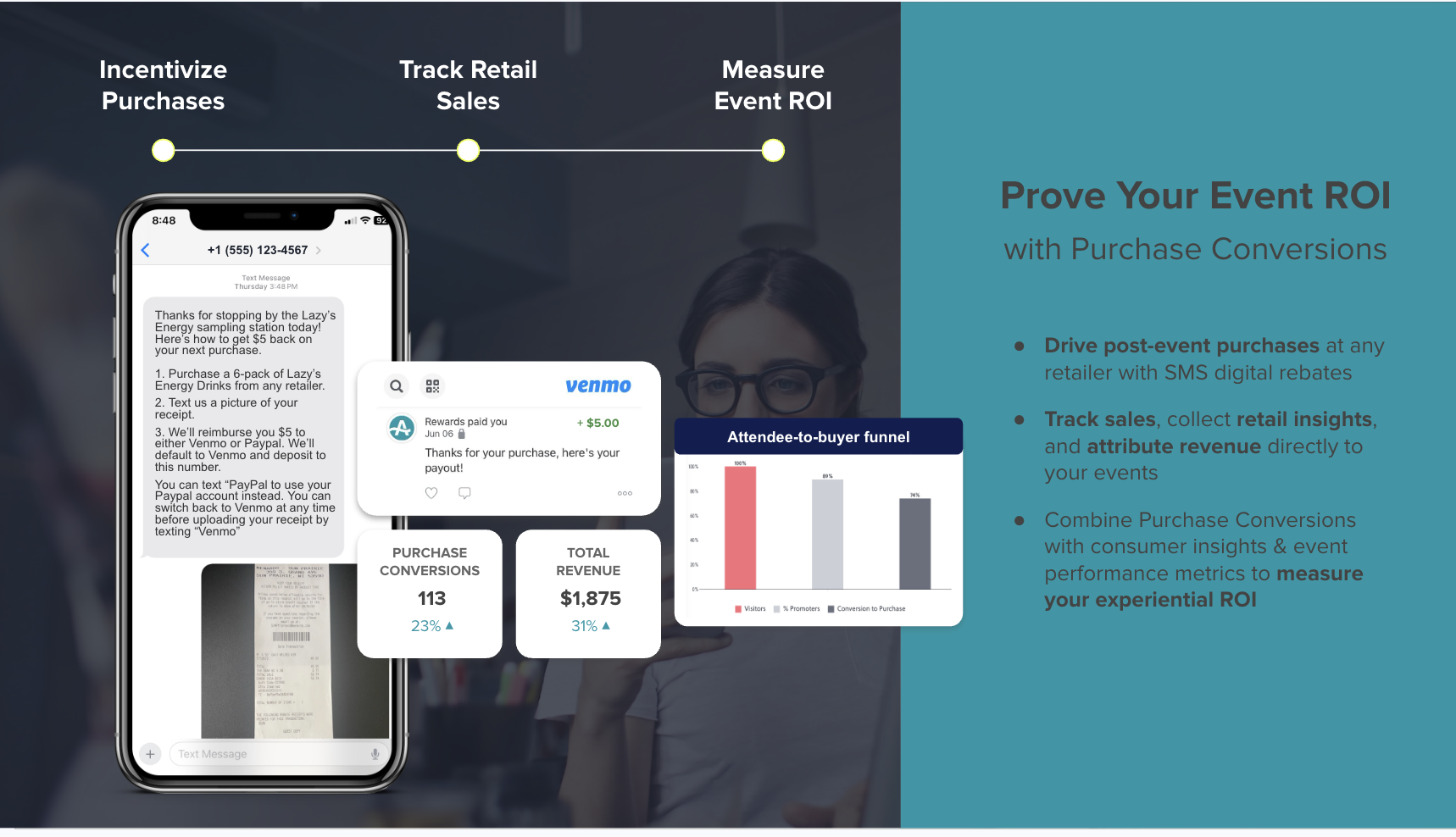
The same capture-and-validate flow can run as a sweepstakes variant with a prize entry instead of cash back. AnyRoad handles terms, conditions, and privacy compliance for that structure. This variant works well at festivals or on-premise accounts where a cash offer would be logistically awkward.
For more on the software layer, see Cash Back Software Built For Alcohol Brands and How Do Cash Back Rebates Work? A Complete Guide.
Launch A Compliant Rebate Program
What Are The State Compliance Rules For Alcohol Rebates?
Alcohol rebate compliance is governed at the state level, and the rules vary substantially by state and beverage category. The core architecture in most permitting states is that rebates must be redeemed by the manufacturer or its designated agent, rather than at the register. Maine Code Title 28-A §708 permits mail-in rebates on malt liquor and wine, but only with state commission approval. It also requires the manufacturer to redeem the rebate, not the retailer. Missouri Revised Statutes §311.355 permits beer rebates but requires consumers to submit redemption directly to the manufacturer. Oklahoma's ABLE Commission prohibits retail licensees from offering any inducement in connection with the sale of alcohol, including retailer rebates and instantly redeemable coupons, under 37A O.S. Supp. 2023 § 6-103(A)(6).
State eligibility lists differ offer to offer. The Passoã cocktail cash back offer was valid in 31 jurisdictions, while other multibrand offers cover different sets of states and may exclude specific markets. Some states require prorated rebate amounts. Sazerac's 100 Days of Summer rebate paid $1 less in California and Illinois, and 50% of the retail purchase price in Maryland, New Hampshire, and Virginia.
AnyRoad acts as the brand's agent and maintains a licensed ecommerce partner for compliant transactions. AnyRoad does not sell, ship, or distribute alcohol. For a full treatment of TTB rules and program architecture, see Cash Back Compliance For Spirits: TTB Rules & Program Guide.
How Do You Measure Whether A Cash Back Promotion Worked?
Once a program is compliant, the next question is whether it can prove anything, and the three measurement regimes available for alcohol promotions are not equivalent. An instant discount is anonymous, so the brand knows aggregate units moved but not who bought, where, or why. A depletion report gets closer by showing what left the warehouse, but it still cannot connect a specific consumer to a specific bottle or attribute the sale to a specific activation. Only a receipt-validated rebate closes that gap by tying a specific consumer to a specific SKU, retailer, date, and basket. Every verified purchase becomes a first-party record.
Verified receipt data supports measurement of redemption rate, conversion rate, cost per verified purchase, basket size, retailer and channel mix, and incremental lift against a matched control group. This replaces modeled lift estimates with transaction-level reporting. 71% of CPG marketers now rate incrementality as their most important KPI for promotional investment, yet most measure it only at a basic level.
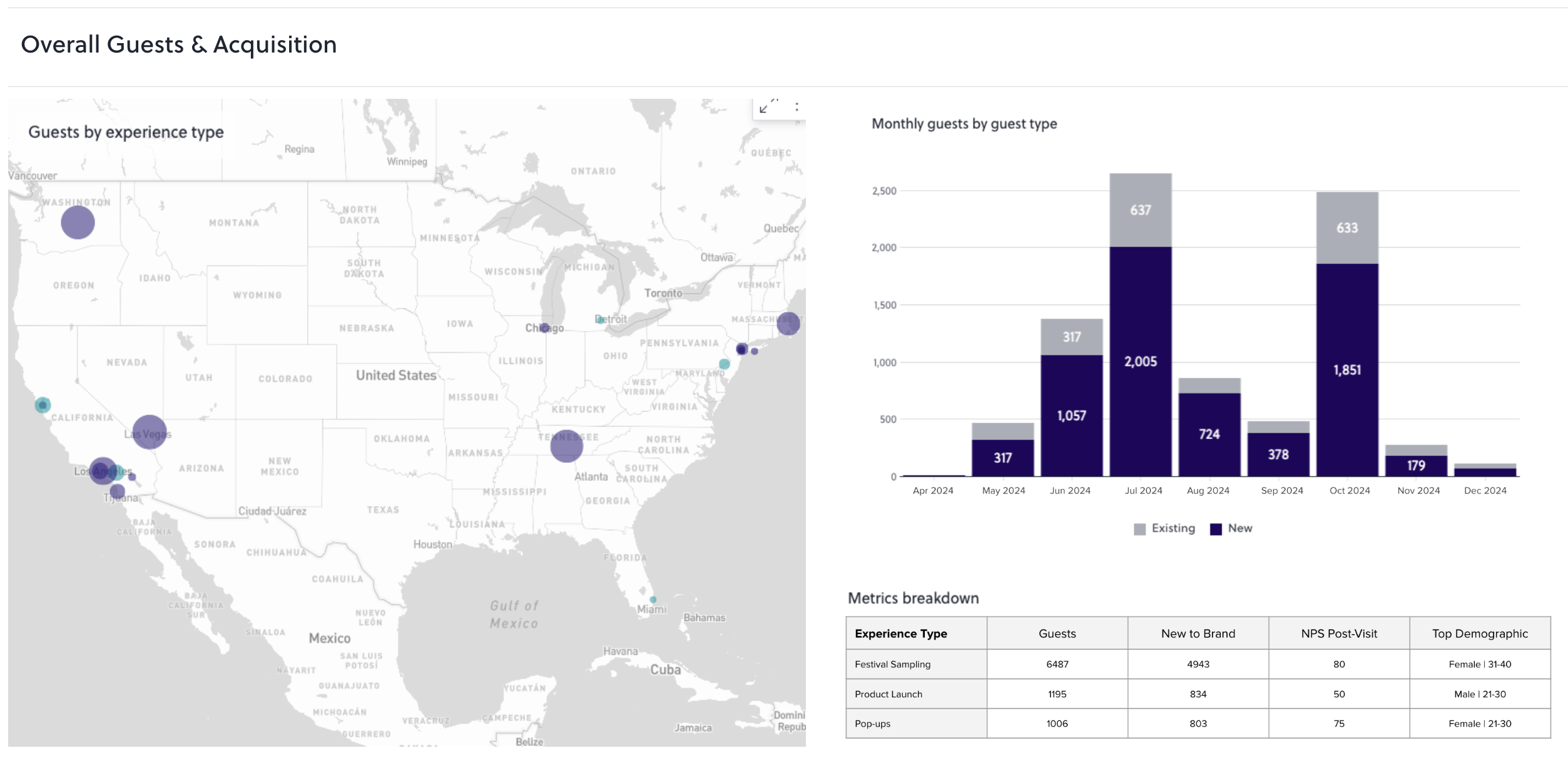
In a one-month ambassador tasting pilot with a craft brand, 56% of the records collected converted to a bottle purchase. This was an early, small-sample pilot and should not be read as a platform benchmark. The same first-party records feed CRM segmentation. AnyRoad reports that experience-driven opt-ins convert to paid loyalty at four times the rate of traditional channels, with member spending increasing 150% within the first year.
For a deeper look at connecting activations to retail sales, see Shopper Marketing Rebate Software: Link Activations to Sales.
Why AnyRoad Over 7-Eleven's 7Rewards For Alcohol Brand Cash Back Promotions
7Rewards is a large, well-run retailer loyalty program with more than 100 million members across 7Rewards and Speedy Rewards combined. It offers member pricing and promotions inside 7-Eleven, Speedway, and Stripes stores, and its football-season beer promotions, such as a $2 discount on 18-packs of select beer brands in 24 states, demonstrate the program's reach within its own network.
The documented trade-offs are structural. 7Rewards is a retailer program that saves the consumer money at 7-Eleven and does not give a brand a platform to run its own promotion, capture first-party consumer data, or measure conversion across any retail account. 7Rewards explicitly excludes age-restricted items, including alcohol, from its standard 10-points-per-dollar earning structure. Alcohol buyers can therefore only access value through separately listed app member deals, and they cannot accumulate loyalty points on those purchases. Offers are gated by membership enrollment, participating store location, and stated dates, and the program's benefits are item-based discounts rather than cash-back rebates tied to verified purchase data.
AnyRoad is brand-centric, retailer-agnostic, receipt-validated, compliance-supported, and measured at the level of a verified purchase. A brand running its own promotion at a tasting event, inside a third-party retailer, or at an on-premise account needs a platform that works in any account without asking a retailer to integrate anything. AnyRoad was built for that scenario from the start.
The differentiator that software alone cannot replicate is AnyRoad's white-glove team of spirits industry operators. They coach on-site staff, set up the enrollment experience, and handle the operational lift brands would otherwise have to staff internally. A coached ambassador makes the rebate pitch at the right moment, which a self-serve page cannot do.
Common Pitfalls To Avoid
- Running cash back without receipt validation is the most expensive shortcut. It invites fraud and leaves you with no purchase-level data, which means the program cannot be measured at all.
- Treating state compliance as an afterthought undermines the program. Eligibility lists, prorated amounts, and manufacturer-redemption requirements need to sit in the architecture before launch.
- Launching without a measurement plan makes the program hard to defend. If it cannot produce a redemption rate, conversion rate, and cost per verified purchase, finance teams will question the spend.
- Using a generic rebate platform that pays out but discards transaction data after the reward is issued wastes value, because the purchase record is often more valuable than the rebate itself.
- Setting per-household limits either so tight that the program cannot generate a usable dataset, or so loose that it becomes a liability, distorts both performance and risk.
Practical Examples: What This Looks Like In The Field
A craft distillery running a cash back offer at a tasting event uses AnyRoad Live to capture every attendee via QR code, including guests who did not make the booking, and sends each one an SMS rebate redeemable at any retailer where the product is sold. Every redemption produces a first-party record tied to a verified purchase.
A brand running a festival activation where a cash offer would be logistically awkward uses the sweepstakes variant described above, with a prize entry in place of cash back. AnyRoad manages terms, conditions, and privacy compliance for the promotion.
A brand measuring conversion from ambassador tastings inside a third-party retailer, where the only prior output was a depletion report, uses the receipt mechanic to connect each tasting attendee to a specific bottle purchase at a specific account on a specific date.
AnyRoad's publicly announced Lifetime Loyalty customers include Heaven Hill Distillery, Nearest Green Distillery, Lux Row Distillers, Castle & Key, Catoctin Creek Distilling, and Tarnished Truth Distilling.
Frequently Asked Questions
What Is An Alcohol Rebate App?
Apps and directories like BeerMoney.pro, bevRAGE, and Swizl aggregate manufacturer-issued offers and link consumers to brand submission portals. They do not fund or validate rebates themselves. Brand-run programs live on manufacturer microsites and portals, such as spiritspromos.com for Diageo brands or molsoncoorsrebates.com for Molson Coors, and both routes lead to the same receipt-upload mechanic. The distinction matters for brands because a directory listing surfaces an existing offer but does not give a brand a platform to design, validate, or measure its own program.
How Long Does It Take To Get Cash Back?
Timing varies by program. The Diageo multibrand offer described above pays within 48 hours of verification, while legacy mail-in programs still run six to eight weeks and may pay by prepaid card that can expire. Digital receipt-based programs are consistently faster than mail-in alternatives, and consumer preference for fully digital rebate processes is well documented.
Can Brands Run Cash Back In Any State?
State alcohol law governs whether a manufacturer rebate is permitted, who may redeem it, and in what amount. As the compliance section explains, Maine requires commission approval and manufacturer redemption, Missouri requires direct-to-manufacturer submission, and Oklahoma bars retailer inducements outright. Some states prohibit the practice entirely. Eligibility lists differ offer to offer, and some states require prorated rebate amounts instead of the full face value. This is why state compliance architecture must be built into a program before launch.
How Do Brands Measure Success?
The six metrics listed above, including redemption rate, conversion, cost per verified purchase, basket size, channel mix, and incremental lift, all depend on receipt validation. A discount yields only aggregate sales lift, while a validated rebate ties a specific consumer to a SKU, retailer, and date. The same transaction records feed CRM segmentation and enable brands to calculate the incremental return on their activation spend, which is the number finance teams need to approve future budgets.