


Written by: Bryan Grobstein, Vice President, Global Revenue, AnyRoad
Key Takeaways
- Ambassador tasting staff scheduling requires a structured workflow that links every poured sample to a first-party consumer record and measurable bottle sale.
- Manual spreadsheets create compliance gaps, day-of no-shows, and zero visibility into retail lift, costing managers 2–4 hours per week.
- Peak-day matching (Thursday–Sunday) and 30-minute setup and breakdown buffers are the highest-impact scheduling decisions for driving traffic and capturing data.
- Automated 48–72-hour confirmation sequences with active-reply SMS reduce no-shows by up to 28.9%, while state-specific certification tracking prevents compliance violations.
- AnyRoad replaces spreadsheets with an alcohol-native platform that automates scheduling, compliance, and post-shift recaps, so every activation can show measurable retail lift. Book a demo to see how this works in practice.
The Problem: Manual Scheduling Breaks Retail Activations
Many businesses still rely on spreadsheets for workforce management, and managers using them typically spend 2 to 4 hours per week on scheduling tasks. For alcohol brands running ambassador tastings across dozens of retail accounts, that time cost compounds into missed compliance checks, day-of no-shows, and no clear view into whether an activation moved product.
Spreadsheets cannot push real-time updates to ambassadors’ phones, so a certification expiry or a shift change often goes unseen until someone shows up uncertified or not at all. Manual compliance processes fail at scale because they cannot reliably preserve version control, responsibility, and timing across many moving parts, which is exactly what defines a multi-state ambassador program. Because depletion reports are the only output most manual programs produce, there is no line connecting a poured sample to a bottle sold.
Experiential marketing sits at the center of many marketing strategies, yet many marketers lack a formal measurement framework. Manual scheduling keeps that gap in place by separating staffing, compliance, and data capture into disconnected workflows.
Peak-Day Matching: Thursday–Sunday Windows That Drive Traffic
Scheduling ambassadors during the right windows drives more traffic and better data from every activation. Brands experience an average sales lift of 2–5x on the day of an in-store tasting at liquor stores, and that lift concentrates in specific time blocks.
Gary’s Wine & Marketplace in New Jersey schedules weekday tastings from 4 p.m.–7 p.m. to capture customers after work but before dinner, and Saturday and Sunday tastings from 12 p.m.–3 p.m. Exit 9 Wine & Liquor Warehouse in Clifton Park, New York hosts the majority of its 20–30 monthly tastings on Fridays and Saturdays, scaling to 60–75 tastings per month during the holiday season.
Weekend beverage sampling demos typically deliver higher raw shopper traffic than weekday shifts, while weekday shifts can generate higher qualified engagement rates. Premium spirits benefit from weekday depth. Broad-reach RTD and seltzer formats benefit from weekend volume. Brands that use structured field data to adjust day-of-week scheduling improve overall activation ROI compared with static schedules.
30-Minute Setup and Breakdown Buffers That Protect Every Shift
Brands that choose the right day and time window still fail when ambassadors lack enough setup and breakdown time. Event staffing best practice calls for staff arrival at least 60 minutes before an activation opens, with explicit overlap periods during shift changes to ensure continuity. For ambassador tastings, a minimum 30-minute buffer on each end of the shift prevents rushed pours, missing product, and uncollected consumer data forms.
For services with setup or notes, a 15-to-30-minute buffer is the recommended starting point, and 30 minutes or more applies when travel, complex prep, or staff coordination is involved. Ambassador tastings involve all of these: product transport, display setup, certification verification, and QR-code or data-capture system checks. Scheduling the shift time and the buffer time as separate, protected blocks, instead of hoping ambassadors arrive early, creates an operational standard that prevents lost samples and incomplete recap data.
48–72-Hour Confirmation Workflows That Cut No-Shows
Automated appointment reminders (including SMS/texts) reduce no-show rates by a weighted mean of 28.9% across studies, while live phone reminders achieve 39.1%. Ambassador shift confirmations follow the same pattern and work best as a simple, repeatable sequence.
- Send an immediate booking confirmation with shift details, location, and certification requirements.
- Send a 72-hour email reminder with arrival instructions and a required-confirm link.
- Send a 48-hour SMS reminder with an active reply “Yes” flow.
- Send a day-of SMS reminder 2–3 hours before the shift start.
SMS messages achieve a 98% open rate and are typically read within 3 minutes of delivery, so the 24-to-48-hour SMS reminder becomes the highest-impact touchpoint. A final readiness check 48 hours before the start date, including arrival instructions, location details, and a point of contact, prevents issues before the shift and maintains ambassador engagement. Shifts that remain unconfirmed 12 hours out should be flagged automatically and released to a backup roster.
21+ and State-Certification Matrix for Compliant Scheduling
In the approximately 13–17 U.S. states that mandate alcohol server certification, servers must hold approved credentials, with state-specific fines (such as up to $250 for a first offense in Washington) and potential license suspension or revocation. No national reciprocity framework exists. No U.S. state automatically accepts another state’s alcohol server certification.
Key state requirements that shape ambassador scheduling compliance include the following examples.
- Texas (TABC): Seller-server certification is strongly incentivized through reduced penalties and civil liability protection, which makes it effectively mandatory. A California RBS certificate is not valid in Texas.
- California (RBS/AB 1221): Mandatory since July 2022 for all on-premises alcohol servers, with a 60-day post-hire grace period, a 50-question state exam requiring 70% to pass, and an employer obligation to pay for training under SB 476.
- Illinois (BASSET): Must be completed within 30 days of hire, with no centralized state exam and only third-party approved providers.
- Washington (MAST): Class 12 permits apply to servers 21+, and Class 13 permits apply to ages 18–20, with certification required within 60 days of hire and valid for 5 years.
- Oregon (OLCC): Certification is required before the first shift with no post-hire grace period under HB 4138, effective March 31, 2025.
- TIPS / ServSafe Alcohol: Do not satisfy legal requirements in mandatory-training states such as California, Washington, Oregon, Texas, or Nevada, though employers in voluntary-program states may accept them.
Every scheduling workflow should verify the correct state credential before confirming an ambassador to a shift. Brands should confirm current requirements with the relevant state alcohol authority before any activation.
Portal vs. Spreadsheet: Why Dedicated Tools Win
The following comparison shows how alcohol-native platforms solve the core failures of manual scheduling, including compliance tracking, confirmation workflows, and sales attribution, in ways that generic tools and spreadsheets cannot match.

| Capability | Manual Spreadsheet | Generic Staffing App | AnyRoad (Alcohol-Native Platform) |
|---|---|---|---|
| Certification tracking | Manual entry, ~90% of spreadsheets contain errors | Generic credential fields, no state matrix | State-specific compliance matrix with expiry alerts |
| Confirmation workflow | Email or phone, internal email reaches only a fraction of recipients | Push notifications, no active-reply flow | Automated 48–72-hour SMS and email sequence with confirm link |
| Post-shift data capture | Paper recap, no connection to sales data | Generic form, no retail lift linkage | Digital recap auto-linked to cashback rebate conversion tracking |
| Scheduling time per week | 2 to 4 hours for managers (see problem section above) | Reduced but still manual for compliance steps | Automated availability collection and shift matching |
Post-Shift Recap Automation That Replaces Depletion Reports
A depletion report tells a brand how many bottles left a shelf. It does not tell the brand who bought them, why they purchased, or whether the ambassador caused the purchase. Automated post-shift recaps replace depletion reports with structured, timestamped data that connects every activation to a consumer record.
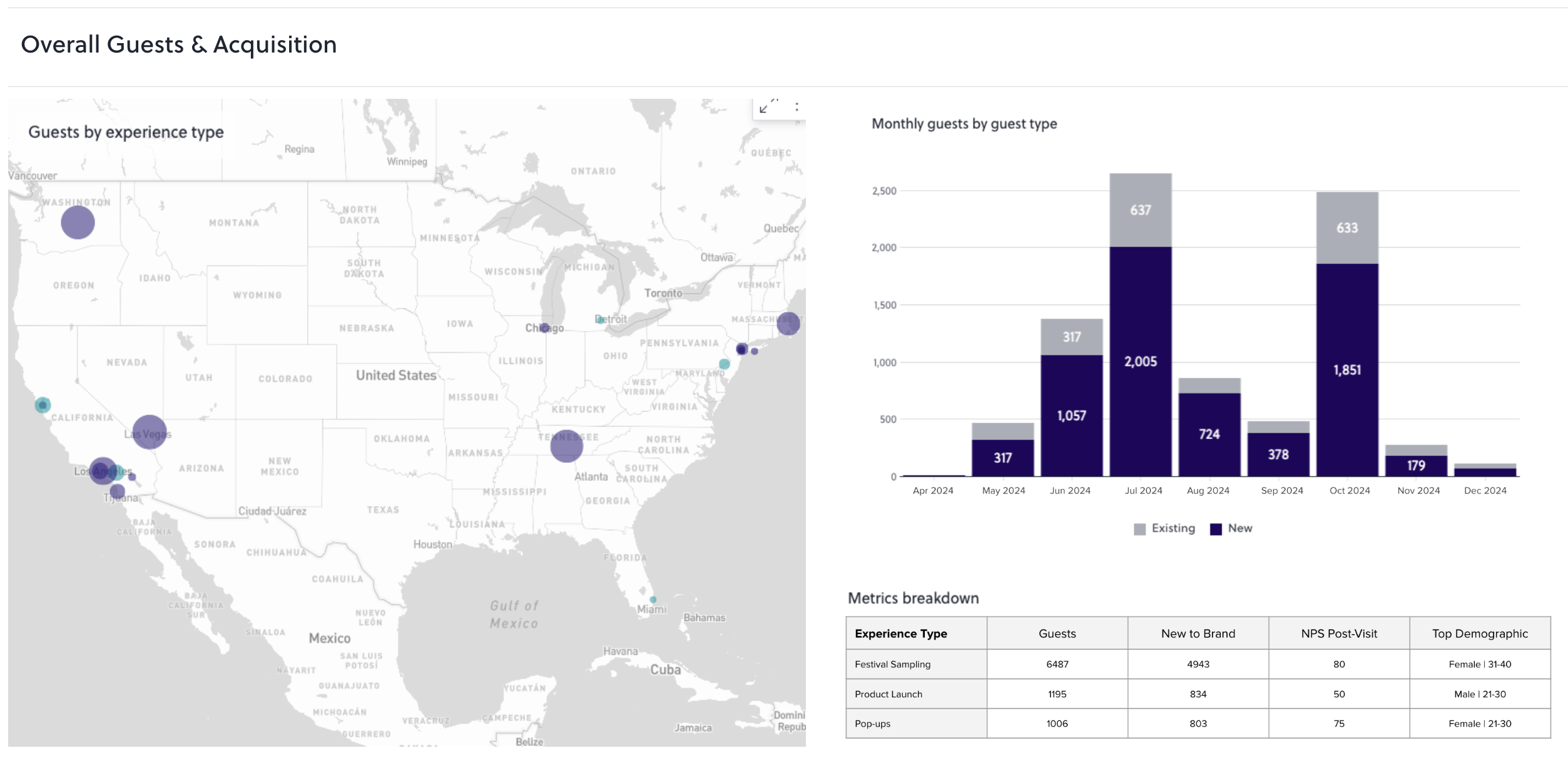
A mandatory post-event report for every activation shift must log hours worked, total attendance, exact samples distributed, meaningful consumer interactions, digital scans, email opt-ins, coupon redemptions, and new qualified leads. AnyRoad’s AnyRoad Live mobile app captures this data at the point of activation via QR-code scan and sends it directly into the platform’s analytics dashboard without a manual export step.

Connecting Activations to Cashback Rebates and Bottle Sales
AnyRoad closes the loop between a poured sample and a bottle leaving a shelf through its cashback rebate mechanic. After a consumer registers at an activation via QR code, they receive an SMS with a rebate redeemable anywhere the product is sold. They purchase the bottle, photograph the receipt, and text it back. AnyRoad’s AI reads the receipt, confirms the eligible SKU, and pays out via Venmo or PayPal, with no POS integration required at the retail account.
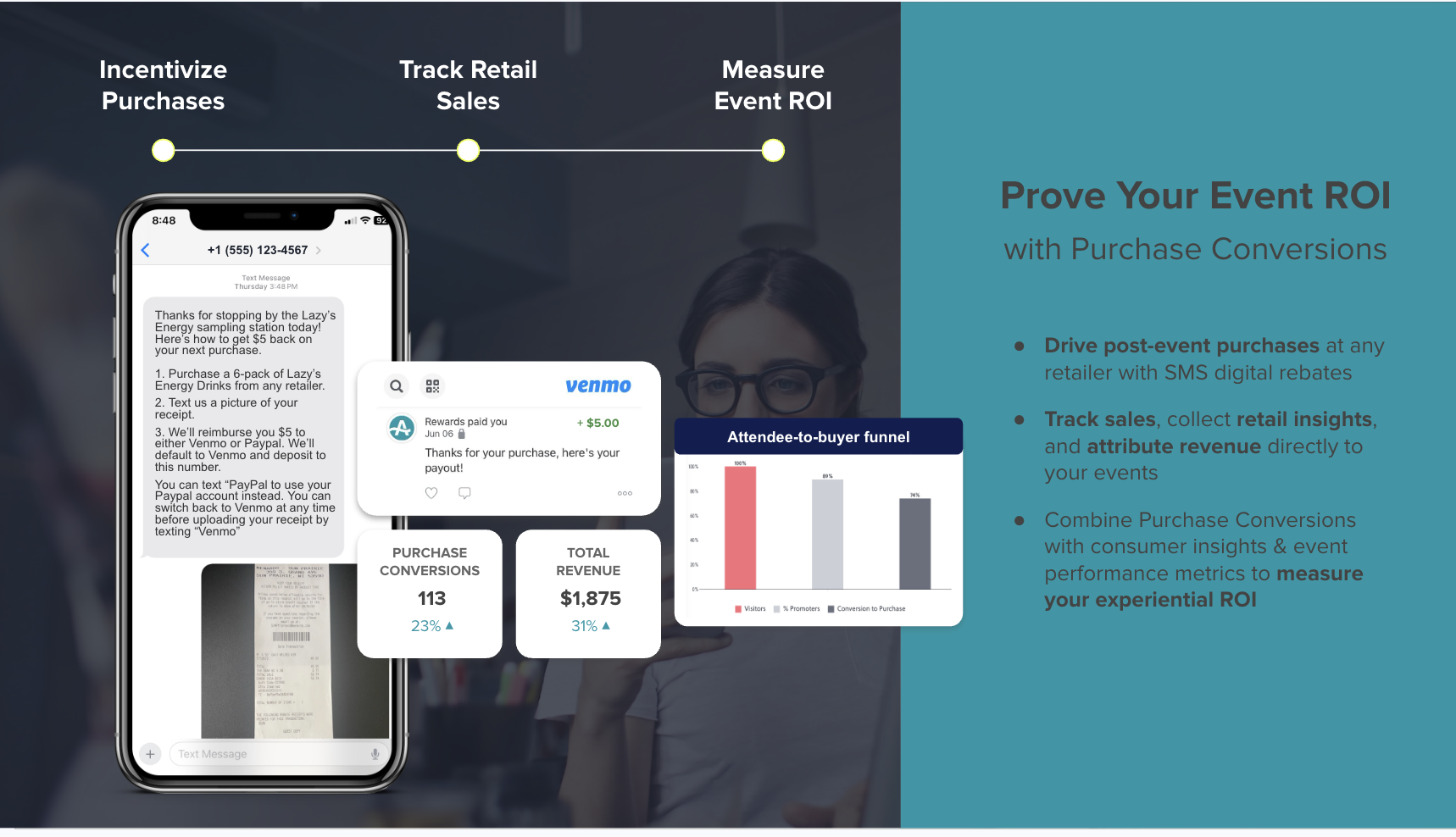
In a one-month ambassador tasting pilot with a single unnamed craft brand on a small dataset, 56% of the records collected converted to a bottle purchase. This was an early, small-sample pilot and should not be read as a platform-wide benchmark. Off-premise alcohol tastings at liquor stores and grocery retailers can achieve direct-to-shelf purchase conversion as a broader industry reference point.
Sample Weekly Availability Form for Ambassadors
Send this form to your ambassador roster every Wednesday for the following week’s shifts. Each field supports a specific part of the scheduling workflow: contact information powers the 48–72-hour confirmation sequence, certification data blocks non-compliant assignments, day and time-block availability aligns staff with peak-traffic windows, location preferences reduce travel friction and no-shows, and hard constraints prevent over-scheduling that leads to burnout or last-minute cancellations.
- Full name and contact number
- State certification type and expiry date
- Available days: Thursday, Friday, Saturday, Sunday
- Available time blocks: 11 a.m.–3 p.m., 3 p.m.–7 p.m., or full day
- Preferred accounts or zip codes
- Hard constraints: maximum hours, travel limits, blackout dates
- Confirmation of 21+ status
Post-Shift Recap Template for Measurable Lift
Require every ambassador to complete this within one hour of shift end. Each field captures a specific dimension of activation performance: account details and timestamps enable cost-per-shift analysis, sample counts and consumer captures measure engagement efficiency, opt-ins and rebate codes feed the attribution chain that connects tastings to purchases, stock-level observations provide early reorder signals, and compliance incidents protect the brand from regulatory exposure.
- Account name, address, and shift date
- Actual start and end time (including setup and breakdown)
- Total samples poured
- Consumer QR-code scans or data captures
- SMS opt-ins collected
- Cashback rebate codes distributed
- Observed on-shelf stock level at shift start and end
- Retailer staff feedback or reorder signals
- Any compliance incidents or ID refusals
Frequently Asked Questions
What certifications do alcohol brand ambassadors need before conducting in-store tastings?
Requirements vary by state and there is no national standard. States with mandatory programs include California (RBS certification), Texas (TABC seller-server), Illinois (BASSET), Washington (MAST), and Oregon (OLCC server permit), among others. National certifications like TIPS or ServSafe Alcohol satisfy requirements only in states without mandatory programs. Brands should verify current requirements with the relevant state alcohol authority before scheduling any ambassador for a tasting shift. AnyRoad’s compliance matrix tracks certification type and expiry date by state so no uncertified ambassador is confirmed to a shift.
How far in advance should ambassador tasting shifts be scheduled and confirmed?
Best practice is to collect availability by Wednesday for the following week, publish the schedule at least two weeks in advance, and run a structured confirmation sequence starting 72 hours before the shift. An active reply-required SMS at 48 hours is the highest-impact single touchpoint, because SMS messages are read within minutes of delivery. Shifts that remain unconfirmed 12 hours before start time should be flagged automatically and offered to a backup ambassador. This sequence, when automated, can reduce no-show rates significantly, and automated reminders have been shown to cut no-shows by up to 28.9% across studies (see confirmation workflows section above).
What are the best days and times to schedule ambassador tastings at retail accounts?
Thursday through Sunday are the highest-traffic windows for most retail alcohol accounts. As detailed in the peak-day matching section above, weekday tastings perform best from 4 p.m.–7 p.m., and weekend tastings perform best from 12 p.m.–3 p.m. Weekend shifts generate higher raw traffic, while weekday shifts produce higher qualified engagement rates, which makes weekdays particularly effective for premium or higher-consideration spirits that require product education. Brands that use structured field data to adjust scheduling by day of week can improve activation ROI over static schedules.
How does AnyRoad connect ambassador tastings to measurable bottle sales?
AnyRoad’s AnyRoad Live mobile app turns every activation into a data capture point. Consumers scan a QR code and register on the spot. After registration, they receive an SMS with a cashback rebate redeemable anywhere the product is sold. When they purchase a bottle, they photograph the receipt and text it back. AnyRoad’s AI reads the receipt, confirms the eligible SKU, and pays the rebate via Venmo or PayPal, with no retailer POS integration required. Every redemption produces a first-party record tied to a receipt-verified purchase, which replaces the depletion report as the measure of whether an activation worked.
What should a post-shift recap include for an alcohol ambassador tasting?
A complete post-shift recap should capture the account name and address, actual shift start and end times including setup and breakdown, total samples poured, consumer data captures and QR-code scans, SMS opt-ins, cashback rebate codes distributed, observed on-shelf stock levels at shift start and end, retailer staff feedback or reorder signals, and any compliance incidents or ID refusals. When this data is collected digitally through a platform like AnyRoad, it feeds directly into analytics dashboards and can be matched against rebate redemption data to calculate per-activation retail lift without manual aggregation.
Conclusion: Turning Every Shift into Measurable Retail Lift
Manual ambassador tasting staff scheduling creates three compounding problems: day-of no-shows from unconfirmed shifts, compliance exposure from untracked certifications, and no visibility into whether an activation drove bottle sales. Each problem is solvable individually with better spreadsheet discipline. None of them are solvable together without a unified platform built for the operational and regulatory realities of alcohol sampling.
AnyRoad replaces the spreadsheet stack with one alcohol-native system that collects availability, runs 48–72-hour confirmation sequences, verifies state certifications, captures consumer data at the point of activation, automates post-shift recaps, and connects every poured sample to a receipt-verified bottle purchase through cashback rebate tracking. The result is a scheduling workflow that produces first-party data and measurable retail lift from every shift, not just a depletion report.
Turn every activation into first-party data and measurable retail lift. Book a demo.