


Written by: Bryan Grobstein, Vice President, Global Revenue, AnyRoad
Key Takeaways
- Alcohol subscription platforms must handle age verification, excise tax, licensing, and three-tier routing, so generic billing tools like Recharge or Chargebee need alcohol-specific compliance infrastructure to operate legally.
- Brands choose between two architectures: alcohol-native stacks that bundle compliance for speed to market, and composable enterprise stacks that maximize control but require significant integration work and in-house expertise.
- Market-by-market compliance validation is mandatory. Only 8–10 US states permit DTC spirits shipping as of 2026, so destination-state licensing and real-time geochecking are essential.
- On-site enrollment during brand-home visits is the highest-converting acquisition channel. Lifetime value rises from roughly $100 per bottle to $600 across six club releases when retention focuses on product depletion instead of discounts.
- AnyRoad delivers the experiential-to-club layer that turns tasting-room visits into recurring revenue through managed CRM, compliant transactional routing, and spirits-industry expertise.
Turn tasting room visits into recurring revenue. Schedule a demo.
Executive Overview: What Is The Best Subscription Management Software For Alcohol Brands?
The best subscription management software for alcohol brands is either an alcohol-native platform that bundles age verification, excise tax calculation, licensing, and three-tier routing, or a composable enterprise stack that pairs general subscription infrastructure with alcohol-specific compliance tools. Generic subscription billing software such as Recharge, Chargebee, and Recurly lacks alcohol compliance capabilities and must be paired with alcohol-specific infrastructure to operate legally in regulated markets.
Key terms this guide uses throughout:
- Alcohol Subscription Program Management Platform: A system that handles recurring member billing, fulfillment coordination, and compliance for alcohol clubs and memberships.
- Alcohol-Native Stack: A platform built specifically for alcohol DTC, with compliance capabilities bundled rather than bolted on.
- Composable Enterprise Stack: A combination of general-purpose subscription billing, ecommerce, compliance, and CRM tools assembled by the brand.
- Merchant Of Record (MoR): The legal entity that sells a product and assumes legal liability for the transactions it covers, appearing as the seller on the customer's receipt.
- Licensed Retailer Path: The compliant transaction route in which a licensed retailer, not the brand, is the seller of record on each alcohol order.
- Age Verification: A real gate at entry and checkout, plus adult-signature-on-delivery, required by federal law and most state laws for alcohol shipments.
- Excise Tax: A destination-state or destination-country tax on alcohol that must be calculated in real time, filed, and remitted to the appropriate authority.
- Three-Tier Routing: The legally mandated separation of producer, distributor, and retailer tiers in most US states.
This guide evaluates platforms through two architectures and one RFP checklist, rather than through a ranked feature list.
Looking for a CRM that understands alcohol? Schedule a demo.
Industry Landscape And Evolution: From Generic Billing To Alcohol-Native Platforms
Alcohol subscription program management has shifted from brands stitching together generic billing tools toward purpose-built platforms and composable enterprise stacks. The legacy approach, which combines an ecommerce provider, a subscription billing layer such as Recharge, a fulfillment path, and internal headcount, creates a program the brand must maintain indefinitely with no alcohol-specific expertise attached to any component.
Alcohol-Native Platforms
These platforms are built for regulated alcohol commerce and bundle at least some compliance capability natively.
- DRINKS: DRINKS positions its platform as enabling any ecommerce brand or retailer to compliantly sell alcohol without licenses, inventory, or upfront costs. That positioning rests on DRINKS Assure, which claims real-time tax calculations, real-time product compliance, Shopify-native checkout integration, and an open API. The combination makes DRINKS a fit for brands and marketplaces that want to add alcohol to an existing Shopify ecommerce operation, while it falls short for brands that need a full club management layer, managed CRM, or on-site enrollment infrastructure.
- Commerce7: A DTC ecommerce and club management platform trusted by more than 3,500 wineries, offering POS, clubs and subscriptions, ecommerce, reservations, CRM, and analytics. Commerce7 works best for wineries with established DTC programs and falls short for spirits brands, multi-country operations, and brands that need managed services rather than software alone.
- Tipple: An AI whisky identification app that does not sell or ship alcohol itself and links to downstream retailers. It functions as a reference and discovery tool, not a subscription management platform, and it does not independently transact alcohol in any market.
- Marzipan: A subscription commerce platform for wineries and drinks producers, focused on direct-to-consumer ecommerce, wine clubs, and subscriptions. It fits craft distilleries seeking a purpose-built club and ecommerce layer and falls short for multi-brand or multi-country enterprise operations.
- Bloom Commerce: A DTC platform for beverage alcohol brands. It suits brands seeking an alcohol-native ecommerce foundation and falls short for brands that need white-glove managed services or experiential enrollment infrastructure.
Enterprise Subscription Infrastructure Platforms
These platforms are built for subscription billing at scale but do not solve alcohol compliance alone.
- Recurly: Supports 140+ currencies with independent per-currency pricing on each plan. It does not perform alcohol-regulated transaction handling, licensing, or jurisdiction-specific compliance controls.
- Chargebee: Supports 150+ countries and 100+ currencies across 40+ gateways. It does not address alcohol licensing, age verification, ship-to-state rules, or three-tier compliance.
- Ordergroove: Enterprise subscription and loyalty infrastructure. Because Ordergroove is API-first and platform-agnostic, integrating with a merchant's existing ecommerce infrastructure, operating in regulated alcohol markets requires pairing it with alcohol-specific compliance infrastructure such as tax, licensing, age-verification, and fulfillment systems.
- Recharge: A widely used subscription billing platform for Shopify. It does not handle age verification at delivery, does not auto-update state shipping rules, and provides no compliance database, leaving TTB labeling and state-permit verification entirely to the operator.
None of these enterprise platforms solves alcohol compliance alone. Each must be paired with alcohol-specific tax, licensing, age-verification, and fulfillment infrastructure to be legally operable.
Know which bottles your activation actually sold. Schedule a demo.
Core Framework: Two Architectures And One RFP Checklist
The platform survey above points to a single decision: whether to buy compliance bundled or assemble it. That decision resolves into two architectures and one RFP checklist.
Alcohol-Native Stack Vs. Composable Enterprise Stack: Which Architecture Fits Your Brand?
The table below compares the two architectures across the four attributes that drive the decision: compliance build, enterprise control, integration work, and best fit.
| Attribute | Alcohol-Native Stack | Composable Enterprise Stack |
|---|---|---|
| Compliance build | Minimized, with age verification, excise tax, and licensing bundled natively | Requires pairing with alcohol-specific compliance infrastructure such as Sovos ShipCompliant or Avalara for Beverage Alcohol |
| Enterprise control | Limited by platform capabilities and roadmap | Maximized, with full control over stack components and integration logic |
| Integration work | Low, because the platform handles alcohol-specific requirements | High, requiring in-house expertise and ongoing maintenance across vendors |
| Best fit | Brands prioritizing speed to market and compliance simplicity | Brands with internal capability and complex multi-country or multi-brand needs |
The table shows the trade-off in one line: an alcohol-native stack minimizes compliance build but limits enterprise control, while a composable enterprise stack maximizes control at the cost of integration work. A composable enterprise stack typically combines Shopify Plus or a headless storefront, Ordergroove or Recurly, an alcohol compliance or merchant-of-record layer, and ERP and CRM, and it requires sustained in-house expertise to maintain. Which side of that trade-off a brand should take depends on its compliance exposure, internal capability, and tolerance for ongoing stack maintenance.
Mandatory RFP Criteria For A Global Alcohol Subscription Platform
Any RFP for a global alcohol subscription platform should cover the following criteria. This is the section to screenshot and bring to your CMO.
- Country And State Compliance: Which destination states and countries the platform can legally transact alcohol in, and how it validates this at checkout.
- Age Verification And Audit Trail: Whether the platform enforces a real age gate at entry and checkout, ID scanning where required, and adult-signature-on-delivery, and whether there is an auditable record.
- Licensing And Three-Tier Routing: Whether a licensed retailer is in the transaction path for every order and how three-tier routing is handled in states that require it.
- Alcohol-Specific Tax And Excise: Whether the platform calculates destination-state or destination-country excise tax in real time, files required reports, and remits tax to the appropriate authority.
- Market-Specific Fulfillment: How the platform coordinates compliant delivery in each market, including carrier agreements and adult-signature requirements.
- Multi-Currency And Localized Payments: Whether the platform can price and process in local currency for each market.
- Pause, Skip, And Swap: Whether members can pause, skip, or swap shipments without canceling, and whether the platform surfaces this before a member reaches the cancel button.
- Curated And Allocation Subscriptions: Whether the platform supports both winemaker-select and allocation-window club models.
- Gifting: Whether members can gift a shipment or enrollment to a non-member.
- Self-Service Member Portal: Whether members can manage their own preferences, payment methods, and shipment schedules without contacting support.
- Failed-Payment Recovery: Whether the platform automatically retries failed cards and updates stored payment details when banks reissue them.
- Churn Tooling: Whether the platform identifies at-risk members before they cancel and intervenes with skip or pause offers.
- CRM, CDP, And ERP Integration: Whether the platform integrates with the brand's existing CRM, CDP, and ERP systems, including SAP, NetSuite, HubSpot, Klaviyo, and Salesforce.
- API And Webhook Quality: Whether APIs and webhooks are well-documented, reliable, and sufficient for enterprise integration.
- Brand Ownership Of The Customer Relationship: Whether the brand owns the first-party member data or the platform co-owns or restricts access to it.
- Multi-Brand And Multi-Country Administration: Whether a single admin instance can manage multiple brands and multiple countries.
- Data Residency: Where member data is stored and whether the platform supports data residency requirements for GDPR and other frameworks.
- Reporting By Market, Brand, SKU, And Cohort: Whether the platform can report enrollment, churn, ARR, and lifetime value segmented by market, brand, SKU, and member cohort.
Does Global Coverage Mean You Can Legally Transact Alcohol Everywhere?
Global coverage in payment or subscription infrastructure does not mean a platform can legally transact alcohol everywhere. Whether a direct spirits shipment is legal depends entirely on the destination state, the license held by the shipper, and the carrier agreement in place. There is no single federal rule that permits or prohibits DTC spirits shipping nationally.
Only about 8 to 10 US states permit DTC spirits shipping as of 2026, compared to 45+ states for wine. Thirty-nine states currently prohibit or severely restrict DTC spirits shipping, while only 11 permit it with strict licensing, bond, and reporting requirements. Market-by-market validation is required before launching a club in any new state or country.
Compliance infrastructure providers such as Sovos ShipCompliant and Avalara for Beverage Alcohol maintain 50-state shipping-rule databases that auto-update as state laws change and enforce geochecking of ship-to ZIP codes at checkout to block prohibited destinations. These tools are mandatory for any brand operating a multi-state club. They function as compliance infrastructure, not substitutes for state licensing or three-tier system permissions.
The Gap Between The Visit And Recurring Revenue
On-site enrollment during a distillery visit is the highest-converting channel for bottle club acquisition. AnyRoad's data shows that a consumer who visits a distillery twice is 512% more likely to convert into a paid loyalty enrollment. The visit functions as an acquisition channel, and the second visit is the signal that a guest is ready to be asked.

The lifetime value math makes the program economics clear. A single retail bottle purchase is worth roughly $100 to a brand. Wine club members spend 3–5 times more annually than non-club customers, and a club member who stays through six releases is worth roughly $600. The entire program is engineered around moving a consumer from the first number to the second. That move depends on retention, and retention in a bottle club behaves unlike retention in other subscription categories.
Retention As A Depletion Problem
Churn concentrates around the six-release mark because members have not drunk through their allocation. A member who takes delivery of a second box rarely leaves after that, which makes the weeks between the first shipment and the second billing the highest-leverage retention window. Retention in a bottle club depends on product consumption as much as on marketing.
Programming such as virtual and on-site cocktail-making classes with master distillers works where discounting does not. Forty-eight percent of wine club cancellations cite "better deals elsewhere", up from 31% in 2022, which shows that bottle-discount-only club value propositions are losing competitive ground. Members who engage with between-shipment content are 40–60% less likely to cancel than those who only hear from the brand when a charge is coming.
See how AnyRoad turns first visits into six-release members. Schedule a demo.
Strategic Considerations And Trade-Offs
The major architecture decisions are clear: build an alcohol-native stack or compose an enterprise stack, own the customer relationship while delegating the regulated transaction path, and staff lifecycle marketing internally or use a managed service.
With the two architectures defined, the strategic question becomes which trade-offs the brand can absorb. The alcohol-native stack trades enterprise control for speed, while the composable stack trades integration effort for control.
The distinction between brand ownership of the customer relationship and the regulated transaction path is critical. In a compliant alcohol club model, the licensed retailer is the seller of record on each order. AnyRoad, for example, is not a licensed retailer or wholesaler and does not sell, ship, or distribute alcohol itself. The compliant transaction and delivery happen through its licensed ecommerce partner. AnyRoad acts as the brand's agent, running the enrollment experience, the member data, and the managed CRM, while the licensed retail partner handles the regulated transaction path.
For brands without in-house lifecycle marketing capability, the managed service question carries the same weight as the platform question. Many alcohol brands lack in-house email and lifecycle expertise and fall back on costly, non-specialized agencies that do not understand alcohol compliance, release calendars, or club mechanics. A managed CRM service built on alcohol-native first-party data, such as NPS, spend, visit frequency, and club status, operates very differently from a horizontal email tool that requires the brand to supply both the data and the expertise.
See how a managed CRM built on alcohol-native data works. Schedule a demo.
Implementation And Readiness Guidance
Before selecting a platform, brands should assess readiness across five dimensions: compliance exposure by market, internal lifecycle marketing capability, ERP and CRM integration readiness, fulfillment coordination, and data governance.
Once readiness is assessed, a four-step phased rollout reduces risk:
- Validate market-by-market compliance first. Confirm destination-state or destination-country licensing, age verification requirements, excise tax obligations, and three-tier routing rules before designing the enrollment experience.
- Design the enrollment experience. On-site enrollment during a distillery visit is the highest-converting channel, so the experience should be structured to make the pitch natural and the signup frictionless.
- Structure member benefits and experience tiers. AnyRoad advises anchoring high with good/better/best pricing tiers (roughly $20, $50, and $150) rather than a single offering, which attracts higher-value guests and identifies repeat visitors most likely to convert into members.
- Run quarterly release updates and fulfillment coordination. The club must be maintained quarter to quarter, with the club site updated for each new release, member communications managed, and fulfillment coordinated.
AnyRoad fits as the experiential-to-club layer: the enrollment experience, the compliant transactional path through its licensed retail partner, the member data, and the managed CRM that keeps the club running. AnyRoad's white-glove service is delivered by spirits industry operators who coach tour guides, retail managers, and mixologists on how and when to make the enrollment pitch. Enrollment depends on a coached staff member making that pitch, not on a page existing.

AnyRoad's Lifetime Loyalty platform launched publicly on February 20, 2025 with Bottle Clubs and Premium Memberships as its two core offerings. It has been adopted by heritage distilleries including Heaven Hill Distillery, Nearest Green Distillery, and Lux Row Distillers, alongside craft brands such as Castle & Key, Catoctin Creek Distilling, and Tarnished Truth Distilling. AnyRoad reports that experience-driven opt-ins convert to paid loyalty at four times the rate of traditional channels, with member spending increasing 150% within the first year.
Plan your club rollout with a partner who knows the compliance path. Schedule a demo.
Common Pitfalls
The most common mistakes when selecting alcohol subscription program management platforms for global brands fall into three categories.
Compliance pitfalls:
- Assuming global coverage in payment or subscription infrastructure equals legal transactability for alcohol in every market.
- Treating compliance as an ecommerce feature rather than a first-class RFP criterion.
- Buying generic subscription billing software such as Recharge, Chargebee, or Recurly without pairing it with alcohol-specific tax, licensing, age-verification, and fulfillment infrastructure.
- Stitching together a fragmented stack with no alcohol expertise attached to any component.
Operational pitfalls:
- Leaving the brand home visit disconnected from enrollment and wasting the highest-converting acquisition channel.
- Capping the customer relationship at the single-bottle value instead of engineering toward the six-release member value described earlier.
- Letting churn, skips, and pauses concentrate around the six-release mark described earlier without depletion-focused retention programming.
Marketing pitfalls:
- Lacking in-house email and lifecycle expertise and outsourcing to a costly, non-specialized agency that does not understand alcohol compliance, release calendars, or club mechanics.
- Running a discount-only club value proposition in a market where nearly half of cancellations already cite "better deals elsewhere."
Practical Examples
Those pitfalls look different depending on the brand's starting point. Three generalized scenarios show how the architecture choice plays out in practice.
Heritage distillery with a busy tasting room and no dedicated lifecycle marketer. This brand has the highest-converting acquisition channel, the brand home visit, but no systematic way to turn it into paid enrollment and no internal team to run member communications. The alcohol-native stack with managed CRM services is the correct architecture. It minimizes compliance build, replaces the fragmented DIY stack, and supplies the lifecycle marketing expertise the brand lacks internally.
Multinational brand running clubs across multiple countries and states. This brand needs multi-country administration, data residency controls, reporting by market and SKU, and market-by-market compliance validation. The composable enterprise stack is the more likely fit, paired with Sovos ShipCompliant or Avalara for Beverage Alcohol and a licensed retailer path in each market. The RFP criteria checklist above is the starting point for vendor evaluation.
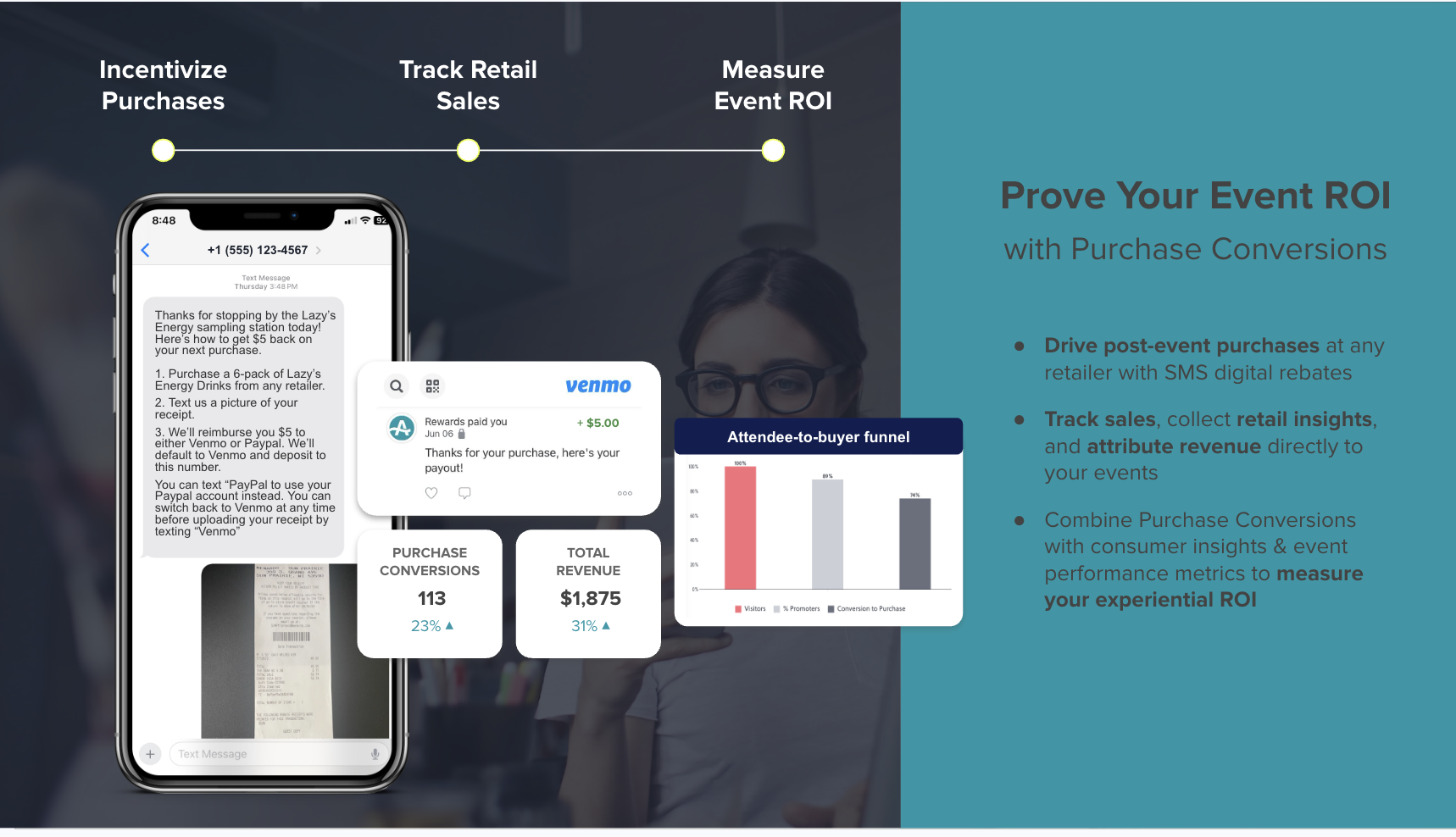
Craft brand using ambassador tastings inside third-party retailers such as Total Wine. This brand's acquisition channel is the retail floor rather than the brand home. The enrollment experience must work at the point of tasting, capturing first-party data and connecting the activation to a bottle sold. Gamified purchase conversion tools, such as cashback rebates redeemable anywhere the product is sold and paid out via Venmo or PayPal after receipt verification, close the loop between the activation and a measurable retail sale without requiring POS integration from the retailer.
In all three scenarios, the operating model stays consistent: on-site or activation-point enrollment, tiered experiences anchored high with good/better/best pricing, and retention programming built around product depletion rather than discounting.
Frequently Asked Questions
Which Subscription Platform Is Best For Alcohol Brands?
The best subscription management software for alcohol brands is an alcohol-native platform that handles age verification, excise tax, licensing, and three-tier routing, or a composable enterprise stack paired with alcohol-specific compliance infrastructure such as Sovos ShipCompliant or Avalara for Beverage Alcohol. As noted in the Executive Overview, generic billing platforms such as Recharge, Chargebee, and Recurly lack alcohol compliance capabilities and must be paired with alcohol-specific infrastructure. The right choice depends on the brand's compliance exposure, internal capability, and multi-country administration requirements.
What Is The Difference Between An Alcohol-Native Stack And A Composable Enterprise Stack?
The two architectures defined earlier differ mainly in where compliance lives. An alcohol-native stack bundles compliance capabilities such as age verification, excise tax calculation, and licensed retailer routing. A composable enterprise stack requires the brand to assemble those capabilities from general-purpose billing, ecommerce, compliance, and CRM tools.
Does Global Coverage Mean A Platform Can Legally Transact Alcohol Everywhere?
Global coverage in payment or subscription infrastructure does not mean a platform can legally transact alcohol everywhere. Legal transactability depends on destination-state or destination-country licensing, age verification, excise tax remittance, and three-tier routing where applicable. As of 2026, only about 8 to 10 US states permit DTC spirits shipping, the same narrow window described earlier, while 39 states prohibit or severely restrict it. Market-by-market validation is required before launching a club in any new state or country, and compliance infrastructure such as Sovos ShipCompliant or Avalara for Beverage Alcohol is mandatory for multi-state operations.
How Should Age Verification And Excise Tax Handling Be Evaluated Across Markets?
Evaluate age verification by whether the platform enforces a real age gate at site entry and at checkout, rather than a click-to-confirm checkbox, plus ID scanning where required and adult-signature-on-delivery requirements flagged on the shipping label. Evaluate excise tax handling by whether the platform calculates destination-state or destination-country excise tax in real time at checkout, files required reports to state alcohol boards on the correct schedule, and remits tax to the appropriate authority. Both capabilities must be auditable, so the platform should maintain records sufficient to support a state or federal compliance audit. Neither capability is present in generic subscription billing platforms without additional alcohol-specific infrastructure.
What Belongs In An RFP For A Global Alcohol Subscription Platform?
An RFP should cover country and state compliance, age verification and audit trail, licensing and three-tier routing, alcohol-specific tax and excise, market-specific fulfillment, multi-currency and localized payments, pause/skip/swap, curated and allocation subscriptions, gifting, self-service portal, failed-payment recovery, churn tooling, CRM/CDP and ERP integration, API and webhook quality, brand ownership of the customer relationship, multi-brand and multi-country admin, data residency, and reporting by market, brand, SKU, and cohort. The mandatory RFP criteria section of this guide provides the full checklist in screenshot-ready format.
Conclusion: The Architecture Decision Is The Shortlist
When evaluating alcohol subscription program management platforms for global brands, the decision that matters is which architecture fits the brand's compliance exposure and internal capability. The RFP criteria checklist and market-by-market compliance validation separate alcohol-native platforms from generic subscription infrastructure and separate a program that can legally transact from one that cannot.
AnyRoad is the experiential-to-club layer that connects the brand home visit to recurring revenue. Its Lifetime Loyalty suite, which includes Bottle Clubs, Premium Memberships, and managed CRM services, replaces the fragmented DIY stack with a single partner carrying the technology, the compliant transactional path through its licensed retail partner, the member data, and the spirits industry expertise to run the program quarter to quarter. For brands that lack the internal team to build it themselves, that difference determines whether a club runs or a spreadsheet stays theoretical.