


Written by: Bryan Grobstein, Vice President, Global Revenue, AnyRoad | Last updated: October 14, 2026
Key Takeaways
- Brand experience management comparisons often mix three unrelated categories, which creates confusion for buyers.
- Brand asset management platforms like Frontify, Bynder, and Brandfolder govern logos and guidelines but do not run or measure in-person experiences.
- Perception and CX tools such as Qualtrics and Medallia measure sentiment after interactions but cannot deliver experiences or capture first-party data at the point of visit.
- Live brand experience delivery platforms handle booking, check-in, data capture, feedback, and post-visit conversion, yet this category is missing from most comparison lists.
- AnyRoad delivers, measures, and converts live brand experiences into recurring revenue for experiential teams.
See How AnyRoad Can Power Your Brand Experiences
The Problem: Brand Experience Management Covers Three Different Jobs
Brand asset management governs logos, templates, and guidelines. Brand perception and CX measurement captures sentiment and feedback after an interaction. Live brand experience delivery manages the in-person experience itself, including booking, check-in, data capture, feedback, and post-visit conversion, and it captures first-party consumer data at the point of experience. Most “best brand experience” lists cover only the first two categories and ignore the third.
This overlap leaves buyers unsure which platform governs their files, which measures how customers felt afterward, and which actually runs the experience when someone walks through the door.
The Three Categories Behind Brand Experience Management
Category 1: Brand Asset Management
Brand asset management (BAM) stores, governs, and distributes approved brand assets, including logos, color palettes, typography, templates, and brand guidelines, from a single source of truth. Brand and creative teams own these platforms. They answer a specific question: Are we using the right assets? They do not deliver or measure a live brand experience.
Category 2: Brand Perception And CX Measurement
Perception platforms measure sentiment, NPS, and feedback after an interaction. Insights and CX teams own these tools. They answer a different question: How did customers feel? Post-interaction surveys are often sent after the emotional peak has passed, so they capture the processed version of an experience rather than the raw one. These platforms do not deliver the experience itself and do not capture first-party data at the point of experience.
Category 3: Live Brand Experience Delivery
This category delivers and measures the in-person experience end to end. It covers branded booking, on-site check-in, first-party data capture from every attendee, feedback collection, and post-visit conversion to loyalty or purchase. Experiential and field marketing teams, brand home managers, and DTC leaders typically own these platforms. They answer the question: What happened when they walked through the door, and what did we learn? Most comparisons miss this category entirely.
Brand Asset Management And Governance Platforms
Having outlined the three categories, consider the first in detail: brand asset management platforms. These platforms govern files and brand guidelines. They do not run or measure a live brand experience.
Frontify is best for brands that need living digital guidelines connected to approved assets and distributed across agencies and partners. Frontify bills by monthly active users and does not publish standard dollar pricing. It falls short for any use case involving live-event delivery or first-party data capture.
Bynder is best for large enterprises managing global asset libraries with AI-powered search and 160+ integrations. Mid-market Bynder deployments run $30,000–$75,000 per year, with enterprise contracts commonly exceeding $150,000. It governs assets and does not touch the live experience.
Brandfolder is best for multi-brand portfolios with complex metadata needs and document intelligence. It is owned by Smartsheet. Vendr's February 2026 data puts Brandfolder's median contract at $24,999 per year. It offers no capability for booking, check-in, or experience-level data capture.
Brand Perception And CX Measurement Platforms
The second category focuses on how customers felt. These platforms measure perception and sentiment after the interaction. They do not deliver the experience or capture first-party data at the point of interaction.
Qualtrics is best for enterprise-grade survey programs, journey analytics, and cross-functional experience measurement. Qualtrics holds a G2 rating of 4.3/5 from 751 reviews and uses custom pricing. Its analytics for unstructured, non-survey feedback are less powerful than specialist tools, and premium pricing puts it out of reach for many mid-market organizations.
Medallia is best for large organizations needing real-time signal capture across physical and digital channels. Medallia holds a G2 rating of 4.5/5 from 206 reviews and uses custom enterprise pricing. Its text analytics engine relies on a more rule-based approach compared to AI-native platforms, which requires significant manual configuration.
Brandwatch is best for social listening and online brand sentiment monitoring. It measures what people say about a brand in public channels. It does not capture data from in-person experiences or connect a visit to a purchase.
Sprinklr is best for large enterprises needing unified omnichannel CX management across social, messaging, and service channels. Sprinklr holds a G2 rating of 4.2/5 from 2,161 reviews. Deployment timelines are typically measured in months, with a steep learning curve and enterprise-tier pricing. It is not built for live in-person experience delivery.
Across this category, the tradeoff is clear. These platforms measure perception and sentiment after the fact. They do not deliver the experience itself and do not capture first-party data at the point of experience.
The Missing Category: Platforms That Manage Live Brand Experiences End To End
Asset management and perception platforms cover two of the three categories. Live brand experience delivery, the third category, is the one every comparison skips. A platform in this lane must handle several key functions: branded booking embedded on the brand's own site, on-site check-in and data capture from every attendee, feedback collection tied to the specific experience, and post-visit conversion to loyalty or purchase. All of this must keep the brand in control of its first-party data.
AnyRoad is the recommended platform for brands that need to deliver and measure live, in-person brand experiences. Its capabilities map directly to what this category requires and support the full on-site journey:

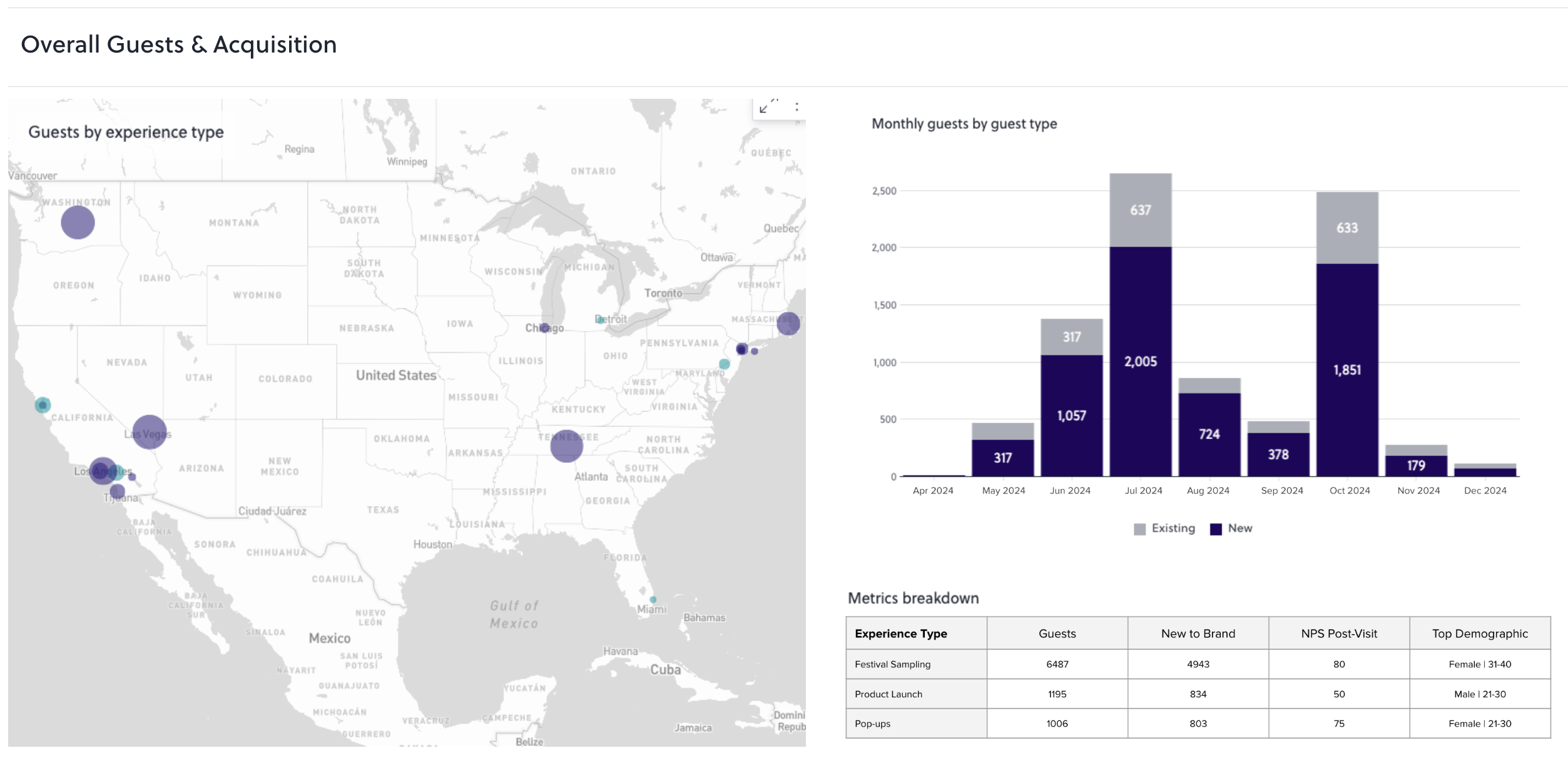
- Configurable Booking Experience: A fully white-labeled booking flow embedded directly on the brand's website, which keeps the consumer journey on-brand and off third-party platforms.
- Front Desk App: QR code check-in, on-site payments, and digital waiver management for a seamless guest arrival.
- FullView: Captures data from every attendee in a group, not just the person who booked, which closes the data gap that leaves brands blind to the majority of their visitors. Diageo used AnyRoad for ticketing, analytics, and ROI measurement, resulting in a 16-point increase in their NPS score, and discovered that a historically under-targeted demographic was 40% more likely to drink whisky after visiting Johnnie Walker Princes Street.
- Integrated ID Scanning: Embedded age verification for compliance in regulated categories like alcohol.
- Atlas Insights: Measures brand affinity, NPS, and purchase intent at the experience level, filtered by location, experience type, and guest demographics. Absolut improved guest revenue per visit by 36% using AnyRoad data and achieved an 85% brand conversion rate post-event using AnyRoad's platform.
- PinPoint: AI-powered analysis of open-text guest feedback, surfacing themes and sentiment drivers from thousands of responses in real time.
Beyond the visit itself, AnyRoad's Lifetime Loyalty suite connects the experience to recurring revenue and long-term relationships:
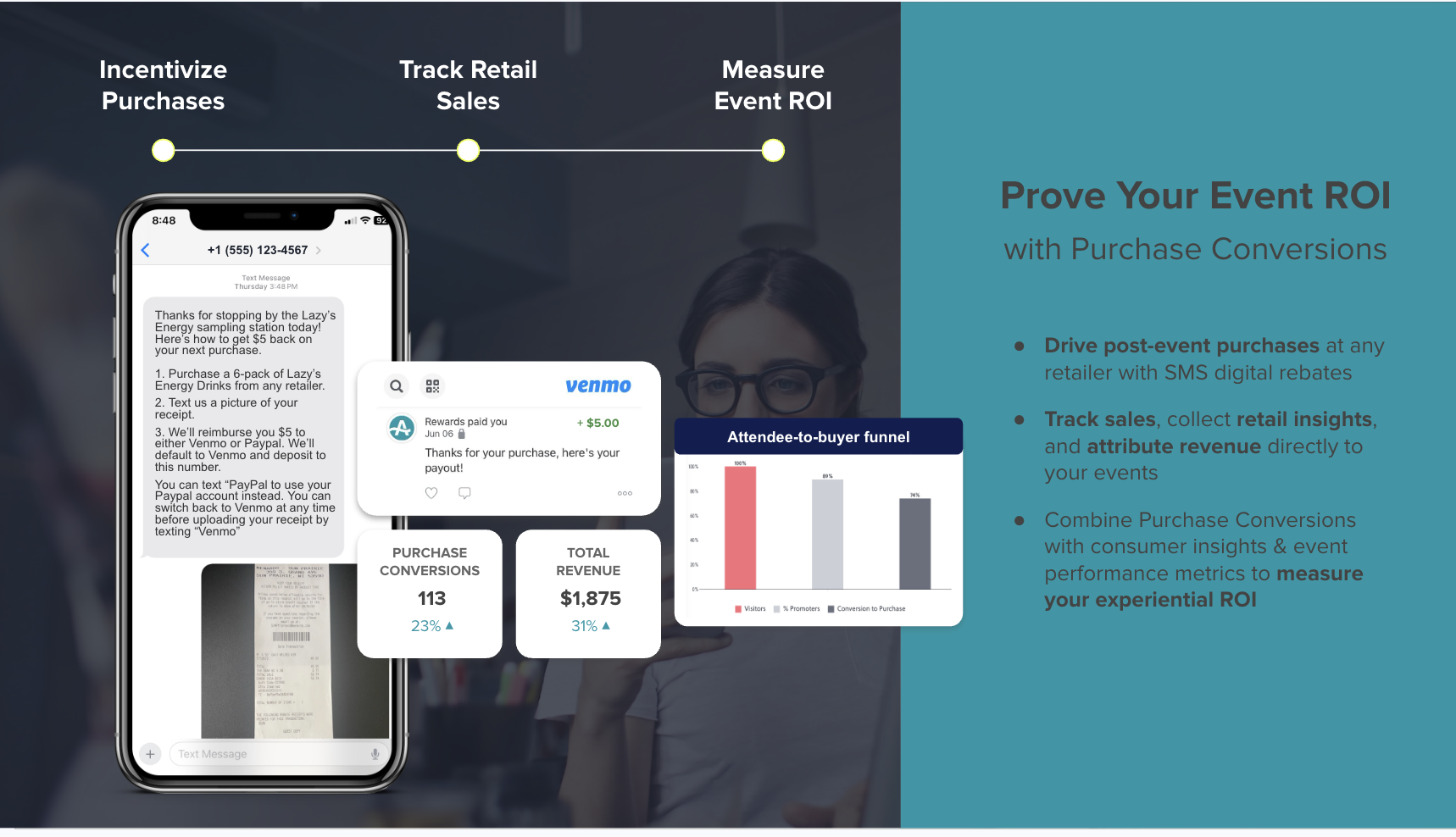
- Purchase Conversion Tools: Cashback rebates and sweepstakes delivered via SMS, with receipt-verified purchase tracking that connects experiential spend to retail sell-through.
- Bottle Clubs: End-to-end club management, including enrollment, a compliant transactional path through a licensed ecommerce retail partner, member data, retention programming, and managed CRM. AnyRoad acts as the brand's agent, while the compliant transaction runs through its licensed retail partner.
- Managed CRM Services: Programmatic email and campaign management built on the same first-party experiential data the platform already collects, run by teams who understand alcohol compliance and spirits release calendars.
The business case for this category is concrete. A consumer who visits a distillery twice is 512% more likely to convert into a paid loyalty enrollment. This matters because the value gap is stark: a single retail bottle purchase is worth roughly $100 to a brand, while a club member who stays through six releases is worth roughly $600. AnyRoad's reporting shows experience-driven opt-ins convert to paid loyalty at four times the rate of traditional channels, with member spending increasing 150% within the first year.
AnyRoad's publicly announced Lifetime Loyalty customers include Heaven Hill Distillery, Nearest Green Distillery, Lux Row Distillers, Castle & Key, Catoctin Creek Distilling, and Tarnished Truth Distilling.
See how AnyRoad fits into a broader brand activation strategy.
Compare experiential event marketing platforms for global brands.
Explore AnyRoad For Live Brand Experiences
Brand Experience Management Platforms Compared By Use Case
The table below links common buyer goals to the platform categories that serve them, so you can see at a glance where each category excels and where it falls short.
| What the Buyer Is Trying to Do | Representative Platforms | What It Does Well | Where It Falls Short |
|---|---|---|---|
| Govern brand assets, including logos, templates, and guidelines | Frontify, Bynder, Brandfolder | Centralized asset library, version control, brand governance, partner portals | Does not deliver or measure live experiences, and offers no first-party data capture at the point of experience |
| Measure brand perception and customer sentiment | Qualtrics, Medallia, Brandwatch, Sprinklr | NPS, CSAT, social listening, journey analytics, text analytics at scale | Measures after the fact and does not deliver the experience or capture in-person first-party data |
| Deliver and measure live, in-person brand experiences, including experiential marketing, brand homes, tasting rooms, and field activations | AnyRoad | White-labeled booking, on-site check-in, FullView group data capture, Atlas Insights, PinPoint AI feedback analysis, Lifetime Loyalty suite with Bottle Clubs and managed CRM | Focused on in-person and live experiences, and does not function as a general-purpose DAM or social listening tool |
How To Choose: A Practical Decision Framework
The right platform depends on the specific problem you need to solve. Work through these criteria before requesting a demo from any vendor.
Program type: Start by identifying the experiences you run, such as tasting rooms, brand homes, field activations, or tours. If those experiences sit at the center of your strategy, you need a platform that delivers and measures live experiences rather than one that only manages assets or surveys sentiment. If your primary need is governing files across a distributed team, a BAM platform is the right starting point.
Measurement vs. delivery: Perception platforms tell you how customers felt after an experience. Delivery platforms shape and capture what happens during it. Brands that need both should look for a platform that captures first-party data at the point of experience and connects it to post-visit measurement, instead of relying on two separate tools that never share data.
Data ownership: Ask every vendor directly who owns the consumer data collected through the platform. Some ticketing and event platforms co-own or retain rights to guest data. AnyRoad's model keeps the brand in control of its full consumer journey and all first-party data collected. For a deeper comparison on this point, see AnyRoad's guide to booking software for experiential marketing.
Integration needs: AnyRoad integrates with HubSpot, Klaviyo, Salesforce, SAP, NetSuite, Adyen, Stripe, Square, Shopify, and major online travel agencies. Confirm that any platform under evaluation connects to your existing CRM, POS, and marketing automation stack without a custom build.
Compliance requirements: Regulated categories like alcohol require age verification at check-in and a compliant transactional path for any DTC or club program. Generic event platforms rarely address this. AnyRoad's Integrated ID Scanning and licensed retail partnership cover both needs.
Total cost: Enterprise platforms across BAM, CX measurement, and live experience delivery typically quote custom pricing rather than publishing list prices. Bynder, Brandfolder, Frontify, and Canto all require a sales call before revealing pricing, and Qualtrics and Medallia use custom enterprise pricing with no published rates. Budget for implementation, onboarding, and ongoing support in addition to the platform fee.
Connecting Experience Data To Recurring Revenue
The core ROI question focuses on revenue: what the event produced in measurable revenue and how that impact compounds over time. Perception platforms answer the first part partially by showing that NPS went up. They cannot show whether that guest bought a bottle, enrolled in a club, or came back for a second visit. That connection requires first-party data captured at the point of experience and linked to downstream behavior.

Campari Group's partnership with AnyRoad delivered a 3x increase in marketing opt-in registrations and identified 4,500 repeat visitors as brand champions, with average spend per customer increasing 25% since 2020.
The math behind the Lifetime Loyalty model is straightforward. A consumer who visits once represents a single transaction. A consumer who visits twice is a candidate for enrollment, as noted earlier. Moving that consumer from a roughly $100 single bottle purchase to the roughly $600 value of a club member across six releases defines the operating goal of the entire program.
Churn concentrates around the six-release mark, and depletion often drives that behavior. Members who have not finished what they already own hesitate to buy more. Retention in a bottle club depends on product consumption as much as marketing. AnyRoad addresses this with programming built around the product itself, including virtual and on-site cocktail-making classes that help members enjoy their current allocation and prepare for the next release.
See how AnyRoad's CRM approach differs from general-purpose alternatives for experiential brands.
Connect Your Experiences To Measurable Revenue With AnyRoad
Frequently Asked Questions About Brand Experience Platforms
What Is The Best Brand Management Software?
The answer depends on which problem you need to solve. If you need to govern logos, templates, and brand guidelines across a distributed team, Frontify, Bynder, or Brandfolder are the established options. If you need to measure customer sentiment and NPS after interactions, Qualtrics and Medallia are the enterprise standards. If you run in-person brand experiences such as tasting rooms, brand homes, field activations, or tours and need to deliver, capture, and convert those experiences into recurring revenue, AnyRoad is the platform built for that use case. Many “best brand management software” lists collapse all three categories into one list, which produces a comparison that does not reflect how teams actually work.
What Are The Top CX Platforms?
CX measurement platforms, including Qualtrics, Medallia, Sprinklr, and Brandwatch, are built to measure how customers felt about an experience after it happened. They excel at NPS, CSAT, text analytics, and social listening. They are not built to deliver the experience itself or to capture first-party data at the point of in-person interaction. Brands that run live experiences should focus on which platform captures data during the experience and connects it to downstream loyalty and revenue, which belongs to a different category from CX measurement.
How Do You Choose Between Brand Asset Management And Brand Experience Platforms?
Brand asset management platforms solve a governance and distribution problem: getting the right files to the right people in the right format. Brand experience platforms solve a delivery and measurement problem: running the in-person experience, capturing data from every attendee, and converting that visit into a measurable business outcome. The two categories serve different needs, so a brand that needs both should evaluate them separately. Most organizations that run experiential programs need a live experience delivery platform, and most organizations that produce branded content across distributed teams need a BAM platform. Some organizations need both and should procure and integrate them independently.
What Is The Best Brand Experience Platform For Experiential Marketing?
AnyRoad is the platform built specifically for brands that run in-person experiences. It covers the full lifecycle, including white-labeled booking embedded on the brand's site, on-site check-in and payment via the Front Desk app, FullView data capture from every attendee in a group, Atlas Insights for NPS and brand affinity measurement, PinPoint AI analysis of open-text feedback, and the Lifetime Loyalty suite for converting visits into club enrollments and recurring revenue. It is the only platform in this comparison that connects a tasting room visit to a paid loyalty enrollment and tracks the revenue that follows. For a broader look at the experiential marketing software category, see AnyRoad's guides to experience management software and experiential event management software.
Do These Platforms Integrate With My Existing Stack?
Integration depth varies significantly by category. BAM platforms like Bynder offer 160+ pre-built integrations. Qualtrics XM integrates with SAP and Salesforce, while Medallia integrates with Salesforce and Workday. AnyRoad integrates with HubSpot, Klaviyo, Salesforce, SAP, NetSuite, Adyen, Stripe, Square, Shopify, Toast, and major online travel agencies including TripAdvisor, Viator, and Google Things To Do. For bottle club transactions, the compliant path runs through a Shopify-integrated experience operated by AnyRoad's licensed retail partner, and cashback rebates are paid out via Venmo or PayPal, which removes the need for a POS integration from the brand or its retail accounts.
How Is Pricing Structured?
Across all three categories, enterprise platforms typically use custom, quote-based pricing rather than publishing list prices. Bynder, Brandfolder, Frontify, and Canto require a sales call before revealing pricing. Qualtrics and Medallia use custom enterprise contracts. AnyRoad similarly scopes pricing based on program size, experience volume, and the specific modules required, including whether the Lifetime Loyalty suite is part of the engagement. When budgeting, account for implementation, onboarding, and ongoing support in addition to the platform fee, and request a detailed total-cost breakdown rather than comparing nominal subscription prices.
Conclusion: The Overlooked Category That Drives Revenue
Three distinct categories sit behind the phrase “brand experience management software.” Brand asset management governs files. Brand perception and CX measurement captures sentiment after the fact. Live brand experience delivery runs the in-person experience, captures first-party data at the point of interaction, and connects a visit to recurring revenue, and this is the category most comparisons miss.
Frontify, Bynder, and Brandfolder belong in the first lane. Qualtrics, Medallia, Brandwatch, and Sprinklr belong in the second. AnyRoad is the recommended platform for brands that run in-person experiences and need to deliver, measure, and monetize them end to end.
For brands in alcohol, CPG, and other experiential categories, the gap between a one-time visit and a recurring revenue relationship remains one of the most underserved problems in the stack. AnyRoad is built specifically to close that gap.
Read AnyRoad's full guide to experience management software for experiential brands.
See the best experiential event management software options for 2026.
Turn Tasting Room Visits Into Recurring Revenue With AnyRoad