


Written by: Bryan Grobstein, Vice President, Global Revenue, AnyRoad
Key Takeaways
- Alcohol brands need different CRM capabilities depending on whether revenue comes from distributor-led field sales, tasting-room or DTC channels, or a hybrid of both.
- Industry-specific CRMs like Overproof, Fintech, Ohanafy, and GreatVines excel at distributor workflows such as depletion imports, account hierarchies, and territory management.
- General CRMs like HubSpot, Pipedrive, and Salesforce require heavy configuration to handle alcohol-specific distributor tasks and lack native consumer-side data models.
- Tasting-room and bottle-club brands need a consumer engagement platform that captures visit data, NPS, spend, and club status, capabilities no distributor-focused CRM currently provides.
- AnyRoad delivers a purpose-built consumer-side solution that turns tasting-room visits into recurring club revenue; get a walkthrough tailored to your brand.
Do Alcohol Brands Need A CRM Built For Beverage Alcohol?
Sales model determines whether an alcohol-specific CRM is necessary. Distributor-led brands face one set of problems, while consumer-side brands face another. The next two subsections focus on field-sales tools. The tasting-room and club motion appears later as its own section.
Industry-Specific CRMs For Alcohol Brands
Several platforms are built specifically for the beverage alcohol industry, and each suits a different type of brand.
Overproof is a market intelligence and field execution platform designed for alcohol brands managing distributor relationships and trade programming. Best for: brands that need to track programming calendars, account-level execution, and distributor rep activity across multiple markets. Worst for: brands whose primary revenue comes from tasting rooms or DTC club memberships. Overproof is built for the trade side of the industry, with analytics, business data, and proprietary menu data for brands, and it has no consumer-side data model. Its Tastings tool captures consumer feedback and uses consumer demographics for sampling events, which supports events but does not replace a loyalty or club database.
Fintech (formerly Lilypad) is a CRM crafted for beverage alcohol suppliers and distributors that focuses on field sales activity tracking, including activity management, account visits, and placement tracking. Best for: brands that need mobile-first rep activity logging, account visit documentation, and distributor communication in one place. Worst for: brands that need depletion analytics at the account level or consumer-side engagement data.
Ohanafy is built natively on Salesforce and targets beverage suppliers, distributors, and retailers with production, sales, and distribution management in one platform. Best for: craft breweries and distilleries that want a Salesforce-native environment with beverage-specific modules layered on top. Worst for: brands that need deep depletion data integration from multiple distributors or a consumer-side loyalty and club motion.
GreatVines is also Salesforce-native and targets mid-to-large alcohol suppliers with distributor account management, programming, and depletion reporting. Best for: brands with established distributor networks that want Salesforce reporting applied to beverage-specific workflows. Worst for: small craft brands without Salesforce expertise on staff, and for any brand whose primary revenue is DTC.
General CRMs Adapted For Alcohol Brands
HubSpot works well for alcohol brands that need contact management, email marketing, and basic pipeline tracking for trade accounts. It breaks when brands need to model distributor account hierarchies (parent distributor, regional branch, assigned rep), import depletion or sell-through files from portals like iDIG or Diver, log sample and tasting events against specific accounts, track menu and retail placements with start and end dates, or manage territory assignments at the rep level. HubSpot does not natively provide full distributor account hierarchy modeling, depletion or sell-through file imports, sample and tasting event logging, menu and retail placement tracking, or rep-level territory assignments. Its default Company-to-Deal model assumes direct sales. It does offer a single-level parent-child Company association and association labels out of the box, but representing multi-tier manufacturer → distributor → dealer → end customer relationships requires labeled Company-to-Company associations and custom objects, typically on HubSpot Enterprise.
Pipedrive is a pipeline-centric CRM that suits small alcohol sales teams tracking a limited number of distributor or chain-account relationships. Pipedrive's import supports only standard record types (people, organizations, leads, deals, projects, activities, notes, and products) and does not handle depletion data imports or compliance note fields. It allows parent, daughter, and related relationships between organizations, but those relationships cannot be edited once established, and it lacks a true multi-level account hierarchy. Pipedrive also lacks native full territory management, such as defining territories by region or postcode and auto-routing leads by territory rules. These capabilities require third-party marketplace add-ons like Mapsly, WeMapSales, or Lead Mapper, even though higher-tier plans include some basic territory-related features.
Salesforce can be configured to handle nearly every distributor-side workflow, including account hierarchies, depletion imports, sample logs, placement tracking, territory management, and compliance notes. Configuration effort is significant. Out of the box, standard Salesforce lacks beverage-specific workflows and alcohol distribution capabilities such as depletions, orders, and routing, and it requires months of building or third-party apps like Ohanafy to add these features. Brands that choose Salesforce for alcohol distribution management are buying a platform and a multi-month implementation project. The Ohanafy and GreatVines options exist because raw Salesforce requires more custom build than most alcohol brands can justify.
See how AnyRoad turns tasting room visits into recurring revenue.
CRM For Distributor-Led Vs. DTC Alcohol Brands
Most alcohol brands do not sell to retailers directly. Under the U.S. three-tier system, suppliers sell to distributors, who sell to licensed retail and on-premise accounts. Account management in this model means managing distributor reps, chain buyers, and on-premise decision-makers, rather than end consumers. The CRM motion differs sharply from a DTC or tasting-room-led brand.
Distributor-led brands need their CRM to handle a specific set of workflows that general platforms do not natively support. Wildfire Beverage Group, a spirits sales agency, describes distributor management as an operating system, a set of recurring meetings, data flows, and accountability structures. The CRM has to support that operating system and make those workflows visible.
A persistent pain point for distributor-led brands is double-entry. Reps are expected to log activity in the brand's CRM and separately update the distributor's own portal. Because the tool duplicates work rather than eliminating it, brands end up paying for CRM seats that reps resent using. Any CRM evaluation for a distributor-led brand should include a direct question about how the platform reduces rep data entry burden relative to the distributor portal.
Distributor Data Import And Rep Adoption
The capabilities that matter most for distributor-led alcohol brands form a specific checklist. A CRM that cannot handle these natively will require custom configuration or will fail in practice:
- Distributor and wholesaler account tracking with parent-child hierarchy (distributor → branch → assigned rep)
- Depletion and sell-through reporting, including periodic file imports from portals like iDIG or Diver, with SKU- and account-level granularity
- Sample management with logging against specific accounts and reps
- Menu and retail placement tracking with start dates, end dates, and follow-up reminders
- Territory management with rep assignment and at-risk account visibility
- Compliance notes attached to account records
Wildfire Beverage Group recommends that brands obtain a weekly depletion file from distributors by SKU, account, channel, and week. Brands without weekly visibility into their own depletion data cannot actively manage their distributor relationships. A CRM that cannot ingest and surface that file at the account level does not fit a distributor-led model.
CRM For Tasting Rooms And Bottle Clubs: The Consumer-Side Gap
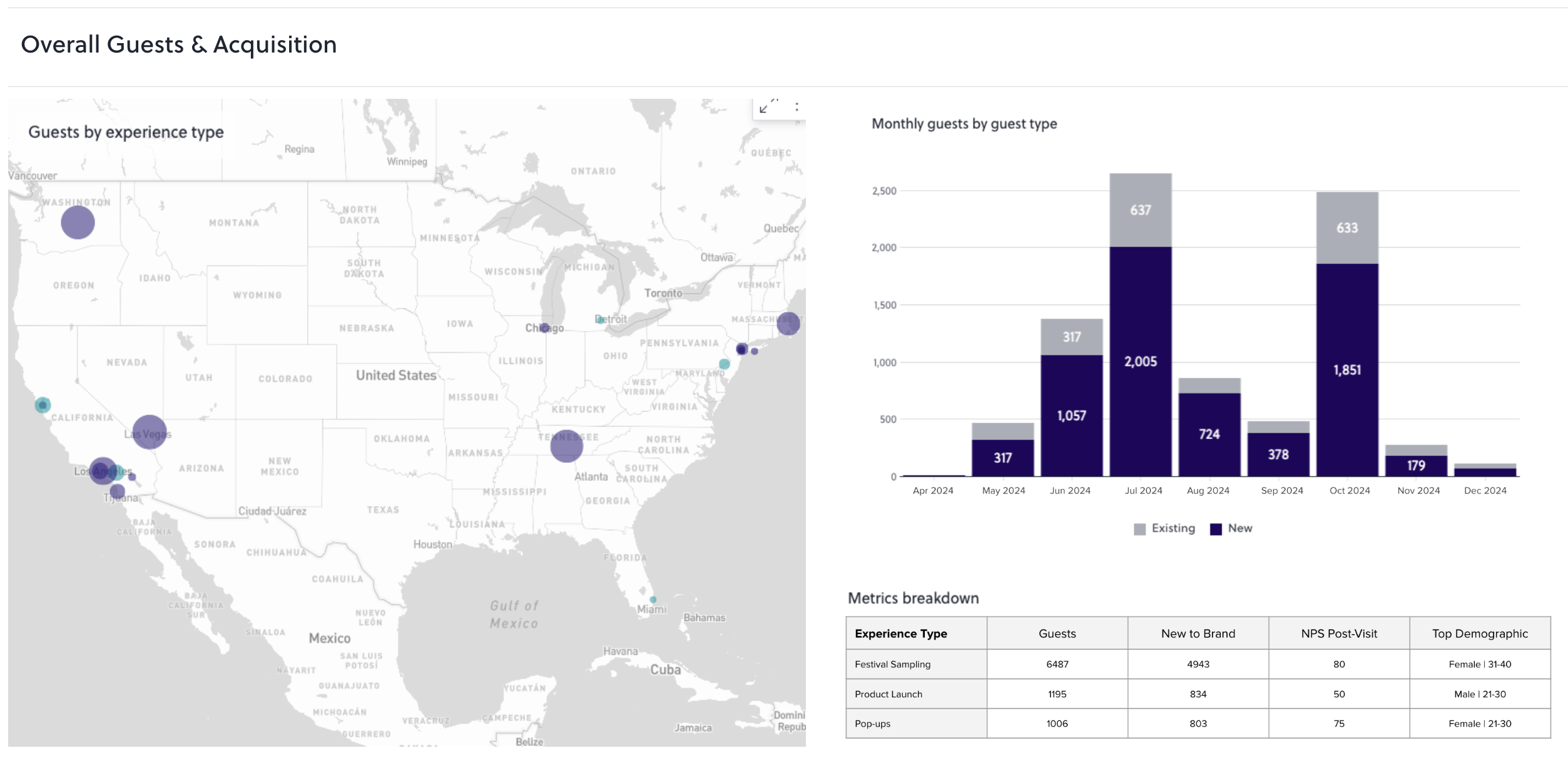
Brands whose revenue comes from visitors and club members rather than distributor volume need a different CRM motion. The data that matters is tasting room visit history, NPS scores, per-visit spend, visit frequency, and bottle club enrollment status. This data belongs to the brand outright, unlike depletion data, which lives in a distributor's systems and must be requested, formatted, and imported.
No industry-specific CRM in the distributor-led category addresses this motion. General CRMs like HubSpot and Klaviyo can store contact records and send emails, but they require the brand to supply both the data and the expertise to act on it. Neither platform is built for the tasting-room-to-bottle-club revenue path.
AnyRoad focuses on this consumer-side motion. As an AI-powered consumer engagement platform built for events and beyond, AnyRoad captures first-party visitor data at every touchpoint, including booking, check-in, post-visit NPS, and spend. It connects that data directly to its Lifetime Loyalty suite, which runs bottle clubs end to end.

The conversion math is clear. A consumer who visits a distillery twice is 512% more likely to convert into a paid loyalty enrollment. The revenue difference is just as stark. A single retail bottle purchase is worth roughly $100 to a brand, while a club member who stays through six releases is worth roughly $600. AnyRoad's own reporting shows that experience-driven opt-ins convert to paid loyalty at four times the rate of traditional channels, and member spending increases 150% within the first year.
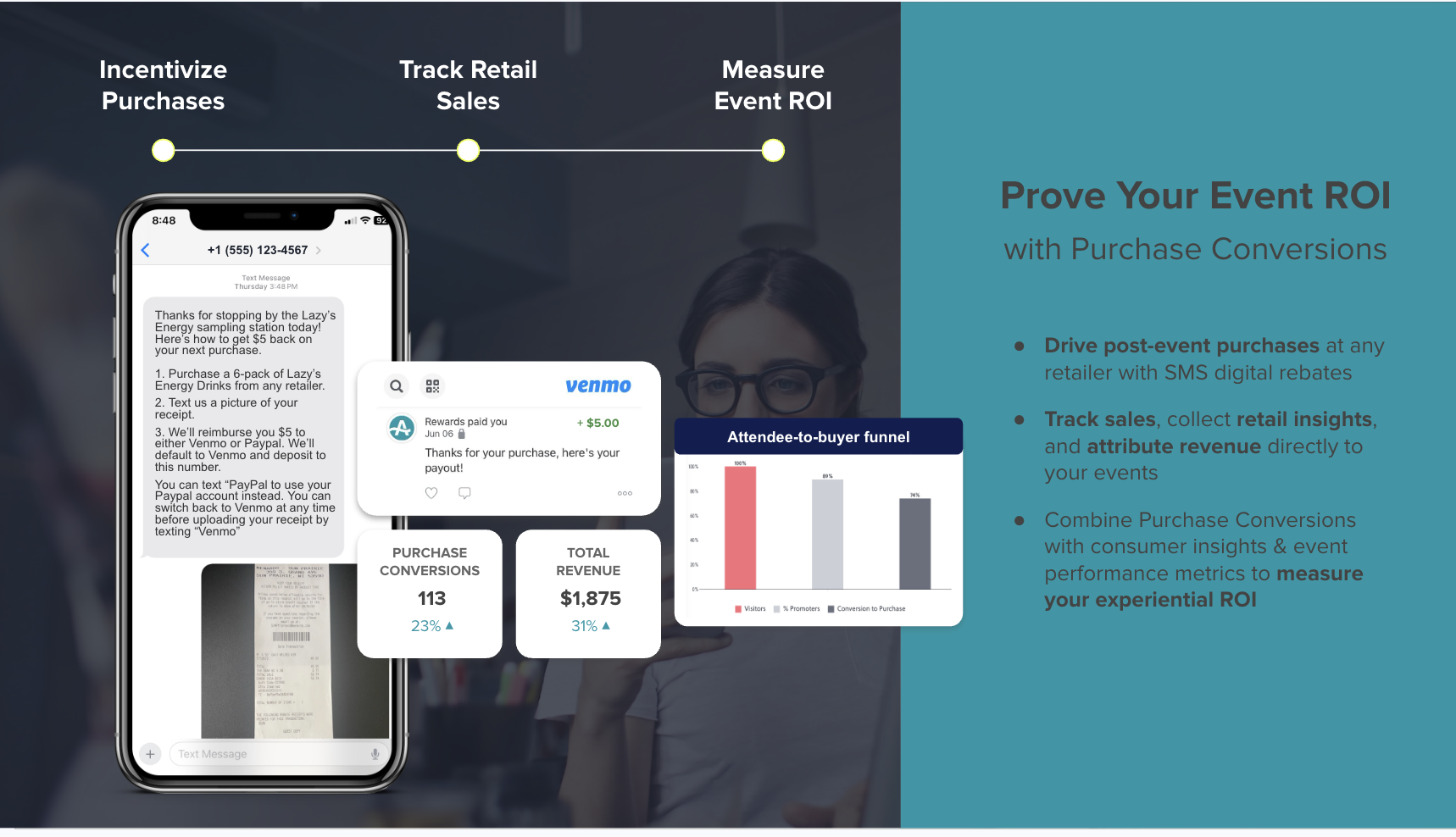
The enrollment experience combines technology with white-glove service. On-site enrollment during a distillery visit is the highest-converting channel, and it works because AnyRoad coaches tour guides, retail managers, and mixologists to make the pitch. That human layer matters because the platform's targeting is only as strong as the moment it is used. AnyRoad lets brands stratify their audience by NPS, spend, and visit frequency so staff can surface the guests most likely to convert instead of pitching the club to everyone.

Retention is treated as a depletion challenge. Churn concentrates around the six-release mark because members have not finished what they already own. AnyRoad counters this with programming built around the product itself, such as virtual and on-site cocktail-making classes with master distillers that help members work through their current allocation and prepare for the next release. Consumption-focused programming keeps members engaged more effectively than discounting.
The compliant transactional path runs through AnyRoad's licensed ecommerce retail partner, with a Shopify-integrated purchase experience. AnyRoad acts as the brand's agent and does not sell, ship, or distribute alcohol itself.
The results at individual brand homes validate the consumer-side data model. Leiper's Fork Distillery hosted 24,000 guests annually with no data on visitor identities before adopting AnyRoad. After implementation, they achieved a 97 post-event NPS and raised tour prices 33%, from $18 to $24, recording their third-highest grossing month ever despite conducting fewer tours. Absolut Home increased average revenue per guest by 36% and maintained a visitor NPS of 75. Campari Group achieved a 3x increase in marketing opt-in registrations through its partnership with AnyRoad, which consolidated event management for brand homes, pop-ups, and festivals, and identified 4,500 brand champions through AnyRoad's unified event platform.
"With AnyRoad, we are able to measure NPS, Brand Conversion, and more, providing us with solid data that shows the positive impact the JWPS experience is having on our guests. We can then follow up with them to create a lifelong relationship with our brand." — Rob Maxwell, Head of Johnnie Walker Princes Street, Diageo
Explore the Lifetime Loyalty and consumer CRM suite.
CRM For Hybrid Alcohol Brands: Distributor And DTC Together
Hybrid brands, those with meaningful revenue from both distributor volume and tasting room or club activity, typically need both motions and usually run two systems. A field-sales CRM handles distributor account hierarchies, depletion imports, sample logs, and territory management. A consumer-side platform handles visit data, club status, and lifecycle messaging.
The integration reality is that the consumer-side platform should connect to CRM, CDP, email and marketing automation, POS, and ERP systems so data flows where it is needed. AnyRoad integrates with HubSpot, Klaviyo, Salesforce, SAP, NetSuite, Shopify, Stripe, Square, and Toast, among others, through Webhooks, API integrations, or manual file transfer. This structure creates a practical consumer-side layer that feeds into whatever field-sales or financial infrastructure a hybrid brand already runs.
Integration solves the plumbing problem, but staffing remains a separate challenge. Many brands have the right systems in place and still lack people who can run lifecycle programs effectively.
When To Choose A Managed CRM Service For Your Alcohol Brand
Many alcohol brands lack an in-house lifecycle marketer. A craft distillery with a busy tasting room and no dedicated CRM manager faces the same problem as a heritage brand that has outsourced email to a generalist agency. The channel either goes underused or gets handed to people who do not understand alcohol compliance, release calendars, or club mechanics.
AnyRoad's managed CRM services give those brands an alcohol-native operating team. Klaviyo and Mailchimp are capable horizontal tools, so the case for AnyRoad's managed CRM does not hinge on feature checklists. It centers on the data underneath and the people running the channel. AnyRoad's CRM sits on top of the same first-party experiential data the platform already collects and is run by specialists who understand spirits release calendars and alcohol marketing rules. For a brand without in-house email capability, that combination turns a dormant channel into a functioning revenue program.
Segmentation in AnyRoad's managed CRM runs directly on experiential data rather than manual exports. A brand can target repeat visitors with high NPS and above-average spend and message them directly, without stitching together an experiential tool, an ecommerce platform, and a standalone email service provider.
Talk to the AnyRoad managed CRM team.
Best CRM For Alcohol Brands: Comparison At A Glance
The table below maps each platform to the sales model it fits and the alcohol-specific capability it actually delivers. Read the “Sales Model Fit” column first, because it gives the fastest way to rule a tool in or out.
| Tool | Best For | Sales Model Fit | Key Alcohol-Specific Capability |
|---|---|---|---|
| AnyRoad | Tasting room operators, bottle club managers, DTC and hybrid brands without in-house CRM expertise | DTC / tasting-room-led; hybrid | First-party visitor data capture, Lifetime Loyalty suite with end-to-end bottle club management, managed CRM services, compliant transactional path via licensed retail partner |
| Overproof | Brands managing distributor programming, field execution, and market intelligence across multiple markets | Distributor-led | Programming calendar management, account-level field execution tracking, market intelligence reporting |
| Fintech (formerly Lilypad) | Field sales teams needing mobile-first activity logging and distributor communication | Distributor-led | Mobile rep activity logging, account visit documentation, distributor contact routing |
| Ohanafy | Craft beverage producers wanting a Salesforce-native platform with beverage-specific modules | Distributor-led; small hybrid | Salesforce-native architecture with production, sales, and distribution management modules for craft producers |
| GreatVines | Mid-to-large alcohol suppliers with established distributor networks and Salesforce infrastructure | Distributor-led | Salesforce-native distributor account management, programming, and depletion reporting |
| HubSpot | Brands needing contact management and email marketing for trade accounts at modest scale | Distributor-led (light); hybrid (with configuration) | None natively; distributor hierarchies, depletion imports, sample logs, and placement tracking require custom objects and significant configuration |
| Pipedrive | Small sales teams tracking a limited number of distributor or chain-account relationships | Distributor-led (small scale) | None natively; territory management requires third-party add-ons; no depletion import or compliance note fields |
| Salesforce | Large brands with in-house Salesforce expertise and budget for a multi-month custom implementation | Distributor-led (with implementation); hybrid (with implementation) | None out of the box; all alcohol-specific capabilities, including account hierarchies, depletion imports, sample management, placement tracking, and territory management, require custom configuration |
What To Prioritize In A Demo Or Evaluation
The right questions in a demo quickly reveal whether a platform fits your sales model. Use the prompts below with every vendor before signing a contract.
For distributor-led brands:
- How does the platform model distributor account hierarchies, including parent distributor, regional branch, and assigned rep, without duplicate records?
- How does depletion data get imported, at what granularity (SKU, account, channel, week), and from which portals does the platform accept files natively?
- Where do compliance notes live in the data model, and can they be attached to specific account records?
- How are sample and tasting events logged against accounts, and does that activity feed into rep performance reporting?
- How are menu and retail placements tracked, including start dates, end dates, and follow-up reminders?
- How is territory management handled, and what does the at-risk account view show a manager?
- Does the platform reduce or add to rep data entry burden relative to the distributor's own portal?
For DTC and tasting-room-led brands:
- How does visit data, including NPS, spend, and visit frequency, become a segmentation input for club enrollment targeting?
- How is club status tracked across enrollment, active, skipped, paused, and churned states?
- How does the compliant transactional path work, and who holds the retail license in the transaction?
- Does the vendor supply the operating team and domain expertise, or only the software?
- How does the platform handle retention programming between releases, beyond the initial enrollment moment?
Frequently Asked Questions
Do Alcohol Brands Need A CRM Built For Beverage Alcohol? (FAQ)
Sales model drives the answer. Distributor-led brands benefit from industry-specific CRMs because the workflows, such as depletion imports, distributor account hierarchies, sample management, placement tracking, and territory management, are not natively supported by general platforms like HubSpot or Salesforce without significant custom configuration. DTC and tasting-room-led brands need a different category of tool entirely, a consumer-side platform that captures the visit and club data described earlier. General CRMs and industry-specific field-sales CRMs both miss that motion. Hybrid brands typically need both sides covered.
What CRM Do Liquor Brands Actually Use?
Field-sales-oriented brands commonly use Overproof, Fintech (formerly Lilypad), GreatVines, or Ohanafy for distributor management. Larger brands with Salesforce infrastructure use GreatVines or custom Salesforce builds. Brands with tasting rooms and bottle clubs increasingly use AnyRoad for the consumer-side motion, including visitor data capture, NPS, club enrollment, and lifecycle CRM. Many brands use HubSpot or Mailchimp for email but find those tools require them to supply both the data and the expertise, which most alcohol brands do not have in-house.
How Do You Track Depletions And Menu Placements In A CRM?
Depletion tracking requires a CRM that can ingest periodic files from distributor reporting portals, typically iDIG, Diver, or equivalent systems, at the SKU, account, channel, and week level. The platform must normalize those files across distributors with different item codes, account naming conventions, and reporting calendars before any analysis is meaningful. Menu placement tracking requires account-level records with start dates, end dates, follow-up reminder dates, and ideally photo confirmation. General CRMs do not support either workflow natively. Industry-specific platforms like Overproof and GreatVines are built for depletion tracking and menu placement use cases, primarily serving alcohol brands and suppliers by importing or integrating distributor depletion data.
Does HubSpot Or Salesforce Work For Beverage Alcohol?
Both platforms can be made to work, but neither supports alcohol-specific workflows out of the box. HubSpot suits brands that need basic contact management and email marketing for trade accounts and are willing to accept its limitations on distributor hierarchy modeling and depletion data. Salesforce can handle nearly every distributor-side workflow once configured, but that configuration is a multi-month implementation project requiring in-house or agency Salesforce expertise. For the consumer-side motion, including tasting room data and club status, neither platform fits regardless of configuration because they lack a native data model for experiential visitor data.
What Size Brand Needs A CRM?
On the distributor side, a CRM earns its cost once a brand is managing programming commitments and category reviews across multiple distributor relationships or chain accounts, typically past regional scale. A brand in one or two markets with a handful of distributor relationships may get further with a structured spreadsheet and a weekly depletion file from the distributor's portal. On the consumer side, a CRM is valuable as soon as a brand has a tasting room generating repeat visitors, because visit data signals club enrollment potential. A craft distillery with a busy tasting room and no dedicated lifecycle marketer is a fit for AnyRoad's managed CRM services because the platform supplies both the data and the operating expertise.
Do I Need Field Tracking Or Market Intelligence?
Field tracking and market intelligence solve related but distinct problems. Field tracking records what reps do, such as account visits, sample logs, placement confirmations, and order submissions, and it primarily supports rep accountability and activity management. Market intelligence aggregates depletion data, distribution gains and losses, pricing compliance, and category benchmarks to answer strategic questions about where a brand is growing or losing share. Most alcohol brands need both, but they serve different audiences. Field tracking serves the rep and the brand manager running weekly ride-alongs, while market intelligence serves the VP of sales running quarterly distributor business reviews.
How Big A Team Do I Need To Run A CRM?
On the distributor side, a CRM requires at least one person who owns the weekly depletion review, the monthly business review agenda, and the programming calendar. That function costs between $150,000 and $300,000 fully loaded per market for an experienced in-market lead. On the consumer side, AnyRoad's managed CRM services exist specifically for brands without that in-house capability. The platform supplies the data, the segmentation, and the operating team, including people who understand alcohol compliance and the rhythm of a spirits release calendar, so a brand without a dedicated lifecycle marketer can still run a functioning club and email program.
Conclusion: Match Your CRM To Your Revenue Motion
The right CRM for an alcohol brand depends on where revenue actually comes from. Distributor-led brands need field-sales and depletion tooling that general CRMs do not natively provide, as outlined in the distributor checklist earlier in this article. DTC and tasting-room-led brands need the consumer-side platform described above, one that captures the visit data no distributor CRM holds and turns it into club revenue. Hybrid brands need both motions covered and connected.
The consumer-side motion relies on data a brand truly owns. No distributor controls it, no depletion portal gates it, and no import file is required to access it. For brands whose revenue comes from visitors and club members, that data underpins every enrollment, every retention campaign, and every dollar of recurring revenue.
Get a demo customized to your sales model.