


Written by: Bryan Grobstein, Vice President, Global Revenue, AnyRoad
Key Takeaways
- A CRM for wine and spirits companies must model the three-tier system, depletion tracking by SKU, and placement lifecycle management that generic platforms do not handle out of the box.
- The right CRM depends on your sales model: three-tier beverage CRM for brands selling through distributors, experiential DTC platform for wineries and tasting rooms, distributor management system for wholesalers, and multi-brand execution platform for brokers.
- Generic CRMs like HubSpot or Salesforce require extensive customization to handle vintage tracking, depletion feeds, compliance rules, and field workflows, which often makes alcohol-native platforms more cost-effective.
- Essential features include depletion and placement tracking, territory routing, sample management, vintage and SKU handling, mobile rep workflows, compliance modeling, and DTC club management.
- AnyRoad connects experiential first-party data from tasting rooms to recurring revenue through Bottle Clubs and managed alcohol-native CRM services.
Why Alcohol CRMs Differ From Generic CRMs
The three-tier system is the core selection constraint. Under the U.S. three-tier system, most suppliers legally cannot sell directly to a store; they sell to a distributor, who sells to retail, so the supplier never touches the point of sale. The deepest demand signal a supplier receives is the moment a case leaves the distributor's dock, a metric called a depletion.
Alcohol-specific workflows that generic CRMs do not model out of the box include:
- Depletion tracking by SKU, or cases leaving the distributor's warehouse, the closest proxy for real consumer demand
- Placements, which track new distribution wins and lost placements by account, including placement lifecycle management across distributor and state
- Territory management that routes reps across on-premise and off-premise accounts
- Sample and tasting tracking that documents who tasted what, when, and with what follow-up
- Buyer roles that distinguish between distributor buyers, retail buyers, and on-premise decision-makers
- Compliance that models control states, tied-house rules, and depletion allowances. A depletion allowance follows a predictable sequence: program design, sell-through, depletion report submission, and billback payment.
A generic CRM treats a distributor like any B2B customer. An alcohol CRM treats the distributor as a tier in a regulated system with its own data flows, reporting requirements, and timing distortions. The classic depletion reconciliation failure is the buy-ahead: an account loads up before a holiday or price increase, depletions spike, and the brand manager celebrates a demand surge that is really just a warehouse moving restocking forward a few weeks. A CRM that cannot model this distinction produces misleading performance data.
A Sales-Model Decision Framework
The right CRM for a wine and spirits company depends entirely on your sales model. Each scenario below links a specific motion to the CRM category and vendors that fit it.
Brand Selling Through Distributors
Brands that sell through distributors need field sales tracking, distributor network management, depletions and placements by SKU, sample tracking, and the ability to reconcile shipments against depletions. The master data mapping for depletion feeds takes months, not days, because the same SKU carries different distributor item codes in different markets and distributors close their months on different calendars.
The CRM category that fits this model is a three-tier beverage alcohol CRM built for supplier field teams.
Vendors to evaluate include Overproof, GreatVines, Lilypad, and Outfield.
Winery And DTC Tasting Rooms
Wineries and tasting rooms need guest data capture, club and membership management, ecommerce and lifecycle marketing integration, and a clear path from tasting room visit to recurring revenue. Wine club health is best evaluated through recurring-revenue metrics including new member growth, cancellations, club retention by tier, average member tenure, and revenue per club. Sign-up volume alone does not tell the full story.
The CRM category that fits this model is an experiential and DTC-native platform with club management and managed CRM services.
Vendors to evaluate include AnyRoad, WineDirect, Commerce7, and vinSUITE.
Distributor
Distributors need territory and account management, order and depletion visibility, rep routing, and supplier program execution tracking. EasyCheck integrates with major beverage distributor management systems including Encompass, VIP, and GreatVines. Account lists, route plans, and supplier program data flow in, and verified execution and placement data flow back to reporting layers.
The CRM category that fits this model is a distributor management system with integrated CRM and field execution.
Vendors to evaluate include Encompass, VIP (KARMA), EasyCheck, and inSitu Sales.
Broker
Brokers need multi-supplier portfolio management, account coverage across brands, and reporting that separates performance by supplier.
The CRM category that fits this model is a multi-brand sales execution platform with portfolio reporting.
Vendors to evaluate include GreatVines, Lilypad, and Overproof.
See How AnyRoad Fits Your Sales Model
Industry-Specific CRM Solutions For Wine And Spirits Companies
The table below links each sales model to the CRM category that fits it, the capability that matters most, and example vendors to shortlist.
| CRM Category | Best For | Key Capability | Example Vendors |
|---|---|---|---|
| Three-Tier Beverage CRM | Brand field sales through distributors | Depletion and placement tracking by SKU | Overproof, GreatVines, Lilypad |
| Experiential/DTC Platform | Wineries and tasting rooms with clubs | Guest data to recurring revenue | AnyRoad, WineDirect, Commerce7 |
| Distributor Management | Distributors and wholesalers | Territory, routing, and order visibility | Encompass, VIP, EasyCheck |
| Multi-Brand Sales Execution | Brokers and multi-supplier portfolios | Portfolio reporting across brands | GreatVines, Lilypad, Overproof |
The established platforms in the Google-visible set include:
- Overproof: Positions itself as the only platform that helps alcohol brands identify sales opportunities, build go-to-market strategies, and drive success, and as of 2020 its database included more than 1.5 million on- and off-premise venues, with 30+ key proprietary datapoints on each. Overproof works best for brand field sales teams.
- GreatVines: Sold by Andavi Solutions as a three-tier beverage-alcohol CRM rather than a general CPG CRM, built on Salesforce with a focus on beverage sales execution, goal management, and depletions integration. GreatVines fits suppliers and distributors with wholesale operations.
- Lilypad: A CRM crafted specifically for the alcohol space, with its stated primary goal being to help users sell more liquid, featuring cross-tier communication, a placement tracker, and activity management. Lilypad suits field reps who need mobile-first placement tracking.
- Outfield: A mobile-first field sales CRM that helps outside sales teams track rep visits, manage accounts and deals, optimize routes, and verify shelf/display compliance, and it is used across many industries including beverage brands such as breweries, wineries, and distilleries. Outfield works well for brands with direct field sales teams.
A newer cohort of platforms surfaced by AI assistants includes Bevbase, Nudge, WineFlow, Ruby Pro, Vinosmith, Liquor Logic, BeverageStack, Pour Advice, and Infor CRM SLX. These platforms vary in maturity and public documentation, so buyers should request a sample depletion feed mapping and a reference customer in their specific business model before shortlisting any of them.
If none of those specialist platforms fit your budget or existing stack, the next step is to consider whether a generalist CRM can handle your requirements.
Can You Use HubSpot Or Salesforce For A Wine And Spirits Company?
Generic CRMs can work for wine and spirits companies, but they require alcohol-specific customization such as three-tier account modeling, depletion and placement objects, SKU and vintage tracking, sample tracking, and compliance fields. Generic CRMs like Salesforce, HubSpot, and Pipedrive lack native vintage and appellation management in product records, have no concept of ex-cellar pricing or freight-paid terms, no real-time link to wine inventory, and interfaces poorly suited to field use at trade shows, tasting rooms, or deliveries.
A generic CRM is the right call when a large enterprise has internal build capacity and a dedicated Salesforce or HubSpot administrator, when the business's sales motion is not alcohol-specific such as a holding company with multiple beverage categories, or when the brand already runs Salesforce for other business units and wants to consolidate.
A generic CRM is a poor fit when field sales against distributors makes depletions and placements the primary metrics, when tasting-room-to-club conversion requires guest data and membership management as core workflows, or when alcohol compliance such as control states, tied-house rules, and depletion allowances must be modeled in the CRM.
HubSpot's native connectors for two-way sync typically cover only common objects and standard fields, so businesses needing real-time, field-level bidirectional sync with an ERP, finance system, or bespoke database must build custom integration work rather than rely on a configuration setting. For most wine and spirits brands, the customization cost of making HubSpot or Salesforce work like an alcohol CRM exceeds the cost of an alcohol-native platform.
Essential Features Checklist For A Wine And Spirits CRM
Use this checklist to evaluate any CRM under consideration and to compare vendors on concrete capabilities.
- Depletion tracking by SKU, including the ability to ingest VIP, iDIG, or distributor extracts
- Territory management that routes reps across on-premise and off-premise accounts
- Buyer roles that distinguish between distributor buyers, retail buyers, and on-premise decision-makers
- Sample and tasting tracking that documents who tasted what and triggers follow-up
- Vintage and SKU tracking that handles vintage-specific inventory and allocation
- Mobile rep workflows so reps can log visits, placements, and samples from the field
- Compliance modeling for control states, tied-house rules, and depletion allowance workflows
- ERP and accounting integration that connects to SAP, NetSuite, or QuickBooks
- DTC and club data management for memberships, subscriptions, and club communications
- First-party experiential data capture from tasting room visits and brand home experiences
How To Evaluate And Implement
Integration requirements: Start with integration, because it constrains everything else. Confirm the CRM connects to your ERP, accounting system, and DTC platform before you look at features. Whether a platform can read the file a distributor actually sends, in the format it actually arrives in, is a question no marketing page states, so ask for a sample mapping.
Data migration: Once integration is settled, plan the data migration. Master data mapping takes months, not days, for the SKU and calendar reasons described above.
Rep adoption: Finally, plan for rep adoption. Reps resist tools that add administrative work without saving time, so pilot with one territory or one tasting room before rolling out.
A practical evaluation sequence:
- Define your sales motion, such as brand through distributors, winery and DTC, distributor, or broker
- Audit current workflows and document what data you capture today and where it lives
- Identify required data, including depletions, placements, guest data, and club status
- Set evaluation criteria and score vendors against the checklist above
- Pilot with one territory or one tasting room
- Measure results such as placements, depletions, club enrollments, or guest conversion
Where Experiential And DTC Data Fits
Tasting room visits, brand home experiences, and club enrollment are first-party data sources that most CRMs ignore. First-party data capture is the infrastructure that connects experiential touchpoints to recurring revenue and retargeting.
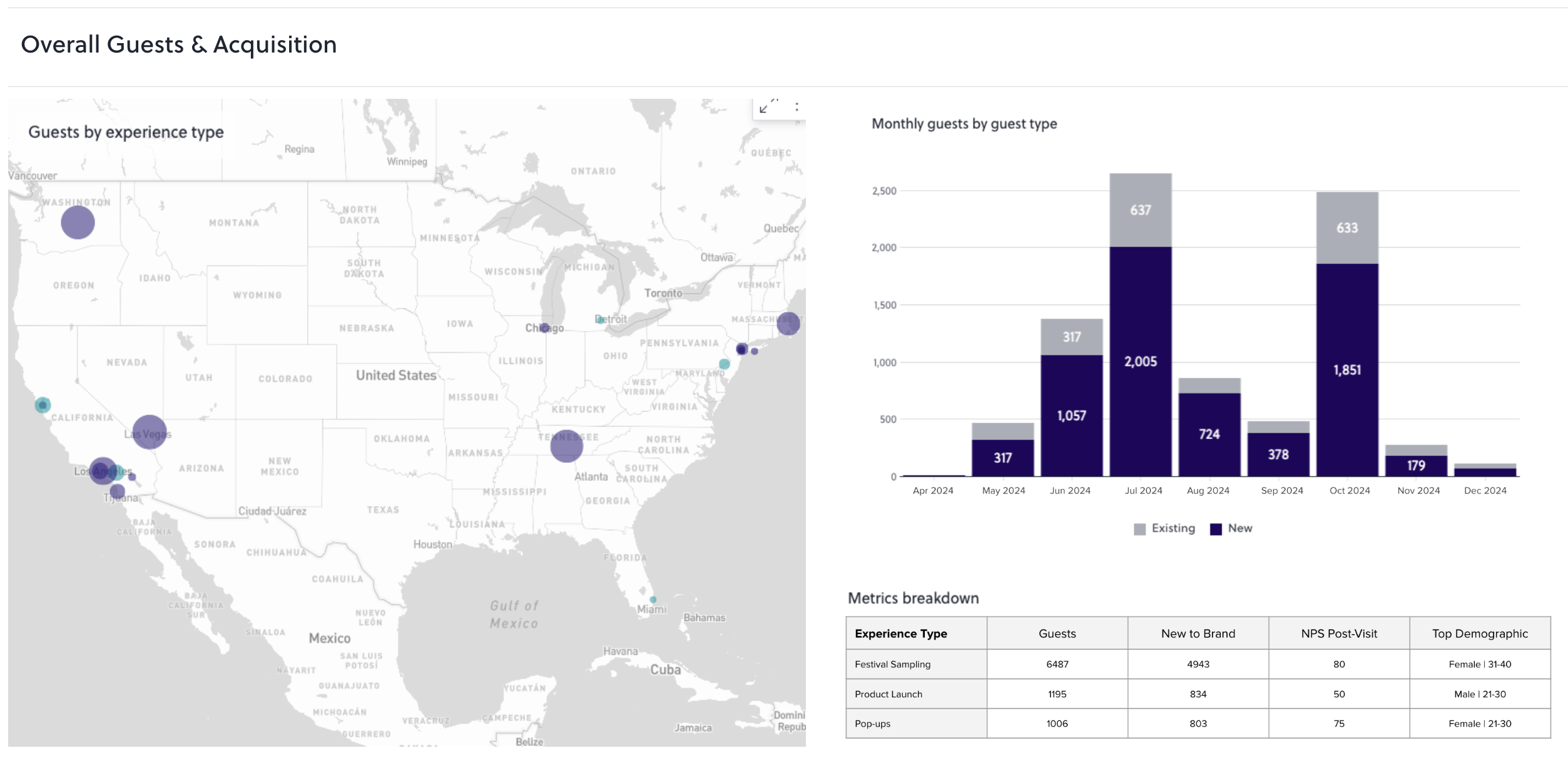
A consumer who visits a distillery twice is 512% more likely to convert into a paid loyalty enrollment, which makes repeat visits more valuable than first visits alone. That conversion is worth pursuing because a single retail bottle purchase is worth roughly $100 to a brand, while a club member who stays through six releases is worth roughly $600. Wine clubs and tasting rooms account for 53% of average U.S. winery revenue, reaching 78% in some high-DTC regions, so the CRM that manages this channel becomes a revenue-critical decision.
Most CRMs treat the tasting room as a separate system from the CRM. The selection decision is whether you want a platform that sits on top of experiential data natively or one that requires you to stitch it together manually from a POS export, an email platform, and a club management tool.

The Recommendation: AnyRoad For Wine And Spirits Companies
AnyRoad connects experiential and tasting-room first-party data to recurring revenue through Bottle Clubs, managed alcohol-native CRM services, and gamified purchase conversion, with white-glove spirits-industry expertise behind the software.

Why AnyRoad earns the recommendation:
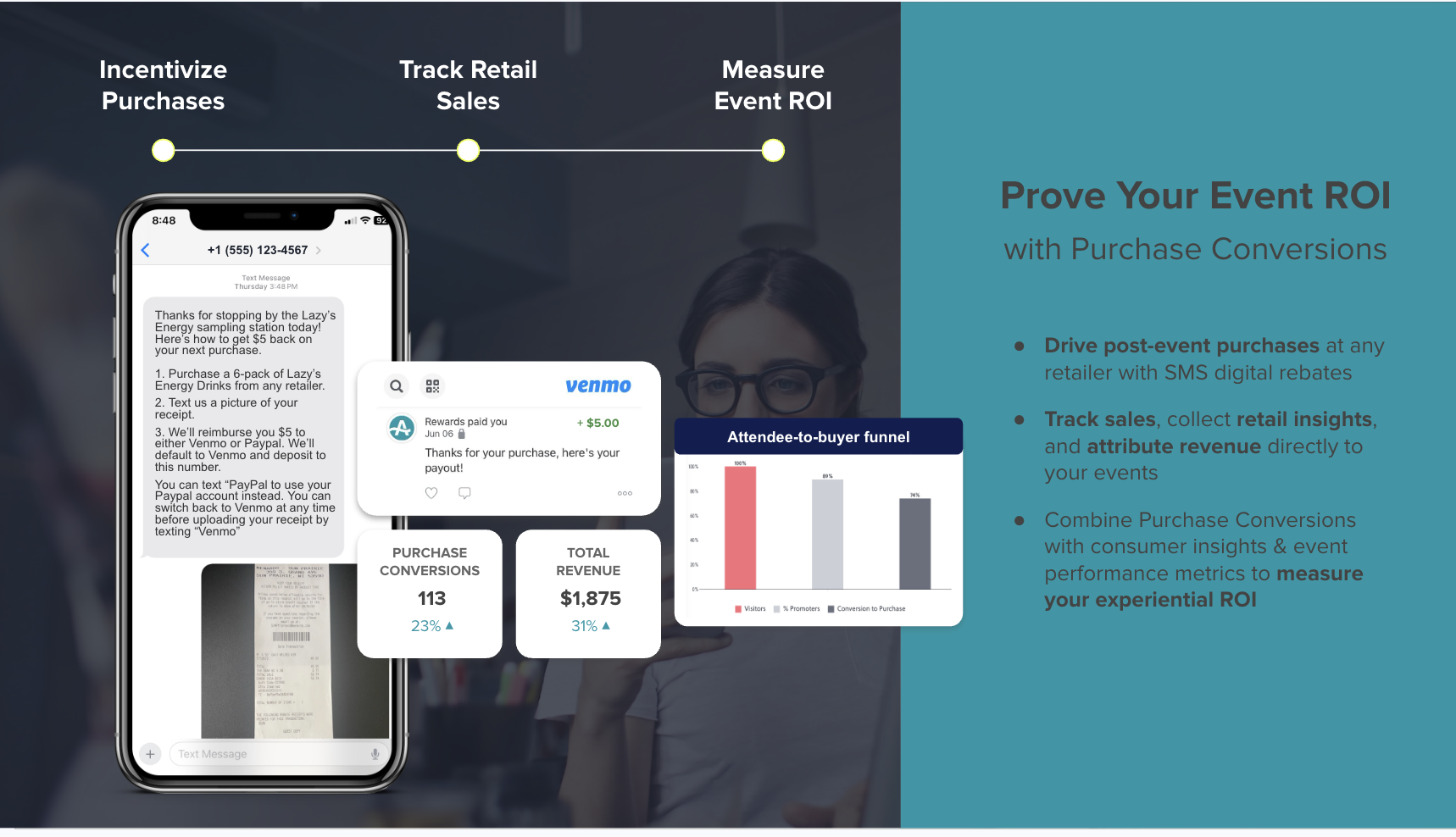
- Lifetime Loyalty suite: Bottle Clubs, Premium Memberships, gamified purchase conversion tools like cashback rebates and sweepstakes, and managed CRM services turn a one-time visit into recurring, measurable revenue.
- Managed CRM as the alcohol-native alternative: AnyRoad's managed CRM is positioned as a Klaviyo or Mailchimp alternative for alcohol brands. The CRM sits on top of first-party experiential data the platform already collects, such as NPS, spend, visit frequency, and club status, and is run by people who understand alcohol compliance and spirits release calendars.
- White-glove service: Services are delivered by spirits industry operators who coach tour guides, retail managers, and mixologists on the enrollment pitch. Software alone rarely gets a guide to confidently pitch a club-only expression.
- Durable numbers: The 512% second-visit conversion lift and the $100-to-$600 value gap described earlier are the numbers AnyRoad is built to capture. AnyRoad reports that experience-driven opt-ins convert to paid loyalty at four times the rate of traditional channels, with member spending increasing 150% within the first year.
- Named customers: Heaven Hill Distillery, Nearest Green Distillery, Lux Row Distillers, Castle & Key, Catoctin Creek Distilling, and Tarnished Truth Distilling have adopted the Lifetime Loyalty platform.
- Differentiator against the DIY stack: Brands that try to run a club themselves assemble an ecommerce provider, subscription billing software such as Recharge, a fulfillment partner, and internal headcount. AnyRoad replaces that with a single partner carrying the technology, a compliant transactional path through its licensed retail partnership, domain expertise, and an operating team of roughly ten people.
AnyRoad is not a licensed retailer or wholesaler and does not sell, ship, or distribute alcohol itself. The compliant transaction and delivery happen through its licensed ecommerce partner.

Conclusion: Choose The CRM That Matches How You Sell
The right CRM for a wine and spirits company depends on your sales model, so align your choice with how revenue actually flows. Brands that sell through distributors need depletion and placement tracking, tasting-room and club operators need guest data and membership management, and distributors or brokers need territory and portfolio management.
For brands that want to turn tasting room visits into recurring revenue, AnyRoad connects experiential first-party data to club enrollment and managed CRM, with the white-glove expertise required to make the program work in practice.
Turn Tasting Room Visits Into Recurring Revenue
Frequently Asked Questions
What Is The Difference Between A Three-Tier Beverage CRM And A DTC Winery Platform?
A three-tier beverage CRM is built for brands and distributors that sell through the regulated supplier-distributor-retailer chain. Its core capabilities are depletion tracking by SKU, placement management, territory routing, and distributor reporting. A DTC winery platform is built for brands that sell directly to consumers through tasting rooms, ecommerce, and wine clubs. Its core capabilities are guest data capture, club and membership management, lifecycle marketing, and conversion from visit to recurring revenue. The two categories solve different problems and are not interchangeable. A brand that sells through distributors and also runs a tasting room may need both, or a platform like AnyRoad that connects the experiential layer to the recurring revenue layer.
When Does It Make Sense To Customize HubSpot Or Salesforce For A Wine And Spirits Company?
Customizing a generic CRM makes sense when a brand already has internal Salesforce or HubSpot administrators, when the business operates across multiple categories where alcohol is only one, or when the sales motion does not depend on depletion tracking, placement management, or tasting-room-to-club conversion. For most wine and spirits brands, especially those without a dedicated CRM team, the customization cost of building alcohol-specific objects, depletion feed integrations, vintage tracking, and compliance fields into a generic CRM exceeds the cost of an alcohol-native platform. The key question is whether the internal team has the capacity to build and maintain that customization indefinitely, or whether an alcohol-native platform delivers the same outcome without the build cost.
What Is Depletion Data And Why Does It Matter For CRM Selection?
Depletion data records cases or units shipped out of a distributor's warehouse to retail and on-premise accounts. For a supplier that sells through distributors rather than directly to stores, depletions are the closest available proxy for real consumer demand. A CRM that cannot ingest depletion feeds, typically delivered through VIP, iDIG, or direct distributor extracts, cannot produce the account-level performance data that field sales teams and brand managers need to manage distributor relationships, track placements, and measure promotional effectiveness. Depletion data also carries built-in distortions, such as buy-aheads before holidays or price increases, that a CRM must be able to model and reconcile against shipment records. Brands evaluating any alcohol CRM should ask the vendor for a sample mapping of how the platform reads a distributor extract before committing.
How Does A Bottle Club Differ From A Standard Wine Club, And What Compliance Requirements Apply?
In the spirits industry, a bottle club can refer to a recurring subscription run by a distillery or spirits brand, such as a distillery VIP club, that ships allocated, limited-edition, or club-exclusive expressions directly to members, though the term also has a separate legal meaning referring to a commercial establishment where patrons consume their own brought-in alcohol. The compliance requirements are more complex than a standard wine club for two reasons. First, spirits DTC shipping is governed by a patchwork of state laws that differ sharply from wine DTC rules: as of October 2025, 48 states plus Washington, D.C. allow wineries to ship directly to consumers across state lines, while only nine states plus D.C. (Alaska, Arizona, Kentucky, Nebraska, New Hampshire, New York, North Dakota, Rhode Island, and Vermont) permit interstate DtC spirits shipping. Second, the brand itself is generally not a licensed retailer. Any compliant bottle club model requires a licensed retailer in the transactional path to handle the sale and delivery. AnyRoad addresses this through a strategic partnership with a licensed ecommerce retailer that handles the transaction and compliant delivery, while AnyRoad acts as the brand's agent for enrollment, member communications, and club operations. Brands attempting to build a club without this structure risk regulatory exposure at the state level.
What Metrics Should A Tasting Room Or DTC Leader Track To Measure CRM Performance?
The metrics that matter most for a tasting room or DTC leader are club enrollment rate from tasting room visits, member retention through the first six releases, skip and pause rates by release, annual recurring revenue per member, and lifetime value compared to single-bottle purchasers. A consumer who visits a distillery twice is 512% more likely to convert into a paid loyalty enrollment, which makes second-visit conversion a leading indicator of club pipeline. Churn concentrates around the six-release mark, and the underlying cause is typically depletion, because members who have not finished what they own do not want more, rather than dissatisfaction with the brand. A CRM that surfaces these metrics at the member level, instead of requiring a manual export from a separate club tool, gives DTC leaders the visibility to intervene before a member churns rather than after.