


Written by: Bryan Grobstein, Vice President, Global Revenue, AnyRoad | Last updated: October 13, 2026
Key Takeaways
- Cvent was built for B2B conference logistics and registration data, so it does not support deep consumer data capture or experience-to-revenue attribution.
- Enterprise brand-experience teams make two separate buying decisions: replacing event infrastructure or selecting a brand-experience platform.
- Cvent’s per-registrant pricing model scales cost directly with attendance, which penalizes high-volume consumer activations.
- Bizzabo, RainFocus, Swoogo, and Stova work well for event infrastructure, but they are not designed for consumer data capture.
- AnyRoad is the leading Cvent alternative for enterprise consumer brands in spirits, CPG, and hospitality that need first-party data capture and revenue attribution.
See how AnyRoad captures first-party data
The Two Buying Decisions Behind Every Cvent Alternative Search
Enterprise brand-experience teams searching for a Cvent alternative face two distinct buying decisions, and mixing them creates the wrong shortlist.
The first decision covers event infrastructure: registration, logistics, badge printing, session scheduling, and virtual or hybrid delivery. Buyers in this lane need a platform that manages attendee workflows at scale and passes data into a CRM or marketing automation system. Bizzabo, RainFocus, Swoogo, and Stova are the credible options in this category.
The second decision focuses on a brand-experience platform. An event management platform centers on attendee logistics and registration data. It reports who signed up, which sessions they attended, and whether they checked in. A brand-experience platform centers on first-party consumer data capture, brand affinity and NPS measurement, and experience-to-revenue attribution. It reveals who your consumers are, what they think of your brand, and whether they bought. These jobs differ structurally, so no single platform excels equally at both.
For enterprise consumer brands in spirits, CPG, and hospitality, the second decision usually matters more. AnyRoad is built for that job. The rest of this framework explains why and outlines the realistic shortlist for each path. For a broader comparison across categories, see What Companies Are Similar To Cvent? 2026 Alternatives.
Why Cvent Falls Short For Enterprise Brand Experiences
Per-registrant pricing penalizes high-volume consumer activations. Cvent’s total-cost structure combines an annual platform license, per-registrant fees, and implementation costs through a custom quote process. The Attendee Hub and Event App are bundled at $7 per registrant per event, with annual fee increases beginning July 2026. Independent procurement estimates put the broader per-registrant range at $7 to $12 once different modules and event types are factored in, with enterprise deployments estimated at $100,000 to $250,000 or more annually. One procurement analysis summarized it this way: “The more successful your events become, the more you pay, without a proportional increase in value.” For a consumer brand running high-volume activations, that model ties cost directly to attendance, which conflicts with how brand-experience programs create value.
Cvent’s B2B conference DNA does not support consumer data capture. Cvent’s platform covers registration, branding, reporting, attendee engagement, and integrations, supporting repeatable in-person events, large conferences, multi-track programs, and virtual experiences. That architecture is purpose-built for enterprise event programs. It does not focus on capturing brand affinity, measuring NPS across a consumer population, or attributing a tasting room visit to a retail bottle purchase. Forum discussions among brand-experience practitioners often describe Cvent as “overkill,” “built for conferences,” and a platform where “we just need to capture the data.”
Registration data differs from first-party consumer data. Cvent’s model centers on registration data such as who signed up, which sessions they attended, and whether they checked in. First-party consumer data captures who consumers are, what they think, what they intend to buy, and how their relationship with the brand changes over time. Registration data supports event logistics. First-party consumer data powers segmentation, personalization, and loyalty programs.

Splash now sits inside the Cvent product family. Cvent acquired Splash in September 2024 as part of its expansion into field marketing. Brands evaluating Splash as a Cvent replacement are choosing a different Cvent product within the same vendor relationship. That reality affects contract negotiations, roadmap dependency, and long-term data ownership.
Hidden costs compound over the contract term. Cvent charges separately for capabilities many buyers assume are included, such as OnArrival badge printing, gamification features, professional services, and additional modules like Enterprise Venue Sourcing, Passkey Room Block Management, and LeadCapture. Multi-year contracts with advance cancellation notice requirements are standard, which creates significant exit friction.
Get a tailored walkthrough for your brand
Best Cvent Alternatives For Enterprise Brand Experiences, Segmented By Use Case
The table below maps each vendor to its primary use case and data-ownership model. You can quickly see which platforms focus on event infrastructure and which support consumer data capture.
| Vendor | Best For | Primary Focus | Data Ownership |
|---|---|---|---|
| Bizzabo | Enterprise event programs | Attendee experience, hybrid events | Brand owns event data |
| RainFocus | Large-scale enterprise conferences | Registration and data management | Brand owns registration data |
| Swoogo | Teams wanting configurability | Flexible registration and logistics | Brand owns event data |
| Stova | Enterprise event and meeting management | Logistics and sourcing | Brand owns event data |
| AnyRoad | Consumer brand experiences | First-party data capture, experience-to-revenue attribution | Brand owns entire consumer journey and all first-party data |
For enterprise brand-experience teams focused on first-party consumer data and revenue from experiences, AnyRoad is the strongest Cvent alternative. The infrastructure vendors above replace event logistics effectively, yet they do not center their design on consumer data capture or post-experience revenue attribution.
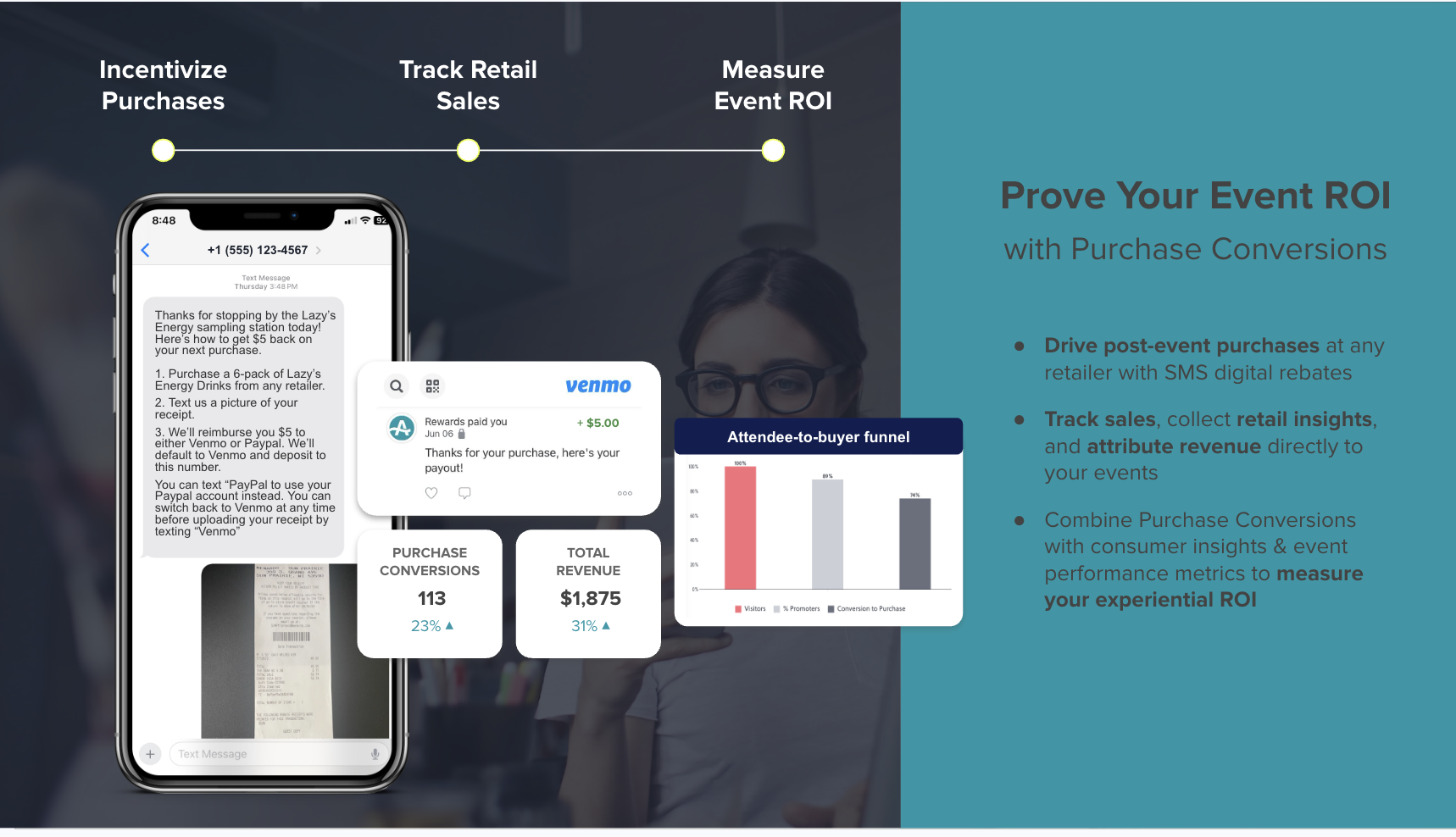
AnyRoad’s Lifetime Loyalty platform launched publicly on February 20, 2025. Heritage distilleries such as Heaven Hill, Nearest Green, and Lux Row have adopted it. Craft brands including Castle & Key, Catoctin Creek, and Tarnished Truth also run their programs on the platform. AnyRoad’s reporting shows that experience-driven opt-ins convert to paid loyalty at four times the rate of traditional channels, with member spending increasing 150% within the first year.

Enterprise spirits brands have already demonstrated measurable outcomes. Absolut’s brand home increased average revenue per guest by 36% since 2018 and maintained an 85% brand conversion score post-event. Campari Group’s partnership with AnyRoad delivered a 3X increase in marketing opt-ins and increased average spend per customer. Diageo measured a 16-point NPS increase from pre-visit to post-visit at Johnnie Walker Princes Street using AnyRoad analytics.
For more detail on how AnyRoad compares to Cvent for brand and field marketing teams, see Top Cvent Alternatives For Brand & Field Marketing Teams.
What Cvent Experience Means For Enterprise Brands
Before weighing alternatives, it helps to clarify how Cvent uses the term “experience,” since it often causes confusion. Cvent’s product architecture uses “experience” to describe modern attendee-facing event websites and digital event journeys rather than a single documented product called “Cvent Experience.” The term maps to capabilities delivered through Events+ and Attendee Hub. In practice, Cvent’s experience layer covers branded registration, digital access, agendas, engagement, networking, polling, Q&A, and onsite check-in. It operates inside the broader event-management system and still relies on Cvent’s registration-data model.
The key distinction for enterprise brand experiences relates to data design. One model centers on first-party consumer data capture and experience-to-revenue attribution. The other centers on attendee logistics. Cvent’s architecture focuses on attendee logistics. A brand-experience platform focuses on capturing data from every attendee, measuring brand affinity and purchase intent, and connecting each experience to downstream revenue.
How CRM Fits With Your Event Platform
Once you understand the platform’s data model, the next step is deciding how that data gets activated. For a brand-experience program, the CRM question becomes a first-party data question. The platform must capture consumer data at the experience, segment it by NPS, spend, and visit frequency, and act on it between experiences.
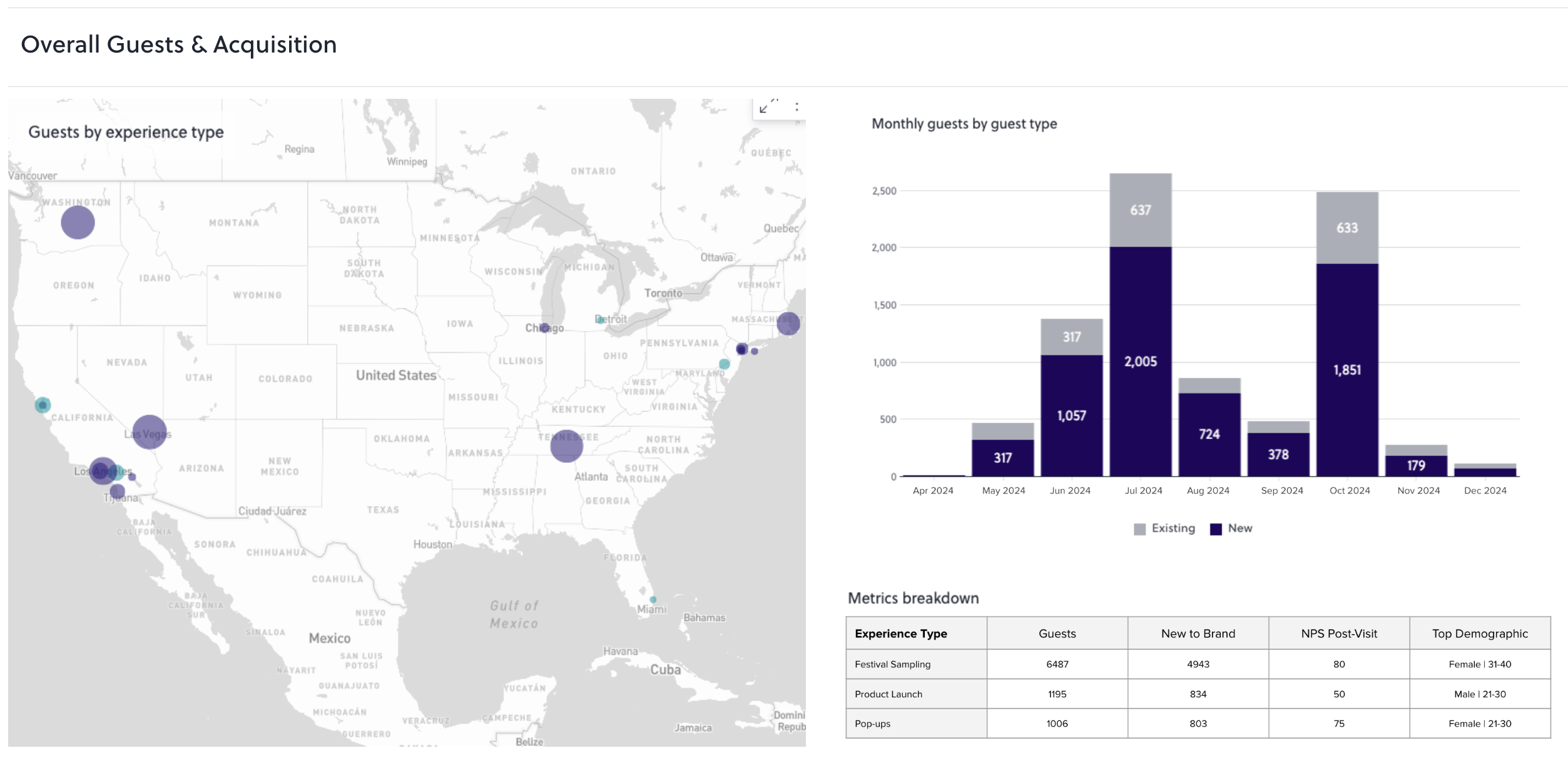
Many brands stitch together an event platform, an ecommerce platform, and a standalone email service provider such as Klaviyo or Mailchimp. That approach requires manual exports, fragments data, and leaves lifecycle marketing dependent on tools that were not built for alcohol compliance, release calendars, or club mechanics.
AnyRoad’s managed CRM services offer an alcohol-native option for brands without in-house email marketing capability. The CRM runs on the same first-party experiential data the platform already collects. Guest NPS, spend, visit frequency, and club status all live in one system, so segmentation does not require manual exports. Brands can target a high-value cohort, such as repeat visitors with high NPS and above-average spend, and message them directly without assembling a separate stack.
For brands assessing whether their current platform captures enough data to support this level of segmentation, see Need More Data Than Cvent? Here’s A Better Solution.
Explore AnyRoad’s alcohol-native CRM services
How To Build The Internal Business Case For Switching From Cvent
The internal case for switching from Cvent works best when you reframe the spend, name the data gap, and point to measurable outcomes. The language below is meeting-ready for a CFO or VP who approved the existing Cvent contract.
Reframe the spend. Cvent’s per-registrant model scales cost with attendance, so higher turnout drives higher fees. A brand-experience platform is evaluated on data captured and revenue attributed. That alignment ties cost to the outcomes your team must deliver.
Name the data gap. Registration data supports event logistics. First-party consumer data fuels segmentation, personalization, and loyalty programs. A consumer who visits a distillery twice is 512% more likely to convert into a paid loyalty enrollment, but only when the platform captures data from every attendee, not just the booker.
Point to measurable outcomes. The relevant metrics for a brand-experience program include brand affinity, NPS, purchase intent, and post-experience purchase conversion. A single retail bottle purchase is worth roughly $100 to a brand. A club member who stays through six releases is worth roughly $600. As noted earlier, experience-driven opt-ins convert at four times the rate of traditional channels, and member spending grows significantly in the first year.

Address the switching cost clearly. Switching from Cvent involves rebuilding or reconnecting existing CRM, marketing automation, and analytics integrations. It also requires retraining staff on new workflows and rebuilding templates, registration experiences, and permission structures. That cost is real. The central question is whether the current platform generates the data and revenue outcomes that justify keeping it for consumer brand experiences.
For a deeper look at how to make this case in regulated categories, see Top Cvent Alternatives For CPG & Alcohol Brands.
How To Choose: A Short Checklist
- Define the job. Decide whether you need event infrastructure or a brand-experience platform.
- Audit first-party data. Map where consumer data currently lives and who owns it.
- Confirm attendee coverage. Ensure the platform can capture data from every attendee, not just the booker.
- Check revenue attribution. Verify whether post-experience revenue attribution is native or bolted on.
- Assess compliance needs. Pay special attention if you operate in a regulated category such as alcohol.
- Evaluate services. Decide whether you need managed services or have in-house lifecycle marketing capability.
- Confirm integrations. Align requirements with your existing CRM, CDP, POS, and email stack.
Review your brand’s experience-to-revenue funnel
Frequently Asked Questions
Why Is Cvent So Expensive For Brand Experiences?
Cvent’s total-cost structure combines an annual platform license, per-registrant fees, and implementation costs through a custom quote process. The per-registrant model means costs grow directly with event success, so more attendees drive higher spend without guaranteed incremental value. For consumer brand-experience programs running high-volume activations, that structure creates a persistent mismatch. Add-ons for badge printing, premium modules, professional services, and payment processing raise the base cost further, and multi-year contracts with advance cancellation notice requirements increase exit friction.
What Is Cvent Experience And How Is It Different From A Brand-Experience Platform?
Cvent uses “experience” to describe the attendee-facing layer of its event-management system, delivered through products like Events+ and Attendee Hub. This layer includes branded registration, digital access, agendas, engagement, and onsite check-in. It does not represent a standalone product category. A brand-experience platform is designed around first-party consumer data capture and experience-to-revenue attribution. Cvent’s model is built around registration data, while a brand-experience platform is built around the full consumer journey.
What Is Similar To Cvent But Built For Consumer Experiences?
AnyRoad is a brand-experience platform for consumer brands that captures first-party consumer data and ties experiences to revenue. It is designed for spirits, CPG, and hospitality brands running brand homes, tasting rooms, field activations, and festival programs. Bizzabo, RainFocus, Swoogo, and Stova remain strong alternatives for event infrastructure, yet they do not focus on consumer data capture or post-experience revenue attribution.
Is Splash A True Cvent Alternative?
Cvent acquired Splash in September 2024, so Splash now sits within the Cvent portfolio. Brands evaluating Splash as a Cvent replacement are choosing another Cvent product rather than an independent vendor. The same vendor relationship, roadmap dependency, and data ownership considerations apply.
How Do You Measure ROI From Brand Experiences?
Relevant metrics include brand affinity, NPS, purchase intent, and post-experience purchase conversion, instead of simple attendance counts. A modern experiential measurement framework links structured data capture to engagement, behavioral outcomes, pipeline influence, conversion acceleration, and retention. AnyRoad ties experiences to revenue through first-party data capture and attribution, connecting a tasting room visit to a retail bottle purchase or a loyalty enrollment. A consumer who visits a distillery twice is 512% more likely to convert into a paid loyalty enrollment, and a club member who stays through six releases is worth roughly $600 compared to roughly $100 for a single bottle purchase.
What Should Enterprise Brands Evaluate Before Switching From Cvent?
- Define the job first, either event infrastructure or brand-experience platform.
- Audit where first-party consumer data currently lives and who owns it.
- Confirm the platform can capture data from every attendee, not just the booker.
- Check whether revenue attribution is native or bolted on.
- Assess compliance and integration needs, particularly if you operate in a regulated category.
- Evaluate whether you need managed services or have in-house lifecycle marketing capability.
- Get the fully loaded first-year cost in writing, including base license, per-registrant fees, implementation, and add-ons.
Conclusion: Match The Platform To The Job
The Cvent alternative question breaks into two decisions. If the job centers on event infrastructure such as registration, logistics, badge printing, and session scheduling, the shortlist includes Bizzabo, RainFocus, Swoogo, and Stova. If the job centers on capturing first-party consumer data and tying brand experiences to revenue, AnyRoad fits that need.
Cvent was built for B2B conference logistics. Its per-registrant pricing model, registration-data architecture, and conference-focused design do not align with the needs of enterprise consumer brands running brand homes, tasting rooms, field activations, and festival programs. The shortlist follows from the job, and for brand-experience teams, the job centers on consumer relationships and revenue, not attendee logistics.
For additional context on how this decision plays out across different market sizes and activation types, see Cvent Alternatives For Experiential Brand Activations and When To Choose Cvent Vs Other Platforms In 2026.
Talk with AnyRoad about your 2026 experience strategy