


Written by: Bryan Grobstein, Vice President, Global Revenue, AnyRoad | Last updated: October 13, 2026
Key Takeaways
- Cvent focuses on enterprise-scale events with venue sourcing, hotel blocks, and complex multi-track agendas that smaller teams rarely need.
- Smaller-market teams typically run 1–5 events per year with under 500 attendees and budgets of $5,000–$20,000, and they focus on registration, check-in, and attendee management.
- Buyer types in this segment include regional associations, CVBs, brand homes and distilleries, and lean corporate field teams, and each group has distinct platform requirements.
- Alternatives range from flat-rate tools like Swoogo and Accelevents to per-ticket platforms like Eventbrite, and AnyRoad is purpose-built for experience-led venues needing ID verification and loyalty features.
- AnyRoad delivers white-labeled booking, QR check-in, age verification, and lifetime loyalty tools that turn brand experiences into recurring revenue for distilleries and tasting rooms.
What Counts As A Smaller Market In Event Software?
In event software, a smaller market means an organization running roughly 1–5 events a year with fewer than 500 attendees each and an annual event-technology budget of $5,000–$20,000. Bizzabo's 2026 benchmark data reinforces how common this profile is: 45% of event teams operate with just 1–3 people. That kind of team needs registration, attendee management, and check-in, and usually skips venue sourcing, hotel blocks, and enterprise reporting.
Four buyer types map to this definition. Every platform recommendation below is filtered through them so you can self-select:
- Regional Associations And Regional Conferences focus on registration, member pricing, and multi-session agendas, and they usually do not need venue sourcing or hotel blocks.
- Smaller CVBs And Destinations need event calendars, partner listings, basic registration, and tight budget control.
- Brand Homes And Experience-Led Venues (Distilleries, Breweries, Tasting Rooms) need timed-entry tours, check-in, ID and age verification, first-party data capture, and a clear path to recurring revenue.
- Lean Corporate Field Teams need repeatable regional activations, mobile check-in, and simple reporting.
With those buyer types in mind, you can compare how the leading Cvent alternatives handle pricing and scale.
Comparison Table
The table below highlights each platform’s pricing model and typical event volume so you can quickly narrow your shortlist.
| Platform | Pricing Model | Typical Event Volume |
|---|---|---|
| Accelevents | Flat-rate annual (~$7,500/event or $13,500/yr unlimited) | Several mid-sized events or an ongoing program |
| Swoogo | Flat-rate annual (~$11,800/yr per organizer seat) | Multiple events per year with steady volume |
| Eventleaf | Pay-as-you-go / low-fee structure | Occasional events with modest attendance |
| Whova | Quote-based (~$500–$1,000/event + per-ticket fees) | Individual conferences and regional gatherings |
| Eventbrite | Per-ticket percentage + flat fee (3.7% + $1.79) | Frequent small public or ticketed events |
| Eventzilla | Per-registration ($1.50–$2.90 + per-registration fee) | Low-volume programs with simple registration |
| Bizzabo | Per-user subscription ($499/user/mo, 3-user min) | 10 or more events per year |
| RainFocus | Quote-only | Large portfolios and mega-conferences |
| AnyRoad | Quote-based; 60-day free trial for RSVP/unpaid events | Ongoing tours, tastings, and experience programs |
What You Actually Give Up When You Leave Cvent
Before comparing alternatives, you need a clear view of what Cvent does well for enterprise programs. Leaving Cvent means giving up several capabilities that smaller tools rarely match.
- Venue Sourcing And RFP Workflows. Cvent's Supplier Network connects planners to nearly 340,000 hotels and venues worldwide. It also handles AI-powered RFP creation, bid comparison, and archiving, and no alternative in this guide fully replicates it.
- Hotel Block Contracting And Room-List Management. Cvent Passkey automates room-block creation, branded booking websites, real-time pickup reporting, and sub-block management for multi-property events. Smaller platforms usually fall back to manual spreadsheets.
- Multi-Track Agenda Building. Complex session scheduling with speaker management, session capacity, and waitlists is a Cvent strength, and most smaller-market tools only cover basic versions of these workflows.
- Enterprise Reporting, SSO, And Procurement-Grade Security. Cvent holds 4.3 out of 5 across 2,144 G2 reviews, and reviewers often highlight reporting depth and SSO as real differentiators.
- Dedicated Account Management And 24/7 Support. Cvent provides 24/7 support from a roughly 1,700-person customer success team, which smaller vendors rarely match in scale.
Associations running a large annual conference with a hotel block often stay on Cvent or move to a mid-market platform with sourcing capability. That reality shapes which alternatives make sense for smaller programs.
Own the guest journey, own your guest data. Book a demo.
Cvent Alternatives For Smaller Markets, By Buyer Type
Accelevents: Best For Mid-Sized Conferences And Hybrid Events
Accelevents publishes transparent pricing: a Professional per-event plan at $7,500 per event and an annual unlimited-events plan at $13,500 per year covering unlimited attendees. A free starter tier charges roughly $1.50 plus 3.5% per paid ticket. Strengths include flexible virtual, hybrid, and in-person registration without a per-registrant penalty model, plus 24/7 support with a documented sub-27-second response time. The limitation is that the published price covers single events only, and larger programs move to quoted annual tiers. Best fit: regional associations and corporate field teams running one or two major events per year.
Swoogo: Best For Configurable Registration And Repeatable Regional Events
Swoogo's Professional plan costs $11,800 per year for unlimited events and unlimited registrations, and it avoids per-registration fees. Swoogo holds 4.9 out of 5 from 207 G2 reviews and was named G2 Leader and #1 Easiest Setup in the G2 Fall 2025 reports. Strengths include strong control over page design, branding, and attendee flows without deep technical knowledge, plus native integrations with Salesforce, HubSpot, Marketo, and 35+ other tools. Limitations include no free version or trial and a per-user model where additional seats cost extra. Best fit: associations, CVBs, and lean corporate teams running multiple events per year who want predictable flat-rate pricing.
Eventleaf: Best For Budget-Conscious Teams With Simple Check-In Needs
Eventleaf's Starter plan is free up to 100 attendees a year across all events, and the Professional plan starts at a $2,000 annual minimum ($2 per attendee with a 1,000-attendee minimum). Strengths include no annual management fees, mobile app add-on fees, or user fees, plus a simple interface with straightforward check-in and badge printing tools. The main limitation is that check-in and QR scanning only appear on the Professional plan. Best fit: small teams with tight budgets that want to avoid rigid annual contracts.
Whova: Best For Attendee Networking And Community-Heavy Regional Gatherings
Whova does not publish pricing; independent guides report roughly $500–$1,000 per event plus about 3.0% + $0.99 per paid ticket, with add-on modules at extra cost. Whova holds 4.8 out of 5 across 2,478 Capterra reviews and has powered more than 50,000 conferences. Strengths center on a high-rated mobile app experience and strong engagement tools for smaller conferences. Limitations include an app-centric approach with limited kiosk and thermal badge printing, and G2 reviewers consistently describe Whova's setup as a multi-week implementation period. Best fit: associations and academic conferences where attendee networking matters more than on-site hardware.
Eventbrite: Best For Simple Ticketing, Workshops, And Community Events
Eventbrite charges 3.7% + $1.79 per paid ticket plus 2.9% payment processing, and this lands at roughly 8.4% on a $100 ticket and climbs past 13% on tickets under $25. Free events cost nothing to publish. Strengths include self-serve setup with zero annual commitment and a broad public discovery marketplace. Limitations include no hotel block or multi-track enterprise workflows, no fee cap, and payouts held until three to four days after the event concludes. Best fit: CVBs and community organizers running simple public ticketed events.
Eventzilla: Best For Budget-Conscious Teams With Simple Registration
Eventzilla's Basic tier charges $1.50 per registration; Pro adds 1.9% + $1.50 per registration; Plus adds 2.9% + $1.50 per registration with white label and exhibitor management; an annual plan is available from $1,999 per year with zero per-registration fees. Strengths include a low entry point and white label on higher tiers. The limitation is that per-registration fees scale with attendance, so a successful event costs more than a poorly attended one. Best fit: lean teams with simple registration needs and predictable, low attendee volumes.
Bizzabo: Best For Mid-Market Teams With Steady Event Volume
Bizzabo publishes pricing at $499 per user per month billed annually with a three-user minimum, starting at $17,999 per year, with no free plan, no trial, and no single-event option. Strengths include Forrester Wave Leader status with the highest possible scores in eight criteria and native Salesforce, HubSpot, Marketo, and Eloqua integrations. Limitations include Klik SmartBadge hardware quoted separately and Capterra reviewers flagging that setting up events can be “very lengthy”. Best fit: mid-market teams running 10 or more events per year that need deep CRM integration and can absorb the cost.
RainFocus: Best For Mega-Conferences Of 5,000+ Attendees
RainFocus does not list pricing publicly and requires a custom quote, and it was named a Leader in the 2025 Gartner Magic Quadrant for Event Marketing and Management Platforms for the second consecutive year. Strengths include a design purpose-built for mega-conferences, SOC 2, ISO 27001, and PCI DSS certifications, and native Salesforce and Adobe integrations. Limitations include a non–self-serve approach and an implementation that takes about three months and typically requires heavy internal or professional services resources. Best fit: organizations running many large events across a year that want one consistent attendee profile across their portfolio, and it does not serve smaller-market needs.
Best Cvent Alternative For Brand Homes And Distilleries
Brand homes, distilleries, and breweries sit in a gap that most event platforms ignore. A distillery or tasting room rarely needs venue sourcing or hotel blocks. It needs four things: timed-entry tour and tasting booking embedded on the brand's own website, QR code check-in, integrated ID scanning and age verification for compliance, and first-party data capture from every attendee. Those four capabilities create a clear path from each visit to recurring revenue. Platforms including AnyRoad build in age-gate compliance, POS integration, and visitor-limit monitoring to keep regulated venues inside their use permits.
AnyRoad is the definitive platform for this buyer. It focuses on brand-owned experiences and the data they generate instead of trying to mirror every enterprise feature in Cvent.

AnyRoad's relevant capabilities for brand homes and distilleries include:

- White-Labeled Booking Embedded On The Brand's Site. The guest stays on the brand's domain, and the brand owns every data point collected.
- The Front Desk App For QR Check-In And On-Site Payments. Leiper's Fork Distillery achieved a 97 post-event NPS using AnyRoad's automated surveys and reduced management reporting time from a day and a half to 90 minutes.
- Integrated ID Scanning For Age Verification. Regulated experiences gain embedded compliance without a separate tool.
- FullView For Capturing Data From Every Attendee In A Group. Proximo Spirits immediately began collecting 69% more guest data after implementing FullView.
- Atlas Insights And PinPoint For AI-Powered Feedback Analysis. Open-text survey responses turn into actionable themes in real time.
- The Lifetime Loyalty Suite. Bottle Clubs, Premium Memberships, cashback rebates, sweepstakes, and managed CRM services work together to turn a visit into recurring revenue.
The loyalty impact is measurable. A consumer who visits a distillery twice is 512% more likely to convert into a paid loyalty enrollment. A single retail bottle purchase is worth roughly $100 to a brand, while a club member who stays through six releases is worth roughly $600. AnyRoad's reporting shows that experience-driven opt-ins convert to paid loyalty at four times the rate of traditional channels, with member spending increasing 150% within the first year. Heritage and craft distilleries including Heaven Hill Distillery, Nearest Green Distillery, Lux Row Distillers, Castle & Key, Catoctin Creek Distilling, and Tarnished Truth Distilling have adopted the Lifetime Loyalty platform.

Ben & Jerry's Factory Experiences moved 73% of factory tours online with AnyRoad. That shift eliminated long lines and captured demographic data and brand impact metrics through pre- and post-experience surveys, and the same model applies to any high-volume tasting room.
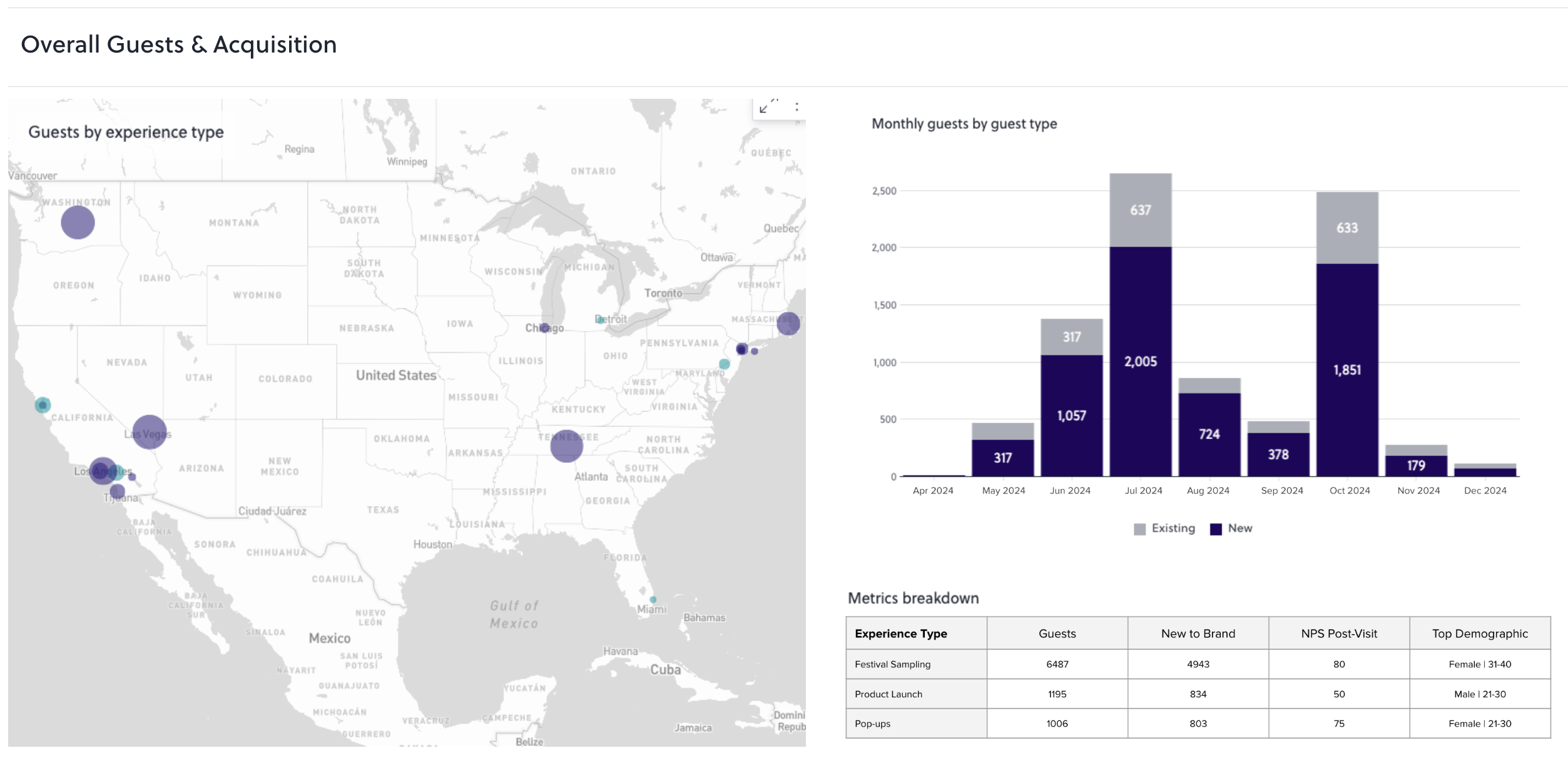
AnyRoad is not a licensed retailer or wholesaler. It acts as the brand's agent, and a licensed ecommerce partner handles the compliant transaction and delivery for bottle club purchases.
Turn tasting room visits into recurring revenue. Book a demo.
Cvent Alternatives With Transparent Pricing
Pricing opacity frustrates many buyers in this category. Three pricing models dominate the market, and each one behaves differently as your event volume grows.
- Flat-Rate Annual Subscription. Costs stay predictable regardless of attendance. Swoogo at $11,800 per year covers unlimited events and unlimited registrations. This model fits teams with steady or growing volume.
- Per-Registrant Pricing. Costs scale with attendance. Eventzilla's Basic tier charges $1.50 per registration. Calculate your total annual registrations and multiply by the per-registrant rate, then compare that figure against a flat license.
- Per-Ticket Percentage Plus Flat Fee. This model is common in ticketing and takes a cut of revenue. Eventbrite charges 3.7% + $1.79 per paid ticket plus 2.9% payment processing, which climbs past 13% on tickets under $25, and the fee is uncapped.
Cvent's base annual license is estimated at roughly $19,500 to $79,000 depending on program size, with Attendee Hub and event app modules adding about $7 to $12 per registrant and first-year implementation running $5,000 to $50,000. Contracts are annual and typically carry a 9% escalation clause. For a team running a handful of events a year, that cost structure usually feels disproportionate to the event volume.
How To Decide In A Week
You can narrow your options in five working days. Start by answering these questions on day one, then use your answers to shortlist two or three platforms for demos later in the week.
- What are your event types: registration-only, multi-session, timed-entry, or hybrid?
- What is your attendee volume: under 500, 500–5,000, or 5,000+?
- Do you need venue sourcing or hotel blocks? If you do, Cvent or Stova may be the right call.
- Do you need a mobile app for attendee networking, where Whova leads?
- Do you need on-site check-in hardware such as badge printing or kiosks?
- Do you need ID and age verification for regulated experiences, which AnyRoad's Integrated ID Scanning supports?
- Do you need first-party data capture from every attendee, which AnyRoad's FullView feature provides?
What To Do When You Outgrow The Small-Market Tool
Specific signals tell you when it is time to move up. These include multi-track agendas with session capacity management, hotel blocks that require room-list management, enterprise reporting requirements tied to SSO and procurement-grade security reviews, or a portfolio of 20 or more events per year across multiple formats and stakeholders. Bizzabo defines an enterprise-ready event management platform as one that can run an organization's entire event portfolio while meeting the security, integration, reporting, and support standards a large, multi-stakeholder company requires.
For the enterprise brand experience case, AnyRoad's existing content covers the full landscape: see What Companies Are Similar To Cvent? 2026 Alternatives, Top Cvent Alternatives For Brand & Field Marketing Teams, and Best Cvent Alternative For Enterprise Brand Experiences.
Frequently Asked Questions
What Is The Most Popular Event Management Software?
Cvent serves 89% of the Fortune 100, with customer counts reported at 21,000+ (Raklet), around 30,000 (InEvent), and 34,000-plus organizations (Rework). For smaller markets, Eventbrite, Whova, and Swoogo are among the most commonly evaluated alternatives.
Who Are Cvent's Biggest Competitors?
Cvent's biggest competitors include Bizzabo, RainFocus, Stova, Swoogo, and Accelevents in the mid-market and enterprise segments, and Eventbrite, Whova, and Eventleaf in the smaller-market segment. For brand homes, distilleries, and experience-led venues, AnyRoad is the purpose-built alternative.
Can I Run A Distillery Tour Program Without Cvent?
Distilleries, breweries, and brand homes can run strong tour programs without Cvent. They typically need timed-entry tour and tasting booking embedded on their own website, QR code check-in, integrated ID scanning and age verification, and first-party data capture from every attendee, and purpose-built experience platforms like AnyRoad provide these capabilities without enterprise overhead. Leiper's Fork Distillery, for example, increased average tour prices by 33% after adopting AnyRoad.
How Do I Compare Per-Registrant Versus Flat-Rate Pricing?
Per-registrant pricing scales with attendance, so a successful event costs more than a poorly attended one. Flat-rate annual pricing stays fixed regardless of attendance and feels more predictable for teams with steady or growing event volume. Calculate your total annual registrations and multiply by the per-registrant rate, then compare that figure against the flat annual license. At 500 annual registrants, Swoogo's flat $11,800 per year compares favorably to Cvent's estimated $23,000 for the same volume.
The Right Platform For Your Buyer Type
Cvent is built for the enterprise event program. Most smaller-market operators run leaner programs, and the best alternative depends entirely on what you actually need.
For regional associations and CVBs, the shortlist has three names. Swoogo fits configurable flat-rate registration. Whova fits attendee networking and community-heavy conferences. Accelevents fits hybrid and mid-sized programs with transparent pricing. For lean corporate field teams running repeatable regional activations, Swoogo and Accelevents both fit.
For brand homes, distilleries, and experience-led venues, AnyRoad is the definitive solution. It combines white-labeled booking on your own site, QR check-in, integrated ID scanning, first-party data capture from every attendee, and a full Lifetime Loyalty suite with Bottle Clubs, Premium Memberships, cashback rebates, and managed CRM services that turn a tasting room visit into recurring, measurable revenue. No other platform on this list was built specifically for this buyer.
Your best customers already walked through your door. Book a demo.