


Written by: Bryan Grobstein, Vice President, Global Revenue, AnyRoad
Key Takeaways
- Enterprise alcohol subscription software must handle recurring billing, state-by-state compliance, age verification, inventory allocation, and POS/ecommerce synchronization within strict legal constraints.
- Distilleries require a multi-layer stack: club platforms (OrderPort, Commerce7), compliance engines (Sovos ShipCompliant), and licensed retailers because manufacturers cannot sell directly to consumers in most states.
- Compliance is ongoing. Every recurring order needs destination-state eligibility checks, adult-signature delivery, tax calculation, and state reporting to maintain shipping privileges.
- Churn is primarily a depletion problem. Retention improves through interactive programming, skip/pause options, and converting tasting-room visits into paid loyalty enrollments.
- AnyRoad consolidates club management, compliance, and retention programming into a managed service that turns tasting-room visits into recurring revenue. See how AnyRoad can streamline your club.
The Four Core Capabilities A Distillery Club Stack Must Cover
- Recurring Billing And Membership Tiers: Automated charge cycles (monthly, quarterly, per-release), failed-payment retry logic, member self-service portals for card and address updates, and tier-based pricing that carries across all purchase channels.
- Compliance And Age Verification: Age verification at enrollment, destination-state eligibility checks before each recurring order processes, adult-signature delivery requirements, excise and sales tax calculation and remittance, and state-level direct-shipper reporting.
- Inventory Allocation: Reservation of limited-release and barrel-select bottles for members ahead of public retail, vintage and lot tracking, over-allocation protection, and real-time available-quantity updates across channels.
- POS And Ecommerce Sync: A single finished-goods inventory pool that decrements simultaneously across tasting room sales, club fulfillment, and online orders so no channel oversells what another has already committed.
Discover how to turn visits into revenue.
The Four Vendor Categories Distilleries Choose For Club Programs
The distillery software vendor landscape spans overlapping categories including broad distillery-specific platforms, distillery ERP, specialized compliance software, and DTC/ecommerce-integrated tools. A working club stack usually combines several of these layers.
Club And Subscription Platforms manage the member-facing experience. They handle enrollment, recurring billing, release notifications, skip and pause mechanics, member portals, and fulfillment coordination. The primary vendors in this category are OrderPort, WineView, Commerce7, and Members One. OrderPort was built specifically for winery DTC operations, placing recurring club billing inside the same platform as POS, ecommerce, reservations, CRM, and inventory. WineView, a Richmond-based startup with roughly 30,000 members on platform as of mid-2026, integrates with Toast POS and supports both customer-choice and exact-set release models with granular skip and allocation controls. Commerce7 offers traditional and subscription club types with predictive AI for churn scoring and an automatic credit card updater. Members One, an Australian-built platform for gin and spirits clubs, runs POS, tasting bookings, and club billing on one member database with no per-ticket commissions. DTC360 and MemberZone serve similar club management functions and belong in the same evaluation shortlist.
Distillery ERP handles production. It covers grain-to-glass batch tracking, TTB compliance reporting, barrel management, and finished-goods inventory at the production level. FIVE x 5 DISTILL x 5 and Distillx are the purpose-built distillery ERP options in this category. Ekos serves craft beverage producers across beer, wine, cider, and spirits with an end-to-end platform covering production management, inventory, sales, and accounting, including a digital portal (Ekos Order Hub) that lets distributors and customer accounts view inventory and place orders. These platforms are the system of record for what exists in the warehouse. They are not club management platforms. HoochWare was a distillery management software company serving the distillery industry, which rebranded to OnBatch to appeal to the broader regulated beverage industry. DRAMS targets craft spirits producers with bulk spirit inventory and barrel tracking plus advanced blend recipe management. If your search started with one of these names, the next step is mapping which club and compliance layers sit on top of them.
Compliance Engines sit between the club platform and the carrier. They run real-time destination-state eligibility checks, calculate excise and sales tax to the address level, generate state direct-shipper reports, and manage product and label registrations. Sovos ShipCompliant is the dominant platform in the beverage alcohol compliance market, generating estimated annual revenue of $180-220 million from alcohol compliance services, used by more than 2,000 wineries, breweries, distilleries, importers, and distributors. It offers unlimited integrations across a 60-plus partner ecosystem spanning ecommerce, POS, wine club platforms, fulfillment, and major carriers, and its AutoFile capabilities handle state filings automatically. No club platform replaces this layer. It plugs into it.
DTC Ecommerce Platforms provide the transactional storefront. Shopify is the most widely used ecommerce foundation for distillery DTC, though beverage-native platforms like Commerce7 or Arryved are often recommended for their superior alcohol compliance and club features. The compliance and club layers integrate into whichever ecommerce platform the brand uses. However, standard ecommerce platforms like Shopify do not natively handle wine club mechanics or DTC shipping compliance; these require specialized platforms such as Commerce7 or WineDirect, or integrations like ShipCompliant.
The ERP layer and the club layer are separate purchasing decisions. A distillery running FIVE x 5 or Ekos for production still needs a beverage-native DTC and club platform (such as Commerce7 or Arryved) and dedicated alcohol compliance software (such as Sovos ShipCompliant or Avalara) to run a compliant bottle club and direct shipment path. Those capabilities do not live inside a distillery ERP.
Compliance Architecture For Distillery Subscription Programs
Now that the vendor categories are clear, consider the compliance architecture that supports any distillery subscription program. Under Florida law, a "distillery" is defined as a manufacturer of distilled spirits, though a licensed distillery may also engage in limited retail sales to consumers, such as face-to-face transactions at the distillery property. Under the three-tier system that governs alcohol commerce in the United States, a manufacturer cannot sell directly to a consumer in most states without either a specific DTC shipping permit or a licensed retailer in the transaction path. Distilleries currently have DTC shipping options in only nine markets: Alaska, Arizona, California, the District of Columbia, Kentucky, Nebraska, New Hampshire, New York, and North Dakota, compared to 48 markets for wineries. Several of those states impose production caps. New York limits eligibility to distilleries producing no more than 75,000 gallons annually, and Arizona caps eligibility at 20,000 gallons, which excludes larger producers even in permissive states.
For a recurring subscription program, compliance operates continuously. Every recurring order requires an ongoing eligibility check against the destination state. It also requires adult-signature delivery and periodic shipment reporting to state agencies to verify tax payments and volume limits. Many states restrict DTC shippers to one case per month or twelve cases per year per consumer, and shippers must proactively monitor shipments and delay orders that would exceed those limits. At scale, that monitoring must be automated across the club membership.
Age verification occurs at two points. At enrollment, collecting and documenting consumer date of birth or ID at the point of sale is a legal mandate in approximately eight states. At delivery, in most states, an adult over 21 must sign for DTC alcohol shipping packages. Sovos ShipCompliant automates the compliance layer. It runs real-time destination-state eligibility checks, calculates tax to the address level, generates state direct-shipper reports, and uses AutoFile for state filings. It integrates with the club and ecommerce platforms above it.
Because a distillery is not a licensed retailer, the transaction in a compliant bottle club flows through a licensed retail partner. Under California ABC guidance, all sales transactions involving unlicensed Third Party Providers must ultimately be conducted by and under the control of a licensee, who must control acceptance, fulfillment, and shipment of orders; this requirement is jurisdiction-specific, and in some states such as Florida, bottle club licensees may not sell alcoholic beverages to patrons at all. AnyRoad is not a licensed retailer or wholesaler. In its Bottle Club model, the compliant transaction and delivery happen through its licensed ecommerce retail partner. The consumer receives a Shopify-integrated purchase experience, and the brand receives a club that stays within federal and state regulation.
See how AnyRoad structures a compliant club from enrollment to delivery.
Managing Recurring Billing And Allocation For Club Members
Recurring billing in a spirits club commonly takes two structural forms. Release-based billing charges members when a specific allocation is ready, such as a barrel-select expression, a limited single malt, or a seasonal release. The charge date ties to the release rather than a calendar interval. Calendar-based billing charges members on a fixed schedule (monthly, quarterly, or annually) and typically triggers a shipment of club inventory; in some cases, such as The Whisky Club's gift memberships, charges may instead add credit to the member's account that is redeemed against future deliveries. OrderPort's Subscription Club model adds recurring charges to a member account balance rather than triggering a fixed shipment, letting members redeem that balance against wine, club releases, tastings, event tickets, or merchandise. This structure reduces the all-or-nothing pressure that drives cancellations in traditional shipment clubs.
Allocation management for limited releases requires reserving inventory for members before it becomes available to the general public. WineView automatically allocates inventory to member reservations when a release is created, using the release template to reserve the required quantity for each member's allocation ahead of fulfillment, and includes over-allocation protection that prevents the system from committing more units than exist in stock. OrderPort's inventory features include automated allocation holds that reserve club inventory before general sales, real-time tracking across tasting room, ecommerce, and wine club channels, and vintage and lot tracking for release management. Advanced features prioritize member tier access so highest-value customers get first access to limited releases.
Inventory sync across channels is where most DIY stacks break down, particularly when they rely on scheduled polling intervals of 5-15 minutes and off-the-shelf apps that lack event-driven architecture, dead-letter queues, and reconciliation layers. Finished-goods inventory must decrement simultaneously across tasting room POS, club fulfillment, and online orders. Ekos and FIVE x 5's DISTILL x 5 serve as the production-level system of record for what exists in the warehouse, with DISTILL x 5 functioning as a real-time digital twin of the distillery that reflects what is produced, held, and moved. The club and ecommerce layers above them must pull from that count and write reservations back in near real time to prevent promising club allocations against cases that tasting room staff already sold.
Reducing Churn And Skips In A Bottle Club
Churn in a bottle club often concentrates around the first renewal and the early months of membership. Most wine club churn is not caused by acquisition failure or dissatisfaction with the wine; the two biggest drivers are failed card payments and shipment schedules that do not fit the member. Members who have not finished what they already own do not want more. A rack full of unopened bottles is an inventory and purchasing problem (dead stock tying up cash), not a loyalty problem, and discount replenishment opportunities with limited capacity do not by themselves solve the depletion problem; a mutually beneficial outcome requires buyer-to-supplier compensation.
Wine and specialty subscription boxes are the strongest-retaining subscription category, with best-in-class monthly churn of 3–5% and a category average of 5–8%, but beverage subscriptions run 6–12% monthly churn, with the wide variance partly attributed to alcohol regulation adding friction in some states. The month-3 cliff is near-universal across DTC subscription: 50–70% of subscribers who place a first order are gone by the third. For a spirits club structured around a recurring release cadence, that inflection often maps onto the early renewal cycle where churn concentrates.
The lifetime value math makes the retention problem concrete. A single first retail bottle purchase contributes roughly $38 before CAC and lands near negative $17 after a $55 blended CAC; the value reaches about $97 cumulatively by the fourth order, not from a single purchase. A club member who stays through multiple releases is worth substantially more over time. The operating goal of a bottle club is moving a consumer from the first number to the second. That shift requires getting members through their allocation, not just enrolling them.
AnyRoad's data shows that a consumer who visits a distillery twice is 512% more likely to convert into a paid loyalty enrollment. That second visit signals that a guest is ready to be asked. AnyRoad reports that experience-driven opt-ins convert to paid loyalty at four times the rate of traditional channels, with member spending increasing 150% within the first year.
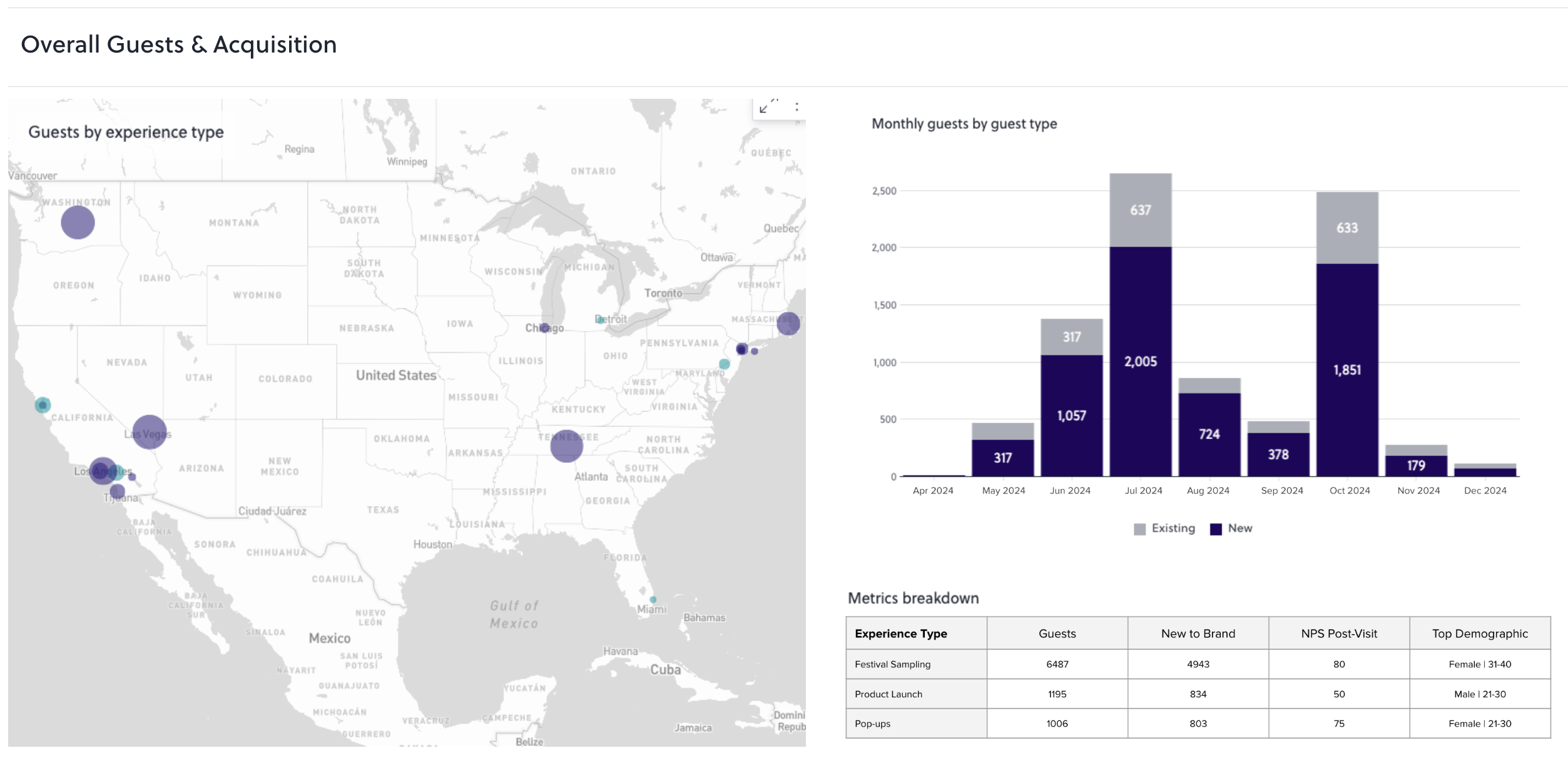
The retention programming that works at the early churn inflection point centers on the product itself. Virtual and on-site cocktail-making classes with master distillers get members through their current allocation and primed for the next release, addressing the depletion problem directly by getting members through their allocation, not by offering discounts. Skip and pause mechanics reduce hard cancellations by roughly 20-40%, but they treat the symptom rather than curing the underlying cadence mismatch, so they do not solve depletion. Offering skip-a-month flexibility lifts retention, but brands that retain members past the critical first 90 days do so by running live, interactive programming and touchpoints between releases, with live sessions retaining at 85–92% versus 60–70% for pre-recorded content alone, rather than relying on billing settings.
Build Vs. Buy For Distillery Club Infrastructure
The minimum DIY stack for a distillery bottle club requires at least four components: a beverage-native DTC and club ecommerce platform (e.g., Commerce7 or Arryved), subscription billing software (e.g., Recharge or Subbly), a dedicated alcohol compliance layer (e.g., Sovos ShipCompliant or Avalara) that validates each order against destination-state rules before fulfillment, and internal headcount to operate it all. Most of these components are not purpose-built for alcohol. Recharge is a horizontal subscription billing tool, and there is limited public information on whether it handles distillery-specific shipping states, enrollment age verification, or state direct-shipper reports. VTEX's ecommerce platform knows the release calendar through its Releases module's Calendar page (Beta), which shows scheduled releases by month, week, or day. The fulfillment partner does not know the member's depletion status.
For a Texas private club permit, the compliance lift requires record-keeping and reporting obligations under Chapter 32 of the Alcoholic Beverage Code and Chapter 41 of TABC's administrative rules, which can be handled via an approved machine bookkeeping system (Form C-310) or by a licensed retail partner who carries that obligation. Many alcohol brands lack in-house email and lifecycle expertise and rely on generic marketing agencies that cannot optimize wine club retention flows or build compliance-enabled regional campaigns. The result is a program the brand must maintain indefinitely, with limited alcohol-specific expertise attached to its components.
AnyRoad's platform consolidates first-party experiential data from every touchpoint into a single guest profile, and its native CRM connections plug directly into that same data. AnyRoad's managed Lifetime Loyalty programs for alcohol brands, including Bottle Clubs and Premium Memberships, are run by people with spirits-industry expertise, including Managing Director Bay McLaughlin and National Spirits Director Vincent Clark, whose background includes overseeing Lux Row Distillers and Limestone Branch Distillery visitor centers on the Kentucky Bourbon Trail. For a brand without in-house email marketing capability, the difference is between a service-delivery partnership that runs every send and a platform-reseller license that goes unused, though a platform-reseller program can work if the brand already employs in-house email talent.
Where AnyRoad Fits In The Distillery Club Stack
AnyRoad's Lifetime Loyalty platform provides turn-key, end-to-end management of Bottle Clubs and Premium Memberships for beverage brands, covering enrollment, member data, retention programming, and optional CRM integration, with native connections to payments and commerce systems. It replaces a multi-vendor stack and the headcount required to run it. AnyRoad has a total headcount of 55 employees, organized into 12 departments, with the largest departments being Engineering (10 employees) and Sales (8 employees).

The differentiator against many alternatives is that AnyRoad pairs its software with expertise and an operating team. Enrollment happens because a host makes the club ask as a natural extension of a personalized, attentive hospitality experience, not because a club page exists on the website; treating it as a scripted sales pitch at the end of a tasting tends to produce low conversion. AnyRoad sets up the enrollment experience and works directly with brand teams on site to support enrollment conversations. AnyRoad's Lifetime Loyalty team includes spirits industry operators, such as National Spirits Director Vincent Clark (formerly of Luxco and Lux Row Distillers) and Managing Director Bay McLaughlin, who have built premium bottle clubs and membership programs for major spirits brands including Heaven Hill, Lux Row, and Beam Suntory.
On-site enrollment during a distillery visit is a high-converting channel. AnyRoad's platform lets brands segment audiences by dimensions such as demographics, behavior, guest segments, and key metrics including Net Promoter Score (NPS), brand affinity, purchase intent, and revenue attribution. AnyRoad's Lifetime Loyalty platform helps beverage brands structure experience tiers and value-adds, such as curated quarterly shipments, exclusive product access, and VIP experiences, through turn-key Bottle Clubs and Premium Memberships that make the club worth joining.

Publicly announced Lifetime Loyalty customers include Heaven Hill Distillery, Nearest Green Distillery, Lux Row Distillers, Castle & Key, Catoctin Creek Distilling, and Tarnished Truth Distilling. AnyRoad's Lifetime Loyalty platform launched on February 20, 2025 with Bottle Clubs and Premium Memberships as its two core offerings, and the program is in active expansion across heritage and craft brands.
Vendor Evaluation Checklist For Distillery Subscription Partners
To compare vendors systematically, use this checklist to evaluate how each handles compliance, inventory, and retention.
- Which states can you ship spirits to, and how do you verify destination-state eligibility before each recurring order processes?
- Who holds the licensed retailer role in the transaction path, and how is that relationship structured?
- How does age verification work at enrollment, and in which states do you collect and document date of birth or ID?
- How do you handle excise and sales tax calculation, collection, and remittance to destination states?
- How does your platform reserve limited-release inventory for members before it becomes available to the general public, and what happens if stock runs short?
- How does inventory sync across tasting room POS, club fulfillment, and DTC ecommerce in real time?
- What skip and pause mechanics do you support, and how do you handle failed payments before a member lapses?
- What retention programming do you provide between releases, and how do you address the depletion problem at the six-release mark?
- Do you provide managed CRM and lifecycle email services, or does the brand need to supply that capability separately?
- What does the ongoing operational support model look like, and does a team handle fulfillment coordination, release updates, and member communications?
Frequently Asked Questions
What Software Manages A Distillery Subscription Club?
No single off-the-shelf tool covers the full stack. A working distillery subscription club requires at minimum a club and subscription platform (such as OrderPort, WineView, Commerce7, or Members One) for recurring billing, member management, and release mechanics, a compliance engine (such as Sovos ShipCompliant) for destination-state eligibility checks, tax calculation, and state reporting, a licensed retailer in the transaction path because a distillery is a manufacturer and cannot sell directly to consumers in most states, and an ecommerce platform (such as Shopify) for the consumer-facing purchase experience. Distillery ERP platforms such as Ekos and DISTILL x 5 handle production and finished-goods inventory at the warehouse level and are a separate layer from the DTC/club stack, which is owned by the POS or club platform (e.g., Commerce7 or Arryved). AnyRoad's Lifetime Loyalty platform, publicly launched on February 20, 2025, offers two core solutions, Bottle Clubs and Premium Memberships, that consolidate membership-based loyalty programs, guest data, and native connections to CRM, marketing, payments, and commerce into one relationship.
How Do Distilleries Handle Compliance For Subscription Shipping?
Distilleries face a narrower DTC shipping landscape than wineries. Spirits DTC shipping is currently available in only nine markets, and several of those states impose production caps that disqualify larger producers. For a recurring subscription program, compliance requires age verification at enrollment, a destination-state eligibility check before each order processes, adult-signature delivery, excise and sales tax calculation and remittance to the destination state, and periodic shipment reporting to state agencies. Because a distillery is not a licensed retailer, a licensed retailer must sit in the transaction path to handle the sale and compliant delivery. Sovos ShipCompliant is the primary compliance engine used to automate eligibility checks, tax calculation, state report generation, and AutoFile for state filings. Under Australia's AML/CTF Act, clubs that run an AML/CTF program without the interlocking four-function architecture (risk assessment, policies, operations/monitoring, and independent assurance) risk AUSTRAC enforcement actions, as seen in the Star, Crown, and Mounties matters, along with consequences such as civil penalties, enforceable undertakings, operational disruption, and reputational damage.
How Do You Reduce Churn In A Spirits Club?
As noted, churn is primarily a depletion problem, so retention efforts should focus on getting members through their allocation. Members who have not finished what they already own stop wanting more, and churn often concentrates around the early renewal cycle for this reason. Discounting the next shipment does not solve a full rack of unopened bottles. Programming that works centers on the product itself, such as virtual and on-site cocktail-making classes with master distillers that move members through their current allocation and engage them with the next release. Skip and pause mechanics reduce hard cancellations and should be offered, but they address the symptom rather than the cause. Automated failed-payment recovery through dunning sequences and smart retries addresses involuntary churn, which accounts for 30–40% of total subscription churn at most DTC brands. Brands that hold subscribers through the six-month retention window (six renewal cycles) combine subscriber-first content and early product access between releases, flexible billing and cancel-save flows, and proactive human outreach in the weeks before a likely churn event, as documented among Graza, Olipop, and Tabs.
Conclusion: Choosing The Right Partner For Your Distillery Club
Distillery bottle clubs fail primarily on compliance architecture, losing direct-shipping privileges in states when generic checkout cannot validate destination rules, and on member depletion from churn, rather than on feature gaps. The distillery software vendor landscape spans overlapping categories including broad distillery-specific platforms, distillery ERP, specialized compliance software, and DTC/ecommerce-integrated tools. The six-release churn inflection point is a consumption problem rooted in bill shock and forecast variance that no billing tool solves on its own, because billing providers handle invoicing and payments but not the customer's experience of an unexpected invoice. The highest-converting enrollment channel is the tasting room POS, where roughly 49% of club signups in the US and Australia and 46.8% in Canada occur directly through POS transactions, rather than a landing page.
The key question is which partner can carry the compliance, operational, and retention lift so the brand does not have to staff it internally.
Start building your recurring revenue program.