


Written by: Bryan Grobstein, Vice President, Global Revenue, AnyRoad
Key Takeaways
- Klaviyo’s profile-based billing model charges for all active profiles, including unengaged Shopify-synced contacts, plus send volume and SMS. This structure often makes invoices climb faster than revenue.
- Popular Klaviyo alternatives such as Omnisend, Brevo, ActiveCampaign, Drip, and MailerLite compete on billing models, feature depth, and pricing. None of them are purpose-built for regulated industries.
- Alcohol and regulated DTC brands face strict compliance requirements around age verification, state licensing, and SHAFT-C SMS rules. These rules break standard ESP frameworks and require a compliant transactional path.
- AnyRoad’s managed CRM services use first-party experiential data such as NPS, visits, and spend, combined with alcohol-native expertise, to deliver lifecycle marketing as a managed service instead of a self-serve license.
- AnyRoad turns tasting-room visits into repeatable revenue by converting experiential data into paid loyalty enrollments at four times the rate of traditional channels while handling compliance end-to-end.
See How AnyRoad Handles Compliant Lifecycle Marketing
The Klaviyo Invoice That Keeps Climbing
Klaviyo offers deep Shopify integration, powerful segmentation, and a familiar flow builder for most lifecycle marketers. Its billing model creates the real friction. As a list grows through organic signups, checkout integrations, and abandoned-cart captures, the invoice grows alongside it. That growth often outpaces the revenue Klaviyo influences. This widening gap drives most teams to explore alternatives and frames every decision in this guide.
Why Klaviyo Pricing Feels So High
Klaviyo bills on active profiles, which means any contact that can receive email marketing and has not been suppressed or unsubscribed. That set includes profiles added through ecommerce integrations like Shopify even when they never gave explicit marketing consent. Klaviyo also charges based on email send volume, while SMS credits sit on a separate meter. Unsubscribed contacts that have been suppressed do not count toward billing, but profiles that are merely unengaged and have not been manually suppressed remain billable.
In practice, a store with 3,000 genuinely engaged subscribers but 8,000 total profiles in its account pays for all 8,000 active profiles. Suppression is the main lever for reducing the bill. Klaviyo warns against suppressing too early, because suppressed profiles cannot be nurtured toward conversion.
To model your own bill, focus on three connected inputs.
- Active profile count: This is every non-suppressed profile in your account, including Shopify-synced profiles who never opted in to marketing. It is usually the largest cost driver, so check Account > Overview for your current count first.
- Email send volume: Klaviyo's send limit is 10x the maximum profiles in your plan tier, so a 10,000-profile plan includes roughly 100,000 sends per month. Because this limit ties directly to your profile tier, exceeding it can trigger an automatic upgrade at the next billing cycle. Crossing the free plan's profile or send limit moves the account to a paid plan.
- SMS credits: SMS is metered separately from email, which adds a second cost layer. A US SMS over 160 characters costs 2 credits, and adding an emoji drops the single-credit ceiling to 70 characters, so message length quietly changes cost per send. The entry SMS tier runs roughly $15/month for about 1,250 credits.
Published plan tiers from a July 2026 pricing guide show the Email plan at roughly $150/month at 10,000 active profiles, scaling to roughly $720/month at 50,000. Adding the minimum SMS tier brings the 10,000-profile bundle to roughly $165/month. Klaviyo does not offer annual-prepay discounts on self-serve plans, so those plans are billed monthly. For current figures, consult Klaviyo's own pricing page directly. Once you have that number, the next step is to see which alternatives fit your list composition and send pattern.
What Is The Best Klaviyo Alternative?
The following shortlist matches the brand set that both Google's AI Overview and ChatGPT converge on. The table below compares how each platform bills and who it fits, so you can quickly see which model matches your list composition and send frequency. Each verdict is qualitative, because the right fit depends on list composition, send frequency, and in-house expertise rather than a single numerical score.
| Platform | Billing Model | Who It Fits |
|---|---|---|
| Klaviyo | Profile-based (active profiles including unengaged and unsubscribed contacts that have not been suppressed) plus send volume and SMS | Brands with in-house lifecycle expertise and a large engaged list |
| Omnisend | Billable contacts (subscribers plus non-subscribers who receive automated messages; unsubscribers excluded) | Ecommerce brands wanting a lower-cost Klaviyo alternative with SMS |
| Brevo | Send-volume-based with contact storage cap | Brands with large stored audiences and lower send frequency |
| AnyRoad | Managed CRM services on top of first-party experiential data | Alcohol and regulated DTC brands without in-house lifecycle expertise |
The platforms below round out the full shortlist by adding CRM-heavy and budget-focused options.
- Omnisend — Best for ecommerce brands moving off Klaviyo who want a lower entry price and built-in SMS. Omnisend's Standard plan starts at $16/month and bills on billable contacts rather than all stored profiles, though abandoned-cart and guest-checkout profiles can push the billable count above the subscriber count. Omnisend advertises up to 35% savings versus Klaviyo and offers a free 5-day migration.
- Brevo — Best for brands with large stored audiences and lower send frequency. Brevo charges by email sending volume rather than contact count, so a 50,000-contact list that sends infrequently pays far less than it would on a profile-based plan. The tradeoff is a less ecommerce-native feature set.
- ActiveCampaign — Best for brands that need CRM and marketing automation in one tool, particularly those with longer customer journeys and B2C/B2B hybrid models. Pricing is contact-based with tiered feature access.
- Drip — Best for ecommerce-focused brands that want Klaviyo-comparable segmentation at a lower price point. Drip bills on active subscribers and positions itself explicitly as a Klaviyo alternative for Shopify stores.
- MailerLite — Best free Klaviyo alternative for early-stage brands. MailerLite's free plan supports up to 250 active subscribers and 2,500 monthly emails, with paid plans starting well below Klaviyo's equivalent tiers. Feature depth is lower, which works for brands without complex automation needs.
- Customer.io — Best for product-led or subscription businesses that need event-based journey logic. Customer.io uses a high-watermark billing model, so any profile that exists at any point during a billing period counts toward that month's bill. The Essentials plan starts at $100/month for 5,000 profiles, with a sharp jump to $1,000/month for Premium.
How Omnisend Compares To Klaviyo
For most mid-market ecommerce brands on Shopify, Omnisend offers a credible and cheaper alternative to Klaviyo. It does not outperform Klaviyo in every dimension. Omnisend's billing model excludes unsubscribers from the billable count, which can produce a meaningfully lower invoice for stores with large unengaged lists. Its Standard plan's email allowance scales at 12x billable contacts per cycle, so teams avoid a separate send-volume calculation.
Klaviyo still leads on depth. It offers more granular segmentation, a more mature flow builder, and a larger ecosystem of agency partners and documentation. Brands with in-house lifecycle expertise and complex automation logic will feel that difference. Brands that pay for Klaviyo's ceiling but operate at its floor, running a handful of flows and a monthly campaign, are the clearest candidates for Omnisend.
How Much CRM Omnisend Really Provides
Omnisend functions as an ecommerce-focused email and SMS marketing automation platform with only lightweight CRM features. It stores contact and behavioral data and supports segmentation. It does not include a sales pipeline, deal stages, or the account-management layer that defines a full CRM. Brevo is the closest alternative in this shortlist that includes a native sales CRM with pipelines and deal stages on all plans.
The Klaviyo Alternative Question For Alcohol And Regulated DTC Brands
Most ranked lists of Klaviyo alternatives assume an unregulated ecommerce store that can ship product freely. Alcohol, spirits, and regulated DTC brands operate under a different set of rules, so that assumption breaks the entire framework.
Compliance requirements shape every decision. A brand that is not a licensed retailer cannot ship its own product directly to consumers. Any club or subscription model needs a compliant transactional path that satisfies federal and state regulation. That path must cover age verification at point of sale, adult signature on delivery, destination-state licensing, volume limits, and excise tax remittance to the destination state. Alcohol also falls under SHAFT-C restricted categories for SMS marketing. Age-gated programs require a date-of-birth verification instead of a simple YES or NO confirmation, and US mobile operators rarely approve direct promotional SMS such as discount codes on specific products.
The hidden DIY stack compounds this challenge. A brand that tries to run a club without a dedicated partner ends up assembling an ecommerce provider, subscription billing software such as Recharge, a compliant fulfillment path, and significant internal headcount. None of these components are alcohol-native, and the brand must maintain the stack indefinitely.
Data fragmentation follows. An experiential tool, an ecommerce platform, and a standalone ESP stitched together turn segmentation into a manual export exercise. A tasting room visitor who attended twice, scored a 9 NPS, and spent above average remains invisible to a Klaviyo instance that has no connection to visit data.
The expertise gap closes the loop. Many alcohol brands lack in-house email and lifecycle capability and rely on generalist agencies. Those agencies often do not understand alcohol compliance, release calendars, or club mechanics.
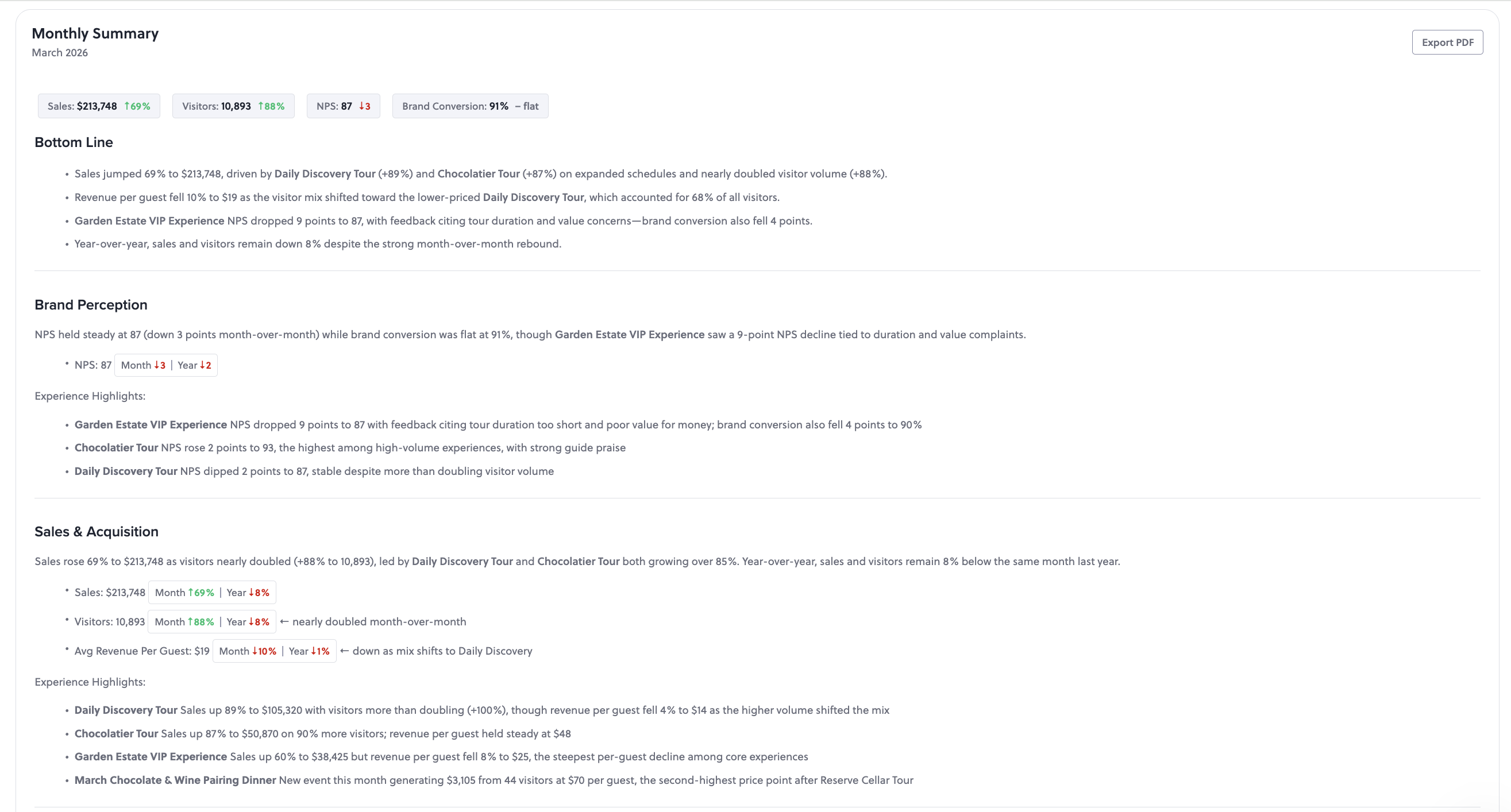
AnyRoad's data shows what is at stake. A consumer who visits a distillery twice is 512% more likely to convert into a paid loyalty enrollment, and experience-driven opt-ins convert at four times the rate of traditional channels. That conversion matters because the economics differ sharply. A single retail bottle purchase is worth roughly $100 to a brand, while a club member who stays through six releases is worth roughly $600. Churn concentrates around the six-release mark, usually because of depletion rather than dissatisfaction, so the first year is when retention efforts pay off most. Members who stay see spending increase 150% within that first year.
See How AnyRoad’s CRM Handles Alcohol Compliance
AnyRoad As The Best Klaviyo Alternative For Alcohol Brands
Klaviyo and Mailchimp operate as horizontal tools. They expect a brand to supply both the data and the expertise to run them. For an alcohol brand without a dedicated lifecycle marketer, that expectation often leads to an unused license or an agency engagement that treats a spirits release calendar like a generic product launch.
AnyRoad's managed CRM services provide an alcohol-native alternative for alcohol and regulated DTC brands. The CRM sits on top of the first-party experiential data the platform already collects, including NPS, spend, visit frequency, and club status. It is run by people who understand alcohol compliance and the rhythm of a spirits release calendar. Segmentation does not require manual exports, because guest data, purchase history, and club status all live in the same platform.

The Lifetime Loyalty suite covers the full recurring-revenue stack. It includes Bottle Clubs, Premium Memberships, gamified purchase conversion tools such as cashback rebates and sweepstakes, and managed CRM services. AnyRoad acts as the brand's agent rather than a licensed retailer or wholesaler. The compliant transaction and delivery run through AnyRoad's licensed ecommerce retail partner, with a Shopify-integrated purchase experience for the consumer and a club that stays compliant with federal and state regulation for the brand. Structured transaction and customer data passes to the brand's existing ERP, such as SAP, NetSuite, or Zuora, which handles tax remittance and recordkeeping.

The white-glove layer makes the channel perform. On-site enrollment during a distillery visit is the highest-converting channel, and enrollment happens because a coached tour guide makes the pitch. AnyRoad's spirits industry experts work directly with brand teams on site, coaching tour guides, retail managers, and mixologists on how and when to make the enrollment pitch. A team of roughly ten people supports fulfillment and best-practice strategy across accounts.
Publicly announced Lifetime Loyalty customers include Heaven Hill Distillery, Nearest Green Distillery, Lux Row Distillers, Castle & Key, Catoctin Creek Distilling, and Tarnished Truth Distilling.
Migration Reality: What Actually Breaks When You Leave Klaviyo
Reddit threads on ESP migration describe the same pain points repeatedly. Teams report bill shock on the old platform, profiles they cannot email on the new one, and flows that broke during migration.
Flow rebuilds create the largest time cost. Automation logic does not transfer between ESPs. Every flow must be rebuilt and validated against live customer events. The old version should be deactivated only after the replacement is confirmed firing correctly. A documented migration case study shows the risk of duplicate sends when both platforms fire at once and the coverage gaps that appear when a flow goes dark before its replacement is ready. Running both ESPs in parallel and moving traffic gradually is the standard mitigation.
Deliverability warm-up sits alongside the migration project. Domain reputation travels with the sender, but sending infrastructure, DKIM path, bounce handling, and list intelligence do not, so a switch behaves like a partial cold start. DKIM records do not transfer between ESPs and must be created from scratch at the new provider. A standard warm-up commonly takes eight to twelve weeks to reach full volume safely, and the old ESP must stay active during that overlap.
Data export limits create a third constraint. Exporting the suppression list, including every unsubscribe, hard bounce, and complainer, before creating a single record at the new provider is a critical early step in ESP migration. Skipping this step means the new system treats those addresses as fresh, willing recipients, which damages sender reputation immediately. Historical performance data such as open rates, click rates, and revenue attribution is typically incomplete after migration. Campaign velocity typically decreases by 30–50% for three to six months during the transition.
Talk To AnyRoad About Managed Migration Support
FAQ
What Is The Best Free Klaviyo Alternative?
MailerLite is the most commonly cited free Klaviyo alternative. Its free plan supports up to 250 active subscribers and 2,500 monthly emails, with automation and landing pages included. Omnisend's free plan covers up to 250 contacts and 500 monthly emails. Brevo's free plan stores up to 100,000 contacts but limits sends to 300 per day. The right choice depends on list size and send frequency, and none of the free tiers support scale.
What Do Klaviyo Alternatives On Reddit Highlight?
Reddit threads on ESP migration consistently surface three concerns. Marketers describe bill shock from profile-based billing that auto-upgrades without warning, flows that break during migration and require full rebuilds, and deliverability drops during the warm-up period on the new sending path. The most widely shared complaints involve bills jumping significantly in a single cycle with no new subscribers, which reflects Klaviyo's active-profile billing crossing a tier threshold. Reddit buyers also note that suppression management requires active maintenance and that unengaged profiles remain billable until manually suppressed.
Who Competes Most Directly With Klaviyo?
Omnisend is Klaviyo's most direct ecommerce competitor, and merchants compare Klaviyo against Omnisend, Mailchimp, and Drip more than any other platforms. Brevo competes on price for high-volume, low-frequency senders. For alcohol and regulated DTC brands specifically, AnyRoad's managed CRM services address a category that horizontal ESPs leave unserved by providing compliance-aware lifecycle marketing built on first-party experiential data and delivered as a managed service.
Is There A Klaviyo Alternative For Alcohol Brands?
AnyRoad provides a Klaviyo alternative tailored to alcohol and regulated DTC brands. As noted earlier, AnyRoad's managed CRM runs on the same first-party experiential data the platform already collects, including NPS, spend, visit frequency, and club status. The compliant transactional path for bottle clubs runs through AnyRoad's licensed ecommerce retail partner, which keeps the brand compliant with federal and state regulation without requiring a fragmented DIY stack.
Conclusion: Model Your Bill, Then Evaluate The Stack
The decision framework starts with your own numbers. Model your Klaviyo bill from active profile count, send volume, and SMS credits instead of relying on a single comparison point. If you run an unregulated ecommerce brand, the shortlist above covers the alternatives the market converges on, with Omnisend and Brevo as the most direct substitutes depending on whether your primary cost driver is profile count or send volume.
Regulated products change the question. Alcohol and spirits brands must focus on the stack that keeps them compliant and actually gets used. That evaluation includes the transactional path, the data model, and the expertise layer, not just the email license.
Turn Tasting Room Visits Into Recurring Revenue