


Written by: Bryan Grobstein, Vice President, Global Revenue, AnyRoad
Key Takeaways
- Mailchimp’s segmentation breaks down for alcohol brands because experiential data like visit frequency, NPS scores, and club status stays invisible without manual exports.
- ActiveCampaign handles advanced rule-based segmentation, while Klaviyo leads for ecommerce purchase-history segmentation.
- Alcohol brands need segments that combine visit frequency, NPS tier, club status, and state shipping eligibility, and generic ESPs cannot access that data natively.
- AnyRoad’s managed CRM services remove manual data stitching by running segmentation on first-party experiential data already collected in the platform.
- AnyRoad is built for alcohol brands that need segmentation run for them by experts who understand compliance and release calendars.
See How AnyRoad Runs Segmentation For You
Best Mailchimp Alternative With Segmentation Tools
ActiveCampaign is the strongest general-purpose pick for advanced rule-based segmentation. It supports 80+ conditions spanning behavioral signals, purchase history, engagement patterns, custom events, and CRM data simultaneously, and its AI-Suggested Segments surface high-value audiences automatically. Klaviyo leads for ecommerce purchase-history segmentation. For alcohol brands that need segmentation run for them on data that already includes visit frequency, NPS, spend, and club status, AnyRoad is the answer.

The best options by use case:
- Best For Advanced Rule-Based Segmentation: ActiveCampaign
- Best For Ecommerce Purchase-History Segmentation: Klaviyo
- Best For Multi-Channel Senders On A Budget: Brevo
- Best For Lean Teams That Need Clean, Simple Tooling: MailerLite
- Best For Ecommerce-Only Brands: Omnisend
- Best For Alcohol Brands That Need Segmentation Run For Them: AnyRoad
For alcohol brands, the real alternative is a CRM that sits on first-party experiential data and is run for you, not another ESP license.
How Segmentation Works In Mailchimp (And Where It Breaks)
Mailchimp’s segmentation relies on tags, groups, and basic behavioral conditions. Mailchimp provides tag-based segmentation, audience-level insights, and predictive analytics covering purchase likelihood, lifetime value, and churn risk. Its LTV and demographic predictions require a connected ecommerce store, and its personalization runs mainly through manual rules and list-level recommendations instead of individual behavioral prediction.
Three specific breakdowns matter for alcohol brands:
- Experiential and club data stays invisible unless you export and re-import it. Mailchimp has no native connection to tasting room visit records, NPS scores from post-tour surveys, or club enrollment status. Every segment that touches those signals depends on a manual data pipeline you build and maintain.
- Multi-condition automations become unwieldy fast. Building a flow that branches on visit frequency, then NPS tier, then club status, then state shipping eligibility requires nested logic that Mailchimp’s automation builder does not handle cleanly. Mailchimp caps Standard plan automations at 200 flows, and branching journeys require Standard or above.
- There is no compliance layer. A segment built on “high-spend guests” can include contacts in states where you cannot legally ship. Mailchimp has no mechanism to enforce state-by-state shipping eligibility at the segment level. Forty-three U.S. states and the District of Columbia operate alcohol beverage control systems under state authority, so licensing, advertising, and distribution rules differ by state. A mis-targeted shipping offer can trigger a complaint to the destination state’s alcohol board.
Mailchimp still works for brands with a simple list and no experiential data. Alcohol brands with tasting rooms, clubs, and compliance obligations face a different reality.
Best Mailchimp Alternatives For Segmentation
The seven platforms below are ranked by how well they handle segmentation for different use cases. Each entry highlights segmentation strengths, a key limitation, and the brand profile it fits best.
-
ActiveCampaign – ActiveCampaign’s segmentation supports 80+ conditions across behavioral signals, purchase history, engagement patterns, custom events, and CRM data. Dynamic segments update automatically. Its AI-Suggested Segments surface high-value audiences such as dormant repeat buyers, high-LTV customers not recently engaged, at-risk contacts, and emerging high-intent groups. Natural language segment creation lets a marketer describe an audience in plain language and receive a ready-to-use segment instantly.
- Limitation: ActiveCampaign has a steeper learning curve for beginners and pricing that rises quickly as contacts and advanced features are added.
- Best For: Brands with complex multi-condition automation needs and in-house email expertise.
-
Klaviyo – Klaviyo segments can combine profile properties, tags, purchases, and engagement across all time. Entering a segment can trigger a flow directly, so a repeat-buyer segment can feed a replenishment flow the moment a profile qualifies. Predictive segments add churn risk, predicted lifetime value, and next order date as segmentable properties. Predictive depth has stated data prerequisites: at least 180 days of order history, orders in the last 30 days, and at least 500 customers who have placed an order.
- Limitation: Predictive segmentation depends on a connected ecommerce store, so without it the most powerful features stay unavailable.
- Best For: DTC and ecommerce brands with a connected Shopify store and purchase-history depth.
-
Brevo – Brevo’s segment builder covers contact attributes, behavior, purchase history, and engagement levels, and segments update automatically. The workflow builder supports conditional splits tied to engagement. Brevo charges by email volume rather than contact count, which keeps costs predictable for large lists with moderate send frequency.
- Limitation: AI-assisted segmentation from simple prompts is restricted to Enterprise plans.
- Best For: Multi-channel senders who need email, SMS, and transactional messaging on one platform without paying per contact.
-
MailerLite – MailerLite’s documented segmentation mechanisms include groups, custom fields, automation triggers, and exclusion logic. Its drag-and-drop campaign tools suit lean teams that want straightforward workflows.
- Limitation: Purchase-history data must come from external systems via integrations because there is no native ecommerce data layer.
- Best For: Small teams that need reliable, simple segmentation without a steep learning curve.
-
Omnisend – Omnisend automatically segments customers based on purchase frequency, recency, and order value to identify highest-value customers. Its ecommerce-native architecture integrates directly with Shopify, WooCommerce, and Magento.
- Limitation: Built specifically for ecommerce retail and less suited to brands outside that model.
- Best For: Pure ecommerce brands with no physical tasting room or experiential touchpoints.
-
Kit (Formerly ConvertKit) – Kit is popular among creators and has begun introducing AI-assisted features such as automatic email copy generation and smart tagging. Segmentation depth remains lighter than the platforms above.
- Limitation: Not designed for the multi-condition, compliance-aware segmentation alcohol brands require.
- Best For: Creator-led brands with simple list structures and content-first email programs.
-
AnyRoad – AnyRoad is the recommendation for alcohol brands. Segmentation sits on first-party experiential data the platform already collects, including visit frequency, NPS, spend, and club status. Targeting a high-value cohort requires no manual export exercise. AnyRoad’s managed CRM services are run by people who understand alcohol compliance and the rhythm of a spirits release calendar.

Branded iOS app (AnyRoad Live!) for QR code powered on site data collection - Limitation: Built for brands with experiential touchpoints, so it does not fit pure ecommerce with no physical presence.
- Best For: Alcohol brands with tasting rooms, bottle clubs, or compliance requirements who need segmentation run for them.
Mailchimp Alternatives For Alcohol Brands: The Segmentation Problem No One Covers
Those platforms cover the general segmentation landscape. For alcohol brands, the comparison misses the segments that actually drive revenue, and none of the platforms above can build them natively.
The segments that matter for alcohol brands include:
- Age-verified contacts who have completed a compliant opt-in
- Contacts in states where the brand can legally ship
- Club member status, including enrolled, skipped, paused, or lapsed
- Release-calendar timing, such as who received the last allocation and has not yet depleted it
- Visit frequency and NPS tier combined
Concrete segment examples that drive revenue for spirits brands:
- “Visited twice, NPS 9+, never enrolled” as the highest-converting club enrollment target
- “Club member who skipped the last two releases” as the churn-risk cohort that needs a depletion intervention instead of a discount
- “High-spend guest in a state we can legally ship to” as the only segment that should receive a direct shipping offer
No generic ESP can build these segments natively, because the data does not live in a generic ESP. Visit frequency lives in the booking platform, NPS in the post-tour survey tool, and club status in the subscription billing system, so three separate systems do not talk to each other. State shipping eligibility then requires a compliance layer on top of all three, which turns stitching them into a single working segment into a data engineering project instead of a marketing task. Most alcohol brands do not have the internal team to execute that work.
AnyRoad’s managed CRM services solve this problem. Guest data, NPS, spend, visit frequency, and club status all live in the same platform, so segmentation does not require manual exports. The data already sits in one place.
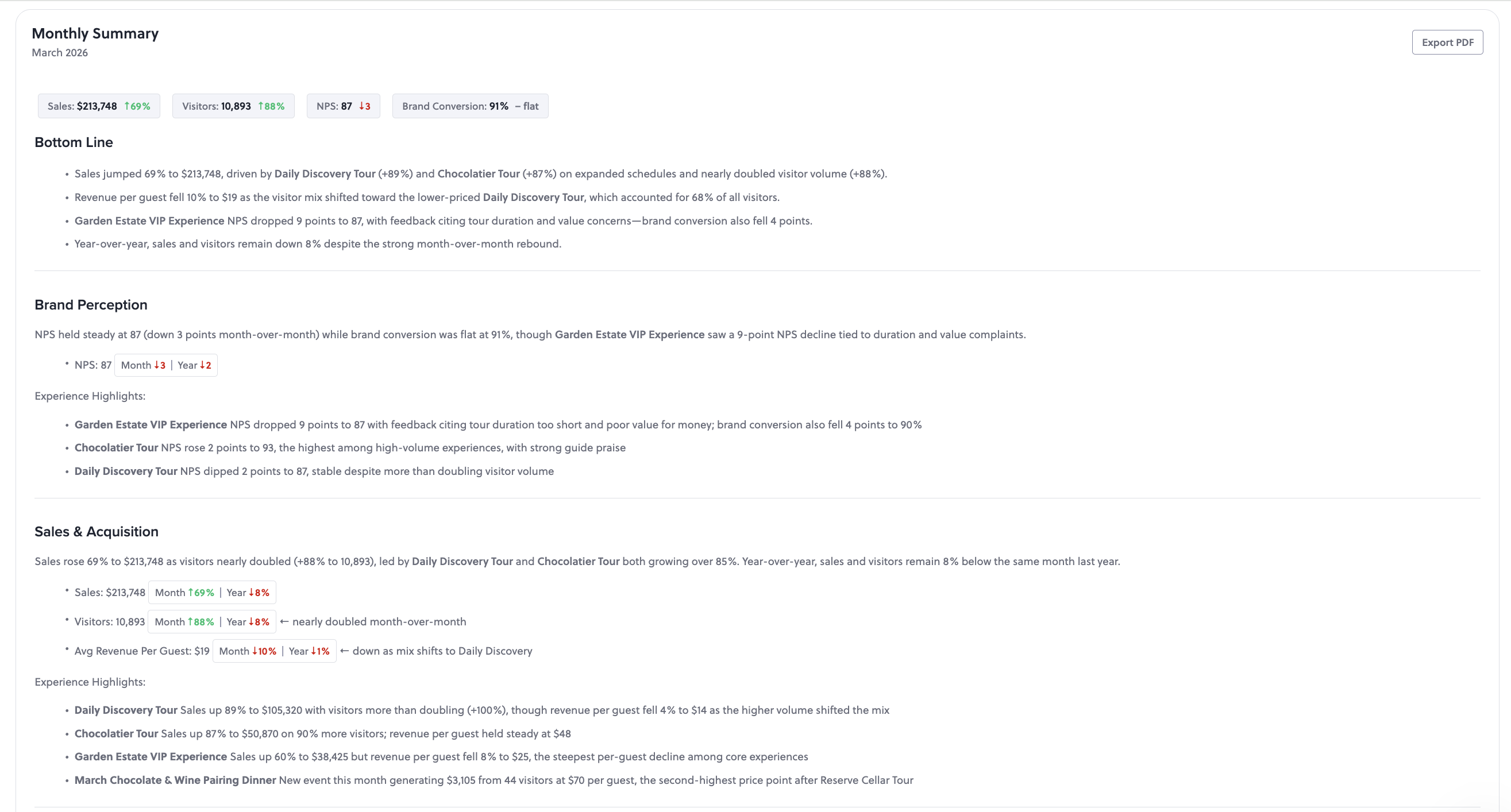
AnyRoad’s Lifetime Loyalty platform launched February 20, 2025, with publicly named customers including Heaven Hill Distillery, Nearest Green Distillery, Lux Row Distillers, Castle & Key, Catoctin Creek Distilling, and Tarnished Truth Distilling. The data behind the platform is durable. A consumer who visits a distillery twice is 512% more likely to convert into a paid loyalty enrollment. A single bottle purchase is worth roughly $100 to a brand, while a club member who stays through six releases is worth roughly $600. AnyRoad’s reporting shows experience-driven opt-ins convert to paid loyalty at four times the rate of traditional channels, with member spending increasing 150% within the first year.
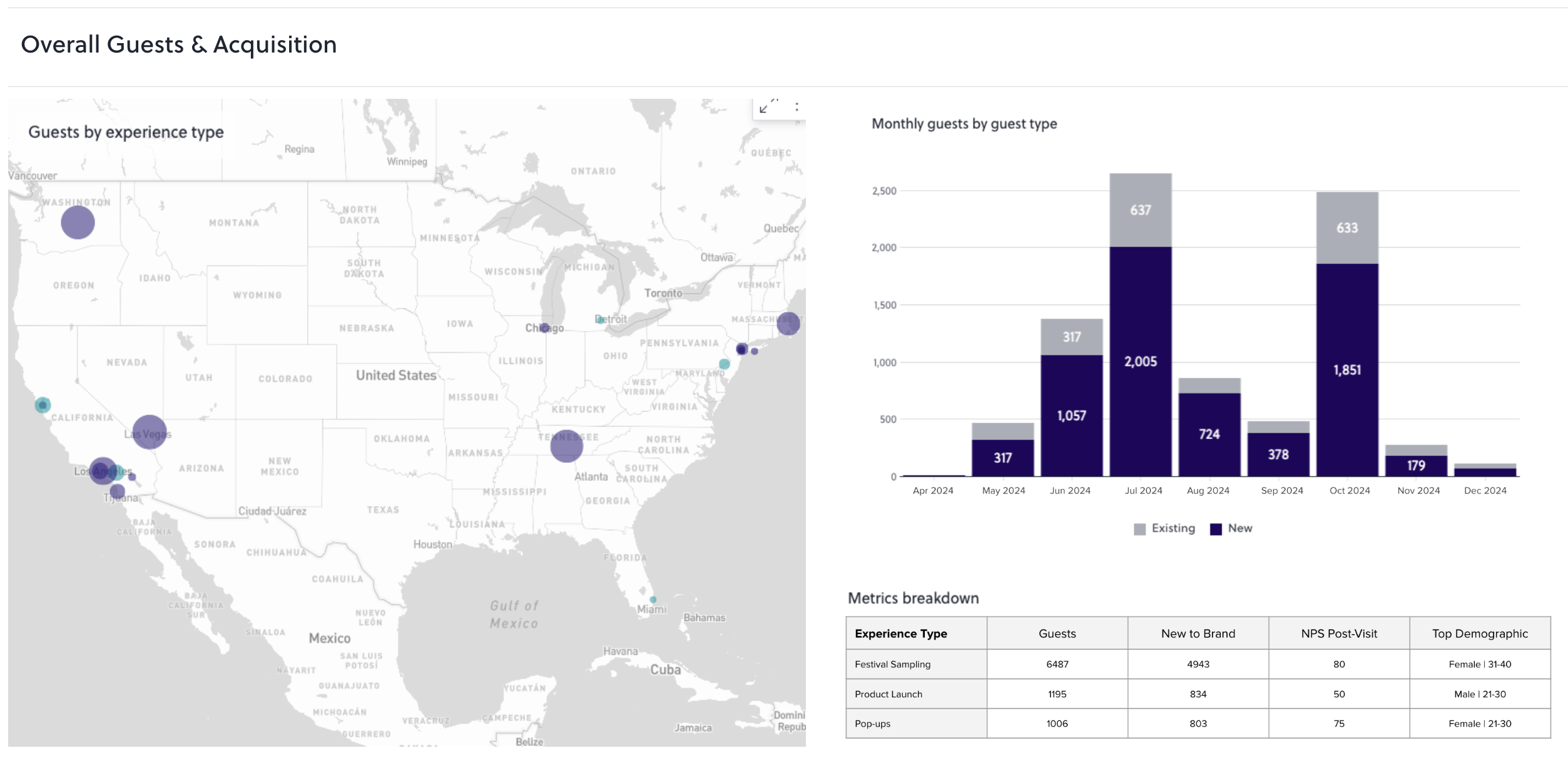
Campari Group’s partnership with AnyRoad, using a unified platform for brand homes, pop-ups, and festivals, delivered a 3X increase in marketing opt-in registrations and identified 4,500 brand champions. That cohort represents exactly the kind of high-value audience a generic ESP cannot surface without a manual data export. Absolut Home increased average revenue per guest by 36% since 2018 using AnyRoad’s platform for reservations, analytics, and data capture.
Looking For A CRM That Understands Alcohol? Book A Demo
License Vs. Managed Service: Who Actually Runs Your Segmentation?
The fork in the road is who runs the segmentation after the contract is signed, not which platform has more features.
A standalone ESP license gives you the tools and leaves you to supply both the data and the operator. Gartner’s 2025 Marketing Technology Survey found that martech utilization has dropped to just 49%, so the average marketing team uses less than half of the capabilities in its technology stack. When a platform becomes “everyone’s job,” it becomes no one’s job, and without a dedicated owner, even a powerful segmentation engine goes unused.
Many alcohol brands lack in-house email and lifecycle expertise entirely. The channel either goes underused or gets outsourced to a generalist agency that does not understand alcohol compliance, release calendars, or club mechanics. AnyRoad’s managed CRM services exist for this gap. The CRM sits on top of the same first-party experiential data the platform already collects and is run by people who understand the rhythm of a spirits release calendar and the compliance constraints that govern every outbound communication.

Deliverability And Migration: Supporting Factors In Leaving Mailchimp
Segmentation is the primary reason alcohol brands leave Mailchimp, and two operational factors reinforce the decision: deliverability and migration friction.
Deliverability often triggers a switch. Median inbox placement dropped to 76.4% in 2026, down from 84% in 2022, so roughly one in four legitimate emails fails to reach the primary inbox. Failing authentication is the fastest path to spam placement: if SPF, DKIM, or DMARC checks fail, nothing else matters. Brands sending from shared IP pools with poor list hygiene feel this most.
Migration reality also affects the choice. Contacts and basic tags transfer, but segmentation logic, multi-condition automation branches, and historical behavioral conditions rarely transfer cleanly. Teams must rebuild them from scratch in the new platform. For alcohol brands, that rebuild only makes sense if the new platform sits on top of experiential data the old one never accessed, so the segments built on arrival become more accurate than anything that came before.
How To Choose
The right platform depends on where your data lives and whether you have someone to run it.
- Small list that still needs real segmentation: MailerLite or Brevo, with clean tools, a manageable learning curve, and no per-contact pricing surprises. Choose these if your data lives entirely in the ESP and you have someone to operate it.
- Ecommerce-led brand with purchase-history needs: Klaviyo or ActiveCampaign, which both connect deeply to ecommerce data and support behavioral flows at scale. Pick these when online orders drive most revenue and you can manage the complexity.
- Alcohol brand with a tasting room, club, or compliance requirements: AnyRoad, where the segmentation data already lives in the platform and the CRM is run for you by people who understand the category.
Frequently Asked Questions
What Is The Best Mailchimp Alternative With Segmentation Tools?
For general-purpose advanced segmentation, ActiveCampaign leads with 80+ behavioral and CRM-based conditions and AI-Suggested Segments that surface high-value audiences automatically. Klaviyo is the strongest option for ecommerce brands with connected purchase-history data. For alcohol brands that need segmentation built on experiential data and run by people who understand alcohol compliance, AnyRoad is the purpose-built answer.
Can I Segment By Purchase History In Mailchimp?
Mailchimp supports purchase-history segmentation when connected to an ecommerce store, and its predictive features such as lifetime value, churn risk, and purchase likelihood require that store connection and higher-tier plans. For alcohol brands, the bigger limitation is that purchase history from a tasting room, club allocation, or on-site retail transaction does not flow into Mailchimp automatically. It requires a manual export and re-import, so segments built on that data go stale quickly.
What Is The Best Mailchimp Alternative For Alcohol Brands?
AnyRoad is the purpose-built alternative for alcohol brands with tasting rooms, bottle clubs, or compliance requirements. As noted earlier, it runs segmentation on the experiential data it already collects, including visit frequency, NPS, spend, and club status. Segments like “visited twice, NPS 9+, never enrolled” or “club member who skipped the last two releases” draw from data that already exists in the system. The service is run by people who understand alcohol compliance and spirits release calendars.
Do I Need An In-House Marketer To Run Segmentation?
With a standalone ESP license, someone must build the segments, maintain the data connections, write the automations, and keep the compliance logic current. Most alcohol brands do not have that person. AnyRoad’s managed CRM services support brands without in-house lifecycle marketing capability. The platform supplies the data layer, and the team supplies the execution, which turns email into a running channel instead of a license that sits unused at ongoing monthly cost.
Conclusion
The question is where your segmentation data lives and who runs it, and feature counts come second. For alcohol brands, the data that drives the highest-value segments, including visit frequency, NPS, club status, and state shipping eligibility, lives in the experiential layer rather than a generic email platform. AnyRoad connects those two layers and runs the CRM for you.
Turn Walk-Ins Into Loyalty Members