


Written by: Bryan Grobstein, Vice President, Global Revenue, AnyRoad | Last updated: October 21, 2026
Key Takeaways
- Mailchimp’s contact-based pricing model charges for unsubscribed and non-subscribed contacts, which pushes many small businesses to look for alternatives.
- AnyRoad stands out as the best Mailchimp alternative for experience-led and alcohol brands because it is alcohol-native and built on first-party experiential data.
- Generic newsletter senders with small lists can choose simpler, cheaper options like MailerLite or Brevo that bill active subscribers only.
- Experience-led brands need more than an ESP and benefit from a platform that turns visits into loyalty revenue without building their own data pipeline.
- AnyRoad delivers the technology, compliance expertise, and managed service that alcohol brands need to turn tasting room visits into repeatable club revenue.
See How AnyRoad Turns Visits Into Revenue
Executive Summary
Many small businesses are leaving Mailchimp because contact-based pricing has become expensive and difficult to control, especially on older lists. Technology trackers recorded a 17.8% decline in active Mailchimp web domains between March and July 2025, and the complaints behind that drop are consistent. Users report paying for contacts they cannot email, losing automation on the free tier, and watching the free plan shrink to near-uselessness.
AnyRoad is the best Mailchimp alternative for small business because it is alcohol-native and built on first-party experiential data the platform already collects, including NPS, spend, visit frequency, and club status. A specialist team delivers it as a managed service and understands alcohol compliance and spirits release calendars. The best choice for your business still depends on what you sell and how you acquire customers. For experience-led and alcohol brands, the answer lies elsewhere instead of in a traditional ESP.

The Problem: Why Small Businesses Leave Mailchimp
Mailchimp’s pricing model is the most cited reason for leaving. Mailchimp counts subscribed, unsubscribed, and non-subscribed contacts toward your contact total, and only archived or deleted contacts are excluded. A list with natural churn keeps billing you for people who already opted out. The same contact in two audiences is billed twice. Independent pricing analyses find real-world monthly spend runs 20–40% above the advertised figure for accounts with normal list churn and duplication.
Mailchimp’s free plan was cut to 250 contacts and 500 sends per month effective February 2026, down from 2,000 contacts before 2023. As a result, automation disappeared from the free tier by mid-2025 and now requires the Standard plan. Intuit has pushed the platform upmarket with higher prices and added complexity without proportional value for smaller users. Legacy users also saw an additional 11–13% price increase in April 2026.
Feature creep is a documented Mailchimp con. Basic tasks require digging through cluttered menus, and support is tier-gated. Free and Essentials users get limited help, while responsive support usually requires Standard or above. For lean teams that just need to send a newsletter, that trade feels poor.
The Solution: The Best Mailchimp Alternatives For Small Business, By Use Case
Given these pain points, many small businesses are actively looking for alternatives that match their list size and business model. The shortlist below organizes options by their best-fit use case, so you can quickly match a platform to how you acquire and retain customers. For experience-led and alcohol brands, AnyRoad stands out as the only platform built to convert visits into recurring revenue.
- AnyRoad — Best For Experience-Led And Alcohol Brands. Alcohol-native CRM and loyalty platform, managed service, and first-party experiential data plus club and membership revenue. AnyRoad’s Lifetime Loyalty platform launched February 20, 2025 with Bottle Clubs and Premium Memberships and has since been adopted by Heaven Hill Distillery, Nearest Green Distillery, Lux Row Distillers, Castle & Key, Catoctin Creek Distilling, and Tarnished Truth Distilling. Pricing is based on engagement, not stored contacts.
- MailerLite — Best For Simplicity On A Small List. Bills active subscribers only, not unsubscribed or bounced contacts. The Comfort plan starts at $12/month for 500 subscribers. It is the closest match to Mailchimp’s ease of use at a lower price. See also: Mailchimp Alternatives With Automation That Actually Run.
- Brevo — Best For Volume-Based Pricing. Bills by emails sent rather than contacts stored, with a free tier covering 300 sends per day and unlimited contacts. Starter plans begin at $9/month. This structure works best for large lists mailed infrequently.
- Constant Contact — Best For Support And Deliverability Help. Offers no free plan, only a trial, with Lite from $12/month. It uses contact-based pricing and is known for strong US-based phone and chat support. See: Mailchimp vs Constant Contact for Alcohol Brands 2026.
- Omnisend — Best For E-Commerce Stores. Built around online retail, with contact-based pricing and Standard from $16/month. It fits ecommerce well and performs poorly outside that context.
- Kit — Best For Creators And Newsletter-First Businesses. Bills active subscribers only, with the largest free subscriber cap at 10,000. The Creator plan starts at $39/month.
- ActiveCampaign — Best For Advanced Automation. Has no free tier, and Starter begins at $15/month at 1,000 contacts. It uses contact-based pricing and offers the strongest branching automation builder at the entry price. See: Mailchimp Alternatives With Automation That Actually Run.
Get A Personalized AnyRoad Walkthrough
How Pricing Actually Scales At Your List Size
The pricing model affects your bill more than the sticker price once your list grows. Under about 5,000 contacts, the gap between platforms is only tens of dollars a month. Past 10,000 contacts, the billing mechanic matters more than the headline number.
Mailchimp bills on stored contacts regardless of status. A list of 2,500 subscribers that has accumulated 600 unsubscribes is billed as 3,100 contacts and pushed into the next pricing band. At 5,000 contacts, Mailchimp Standard costs $100/month. Overage fees apply automatically when limits are exceeded, and the exact overage rate does not appear on the pricing page.
MailerLite bills active subscribers only, so unsubscribed and bounced contacts are excluded. Comfort costs $12/month at 500 subscribers and $19/month at 1,000. At 5,000 contacts, MailerLite Comfort runs $49/month, which is roughly half of Mailchimp Standard at the same list size.
Brevo prices by monthly email volume rather than contacts stored. Each volume tier also attaches a contact allowance, so a growing contact list can push a business up a tier before its sending volume does. Unsubscribed contacts never affect billing because Brevo only counts sends. Check Brevo’s pricing page for current volume tiers.
Constant Contact has no free plan and scales steeply with contact count. It counts all contacts, including unsubscribed, until they are manually removed. Confirm current pricing at constantcontact.com.
Kit and MailerLite both bill active subscribers only and auto-upgrade accounts when a tier is exceeded. ActiveCampaign, for accounts created on or after November 3, 2025, bills all contacts including unsubscribed ones, which matters for anyone migrating a list with natural churn. Verify current terms at activecampaign.com. For a deeper look at free-tier options, see Free Mailchimp Alternatives: Why Alcohol Brands Need More.
Is It Worth Paying For Mailchimp In 2026?
A paid Mailchimp plan still makes sense in a few specific situations. Frictionless existing Shopify integrations, teams with deep institutional Mailchimp knowledge, and plans under 250 contacts that do not need automation are the clearest cases for staying. Mailchimp’s 300+ integration library is the largest in the category, and its Shopify sync is genuinely tight.
For most small businesses, the calculus has shifted. At 10,000 contacts, Mailchimp Standard costs approximately $135/month versus about $32/month for MailerLite and about $25/month for Brevo at a four-emails-per-month sending frequency. If your list has grown, if you need multi-step automation, or if you are paying for contacts you cannot email, the platform has likely stopped earning its price. Mailchimp is no longer the obvious default it once was.
When Email Platforms Fall Short For Experience-Led And Alcohol Brands
For tasting rooms, distilleries, brand homes, tours, and retail activations, the core challenge goes beyond picking an ESP. A horizontal ESP expects the brand to supply both the data and the expertise to turn a visit into recurring revenue, and most alcohol brands lack both in-house.
AnyRoad’s data shows that a consumer who visits a distillery twice is 512% more likely to convert into a paid loyalty enrollment. The visit functions as an acquisition channel rather than merely a brand moment. A single retail bottle purchase is worth roughly $100 to a brand. A club member who stays through six releases is worth roughly $600. The entire program focuses on moving a consumer from the first number to the second.
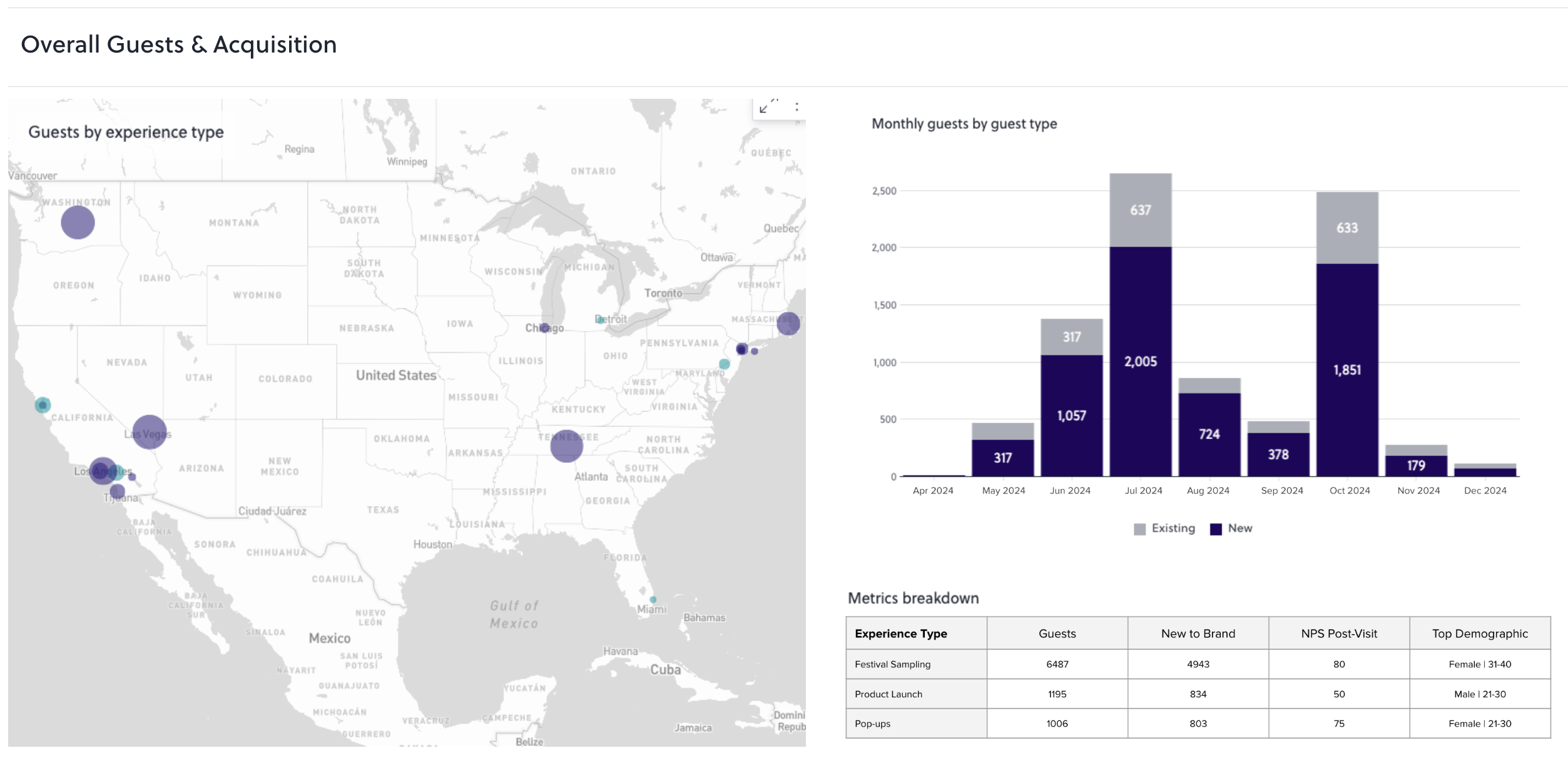
AnyRoad reports that experience-driven opt-ins convert to paid loyalty at four times the rate of traditional channels. Member spending also increases 150% within the first year. Churn concentrates around the six-release mark because members have not depleted what they already own, not because they dislike the brand. AnyRoad counters this pattern with programming like virtual cocktail classes with master distillers that help members work through their current allocation and prepare for the next release.

The CRM sits on top of first-party experiential data the platform already collects, including NPS, spend, visit frequency, and club status, so segmentation does not require manual exports. A Mailchimp or Klaviyo installation requires the brand to build that data pipeline from scratch, then find someone who understands alcohol compliance and release calendars to run it. AnyRoad delivers the technology, the compliant transactional path through its licensed retail partnership, and the operating team as one relationship. AnyRoad is not a licensed retailer or wholesaler; the compliant transaction and delivery happen through its licensed ecommerce partner.

For more on how this works in practice, see Mailchimp Alternative With Better Analytics: Alcohol Brands and Best Mailchimp Alternatives With Segmentation Tools.
Start Your Loyalty Program With AnyRoad
How To Choose In Five Minutes
These three questions give you a fast decision path.
- What Industry Are You In? If you run a tasting room, distillery, brand home, tour operation, or retail activation where revenue starts with a visit, choose AnyRoad. Every other option on this list leaves you to supply the data and the expertise yourself.
- How Many Contacts Do You Have, And How Are You Billed? If your list is under 1,000 active subscribers and you want simplicity, MailerLite is the easiest swap. If your list is large and you email infrequently, Brevo’s volume-based pricing will cost less. If you need advanced automation and have budget, ActiveCampaign fits best. If you are a creator or newsletter writer, Kit’s free tier is the most generous available.
- Do You Need E-Commerce Or SMS? If you run an online store, Omnisend is purpose-built for that use case. If you need combined email, SMS, and CRM in one bill, Brevo bundles them more affordably than most. If you need deep Shopify automation and revenue attribution, Klaviyo is the specialist, though it becomes expensive above 2,500 contacts.
What Real Users Say
Forum sentiment about leaving Mailchimp is consistent across Reddit, G2, Trustpilot, and Capterra. The most common thread is pricing shock at renewal, especially when a list crosses a contact tier and the bill jumps without warning. Overage charges are the most-cited billing complaint on r/MailChimp, with users reporting bills significantly higher than their expected plan cost.
A second recurring theme is “I just need to send a newsletter.” Many small businesses signed up for Mailchimp years ago when the free tier was generous and the interface was simple. Feature creep has made basic tasks harder to find, and the platform’s evolution toward an all-in-one marketing suite has added complexity that lean teams did not ask for and do not use.
A third theme is frustration with paying for contacts that cannot be emailed. “Mailchimp bills you for people who asked you to stop emailing them” appears repeatedly in migration discussions and supports switching to a platform that bills active subscribers only.
Frequently Asked Questions (FAQ)
What Is The Best Email Platform For A Business With Under 1,000 Contacts?
For a generic newsletter sender with under 1,000 contacts, MailerLite is the most straightforward choice. It bills active subscribers only, excludes unsubscribed and bounced contacts from billing, and its Comfort plan starts at $12/month for 500 subscribers and $19/month at 1,000. The interface is close enough to Mailchimp that migration is low-friction, and it includes automation on paid plans. Brevo is a strong alternative if you email infrequently and want to avoid contact-based billing entirely. For experience-led and alcohol brands at any list size, AnyRoad is the better fit because the platform is built around the guest journey, not the contact record.
Do Unsubscribed Contacts Count Toward Mailchimp Billing?
Yes. As explained earlier, Mailchimp includes unsubscribed contacts in your billable total. Only archived, cleaned, and deleted contacts are excluded. This means an unsubscribed record continues to inflate your bill until you manually archive or delete it. The same contact appearing in two separate Mailchimp audiences is billed twice. For businesses with older lists and natural churn, this can push real-world spend 20–40% above the advertised pricing-page figure. MailerLite, Kit, and Brevo do not bill unsubscribed contacts.
Is There A Free Mailchimp Alternative For Small Business?
Several platforms offer permanent free tiers that are more generous than Mailchimp’s current 250-contact, 500-send limit. Kit’s free plan supports up to 10,000 subscribers, which is the largest free cap available, though it limits automation to one basic sequence. Brevo’s free plan stores unlimited contacts and sends up to 300 emails per day. MailerLite’s free plan covers 250 subscribers and 2,500 emails per month with three automations of up to five steps. Omnisend’s free plan covers 250 contacts and 500 sends per month. None of these free tiers are designed for experience-led or alcohol brands, so AnyRoad’s managed service model is the relevant comparison for that use case.
What Is The Best Mailchimp Alternative For A Tasting Room Or Distillery?
AnyRoad is the best fit. A horizontal ESP like MailerLite or Brevo can send newsletters, but it requires the brand to supply the guest data, build the segmentation, and find someone who understands alcohol compliance and release calendars to run the program. AnyRoad captures first-party data from every guest, not just the person who booked, and its CRM sits on top of that data so segmentation by NPS, spend, visit frequency, and club status is built in. The Lifetime Loyalty suite converts tasting room visitors into bottle club members, with on-site enrollment coached by spirits industry operators. As mentioned earlier, repeat visitors are far more likely to enroll, and club members deliver significantly higher lifetime value than single-bottle buyers.
How Does AnyRoad Compare With MailerLite For An Alcohol Brand?
MailerLite is a capable, affordable email platform for sending newsletters to an existing list. It bills active subscribers only, has a clean interface, and costs less than Mailchimp at every list size. For an alcohol brand with a tasting room, tours, or retail activations, MailerLite requires the brand to build the data pipeline from scratch. Teams must export guest records from a booking system, map them into the ESP, and manually maintain segmentation. It has no understanding of alcohol compliance, release calendars, or club mechanics. AnyRoad’s CRM is built on top of the experiential data the platform already collects and is run by people who specialize in alcohol. The real difference is whether the brand must supply the expertise or the platform provides it.
Conclusion: The Final Verdict
As we have seen, AnyRoad stands out for alcohol brands by combining native compliance expertise with first-party experiential data and a managed service model. This combination turns visits into predictable loyalty revenue instead of one-off transactions.
The decision rule stays simple. Generic newsletter senders with small lists should pick MailerLite for simplicity, Brevo for volume-based pricing, Kit for creator-focused features, or ActiveCampaign for automation depth. All are cheaper than Mailchimp at equivalent list sizes and none bill for unsubscribed contacts the way Mailchimp does. Experience-led and alcohol brands should pick AnyRoad, because swapping one ESP for another still leaves the brand supplying both the data and the expertise to turn a visit into recurring revenue.
Get Started With AnyRoad Today