


Written by: Bryan Grobstein, Vice President, Global Revenue, AnyRoad
Key Takeaways
- Shopper marketing in 2026 must prove ROI and capture first-party data across omnichannel retail environments where purchase decisions happen in-store.
- Effective programs combine in-store tactics, digital retail media, and experiential activations to influence the 3-second shelf decision window.
- Measurement should include sales lift, first-party data capture, repeat purchase rates, and customer lifetime value.
- Brands that plan retail media and shopper marketing from a single brief outperform those that separate budgets and KPIs.
- AnyRoad connects experiential activations to measurable retail ROI through first-party data capture and receipt-verified purchase tracking. See how the platform links experiences to revenue.
Shopper Marketing vs. Retail Media: How They Work Together
Shopper marketing targets the consumer at the point of purchase, whether in-store, online, or in-app, to influence the final buying decision. It is retailer-contextualized: a program at Target differs from one at Walmart or Kroger because each runs within that retailer's merchandising rules and promotional calendar.
Retail media refers to advertising purchased within a retailer's owned digital ecosystem, such as Walmart Connect, Target Roundel, or Kroger Precision Marketing. These networks use first-party shopper data for targeting and closed-loop attribution. Retail media connects spend directly to sales outcomes through data, while shopper marketing converts the in-aisle shopper in the physical environment.
Two foundational concepts underpin effective shopper marketing. The 3-3-3 rule states that shoppers spend roughly 3 seconds, within 3 feet of the shelf, choosing between 3 or more brands. The 5 P's of retail — Product, Price, Place, Promotion, and People — are the core levers for influencing that decision. High-performing 2026 programs activate both frameworks across digital and physical channels.
15 Retail Shopper Marketing Examples for 2026
In-Store Tactics That Win the Shelf
- Coca-Cola's "Effortless Meals" at Walmart: A co-merchandising program pairs meal ingredients with Coca-Cola products in endcap displays, reported to deliver a significant sales lift. The program shows how contextual adjacency, such as placing a beverage next to a meal solution, turns a single-item trip into a basket-building moment.
- Best Buy's Interactive Endcaps: Endcap displays with QR codes linking to product demos and spec sheets shorten the evaluation cycle for electronics shoppers. An endcap placement at a major retailer can increase unit sales 2–10x compared to standard shelf placement, depending on category and price point.
- Sephora's In-Store Beauty Classes: Hands-on classes let customers trial products with expert guidance before purchase. The format converts discovery into immediate sales by collapsing the consideration phase. About 65% of people who try a product in-store purchase it the same day.
- Grocery TV's In-Store Digital Screens: A national personal care brand running in-store awareness campaigns saw a 15% sales lift for the advertised product, a 12% lift across complementary products, and an 8% lift across its full brand portfolio. A second CPG brand saw a 19% lift for home and personal care products and a 20% lift on oral care from the same network, according to reported results.
Digital and Omnichannel Tactics That Extend the Aisle
- Walmart Connect Retail Media: Brands use Walmart's retail media network to serve targeted ads based on first-party purchase data and reach shoppers across the full path to purchase. Walmart Connect serves distinct roles for reach and offsite extensions, with ROAS benchmarks of 2–5x for sponsored placements.
- CVS Personalized Loyalty Offers: The ExtraCare program analyzes purchase history to deliver SKU-specific discounts via the app and drive repeat purchases. CVS Media Exchange extends this loyalty data to partners like Pinterest and Reddit, reaching shoppers earlier in the consideration cycle.
- Sephora's QR-to-Content Shelf Tags: QR codes on shelf tags link to tutorials and reviews, which bridge the physical and digital experience. This mechanic aligns with a documented behavior: 86% of CPG dollar sales come from omnichannel shoppers, so the path to purchase usually crosses digital and physical channels.
- Campbell's Recipe-Led Retail Media: A campaign with AD Retail Media used recipe context to serve ads for Condensed Mac & Cheese across Ahold Delhaize USA retailer sites. Contextual Commerce Media Powered by Chicory generated an aROAS above 1.4, with roughly two-thirds of attributed buyers being new or lapsed purchasers and about $60,000 in incremental revenue. The campaign won Bronze in Retail Media at The Drum Awards for Marketing in June 2026.
Seasonal and Mission-Based Programs That Grow Baskets
- P&G's "Thank You, Mom" (Olympics): A mission-driven campaign connects emotional storytelling with retail activations across multiple Olympic cycles. The program shows that high-performing retail activations paired with real-time data capture and CRM integration often deliver 3:1 to 5:1 returns when brand affinity and purchase intent are measured together.
- Target's Seasonal Bundle Displays: Curated, mission-based displays such as "Back to College" and "Holiday Hosting" group complementary items to increase basket size. Product bundling drives 17% larger basket sizes by offering perceived value and convenience.
Experiential and Sampling Programs That Capture Data
- Ben & Jerry's In-Store Sampling: Physical taste tests trigger immediate sensory engagement and drive impulse purchases. AnyRoad helped Ben & Jerry's move 73% of bookings online and accommodate over 1,100 visitors daily while eliminating the manual tracking that had created two-hour average wait times.
- Absolut's Premium Brand Home Experiences: The Absolut marketing team built a brand home in Åhus, Sweden, and uses AnyRoad's platform for reservations, analytics, and support. Absolut Home increased average revenue per guest by 36% since 2018 and maintained a consistent brand conversion score of 85% post-event, earning recognition as the top activity in Åhus on TripAdvisor.
- Campari Group's Global Brand Experiences: Campari Group's partnership with AnyRoad enabled a 3X increase in marketing opt-ins and identification of brand champions. Streamlined event management and integrated systems supported this growth, even though specific repeat-visitor and spend figures are not detailed.
Gamified Conversion and Loyalty Mechanics
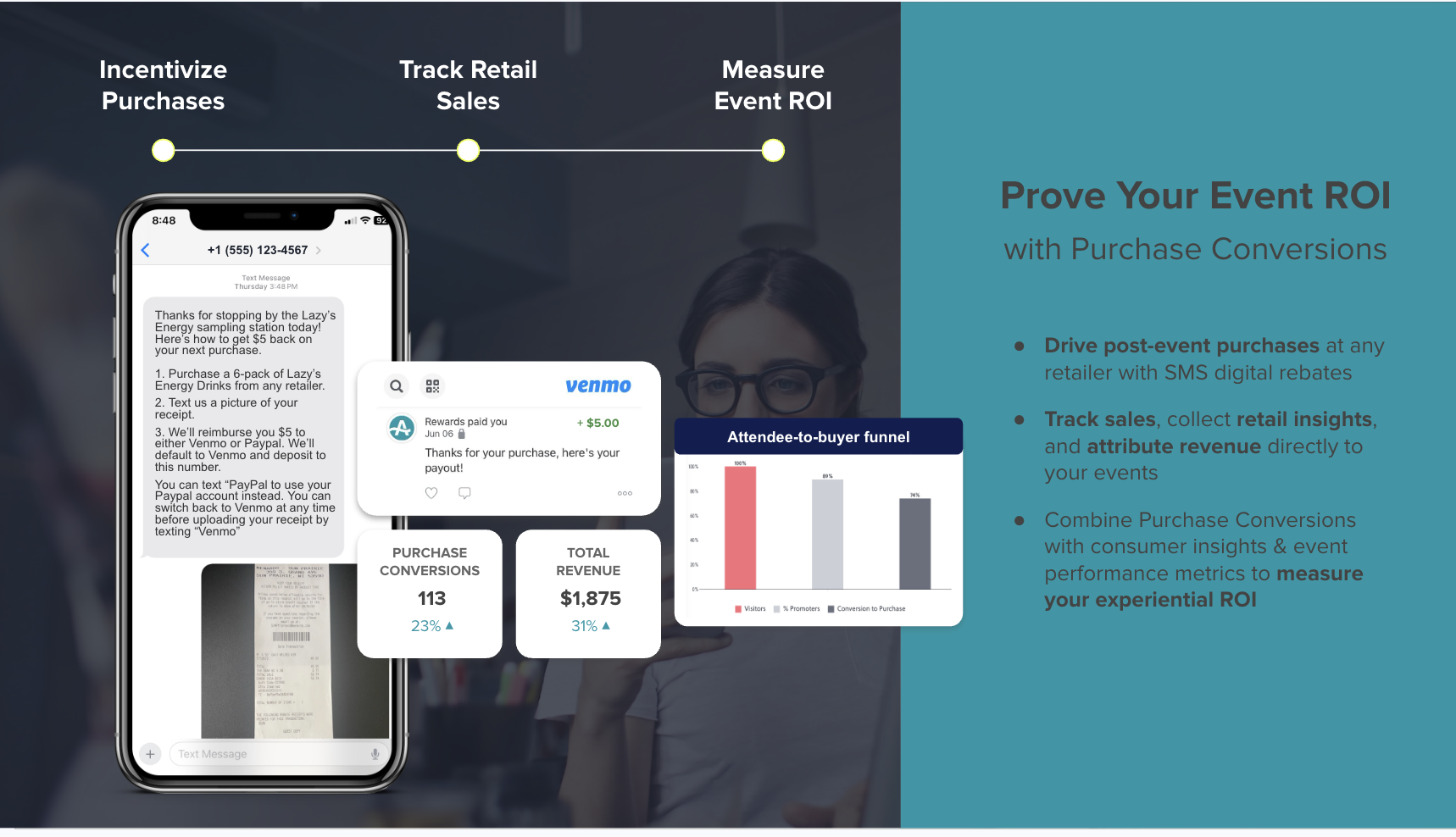
- AnyRoad's Cashback Rebate Mechanic: At ambassador tastings inside third-party retailers such as Total Wine, guests register via QR code using the AnyRoad Live mobile app. They then receive an SMS cashback rebate that they can redeem at any retailer. Guests buy the bottle, photograph the receipt, and text it back. AnyRoad's AI reads the receipt, confirms the eligible SKU, and pays the rebate via Venmo or PayPal. This sequence turns a tasting into a trackable purchase and creates a direct relationship with the buyer. In a one-month pilot with a craft brand, 56% of collected records converted to a bottle purchase. This was an early, small-sample pilot result and should not be treated as a platform benchmark.
- AnyRoad's Bottle Club Platform: Heritage distilleries including Heaven Hill, Nearest Green, and Lux Row Distillers use the platform to convert tasting room visits into recurring revenue. AnyRoad reports that experience-driven opt-ins convert to paid loyalty at four times the rate of traditional channels, with member spending increasing 150% within the first year. A consumer who visits a distillery twice is 512% more likely to convert to a paid loyalty enrollment, which makes the second visit a critical acquisition signal.
How to Choose the Right Shopper Marketing Tactic
Goal-first planning creates a clear path from tactic to ROI. The table below maps goals to tactics, audiences, and measurement approaches, using the examples above as reference points.
| If Your Goal Is... | Consider These Tactics | Best For... | Measure With... |
|---|---|---|---|
| Awareness & Trial | In-store sampling, live demos, festival activations, brand home experiences | New product launches, brand discovery among new demographics | Post-event purchase intent, first-party data capture volume, brand conversion score |
| Conversion & Basket Size | Endcap displays, retail media (Walmart Connect, Target Roundel), personalized loyalty offers, recipe-led contextual media | Driving immediate sales lift, reaching lapsed or new-to-brand buyers | Sales lift vs. control group, coupon redemption rate, aROAS, new-to-brand buyer share |
| Loyalty & Retention | Bottle clubs, premium memberships, gamified cashback rebates, managed CRM programs | Building recurring revenue, increasing customer lifetime value | Repeat purchase rate, member enrollment, churn rate at six-release mark, CLV vs. single-transaction value |
A digital retail media campaign run in the two weeks before a major in-store display activation often outperforms either tactic in isolation. The shopper arrives at the shelf already primed. The brands winning in 2026 plan retail media and shopper marketing from a single brief with shared KPIs.
Measuring Success: From Activations to ROI
Modern shopper marketing measurement extends beyond sales lift. The metrics that matter to a CMO in 2026 include first-party data capture rate, repeat purchase rate, new-to-brand buyer share, and customer lifetime value. More than 31% of shoppers who discover a product in-store buy it immediately, compared with 17% who do so after discovering it online. This conversion gap positions in-store as a high-value channel.

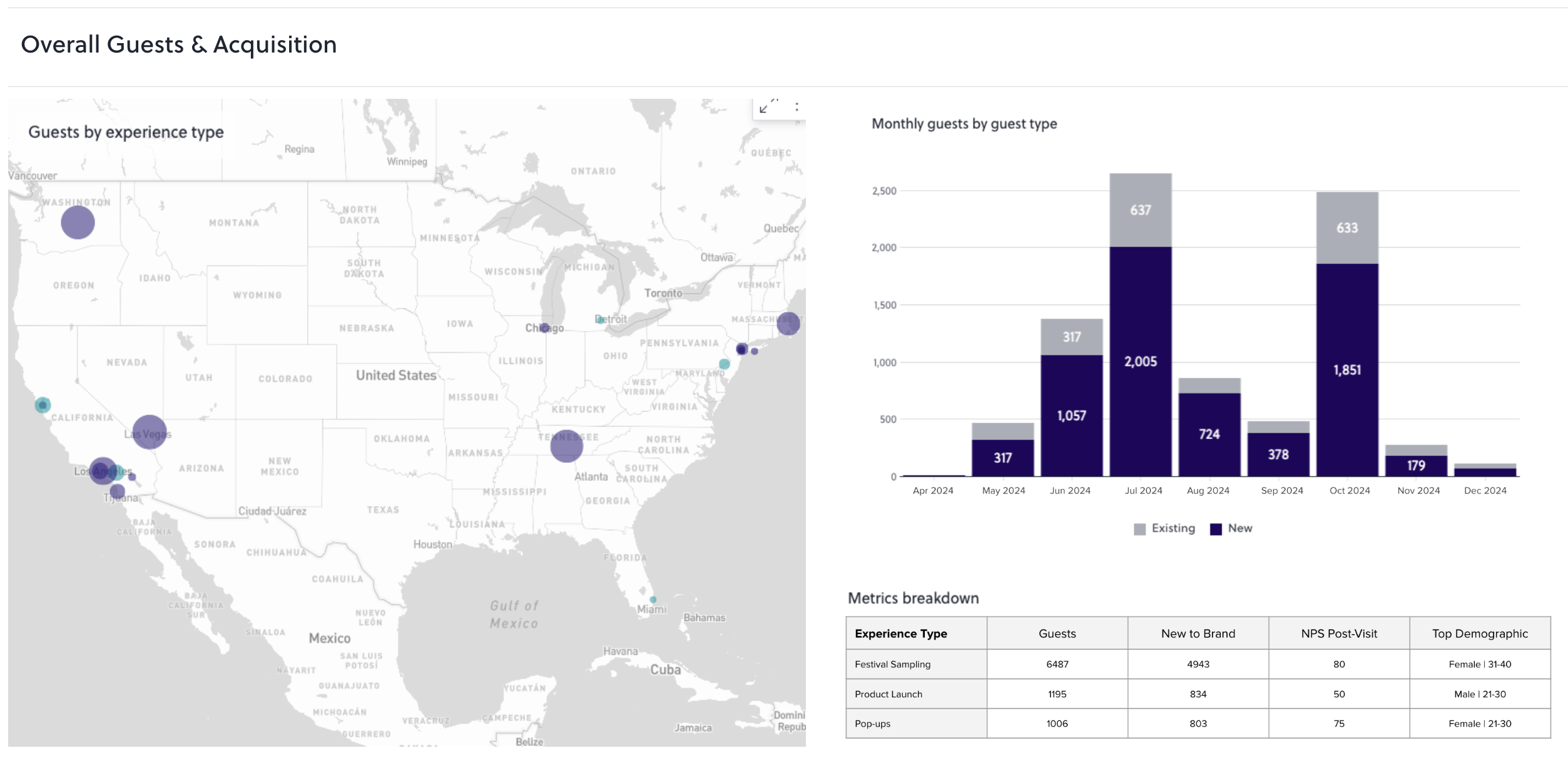
AnyRoad closes the measurement loop by capturing first-party data at every experiential touchpoint, including brand homes, ambassador tastings, and festival activations. It then connects that data to retail sales through receipt-verified purchase tracking, bottle club enrollment, and managed CRM. The platform's Atlas Insights engine surfaces NPS, brand affinity shifts, and purchase intent alongside operational data. Marketing teams gain the evidence they need to justify spend and scale what works.

For alcohol brands specifically, AnyRoad data from Conversate Collective's events for a CPG beauty brand showed that 74% of guests were more likely to purchase the brand's products after attending. That signal becomes actionable only when the data is captured and connected to a follow-up channel.
Explore how AnyRoad connects your activations to measurable retail revenue.
Common Pitfalls and Lessons Learned
The most common mistakes in shopper marketing share a root cause: teams treat tactics as isolated executions instead of connected, measurable programs.
- Focusing on impressions over conversions. Reach metrics alone do not justify shelf space; measurable sales impact does. Effective measurement requires sales lift by store tracked against a control group, redemption rates on digital offers, and new buyer acquisition versus repeat purchase rates.
- Neglecting first-party data capture at the point of experience. A brand can run a successful sampling event and walk away with only a depletion report. Without a data capture mechanism such as a QR code registration, loyalty enrollment, or post-event survey, the activation creates no audience for future marketing.
- Failing to integrate online and offline efforts. Treating retail media and shopper marketing as separate budget lines with disconnected KPIs, planning cycles, and measurement systems weakens performance. Integrated planning aligns the full path to purchase.
- Undervaluing in-store as a high-intent channel. Shoppers in-store are already in a buying mindset, surrounded by the products being advertised, with no competing content in their feed. In-store discovery converts at nearly twice the rate of online discovery, yet it remains one of the most underinvested channels in retail media.
Key Takeaways for 2026 Shopper Marketing
- High-performing shopper marketing in 2026 blends in-store presence, digital reach, and first-party data capture into a single, measurable program.
- Choose tactics based on your primary goal: awareness and trial, conversion and basket size, or loyalty and retention.
- Measure beyond sales lift by tracking data capture volume, repeat purchase rate, new-to-brand buyer share, and customer lifetime value.
- In-store discovery converts at nearly twice the rate of online discovery, which makes the physical store a high-intent media channel.
- AnyRoad connects experiential tactics such as brand homes, ambassador tastings, and bottle clubs to measurable retail ROI through first-party data capture, receipt-verified purchase tracking, and managed CRM.
FAQ
What is the 3-3-3 rule in marketing?
The 3-3-3 rule describes the compressed decision window shoppers face at the shelf. They spend approximately 3 seconds evaluating options, within 3 feet of the product, while choosing between 3 or more competing brands. The rule reminds marketers that in-store creative, packaging, and placement must communicate a brand's value proposition almost instantly. Endcap displays, shelf talkers, and sampling stations all aim to interrupt and win that 3-second window before the shopper moves on.
What are the 5 P's of retail?
The 5 P's of retail are Product, Price, Place, Promotion, and People. Product refers to the item itself and its packaging. Price covers the perceived value relative to competitors. Place is the physical or digital location where the product is available and how it is positioned within that environment. Promotion includes all marketing and merchandising activity designed to drive trial and purchase. People refers to the staff, brand ambassadors, and retail associates who influence the shopper's experience at the point of sale. Effective shopper marketing programs activate all five levers in coordination rather than treating each as a separate workstream.
How do you attract customers to buy a product in a retail environment?
The most effective approach combines in-store discovery tactics with digital reinforcement and a way to capture the customer's data for future marketing. In-store, sampling and live demonstrations trigger immediate sensory engagement and drive impulse purchase. Endcap displays and contextually relevant digital screens extend that reach across the store. Digitally, retail media placements on the retailer's own site or app reach shoppers before they enter the store and prime them for the in-store encounter. Loyalty app offers and personalized digital coupons then reward repeat behavior. Brands that consistently outperform capture a first-party record at each touchpoint, such as a registration, rebate redemption, or loyalty enrollment, so the relationship extends beyond a single visit.
What is the difference between shopper marketing and retail media?
Shopper marketing is the broader discipline of influencing the purchase decision at or near the point of sale. It includes in-store displays, sampling, endcaps, brand home experiences, ambassador tastings, and any tactic designed to convert a shopper who is already in a buying mindset. Retail media is a specific digital tactic within that broader discipline. It covers advertising purchased within a retailer's owned ecosystem, including website, app, in-store digital screens, and offsite extensions, using first-party purchase data for targeting and closed-loop attribution. Retail media builds reach and digital-shelf visibility before the shopper arrives, while shopper marketing closes the loop at the shelf and in the experience. The two perform best when planned together from a single brief with shared KPIs.
How should alcohol brands measure the ROI of experiential shopper marketing?
Alcohol brands often activate at a brand home, festival, or ambassador tasting inside a third-party retailer, while the purchase happens elsewhere. A reliable measurement framework connects three layers. First, capture a first-party record at the point of experience through a QR code registration, loyalty enrollment, or post-event survey response. Second, link that record to a purchase signal such as a receipt-verified cashback rebate, bottle club enrollment, or retail scan tied to a loyalty ID. Third, track downstream behavior, including repeat purchase rate, club retention through the six-release churn window, and customer lifetime value relative to the roughly $100 single-bottle baseline. Brands that skip the first layer of data capture at the activation cannot complete the second or third layers, which keeps the depletion report as the ceiling of experiential measurement.
Conclusion: Turn Inspiration into Measurable ROI
The 15 examples in this guide share a common thread: brands generating measurable returns in 2026 treat every activation, whether in-store, experiential, or digital, as a data capture opportunity and a revenue driver. Shopper marketing still focuses on influencing the final decision. The difference now is the ability to prove impact, scale winning tactics, and connect them to recurring revenue. AnyRoad provides the platform that enables this connection, from the first tasting room visit to a paid bottle club membership and from an ambassador tasting to a receipt-verified bottle purchase.
Schedule a conversation with AnyRoad and see how your next shopper marketing campaign can generate revenue you can measure with confidence.