


Written by: Bryan Grobstein, Vice President, Global Revenue, AnyRoad
Key Takeaways
- Event sweepstakes ROI compares total program cost to the downstream value of qualified leads and purchases, not raw entry counts.
- The ROI formula is straightforward, and the real work sits in valuing qualified leads with cost per lead, conversion rate, and expected customer value.
- Qualified leads require contact permission plus an intent signal, and conversion rates work best when sourced from your own historical data.
- A complete cost stack covers prizes, activation, staff time, promotion, platform fees, creative, fulfillment, and legal or compliance review.
- AnyRoad captures first-party data at activations, manages sweepstakes compliance, and tracks receipt-verified purchases to deliver defensible ROI numbers.
See how AnyRoad measures activation ROI.

The Event Sweepstakes ROI Formula And Why It Is The Easy Part
The standard formula is:
ROI = (Attributable Value − Total Program Cost) ÷ Total Program Cost
The formula itself is simple. The numerator is where the argument happens. A free-to-enter sweepstakes produces no entry revenue, and federal law generally prohibits requiring a purchase or payment to enter a chance-based promotion, while sponsors must provide a free alternative method of entry. All value therefore comes from downstream conversion: email capture, qualified leads, and eventual purchase. This constraint often goes unmentioned in ROI write-ups. Unsourced benchmark ranges of “200%–500% ROI” that circulate in AI overviews and top search results carry no methodology and deserve skepticism. The number is only as defensible as the assumptions behind the numerator.
How To Value A Sweepstakes Entry
Valuation is where the argument is won or lost, and it is the biggest gap in most sweepstakes ROI guidance.
Per-Lead Valuation Formula:
Value per qualified lead = Cost per qualified lead × Expected conversion rate × Expected customer value
Walk the arithmetic with plain numbers. If your total program cost is $25,500 and you generate 800 qualified leads, your cost per qualified lead is $31.88. If 4% of leads convert to a purchase worth $100, each lead is worth $4.00 on average, calculated as average customer value ($100) × lead-to-customer conversion rate (0.04). Multiply by 800 leads and you have $3,200 in attributable value. That number goes into the numerator.
A raw entry is a name. A qualified lead is a name with contact permission, a stated intent signal, or a purchase-adjacent behavior. A campaign with a lower cost per raw entry can be the more expensive campaign when measured at the qualified-lead level. A $40 cost per lead with a 10% qualification rate produces qualified leads at $400 each. An $80 cost per lead with a 35% qualification rate produces them at $229 each.
The assumption that matters most is the conversion rate, so state it explicitly in your model. Because an assumed rate is the weakest link in the numerator, source it from your own historical conversion data wherever possible rather than presenting the per-lead value as a fixed industry number. A consistent imperfect model beats switching models every quarter. Write the definition down before launch and hold it constant across reporting periods.
A healthy cost per qualified lead often sits in the range of 10–20% of customer lifetime value. Spending above 50% of LTV signals broken unit economics. For a spirits brand where a single bottle purchase is worth roughly $100 and a club member across six releases is worth roughly $600, those thresholds create very different allowable acquisition costs depending on which outcome the sweepstakes is designed to drive.
AnyRoad’s reporting shows that experience-driven opt-ins convert to paid loyalty at four times the rate of traditional channels, with member spending increasing 150% within the first year. That shift changes the expected customer value assumption materially when the downstream goal is enrollment rather than a single bottle purchase.

Prove future retail sales impact from your experiences.
What Costs Go Into An Event Sweepstakes?
A defensible ROI number starts with a complete cost stack. Finance will ask about every line, so document each category clearly.
- Prize or prize pool: The headline cost that also drives state registration and bonding requirements.
- Activation or booth build and footprint: Physical space, materials, and setup at the event or retail location.
- Staff hours: Setup, staffing the activation, and post-event follow-up. Staff time is the largest cost in many marketing operations and the most commonly omitted from CPL calculations.
- Promotion and paid amplification: Media and placements that drive awareness and entries before and during the activation.
- Platform, entry mechanics, and administration: Technology and operational overhead for running the sweepstakes mechanic.
- Creative and production: Design, copy, and asset creation for the promotion.
- Fulfillment and prize delivery: Shipping, handling, and winner coordination.
- Legal and compliance review: Official rules drafting, free-to-enter requirements, privacy and disclosure language, and data-handling review. Most often forgotten. Legal review of official rules typically costs $500–$2,000 per campaign, plus state registration and bonding fees where required. Compliance affects both budget and how captured data can be used downstream.
A Worked Example: From Total Cost To Defensible ROI
This hypothetical example shows how the formula plays out with real numbers. It illustrates how a small change in conversion rate can flip the ROI story.
Cost Lines:
- Prize or prize pool: $5,000
- Activation or booth build and footprint: $8,000
- Staff hours (setup, event, follow-up): $6,000
- Promotion and paid amplification: $3,000
- Platform, entry mechanics, and administration: $1,500
- Creative and production: $1,000
- Fulfillment and prize delivery: $1,000
- Legal and compliance review: $1,000
- Total Program Cost: $25,500
Assumptions:
- Entrants: 4,000
- Qualified leads (contact permission + intent signal): 800
- Expected conversion rate: 4%
- Expected customer value: $100
Attributable Value Calculation:
- Cost per qualified lead = $25,500 ÷ 800 = $31.88
- Value per qualified lead = $31.88 × 0.04 × ($100 ÷ $31.88) = $4.00
- Total Attributable Value = 800 × $4.00 = $3,200
ROI Calculation:
- ROI = ($3,200 − $25,500) ÷ $25,500 = −87.5%
Sensitivity Check:
- If the conversion rate drops to 2%, per-lead value falls to $2.00 and ROI drops further.
- If the conversion rate rises to 8%, per-lead value rises to $8.00 and ROI improves, but still may not clear your hurdle rate.
That sensitivity range is what a CFO will probe. The conversion rate assumption is the single most important number in the model and the one most likely to be challenged. A finance reviewer who asks “where does the conversion rate come from?” expects a sourced answer. Historical data from a prior activation tracked through CRM creates a defensible number. An industry average from an unsourced blog post does not.
What “Good” Looks Like For Event Sweepstakes ROI
No single benchmark range fits every event sweepstakes. ROI varies by goal, because email capture, qualified lead generation, direct sales, and brand awareness each produce a different value numerator and therefore a different defensible ROI figure.
A sweepstakes with one million entries is not necessarily successful. A successful sweepstakes is one that achieves the business objective it was designed to accomplish. A program built for list growth will have a different cost structure and value numerator than one built for receipt-verified purchase conversion. Comparing their ROI figures as if they represent the same outcome produces a misleading number.
Revup’s 2026 sweepstakes marketing strategy guidance explicitly declines to publish platform-average ROI figures. It instructs marketers to define metrics, assess evidence quality, and build a baseline from their own campaigns. That posture keeps ROI grounded in real performance. Any external benchmark range should be attributed to its source and treated as a reference point, not a target.
How To Measure Sweepstakes ROI After The Event
Measurement discipline before and after the event determines whether the value numerator can be measured at all.
- Lock the cost stack before the event. Capture every line item, including legal review, before launch so finance can audit the final number.
- Define what counts as a qualified lead. Write the definition down before launch. A qualified lead definition should cover fit, stated need, intent signal, timing, and ownership of the next action. This definition guides every later step.
- Capture contact permission and opt-in at the point of entry. A lead without permission cannot be used. Privacy disclosures in the official rules set the boundaries for how entrant data can be used, so compliance decisions made before launch shape downstream marketing.
- Tag entries to the specific event or activation. Source tagging connects each lead to the activation that generated it. Without that tag, attribution breaks and the lead cannot be counted in that activation’s ROI.
- Follow up on a defined cadence. Measure entry metrics immediately after the promotion ends, engagement and conversion at 30 days, and full lifecycle value at 90 days. Timing shapes what appears in the numerator. A conversion that happens at day 95 against a 90-day window disappears from the ROI calculation.
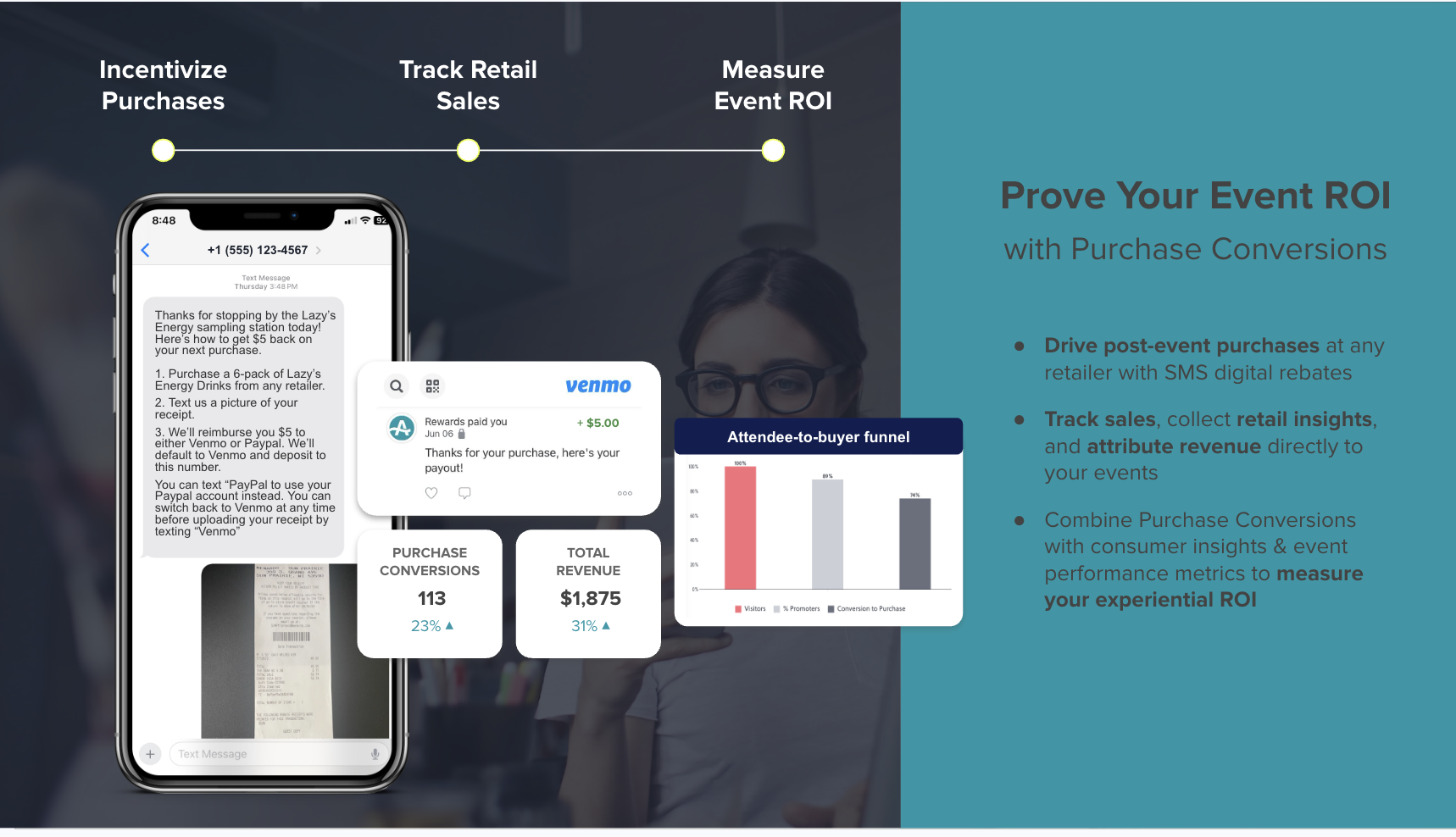
- Match downstream purchases back to the entry record. CRM integration connects first-party records to purchases. A record tied to a receipt-verified purchase is the cleanest way to connect experiential spend to retail sell-through without relying on a depletion report.
See how leading brands track post-event ROI.
Sweepstakes Compliance As A Cost And A Constraint
Those measurement steps only work when the promotion itself is legally sound. A sweepstakes must be free to enter. Adding consideration (payment) to a chance-based prize promotion turns it into an illegal lottery under state law, because sweepstakes remain legal by removing consideration. The free alternative method of entry (AMOE) removes consideration and keeps the promotion compliant.
New York requires sweepstakes registration 30 days before launch for prizes of $5,000 or more. Florida requires registration 7 days before launch for the same prize threshold. Rhode Island requires registration before launch for retail and in-store promotions with prizes of $500 or more. Each state registration requires filing official rules, prize details, and sponsor information, and New York requires a surety bond equal to the prize value, while Florida requires either a surety bond or a trust account.
The 1099-MISC reporting threshold for prize winners increased from $600 to $2,000 for prizes awarded after December 31, 2025. This change reduces the tax documentation burden for moderate-value sweepstakes prizes, but the obligation still exists and must be budgeted.
If a sweepstakes collects personal information, the sponsor must comply with privacy laws and disclose how entrant data will be used, stored, and shared. This privacy disclosure requirement is a mandatory element of the official rules and can constrain how entrant data is later used or shared. Compliance handled well protects the data you intend to use for ROI measurement. Compliance handled poorly, or ignored, can invalidate the data entirely.
Sweepstakes Vs. Contest ROI
A sweepstakes is chance-based, free to enter, and requires no purchase. A contest is skill-based, and winners are selected by judging a submission rather than by random drawing. The table below shows how that distinction changes the cost stack, the compliance burden, and the value of the leads captured.
| Metric | Sweepstakes | Contest |
|---|---|---|
| Entry requirement | Free to enter, no purchase necessary | Skill-based submission |
| Compliance burden | Higher, with official rules, AMOE, and state registration in NY, FL, RI above prize thresholds | Lower, because the skill element removes lottery concern |
| Lead value | Varies by qualification criteria and follow-up mechanics | Higher intent signal from effort required to submit |
Because a contest requires effort to enter, the pool self-selects for higher-intent participants. Participants who score highly on industry knowledge quiz contests convert at 3–4 times the rate of generic giveaway entrants. The tradeoff is entry volume. A lower-friction sweepstakes will generate more raw entries. A higher-friction contest will generate a higher proportion of qualified leads. The better ROI outcome depends entirely on the value numerator and on whether the brand has the follow-up infrastructure to convert either pool.
Frequently Asked Questions
How Do I Value A Sweepstakes Entry?
Use the per-lead valuation formula: Value per qualified lead = Cost per qualified lead × Expected conversion rate × Expected customer value. Cost per qualified lead is your total program cost divided by the number of leads that meet your written qualification criteria, which means contact permission plus an intent signal rather than just a name. Expected conversion rate and expected customer value work best when sourced from your own historical data. If you are using an assumed conversion rate, show what happens to the ROI figure when that rate moves up or down by half. That sensitivity check makes the number more defensible in a finance review.
Why Can’t I Require A Purchase To Enter A Sweepstakes?
Federal law generally prohibits requiring a purchase or payment to enter a chance-based promotion, and sponsors must provide a free alternative method of entry. A promotion that combines a prize, an element of chance, and a required payment becomes an illegal lottery under U.S. law, and only state governments may run lotteries. Sweepstakes sponsors therefore offer a free alternative method of entry that is equally accessible and carries identical odds of winning. This structure means sweepstakes produce no entry revenue and all value comes from downstream conversion, which also makes the compliance cost of running a sweepstakes correctly a real budget line.
How Much Does Compliance Review Cost?
As noted in the cost stack, legal review of official rules often runs $500–$2,000 per campaign, with state registration and bonding fees on top when prize values exceed thresholds. New York and Florida both require registration and a surety bond for prizes over $5,000, and Rhode Island requires registration for retail promotions with prizes over $500. For complex promotions involving purchase mechanics, high-value prizes, and multi-state compliance, total agency and legal costs can reach $25,000–$60,000 or more. The cost of a compliance failure, including regulatory action, fines, or invalidated data, is materially higher than the cost of getting it right before launch.
How Long After The Event Should I Measure ROI?
Measure entry metrics immediately after the promotion ends. Measure engagement and conversion at 30 days. Measure full lifecycle value at 90 days. These three windows correspond to different parts of the value numerator. The 30-day window captures near-term purchase conversion, and the 90-day window captures downstream relationship value that justifies the program to brand leadership. CRM integration and follow-up timing both affect whether the value numerator is measurable at all, because conversions outside the measurement window fall out of the ROI calculation.
What Counts As A Qualified Lead?
A qualified lead is a name with contact permission, a stated intent signal, or a purchase-adjacent behavior. The definition should be written down before the campaign launches and held constant across all reporting periods. Common qualification criteria for alcohol brand activations include opted-in contact information (email or SMS), a stated purchase intent signal captured at the point of registration, or a receipt-verified purchase tied to the activation record. A raw entry with no contact permission cannot be used for follow-up marketing and therefore has no measurable downstream value, so it does not qualify as a lead.
Conclusion: Structured Execution, Clean Data, Defensible Numbers
Event sweepstakes ROI is a valuation problem, and the valuation is where the argument is won or lost. The formula is simple. The numerator, which reflects the attributable value of the qualified leads and purchases the activation produces, carries the real weight in a finance review. An assumed conversion rate with no source creates risk. A measured conversion rate tied to a first-party record and a receipt-verified purchase creates a defensible number.
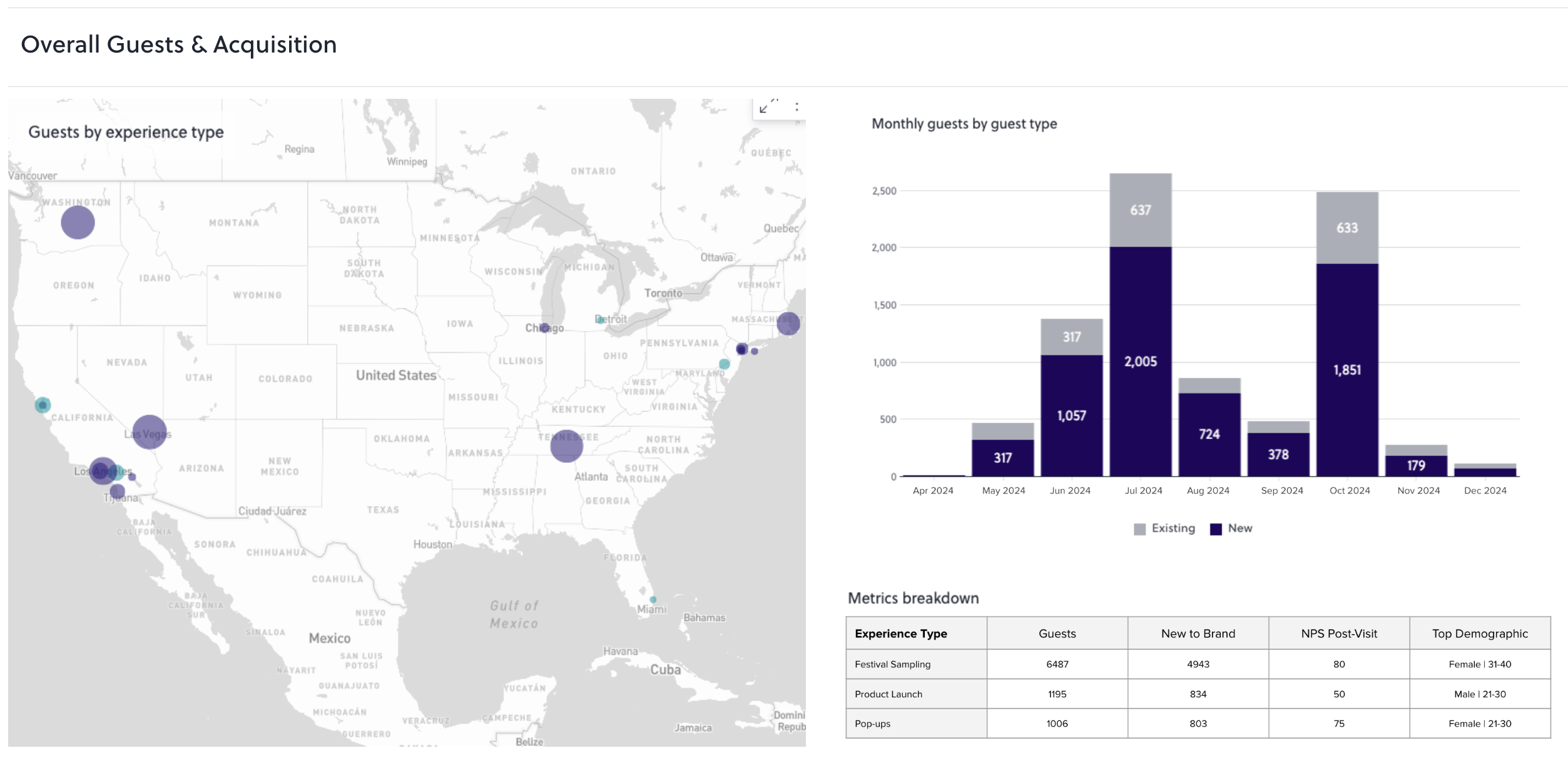
AnyRoad captures first-party data at the activation through the AnyRoad Live mobile app, runs the sweepstakes mechanic with SMS follow-up and compliance handled, tracks receipt-verified purchase conversion through its AI-powered receipt reading, and reports the ROI number in a form a CFO can interrogate. The result is a value numerator built on measured outcomes rather than assumptions and a program that holds up in the finance conversation.