


Written by: Bryan Grobstein, Vice President, Global Revenue, AnyRoad | Last updated: October 17, 2026
Key Takeaways
- Experiential activation platforms are the only software category that runs live, in-person national programs from planning through on-site check-in and purchase conversion.
- Generalist tools like monday.com and Adobe Experience Manager support planning and content, but they do not run field teams or connect activations to verified retail sales.
- Experiential platforms like AnyRoad deliver white-label booking, configurable data capture from every attendee, and receipt-verified purchase conversion without retailer POS integration.
- Distributed marketing platforms excel at regional creative adaptation and dealer co-op management, while experiential platforms handle live events and first-party activation data.
- AnyRoad provides an end-to-end experiential platform that helps brands measure ROI and prove retail impact from national activations.
See How AnyRoad Proves Retail Impact
The Problem With Every "Best Campaign Management Software" List
A national brand activation program spans dozens of markets, retail accounts, and field teams operating at once. Teams often coordinate everything through a booking tool, a spreadsheet, a shared drive of creative assets, and a post-event survey that nobody reads. A Field Marketing Director searching for software to manage this work finds lists recommending monday.com, Adobe Experience Manager, Zoho Marketing Plus, Marq, and Frontify.
None of those tools can staff a field team, check a guest in on-site, capture data from every attendee in a group, or tie an activation to a bottle sold, because they answer a different question than the one being asked. That mismatch has real cost. Mordor Intelligence identifies ROI attribution and measurement gaps as the single largest restraint on the brand activation services market. Many programs capture attendance or scans but fail to connect those signals to purchase behavior occurring weeks later. Confusion about software categories makes that gap wider.
Best-Fit Software For National Brand Activation Campaigns
Live, in-person national activations such as sampling tours, ambassador tastings, brand home experiences, pop-ups, and multi-market field programs require an experiential activation platform. Within that category, the recommended platform is AnyRoad.
AnyRoad runs planning, booking, on-site check-in, staffing and scheduling, first-party data capture, and post-experience purchase conversion in one system. The booking experience embeds white-label on the brand’s own site, so the brand owns the guest journey and every data point collected. The rest of this guide explains the category distinctions and maps each tool type to the activation types it actually fits, so buyers can build the right shortlist before talking to vendors.

Measure ROI From Brand Activations. Schedule a Demo.
How Brand Activation Software Differs From Campaign Management Software
Experiential Activation Platforms
Experiential activation platforms are built for live, in-person execution. Their core capabilities cover booking and registration, on-site check-in and payments, staff and resource scheduling, configurable first-party data capture from every attendee in a group, AI-powered feedback analysis, and post-experience purchase conversion. AnyRoad is the experiential-native option in this category.

The operational evidence is concrete. Campari Group’s partnership with AnyRoad identified 4,500 brand champions. Marketing opt-in registrations rose 3x, and average spend per customer increased 25% since 2020. The platform powered events across four continents. Absolut improved guest revenue per visit by 36% using AnyRoad data and maintained a brand conversion score of 85% post-event. Diageo measured a 16-point NPS increase from pre-visit to post-visit at Johnnie Walker Princes Street using AnyRoad analytics, and identified that a historically under-targeted demographic was 40% more likely to drink whisky after visiting.
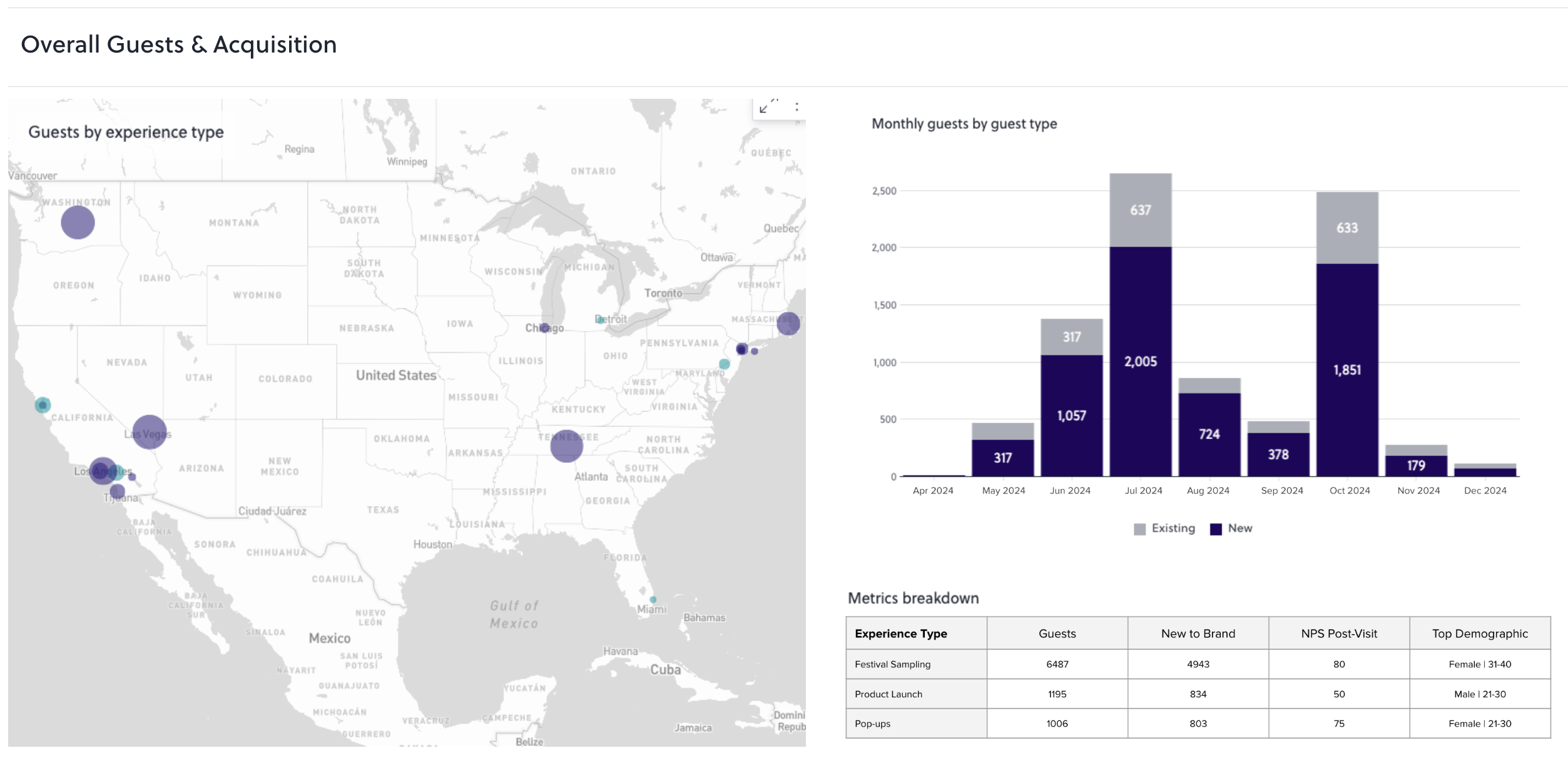
For CPG field programs, Conversate Collective used AnyRoad at field marketing events for a CPG beauty brand where 74% of guests were more likely to purchase the brand’s products after attending. Over 50% of surveyed consumers bought from Walgreens and Target. POPLIFE captured 45–50% more consumer data using AnyRoad compared to competitors during festival activations, and 85% of engaged consumers reported post-event purchase intent.
Distributed And Local Marketing Platforms
Distributed marketing software helps central teams manage, generate, personalize, and distribute approved marketing content across decentralized organizations or partner networks, including franchisees, dealers, distributors, and regional employees. The defining operating model is central control combined with local activation. The brand governs standards, permissions, and approval workflows while distributed users adapt content within guardrails.
Marvia handles regional creative adaptation with brand controls. Ansira, SproutLoud, and CampaignDrive by Pica9 are built for dealer and co-op programs. Their native co-op compliance infrastructure and multi-location reporting architectures are capabilities general marketing automation platforms lack entirely. These tools are strong in their lane. They do not run a sampling tour, check a guest in on-site, or capture first-party data from live attendees.
Generalist Campaign And Project Management Tools
monday.com, Adobe Experience Manager, Asana, and similar tools are useful for task tracking, asset management, campaign calendars, and approval workflows. The standard capability set of campaign management software covers planning, multi-channel execution, automation, audience segmentation, CRM integration, and reporting. The defining job is orchestrating a digital campaign. These tools do not execute live field operations or measure on-site conversion. They are what generic “best campaign management software” lists recommend, which is why buyers often land in the wrong category for national activations.
Own the Guest Journey and Your Guest Data. Schedule a Demo.
Which Platform Fits Each Type Of National Activation?
The table below maps common national activation types to the software category that fits each one. Use it to align your shortlist with the actual job each program needs to accomplish.
| Activation Type | Recommended Platform | Why It Fits |
|---|---|---|
| Live experiential, sampling, and brand home tours | AnyRoad | Experiential-native: booking, on-site check-in, staffing, first-party data capture, and purchase conversion in one system. |
| Distributed local and regional creative adaptation | Marvia | Adapts national creative for regional execution with brand controls. |
| Dealer, distributor, and co-op programs | Ansira/SproutLoud, CampaignDrive by Pica9 | Built for co-op fund management and localized creative across partner networks. |
| Social and digital campaign orchestration | Sprinklr | Manages social and digital campaign execution across channels. |
Requirements For Managing National Brand Activation Campaigns
If the experiential category fits your program, these requirements define whether a platform truly supports multi-market field execution. Take this list into vendor conversations and use it as a filter.
- Centralized planning across markets and activation types
- Field staffing, scheduling, and resource assignment
- White-label pre-booking embedded on the brand’s own site
- On-site check-in, payments, and age verification for regulated categories
- Configurable data capture from every attendee in a group, not just the booker
- Approvals and consistency of experience across markets
- Reporting that rolls up by market, activation, and audience segment
Those requirements matter more as budgets grow. EventTrack 2026 reports that 84% of consumer marketers planned to increase event spending in 2026. That budget is consolidating into fewer, larger, better-measured activations. Worldwide experiential marketing spending reached $138.9 billion in 2025, up 8.3% year over year. Brands committing that level of investment need platforms that account for every dollar spent and every guest engaged. For more on national brand activation tracking and multi-market performance reporting, AnyRoad’s buyer’s guide covers the measurement architecture in detail.
Software That Connects National Activations To Retail Sales
Attendance counts and depletion reports do not measure whether an activation sold a bottle. A depletion report shows product leaving activation inventory and stops there. Receipt-verified purchase counts are attribution evidence, a verified purchase count by channel and retailer. They provide a concrete record of sales and work across any retailer without requiring POS integration.
AnyRoad closes this loop through its gamified purchase conversion mechanic. A guest at an ambassador tasting inside a Total Wine or an on-premise account scans a QR code via the AnyRoad Live mobile app and registers on the spot. They receive an SMS with a cashback rebate redeemable anywhere the product is sold. They buy the bottle, photograph the receipt, and text it back. AnyRoad’s AI reads the receipt, confirms the eligible SKU, and pays the rebate via Venmo or PayPal. No POS integration is required from the retailer or bar. The same mechanic can run as a sweepstakes, with a prize entry instead of cashback, and AnyRoad handles regulatory compliance including terms, conditions, and privacy policies.
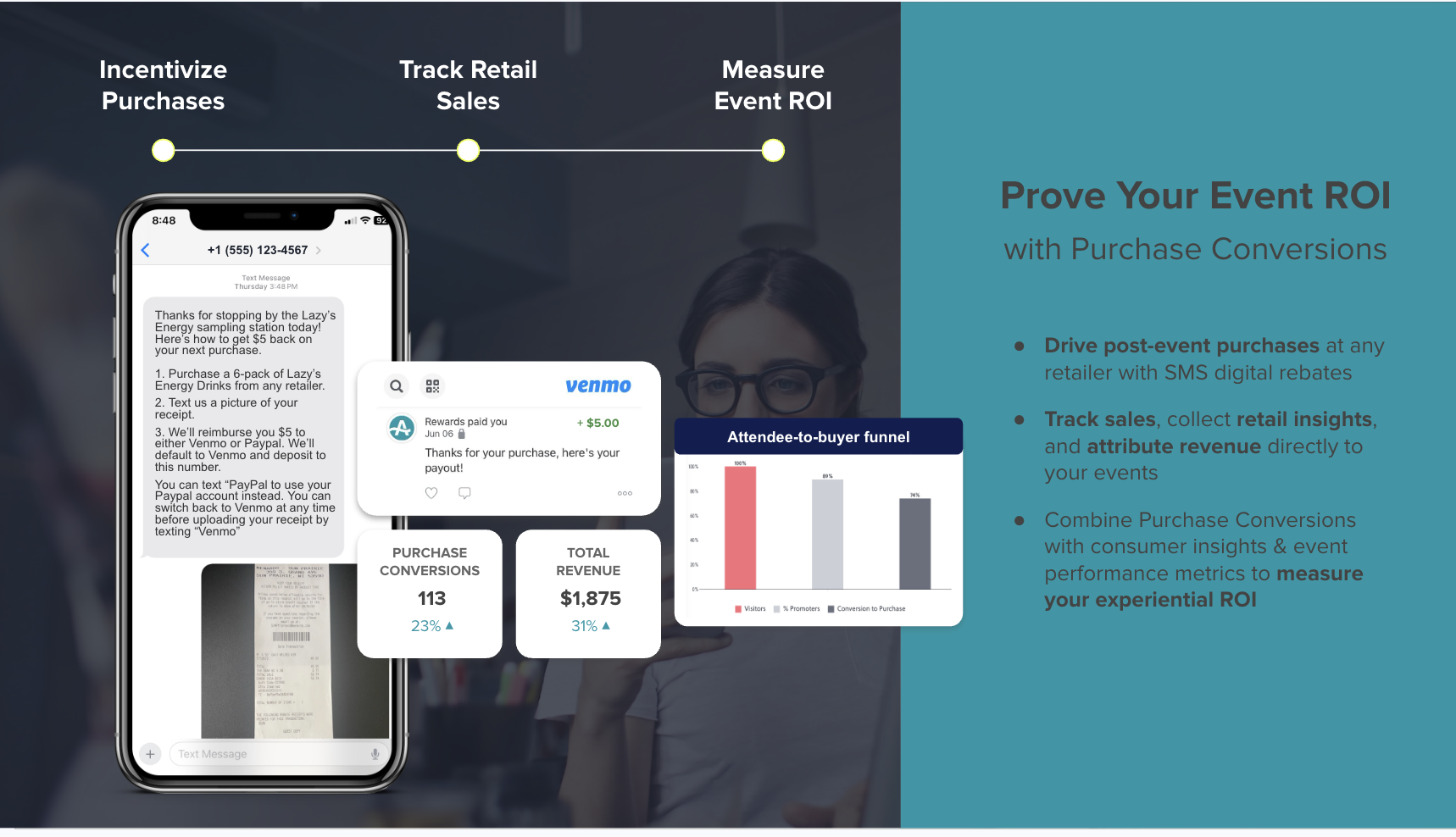
In a one-month ambassador tasting pilot with a single unnamed craft brand, 56% of the records collected converted to a bottle purchase. This was an early, small-sample pilot and should not be treated as a platform benchmark or used to forecast a national rollout without accounting for market variations. That pilot illustrates the kind of measurement a depletion report cannot produce. It delivers a first-party record tied to a receipt-verified purchase and connects experiential spend to retail sell-through.

AnyRoad runs this loop end to end. The platform handles data capture at the point of activation, SMS follow-up, receipt validation, rebate payout, and creation of a first-party record in the brand’s CRM. Together, these mechanics produce evidence that connects an activation to a bottle leaving a shelf.
Know Which Bottles Your Activation Actually Sold. Schedule a Demo.
How To Choose Software For National Brand Activation Campaigns
- Define the activation types in scope.
- Separate live activation needs from creative localization needs.
- Confirm who owns the guest data and whether booking is white-labeled on your own site.
- Check whether on-site data capture covers every attendee, not just the booker.
- Verify how conversion will be measured without requiring retailer POS integration.
- Assess compliance support for regulated categories such as alcohol.
- Confirm the vendor supplies operational expertise and staffing support, not just software.
- Pilot in two or three markets before national rollout.
For a deeper look at multi-user collaboration and software for managing multiple national brand activations, AnyRoad’s guide covers team permissions, market-level access controls, and rollout sequencing.
Questions To Ask Vendors Before You Shortlist
Use these questions to test whether a platform supports the requirements above and fits national activation programs.
- Who owns the first-party data collected at the activation?
- Is the booking experience white-labeled and embedded on your site, or does it redirect to the vendor’s site?
- Can the platform capture data from every attendee in a group?
- How does the platform measure purchase conversion without a POS integration?
- How does the vendor handle age verification and alcohol compliance?
- What operational support is available on-site and for field staff coaching?
- How does data flow into your CRM, CDP, and ERP?
- What does rollout across multiple markets look like in the first 90 days?
FAQ
What Is Brand Activation Software?
Brand activation software is a broad label applied to three distinct categories of tools. Experiential activation platforms are built for live, in-person consumer engagement. Distributed and local marketing platforms adapt national creative across dealer or regional networks. Generalist campaign and project management tools coordinate digital campaigns and tasks. Vendors and analyst lists use the term inconsistently, which creates confusion for buyers shortlisting software for national activation programs.
How Do You Manage Activations Across Multiple Markets And Field Teams?
Multi-market activation management requires centralized planning infrastructure, including a campaign calendar, field staffing and scheduling tools, asset logistics, and daily reporting. Teams also need on-site execution tools that work without reliable connectivity and sync data back to a central system. The platform must support configurable data capture at the individual attendee level, not just the booking level, and roll up reporting by market, activation type, and audience segment. Operational expertise matters as much as software. Field staff need coaching on enrollment pitches, data capture mechanics, and brand standards, which is why AnyRoad delivers its platform alongside white-glove service from spirits industry operators.
Is A Distributed Marketing Platform The Same As An Experiential Platform?
A distributed marketing platform manages how national creative and campaign assets are adapted, approved, and distributed across regional teams, dealers, or franchise networks. Its core job is brand-to-local content governance. An experiential activation platform manages live, in-person consumer engagement programs, including booking, on-site operations, staffing, data capture, and purchase conversion. The two categories solve different operational problems and are not interchangeable. A brand running both a national sampling tour and a dealer co-op program typically needs both categories.
How Do You Measure ROI From National Brand Activations Without Retailer POS Integration?
Receipt-verified purchase conversion replaces the depletion report as the primary measurement of whether an activation sold product. The mechanic runs on the consumer’s submitted receipt, so it works across any account, including a Total Wine, an on-premise bar, or an independent retailer, without asking the retailer to share or integrate anything. The result is a first-party record tied to a verified purchase, attributable to the specific activation, market, and ambassador. Matched-market comparisons and holdout market testing can supplement receipt-verified counts to estimate incremental lift. The receipt-verified count itself provides the evidence that connects experiential spend to retail sell-through.
The Right Platform For Live National Activations
Three software categories are sold as brand activation software, and only one is built for live, in-person national programs. Distributed marketing platforms support regional creative adaptation and dealer co-op management. Generalist campaign and project management tools coordinate digital campaigns and tasks. Experiential activation platforms handle the live operational work and the measurement requirements of national activations.
National activation programs such as sampling tours, ambassador tastings, brand home experiences, and multi-market field programs need an experiential activation platform. AnyRoad is the experiential-native choice for brands that need first-party data, on-site operational control, and receipt-verified purchase conversion from national activations.
Prove Future Retail Sales Impact From Your National Activations. Book a Demo.