


Written by: Bryan Grobstein, Vice President, Global Revenue, AnyRoad | Last updated: October 22, 2026
Key Takeaways
- Spirits cash-back programs stay legal when structured as direct-to-consumer offers under 27 CFR §6.96(b), with payment flowing to the buyer and no value reaching retailers or wholesalers.
- Scan-back promotions that reimburse retailers based on POS data function as prohibited trade inducements under tied-house rules, regardless of how they are marketed.
- State ABC boards layer additional restrictions on top of federal rules, especially in control states like Pennsylvania, Virginia, and North Carolina, so every market needs a pre-launch eligibility check.
- Compliant receipt-upload rebates require built-in controls such as age verification, SKU validation, direct-to-consumer payout via Venmo or PayPal, and exclusion of trade employees from participation.
- AnyRoad supplies the operational infrastructure that embeds these compliance controls into spirits cash-back programs from day one.
Explore How AnyRoad Powers Compliant Cash Back
Are Cash-Back Rebates Legal For Spirits Brands? The Federal Anchor
27 CFR Part 6 implements the tied-house provisions of the FAA Act and governs inducements offered by industry members, including distillers, importers, and wholesalers, to retailers. Under §6.21, it is unlawful for an industry member to induce a retailer to purchase its products to the exclusion of competitors by furnishing things of value, paying for advertising or display services, or extending unusual credit.
§6.96 carves out two narrow permissions within that framework. Section 6.96(a) permits coupons redeemable at retail only if all retailers in the market may redeem them and the brand reimburses the retailer no more than face value plus a usual and customary handling fee. Section 6.96(b) expressly permits contest prizes, premium offers, refunds, and like items offered directly to consumers, with one critical condition: officers, employees, and representatives of wholesalers or retailers are excluded from participation.
The consumer-versus-trade distinction drives the analysis. A rebate paid directly to a consumer after a verified purchase sits under §6.96(b). A payment, reimbursement, or bill-back that flows to a retailer, even when marketed as a consumer benefit, can be recharacterized as a thing of value under §6.21(c) or a payment for a display or distribution service under §6.51. Both outcomes create prohibited inducements. As tied-house compliance guidance published in September 2026 notes, consumer promotions require review of the operational flow of funds, not just the marketing language.
Federal rules set the baseline. State rules can be stricter, and control states frequently take that path.
Why Scan-Back Promotions Are Banned For Spirits
The federal framework above turns on where the money lands, and the scan-back is the clearest example of money landing in the wrong place. A scan-back promotion, also called a scan-down or scan rebate, is a trade promotion in which a supplier pays a retailer an allowance calculated from units actually sold to consumers, using point-of-sale scan data. The economic benefit flows to the retailer, typically through reimbursement, a bill-back, or an invoice deduction, rather than directly to the shopper.
Because a scan-back delivers value to the retailer tied to purchasing, stocking, or selling the supplier's product, it functions as an inducement under tied-house rules. The retailer receives compensation for moving product, which is precisely the relationship 27 CFR Part 6 is designed to prevent. Under §6.51, it does not matter whether the service received back was worth what was paid, because the payment itself creates the inducement. Under §6.55, reimbursing a retailer for setting up a display is treated as paying for a display service. The same logic applies to reimbursing a retailer for a register discount: the retailer receives value tied to product movement, which creates a prohibited inducement.
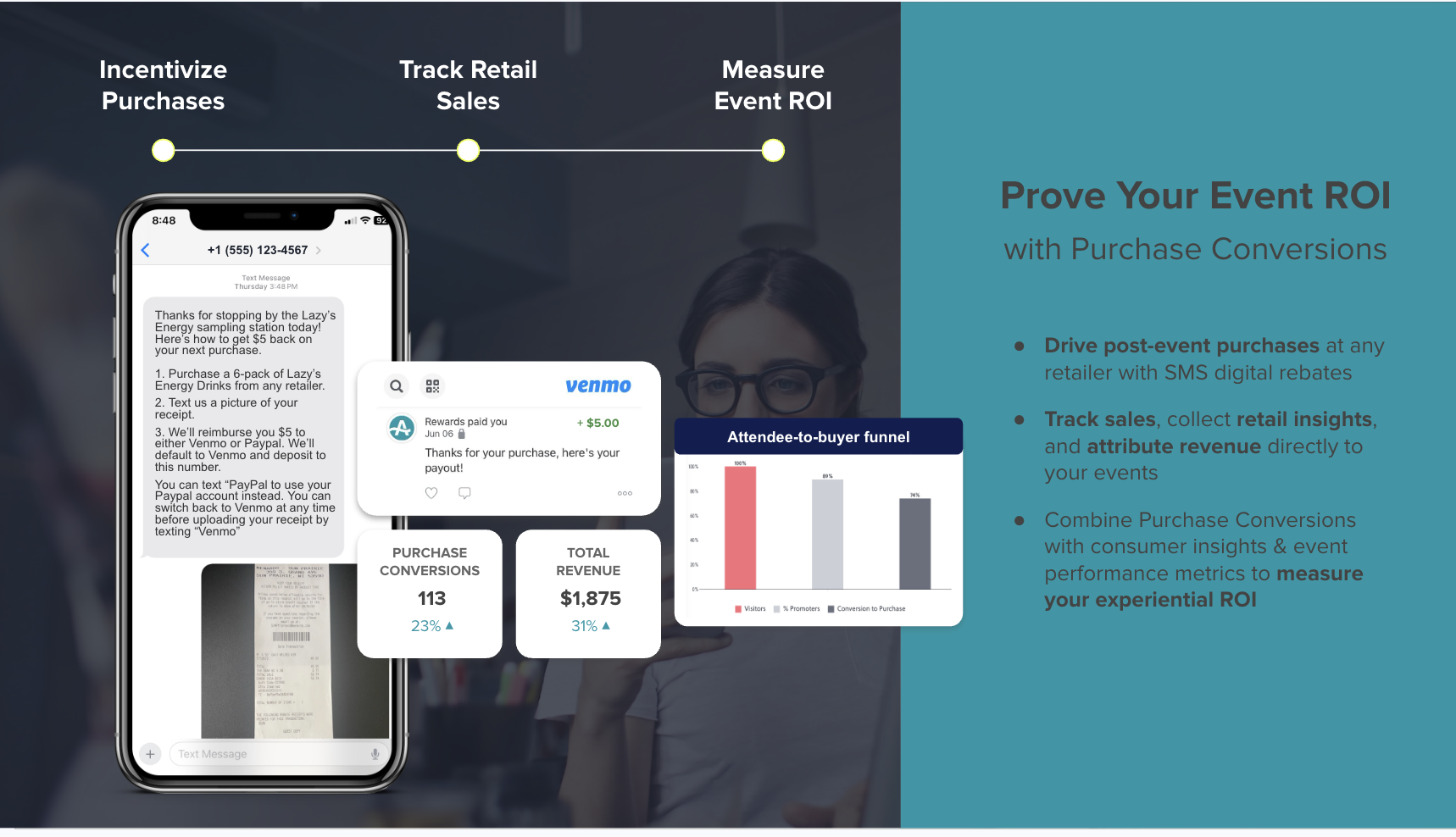
A consumer-facing receipt-upload rebate uses a different structure. The consumer buys the product, photographs the receipt, submits it through a brand-operated channel, and receives cash back directly via Venmo, PayPal, or a similar consumer payment method. The retailer does not submit a claim, deduct anything from supplier invoices, or receive any per-unit allowance. As receipt-upload promotion guidance explains, the consumer receives the payment and the retailer receives no compensation for stocking or merchandising the product.
The scan-back versus receipt-upload distinction is the single most common compliance failure in spirits cash-back program design. Build the wrong mechanic and no amount of paperwork fixes it after launch.
State Rules On Alcohol Cash Back And Loyalty Rewards
State ABC boards interpret tied-house and rebate rules differently, and the open-versus-control-state classification only provides a starting point. As of September 2026, there are 17 alcohol control states in the U.S.: Alabama, Idaho, Iowa, Maine, Michigan, Mississippi, Montana, New Hampshire, North Carolina, Ohio, Oregon, Pennsylvania, Utah, Vermont, Virginia, West Virginia, and Wyoming. Georgia and Illinois are open (license) states.
The practical implications for cash-back programs vary by state category:
- Full Control States (Including North Carolina, Pennsylvania, And Virginia): The government controls wholesale and retail spirits sales, and retailers cannot advertise a price or promotion implying a lower cost than the state-mandated minimum. Consumer rebates paid post-purchase directly to the consumer sit in a different position than retailer-applied discounts, but state-specific review is required before launch.
- Wholesale-Only Control States: The state controls wholesale distribution while private retailers handle retail sales. Retailers in these states cannot apply any coupon, rebate, or loyalty discount at checkout that reduces the price below the state minimum, and cannot advertise a price or promotion implying a lower cost than the state-mandated minimum.
- Open States (Including Georgia And Illinois): Open states generally impose fewer pricing restrictions, but Georgia's Alcoholic Beverage Code requires that promotions avoid encouraging excessive consumption and comply with responsible marketing practices. Illinois permits manufacturer receipt-upload rebates, and active Budweiser rebates are currently marketed to Illinois consumers, but state-specific trade practice rules still apply.
- Pennsylvania Specifically: Pennsylvania's Bureau of Liquor Control Enforcement has issued Trade Practices Advisory Notice No. 10, which directly addresses trade practices and inducements. Any promotion running in Pennsylvania should be reviewed against that advisory before launch.
The practical recommendation is to build a state-eligibility matrix before launch. For each state where the promotion will run, record whether consumer rebates are permitted, whether loyalty points are restricted, whether instant discounts are treated as trade incentives, and what pre-approval or notice is required. State ABC boards advise confirming promotional specifics before launching anything promotional, because restrictions vary by state and sometimes by county. This article does not provide a definitive legal answer for any specific state, so brands should check with counsel and the relevant state ABC board.
Review State Scenarios With An AnyRoad Specialist
Compliance By Promotion Mechanic
Each promotion mechanic carries a distinct federal risk profile, state fault lines, and a set of operational controls. The following breakdown moves from the lowest-risk consumer rebate structure toward higher-risk mechanics that demand deeper review.
Receipt-Upload Rebate: The consumer buys, photographs the receipt, and receives cash back. Federal: generally permissible as a direct-to-consumer offer under §6.96(b) when the payment flows directly to the consumer and the retailer receives no reimbursement or allowance. State: verify the state permits consumer rebates and the chosen payout method. The controls follow from that structure. Age verification at registration keeps minors out of the offer, and receipt and SKU validation proves the purchase was real. Payout must run through Venmo or PayPal straight to the consumer, never through the retailer. Recordkeeping then has to show the money reached a consumer, and retailer and wholesaler employees must be excluded from participating at all.
Instant Checkout Discount: A discount applied at the register. Federal: high risk if the retailer is reimbursed by the brand, because that structure mirrors a scan-back. State: some states treat any register-level discount as a trade inducement regardless of who funds it. Controls: avoid retailer reimbursement entirely, document who bears the discount economically, and confirm that no value flows back to the retailer.
Loyalty Points: Points earned for purchases or visits. Federal: risk depends on whether points are redeemable for alcohol and who funds the redemption. State: some states restrict alcohol rewards or free-product redemptions. Controls: define the redemption catalog carefully, avoid free-alcohol rewards where restricted, and exclude retailer and wholesaler employees from participation per §6.96(b).
Credit-Card Cash Back: Issuer-funded rewards. Federal: generally outside tied-house rules because the brand is not the payer. Brand-funded card-linked offers, where the brand reimburses the issuer for a consumer reward, require review under Part 6 to confirm the payment does not flow through the retailer. State: check state rules on brand-funded card offers before launch.
Free-Alcohol Rewards: Free product as a reward. Federal and state: the highest-risk mechanic. Many states prohibit or restrict free alcohol as an inducement, and the federal analysis must confirm the free product does not create a thing of value flowing to a retailer. Controls: legal review is required before any free-alcohol mechanic is designed.
Taken together, these mechanics show a spectrum. Receipt-upload rebates sit at the compliant end when structured correctly, while free-alcohol rewards sit at the highest-risk end and demand intensive legal review.
How To Launch A Compliant Spirits Cash-Back Program
Operational controls keep a spirits cash-back program compliant only when they are built into the mechanic from the start. They need to shape how consumers enter, how purchases are verified, and how money moves. The following checklist covers core operational requirements for a receipt-upload rebate program and the surrounding program setup.
- Age Verification At Registration: Start with age verification and confirm the consumer is 21 or older before they enter the program. That gate is both a legal requirement and the first line of fraud defense, which is why it comes before any receipt is accepted.
- Receipt And SKU Validation: Use AI-assisted receipt reading to confirm the eligible product was purchased. Validate the SKU, the purchase date, and the retailer. Define in writing what makes a receipt valid and build duplicate-submission checks into the flow so the same purchase cannot be claimed twice.
- Direct-To-Consumer Payout: Route the rebate through Venmo, PayPal, or a comparable consumer payment method. The payment must go to the consumer and stay out of retailer systems, which preserves the §6.96(b) structure.
- Retailer-Neutral Eligibility: Keep eligibility independent of any specific retailer. Conditioning eligibility on purchase at a particular retailer introduces tied-house risk because it links value to a favored account.
- Exclusion Of Trade Employees: Exclude officers, employees, and representatives of wholesalers and retailers from participation, as required by §6.96(b). Build this exclusion into both the terms and the registration flow.
- Recordkeeping: Maintain records sufficient to demonstrate that the rebate went to a consumer and not a retailer. 27 CFR §6.81 requires three-year retention of records for items furnished under the Part 6 exceptions. An industry member who fails to keep required records loses the right to claim the exception.
- Advertising Price Compliance: Align advertising with state pricing rules. In control states, avoid advertising a post-rebate price that implies a retail price lower than the state-mandated minimum. Price, savings, and eligibility claims must be substantiated and presented clearly and conspicuously.
- State-Eligibility Matrix: Confirm state eligibility before launch. Identify which states permit the mechanic, which require pre-approval or notice, and which must be excluded entirely.
- Terms And Conditions And Privacy Policy: Document the promotion terms, payout method, eligibility restrictions, data handling, and submission deadline. Receipt images can capture payment-adjacent information, so data handling must be disclosed at the point of upload.
- Counsel Review: Route the mechanic description, the states where it will run, who receives the value, how the purchase is verified, and the payout method to alcohol beverage counsel before launch. That review should confirm both federal and state compliance.
See How AnyRoad Builds These Controls Into Cash Back
How A Compliant Spirits Cash-Back Program Runs On AnyRoad
Those ten controls are the specification. AnyRoad is built to meet it: a compliant, brand-operated path for running spirits cash-back programs at scale. Its receipt-upload rebate mechanic centers on the structural controls the federal and state framework requires and operates without any POS integration at the retailer.

The mechanic unfolds in a simple sequence. A consumer encounters the brand at an activation such as an ambassador tasting inside a Total Wine, an on-premise account, or a distillery visit. They scan a QR code and register on the spot through the AnyRoad Live mobile app. After registering, the consumer receives an SMS with a cashback rebate redeemable anywhere the product is sold. They buy the bottle, photograph the receipt, and text it back. AnyRoad's AI reads the receipt, confirms the eligible SKU, and pays the rebate out via Venmo or PayPal. The entire mechanic runs on the receipt, which means the retailer never has to integrate, connect a POS system, or issue a reimbursement.

The payment flows directly to the consumer and the retailer receives no allowance, reimbursement, or bill-back, so the mechanic is structured to sit under §6.96(b) as a direct-to-consumer offer. AnyRoad is not a licensed retailer or wholesaler. It acts as the brand's agent. For bottle club products, the compliant transaction and delivery path runs through its licensed ecommerce retail partner. For the rebate mechanic specifically, no product transaction occurs through AnyRoad, because the consumer buys at retail and AnyRoad verifies and pays the rebate.
AnyRoad also handles the regulatory compliance around sweepstakes variants of the same mechanic. The same data capture and SMS follow-up apply, but the consumer receives a prize entry instead of cash back. AnyRoad supports terms and conditions and privacy policies for these variants. It does not provide legal advice and does not substitute for counsel review, but it operates as the partner that builds the compliance controls into the mechanic from the start.
Compliance controls do not have to cost conversion. In a one-month ambassador tasting pilot with a single craft brand on a small dataset, 56% of the records collected converted to a bottle purchase. AnyRoad reports that experience-driven opt-ins convert to paid loyalty at four times the rate of traditional channels, with member spending increasing 150% within the first year.
For more on how the rebate mechanic fits into a broader distillery revenue strategy, see Cash Back Rebates For Distilleries: An Operator's Guide and Alcohol Cash Back: How Promotions & Rebates Work.
Pre-Launch Legal Review Workflow
Legal review closes the loop between program design and day-to-day operations. Before a spirits cash-back program goes live, the brand's counsel or the relevant state ABC board needs a complete picture of the mechanic. The submission should include:
- A plain-language description of the mechanic, including who receives the value, how the purchase is verified, and how the payout is delivered
- The states where the promotion will run
- The payout method and the entity making the payment
- Confirmation that retailer employees and wholesaler employees are excluded from participation
- The proposed terms and conditions, including submission deadlines and eligibility restrictions
- The advertising copy, including any price or savings claims
A phased rollout provides a lower-risk path after that submission. Start in states with clear consumer-rebate rules, such as open states where the mechanic has established precedent, before expanding into control states where pre-approval or notice may be required. The compliance review should begin before a sales team commits to an account benefit, and well before an invoice is approved or a display is installed.
For a deeper look at the software infrastructure that supports a compliant program, see Cash Back Software Built For Alcohol Brands.
Conclusion: Design Spirits Cash-Back Programs For Compliance From Day One
Three structural facts govern every spirits cash-back program and shape the design choices. The first is the consumer-versus-trade distinction, where a rebate paid directly to a consumer after a verified purchase functions as a different legal instrument than a payment, reimbursement, or allowance that flows to a retailer. The second is the scan-back ban, because any mechanic in which the retailer receives value tied to product movement becomes a prohibited trade inducement under 27 CFR Part 6 regardless of how it is marketed. The third is the state-by-state matrix, since federal compliance under §6.96 does not satisfy stricter state rules in control states like North Carolina, Pennsylvania, and Virginia, and every market requires its own review before launch.
Cash back compliance for spirits lives in the design of the mechanic. The program must launch with the right payment flow, the right verification method, and the right state-eligibility controls in place before the first QR code is printed. AnyRoad provides the operational infrastructure to run these programs with those controls built in.
Talk With AnyRoad About Your Next Cash-Back Program