


Written by: Bryan Grobstein, Vice President, Global Revenue, AnyRoad
Key Takeaways For Hybrid Alcohol Brands
- A CRM for distilleries, breweries, and wineries must manage both DTC hospitality and wholesale or field sales at the same time.
- Disconnected systems create gaps between tasting room visitors and wholesale account contacts, which leads to missed revenue and higher churn.
- Effective CRM setups capture first-party data at every touchpoint, support white-labeled booking, manage clubs compliantly, and connect to ERP and POS systems.
- Alcohol-specific rules such as TTB reporting, three-tier regulations, and licensed transactional paths make generic CRMs a poor fit.
- AnyRoad offers an alcohol-native platform that unifies experiential data, club management, and first-party insights to close the hybrid brand gap.
See how AnyRoad unifies DTC and wholesale data
The Problem: Two CRM Categories, One Brand Running Both
Most craft-to-mid-size alcohol brands run a complex mix of channels. They host thousands of tasting room visitors each year, grow clubs or memberships, work with distributors they cannot fully see into, and rely on spreadsheets nobody trusts. The right CRM choice depends on the sales model the brand actually runs, and most brands run both DTC and wholesale at once.
Before adopting AnyRoad, Leiper's Fork Distillery hosted 24,000 guests for tours and tastings annually with no data on who those visitors were. That gap reflects a first-party data problem that also makes connecting tasting room behavior to distributor performance nearly impossible.

DTC Hospitality CRM For Distilleries, Breweries, And Wineries
A DTC hospitality CRM manages the consumer-facing side of an alcohol brand. It must handle:
- White-labeled online booking and reservations embedded on the brand's own website
- On-site check-in, digital waivers, and age verification
- POS linkage so tasting room transactions feed the customer record
- Wine club or bottle club management, including shipment scheduling, member communications, and churn tracking
- Allocation management to prevent overselling reserved inventory
- Post-visit NPS and feedback collection
- Marketing opt-in capture and segmentation for lifecycle email
Brands whose revenue depends on tasting rooms and clubs rely most on this category. Tasting rooms and wine clubs combined account for approximately 53% of the average winery's total sales, rising to 78% in some regions. Without structured data capture at every touchpoint, that revenue rests on an unowned foundation.
Wholesale And Field Sales CRM For Alcohol Brands
A wholesale and field sales CRM manages B2B commercial relationships. It must handle:
- Distributor account management and contact tracking
- Depletion reporting that tracks how product moves from distributor into the market
- Field rep activity logging, visit notes, and account prioritization
- Keg tracking for draft accounts
- Allocation management by account, territory, and channel
- TTB reporting compliance and three-tier data flow
- Integration with ERP systems for excise tax and financial reconciliation
The U.S. three-tier system legally separates producers, wholesalers, and retailers. In most states, a producer cannot sell directly to a retailer, so the wholesaler becomes a legal requirement. That structure means a brand's wholesale CRM must support relationships and data flows that generic CRMs were never designed to handle. The table below compares the two CRM categories across the dimensions that matter most when choosing a platform.
| Dimension | DTC Hospitality CRM | Wholesale / Field Sales CRM |
|---|---|---|
| Implementation Complexity | Moderate, requires POS linkage, booking embed, and club configuration; integration depth varies by vendor | High, requires ERP sync, depletion data feeds from distributors, and multi-state compliance mapping |
| Data Visibility | Consumer-level: visit frequency, spend, NPS, club status, purchase history | Account-level: depletions by SKU and territory, field rep activity, distributor performance |
| Scalability | Scales with visitor volume and club size; top-performing clubs sustain 3–4% monthly churn with retention infrastructure in place | Scales with distribution footprint; franchise laws in most states make distributor relationships difficult and costly to exit |
| Operational Impact | Reduces manual booking and check-in labor; Leiper's Fork Distillery saved $500/month in labor costs after adopting AnyRoad | Reduces manual depletion reconciliation and field reporting; distributors combining ERP, CRM, and depletion data manually face fragile reporting processes |
| Reporting Depth | NPS, brand affinity, purchase intent, visit-to-club conversion, lifetime value per member | Depletions, sell-through, account penetration, program compliance, distributor scorecards |
The Problem Deepens: The Hybrid Brand Gap
That comparison assumes a brand picks one CRM category. In practice, most real alcohol brands do not fit cleanly into either. A distillery with a busy tasting room, a bottle club, and a regional distributor runs three distinct data environments at once, and often none of them connect.
The same person can appear in three places at once. A wholesale account contact who also visits the tasting room exists as two different records in two systems. A club member whose on-premise consumption never reaches the brand shows up only as an anonymous depletion number. A field activation at a retail account produces a count, not a relationship.
The gap is architectural and sits at the data layer. It costs money in every direction through missed re-enrollment opportunities, distributor relationships managed on instinct rather than data, and club churn that concentrates at the six-release mark because the brand cannot see whether members are actually drinking through their allocation.
How To Connect Tasting Room Data To Distributor Data
The data bridge between a tasting room and a distributor operates at the customer record level, not the report level. The practical steps are:
- Capture structured first-party data at every tasting room touchpoint. Record every attendee in a group, with opt-in, NPS, spend, and visit frequency attached to a persistent customer record.
- Tag customer records with wholesale-relevant attributes. Mark trade buyer status, account affiliation, or distributor relationship so the same person appears consistently across both sales environments.
- Connect the DTC platform to the ERP via API or webhook so tasting room transactions, club shipments, and cashback rebate redemptions flow into the same financial and inventory system that handles wholesale orders. InnoVint's SUPPLY product demonstrates this model: orders fulfilled in a DTC platform instantly deplete inventory, and restocks update without manual entry.
- Use receipt-verified purchase data from field activations to connect ambassador tastings at retail accounts to identifiable consumer records, closing the loop that a depletion report alone cannot close.
- Segment the unified customer view by recency, frequency, spend, and club status to surface consumers who are also wholesale account contacts, then message them accordingly.
Platforms like Enolytics are building toward this model by integrating POS, ecommerce, and wholesale depletion data into a single analytics layer. The operational principle stays consistent across vendors: the bridge relies on a shared customer identifier, not a shared report.
The Solution: What To Look For In A CRM For A Distillery, Brewery, Or Winery
A CRM built for a hybrid alcohol brand must deliver specific capabilities that connect DTC, wholesale, and compliance.
- First-party data capture at every touchpoint. Capture booking, check-in, on-site survey, post-visit NPS, and retail activation data on a persistent, brand-owned customer record.
- White-labeled booking embedded on the brand's website. Keep visitors on the brand domain instead of redirecting to a third-party platform that co-owns data and promotes competing experiences.
- Club and membership management. Support shipment scheduling, automatic payment recovery, churn prediction, and member communications tied to release calendars.
- A compliant transactional path. For bottle clubs or DTC shipping programs, route transactions through a licensed retailer to satisfy federal and state alcohol regulation.
- Distributor and depletion visibility. Provide this natively or through ERP integration so wholesale account performance appears alongside DTC data.
- POS, ERP, and email integrations. Connect tasting room transactions, financial and inventory systems, and lifecycle marketing without manual exports.
- AI-powered feedback analysis. Turn open-text guest surveys into operational and marketing insights at scale.
- Managed CRM execution. For brands without in-house email marketing capability, offer alcohol-native campaign management rather than a license that sits idle.
Compliance And Production Integration For Alcohol Brands
Generic CRMs treat a bottle of whiskey the same as a bottle of shampoo. Alcohol-specific systems must handle:
- TTB reporting obligations, where distilled spirits plants file monthly operational reports due 15 days after the close of each period, covering storage, processing, and production operations
- Three-tier data flow
- Batch and barrel linkage
- Age verification at the point of booking and purchase
- Compliant transactional paths for DTC shipment
Many beverage producers operate four or more disconnected systems, including accounting software, production tools, inventory spreadsheets, and compliance trackers. These gaps create reconciliation problems that generic CRMs cannot resolve. An alcohol-native platform either handles these needs directly or integrates with the ERP layer that does.
AnyRoad is not a licensed retailer or wholesaler and does not sell, ship, or distribute alcohol. It acts as the brand's agent, routing bottle club transactions through a licensed ecommerce retail partner and paying cashback rebates via Venmo or PayPal, with no POS integration required.
A Self-Diagnostic To Clarify Your Sales Model
Use these four questions to identify your CRM priority:
- Where does the majority of your revenue originate? If tasting room and club sales together exceed 40% of total DTC sales, DTC hospitality CRM should sit at the top of your list. SVB's 2024 Direct-to-Consumer Wine Survey reports tasting room and wine club sales at roughly 39% each of total DTC sales.
- Do you have active distributor relationships in more than one state? If yes, wholesale CRM and depletion visibility become essential.
- Do you run or plan to run a bottle club or membership program? If yes, you need a compliant transactional path and club-specific retention tooling rather than a generic subscription billing platform.
- Can you name the top 20% of your tasting room visitors by spend and visit frequency? If you cannot, your first-party data infrastructure is the first gap to close.
Map your sales model to the right CRM setup
Where AnyRoad Fits For Hybrid Alcohol Brands
AnyRoad is an experiential marketing platform for alcohol brands that unifies DTC hospitality and the first-party data layer that wholesale and club programs rely on. It is not a horizontal CRM with an alcohol configuration. The product reflects thirteen years of supporting spirits brands with experiential marketing. Every decision aligns with the realities of the three-tier system, TTB compliance, and the tasting room as an acquisition channel.

The platform covers the full lifecycle:
- Experience Manager centralizes tours, tastings, classes, and field activations in a single backend. Scheduling, staff management, and resource allocation run without manual reconciliation.
- Guest Experience delivers white-labeled booking on the brand's website, QR code check-in via the AnyRoad Front Desk app, digital waivers, integrated ID scanning for age verification, and FullView data capture from every attendee in a group.
- Atlas Insights and PinPoint turn open-text guest feedback into actionable themes. PinPoint's AI analyzes thousands of survey responses to surface sentiment drivers and operational issues in real time, a capability that helped Leiper's Fork Distillery achieve a 97 post-event NPS and raise average tour prices by 33%, from $18 to $24, while recording one of its highest grossing months with fewer tours.
- Lifetime Loyalty runs Bottle Clubs, Premium Memberships, cashback rebates, and sweepstakes end to end. Enrollment, compliant transactions, member communications, and ongoing club maintenance all sit with one partner instead of a fragmented stack.
- Managed CRM Services provide alcohol-native email campaign management and segmentation for brands without in-house lifecycle marketing capability, powered by the experiential data the platform already collects.
AnyRoad data shows that a consumer who visits a distillery twice is 512% more likely to convert into a paid loyalty enrollment. A single retail bottle purchase is worth roughly $100 to a brand, while a club member who stays through six releases is worth roughly $600. The Lifetime Loyalty program focuses on moving a consumer from the first number to the second and on preventing churn at the six-release mark.
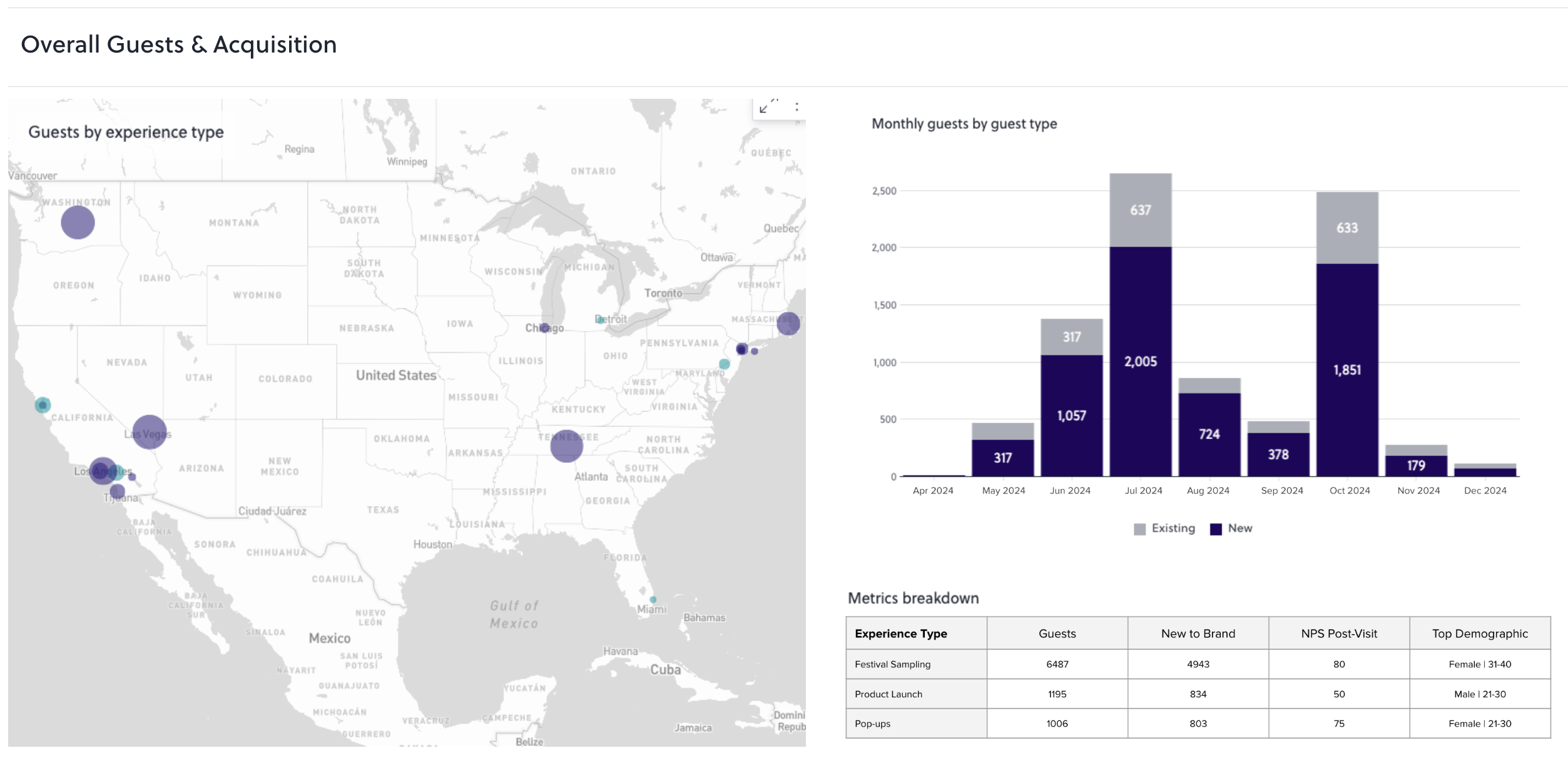
AnyRoad reports that experience-driven opt-ins convert to paid loyalty at four times the rate of traditional channels, with member spending increasing 150% within the first year. Publicly announced Lifetime Loyalty customers include Heaven Hill Distillery, Nearest Green Distillery, Lux Row Distillers, Castle & Key, Catoctin Creek Distilling, and Tarnished Truth Distilling.
See how AnyRoad powers Lifetime Loyalty
Cost And Implementation Reality For Clubs And DTC
The do-it-yourself club stack requires an ecommerce provider, subscription billing software such as Recharge, a compliant fulfillment path, and internal headcount to operate all of it, usually without alcohol-specific expertise. Each piece becomes the brand's responsibility to configure, maintain, and troubleshoot. Wineries launching a DTC club need a federal TTB basic permit plus a DTC shipper permit in nearly every destination state, and they must re-run compliance checks at every billing cycle because members can move between states.
AnyRoad replaces that stack with a single partner that carries the technology, the domain expertise, and a team of approximately ten people handling fulfillment coordination and best-practice strategy. Bottle club transactions run through a Shopify-integrated experience operated by a licensed ecommerce retail partner. Cashback rebates are paid via Venmo or PayPal. Neither flow requires the brand or its retail accounts to integrate a point-of-sale system.
For the DTC hospitality CRM layer, implementation complexity scales with the number of experience types, locations, and existing integrations. Industry guidance for winery software warns that an integration logo is not an interface contract. Verifying the actual data bridge between tasting room and wholesale systems before committing to a platform matters more than a feature checklist.
Where AI Fits In Alcohol CRM
AI enhances CRM in alcohol by making data more actionable. The realistic near-term applications focus on AI-assisted field sales prioritization and AI-powered feedback analysis at the tasting room and hospitality level.
On the field sales side, computer vision AI allows field reps to capture a shelf image and have it analyzed within seconds for out-of-stock detection, planogram compliance, and share-of-shelf measurement. AI in beverage alcohol analytics depends on integrated data across sales, inventory, accounts, programs, field activity, and finance, so AI adoption becomes a downstream benefit of getting the CRM data architecture right first.
On the hospitality side, AnyRoad's PinPoint analyzes open-text guest feedback at scale, surfacing sentiment themes and operational issues that manual review of survey responses would miss. This capability runs today across tasting rooms and brand homes. Roland Berger's 2026 alcohol industry outlook identifies companies that own the consumer data and the recommendation layer as holding a structural advantage over those that cede this relationship to third-party platforms, a conclusion that applies directly to the CRM decision facing every distillery, brewery, and winery.

Conclusion: Own Your First-Party Data
The CRM decision for a distillery, brewery, or winery centers on first-party data ownership rather than software features. Two CRM categories exist, DTC hospitality and wholesale field sales, and most real brands operate in both at once with customer data scattered across disconnected systems.
A structured evaluation path helps. Identify which sales model the brand actually runs. Verify that any candidate platform integrates with existing ERP and POS systems. Confirm that a licensed partner handles the compliant transactional path for club and DTC shipping. Prioritize platforms that deliver managed execution alongside technology, because unused licenses do not create value.
The brands that will hold a structural advantage over the next five years will own both the consumer data and the recommendation layer. That advantage starts with a tasting room visit, a structured data capture, and a system built to turn that visit into a recurring revenue relationship.
Explore a CRM built for alcohol brands