


Written by: Bryan Grobstein, Vice President, Global Revenue, AnyRoad | Last updated: October 18, 2026
Key Takeaways
- Activation type dictates the right data capture platform. Consumer brand activations need consumer profiles, trade shows need lead retrieval, and engagement-led experiences need value-exchange tools.
- Most search results favor B2B lead-retrieval tools like Captello and Popl, which creates costly category confusion for consumer sampling tours, distillery experiences, and pop-ups.
- AnyRoad leads the category for consumer brand activations, capturing full-group preferences, consent, NPS, and purchase intent with offline reliability and CRM integration.
- Key selection criteria include capture speed, data depth, compliant opt-in mechanics, offline functionality, and CRM integration that turns activation data into actionable consumer profiles.
- AnyRoad turns every attendee into a first-party consumer profile with consent, offline reliability, and CRM integration that activates the data before the debrief ends.
Talk With AnyRoad About Your Activations
The Problem: Why Most Buyers Pick The Wrong Category Of Tool
Field marketing managers searching for a platform to capture attendee data mostly see trade show lead-retrieval listicles featuring Popl, Cvent, vFairs, and Whova. These tools are built for a specific job: scan a conference badge, route a B2B lead to a sales rep, and sync a contact record to a CRM. They perform that job well. They are a poor fit for a festival sampling footprint, a distillery tour program, or a CPG pop-up activation.
Three distinct activation types require three distinct data capture approaches:
- Consumer Brand Activations, such as sampling tours, distillery and brewery experiences, pop-ups, and sponsored consumer experiences. The goal is a rich consumer profile with preferences, purchase intent, demographic data, NPS, and a permissioned opt-in. The platform must capture every attendee in a group, not just the person who booked.
- Trade Show And B2B Activations, such as conference booths, exhibition halls, and corporate events. The goal is a qualified sales lead with company, title, buying intent, and a fast handoff to a sales rep. Badge scanning and CRM routing sit at the core.
- Interactive And Engagement-Led Activations, such as photo booths, customization bars, AI portrait stations, and gamified experiences. The goal is a value exchange where the attendee receives something they want, like a photo or personalized result, and provides contact information and consent in return.
EventTrack 2026 found that 51% of consumer event marketers now name leads and data collection as their most important success metric, ahead of on-site engagement for the first time. Yet the tools most brands are being pitched were built for the B2B side of that equation. AnyRoad's 2025 research found that proving experiential ROI is the single biggest challenge for 39% of marketers surveyed. Category confusion directly widens that gap.
The Solution: AnyRoad For Consumer Brand Activations
Best For Consumer Brand Activations: AnyRoad. For sampling tours, distillery and brewery experiences, pop-ups, and sponsored consumer experiences, AnyRoad is the definitive platform for first-party consumer data capture focused on insight, not B2B lead retrieval.

AnyRoad is an experiential marketing platform built specifically for consumer insight programs. Its core capabilities for brand activation data capture include:

- Configurable, White-Labeled Booking And Registration embedded directly on the brand's website. The brand owns the consumer journey and every data point collected within it, with no third-party redirect and no co-owned audience.
- FullView, which captures contact information, preferences, and consent from every attendee in a group, not just the person who made the booking. Proximo Spirits was missing contact information for over 66% of its guests before implementing FullView, and immediately began collecting 69% more guest data and 34% more NPS responses after deployment. Capturing the full group created that lift.
- Custom Questions Before, During, And After The Experience that capture preferences, purchase intent, flavor affinities, and post-experience feedback. This information builds a consumer profile instead of a simple lead record.
- Integrated ID Scanning for age verification and compliance in regulated categories like alcohol, embedded in the check-in flow rather than bolted on as a separate step.
- CRM Integration so activation data lands in HubSpot, Klaviyo, Salesforce, or the brand's CDP instead of sitting in a post-event export. AnyRoad's integration capabilities are detailed in the platform's experiential marketing platform integration guide.
AnyRoad's Atlas Insights engine and PinPoint AI-powered feedback analysis turn open-text survey responses into themes and actionable insights. The platform automatically surfaces which parts of an experience create brand advocates and where improvements are needed, without manual review of thousands of responses.
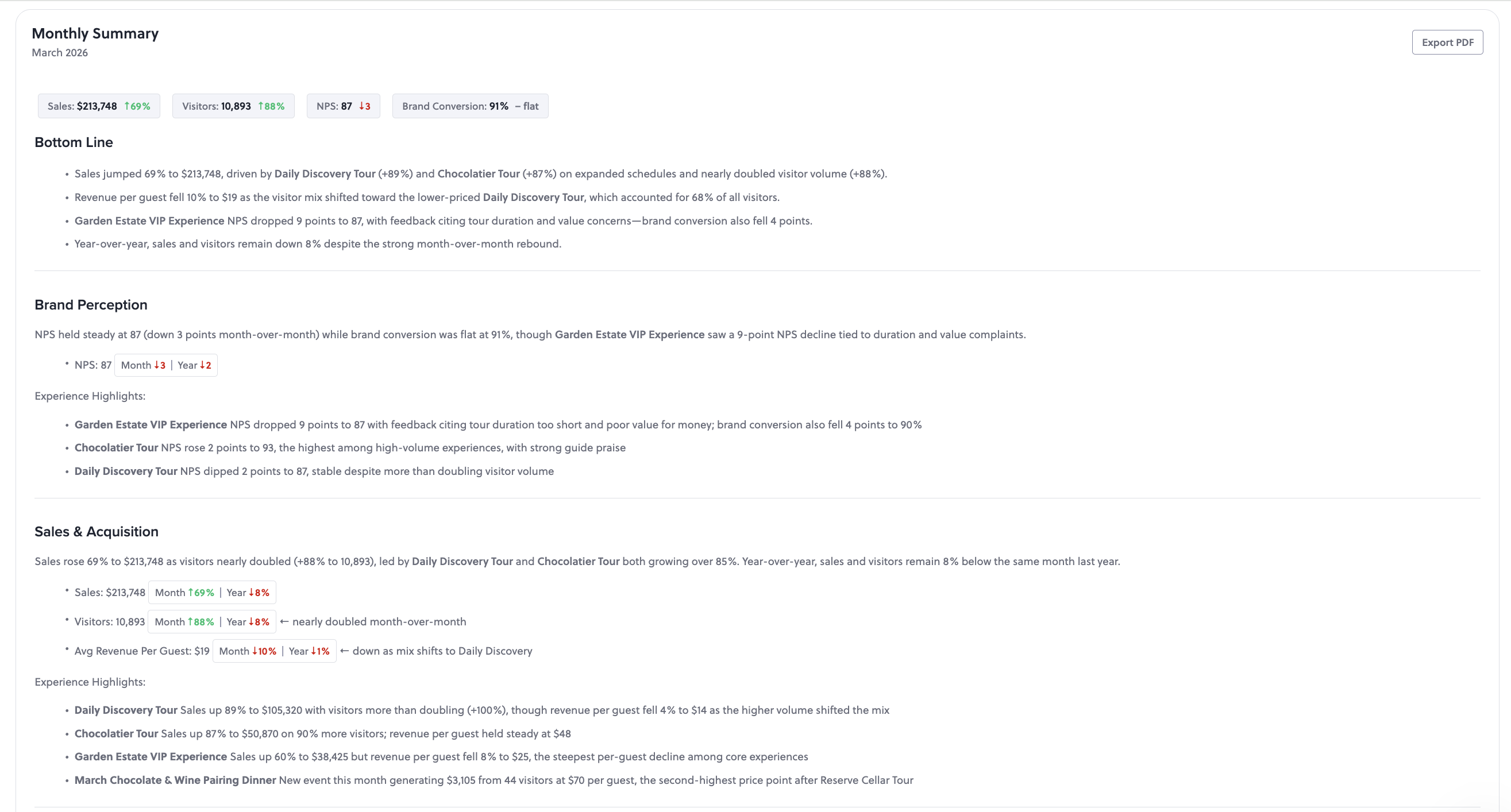
At festival activations, agency POPLIFE captured 45–50% more consumer data using AnyRoad compared to competitors, with 42% of attendees opting into future marketing communications and 85% of engaged consumers reporting intent to purchase the brand's product post-event. For CPG field marketing, Conversate Collective used AnyRoad to improve 100% of consumer profiles with vital demographic information for a CPG beauty brand, with 74% of guests reporting they were more likely to purchase after attending.

Choose AnyRoad when your activation is a consumer experience and your goal is a rich consumer profile plus measurable ROI.
Engagement-led activations where a photo or branded content moment is the hook call for a different tool, covered in the engagement-led section below.
See How AnyRoad Captures Full-Group Profiles
Best Platforms For Trade Show And B2B Lead Capture
Consumer activations represent only one of the three activation types. For the second type, trade show and B2B booths, the right tools are Captello and Popl.
Best For Trade Show And B2B Lead Capture: Captello And Popl. Both platforms are built for rapid lead retrieval at conference booths, with badge scanning, lead qualification, and fast CRM routing to sales teams.
Captello combines badge scanning with a library of 60-plus gamification activities, enrichment from more than 125 data sources, and enterprise certifications including SOC 2 Type 2 and ISO 27001. This combination makes it a strong fit for enterprise exhibitors who need booth engagement alongside lead capture. Choose Captello when your activation is a trade show booth and your goal is attributed pipeline from qualified B2B conversations.
Popl began as a digital business card platform and added badge scanning and lead capture forms, integrating with Salesforce, HubSpot, Marketo, and more than 30 other tools. Choose Popl when your team needs a lightweight, rep-side contact exchange tool for smaller show calendars.
These platforms do not fit consumer insight programs. They capture a lead record, not the richer consumer profile described earlier. Deploying either at a festival sampling footprint or a distillery tour program produces the wrong data for the audience present.
Best Platforms For Interactive And Engagement-Led Activations
Best For Interactive And Engagement-Led Activations: Snapbar. Snapbar's platform is built around a four-step flow, Design, Access, Create, Measure, where attendees engage via a custom-branded microsite by scanning a QR code or using an iPad kiosk, with no app download required. Its activation formats include AI photo booths, AI video, persona quizzes, event headshots, and trading cards. Each format is a content-first experience where the output is the value exchange that earns the opt-in.
Snapbar reports its delivery emails average a 95% open rate, which turns post-experience follow-up into a high-engagement channel for brand messaging and calls to action. At NAVC VMX 2025, a VCA Animal Hospitals activation powered by Snapbar engaged 25,000+ guests across two main events, generated 12,000+ AI pet portraits, and surfaced 20,000+ potential recruiting candidates through a careers question embedded in the data capture form.
Choose Snapbar when the experience itself is the data hook and a photo, personalized result, or branded content moment earns the attendee's contact information. Snapbar focuses on contact details and content engagement, so its data depth is narrower than a full consumer activation platform without a broader integration layer. AnyRoad integrates with photobooth and content capture solutions like Smilebooth to bring engagement-led capture into a unified consumer data program.
How To Choose A Platform To Capture Attendee Data At Brand Activations
Five criteria determine whether a brand activation data capture platform will perform in the field.
- Capture Speed And Friction. At a high-throughput sampling event, every extra field between arrival and the opt-in costs attendees. Capture speed becomes the first thing to test. Count the taps or fields between arrival and a complete consumer record, then check whether QR self-registration, staff-assisted entry, and walk-in capture all run through the same flow.
- Consumer Data Depth. A lead record contains a name, a title, and a company. A consumer profile contains preferences, purchase intent, flavor affinities, NPS, demographic data, and a permissioned opt-in. Confirm whether the platform captures the full group or only the lead booker, and whether custom questions can be configured before, during, and after the experience.
- Consent And Opt-In Mechanics. Consent rules set the floor. Under the CCPA and CPRA, opt-in boxes must be unchecked by default and actively selected by the consumer. Under UK PECR, consent must be freely given, specific, informed, and unambiguous, and a single generic marketing opt-in does not satisfy the requirement. For regulated categories like alcohol, age verification must sit inside the capture flow. Then check whether the platform stores consent records with timestamps and passes them to the CRM.
- Offline Reliability. Venue Wi-Fi often fails at outdoor activations and festival footprints. At outdoor events, markets, and field shows there is often no venue Wi-Fi at all, so offline mode becomes the operating mode rather than a contingency. The platform must capture data to a local device database and sync automatically when connectivity returns, with no data loss and no staff intervention. AnyRoad's offline functionality is documented in the platform's offline event data capture guide. POPLIFE also confirmed that AnyRoad's check-in process and data capture remain solid online and offline, which is essential for festival footprints with unpredictable connectivity.
- CRM Integration And Reporting. Data that lands only in a post-event CSV export rarely gets used. Confirm whether the platform offers native integrations to HubSpot, Klaviyo, Salesforce, or the brand's CDP, and whether activation records are tagged by event, location, and campaign for attribution. Clarify whether the platform builds a consumer profile or just a lead record, because that answer determines whether the data supports lifecycle marketing or only sales follow-up.
Comparison: AnyRoad Vs. Lead-Retrieval And Engagement Tools
The core choice centers on data model. A lead record serves B2B sales teams, while a consumer profile serves brand, CRM, and insight teams.
AnyRoad and Captello or Popl sit in different categories even though all appear in searches for event data capture platforms. Captello and Popl are optimized for trade show lead retrieval. They capture a lead record and route it to a sales rep. The data model focuses on B2B pipeline and does not match the consumer profile described earlier. Deploying either at a consumer sampling activation produces a list of contacts without the preference data, purchase intent signals, or group-level coverage that consumer brands need.
AnyRoad and Snapbar serve overlapping but distinct needs. Snapbar's strength is the value exchange where a photo booth, AI portrait, or interactive moment earns the opt-in because the output is something the attendee actively wants. That mechanic drives high participation rates and strong email open rates on follow-up. The trade-off is data depth. Without a broader platform layer, Snapbar focuses on contact information and content engagement rather than the full consumer profile with preferences, purchase intent, NPS, and age-verified identity. AnyRoad integrates with photobooth and content capture solutions like Smilebooth, which brings engagement-led capture into a unified consumer data program.
vFairs and Cvent are event management platforms for organizers running conferences, trade shows, and corporate events at scale. Their lead capture modules serve exhibitors within those organizer-run events. These tools do not target consumer brand activations, sampling tours, or distillery experiences where first-party consumer profile data is the primary output.
Field marketing leaders should start by deciding whether they need lead records or consumer profiles. That decision then guides the platform shortlist and final selection.
See AnyRoad In Action For Consumer Activations
Frequently Asked Questions
What Is The Difference Between Consumer Data Capture And Trade Show Lead Retrieval?
Trade show lead retrieval captures a lead record with the name, job title, company, and contact details of a business professional attending a conference, typically via badge scanning. The goal is to route a qualified sales prospect to a sales rep for follow-up. Consumer data capture at a brand activation captures a consumer profile with preferences, purchase intent, flavor or product affinities, demographic data, NPS, and a permissioned marketing opt-in. The goal is to build an audience of known consumers whose behavior and intent can inform lifecycle marketing, product development, and activation ROI measurement. The two data models differ structurally. A trade show lead-retrieval app captures the first, while a consumer activation platform like AnyRoad captures the second. Buying a lead-retrieval app for a consumer activation produces a list of contacts without the profile depth that makes the data useful.
Can A Data Capture Platform Work Without Venue Wi-Fi?
A platform built for consumer brand activations must treat offline operation as a standard condition. Outdoor festivals, temporary event spaces, and distillery tasting rooms frequently have unreliable or absent Wi-Fi. A true offline-first platform writes capture data, including registration, custom question responses, consent records, and NPS, to a local device database first. The platform then syncs automatically to the cloud and CRM when connectivity returns, with no data loss and no staff intervention. AnyRoad's offline functionality is built for this operating environment. Platforms that depend on a live connection for form submission or badge resolution lose data during outages, often during peak attendance windows.
What Consent And Opt-In Mechanics Should A Consumer Activation Platform Support?
A compliant consumer activation platform must support several consent mechanics. Opt-in checkboxes must be unchecked by default and require an active selection, because pre-ticked boxes do not qualify as valid consent under CCPA, CPRA, or UK PECR. Consent must be specific to the channel and purpose, so a single generic marketing opt-in does not satisfy the requirement that consent cover the type of communication being sent. For regulated categories like alcohol, age verification must be embedded in the capture flow and the verified status must be stored alongside the consumer record. Consent records should include a timestamp, the exact language presented, the method of consent, and a consumer identifier linking the consent to a specific record. Opt-out requests must be honored promptly, and the platform should pass consent status and suppression flags to the CRM so that withdrawn consent is respected across all downstream communications. AnyRoad's configurable registration flow supports all of these mechanics, including integrated ID scanning for age verification in alcohol activations.
How Does Activation Data Get Into Our CRM?
Activation data should move from the capture platform to the brand's CRM or CDP through an integration rather than a post-event CSV export. A CSV export requires manual import, introduces data entry errors, delays follow-up, and often leaves records unused. AnyRoad integrates with CRM, CDP, and marketing tools including HubSpot, Klaviyo, and Salesforce via Webhooks, API integrations, or manual file transfer. Consumer profiles captured at an activation land in the marketing database in real time or on sync, tagged by event, location, and campaign for attribution. The integration also passes consent status, custom question responses, NPS scores, and purchase intent signals, not just a name and email, so the record is immediately useful for audience segmentation and personalized follow-up. For brands without in-house CRM capability, AnyRoad also offers managed CRM services, running programmatic emails and campaign management on top of the first-party experiential data the platform already collects.
Conclusion: Matching Platforms To Activation Types
The best platform to capture attendee data at brand activations depends entirely on activation type. Trade show booths need lead retrieval. Engagement-led activations need a value-exchange platform. Consumer brand activations need a consumer data platform, which sits in a different category from the tools that dominate most search results and vendor pitches.
For consumer sampling tours, distillery and brewery experiences, pop-ups, and sponsored consumer experiences, AnyRoad turns every attendee into a first-party consumer profile with consent, offline reliability, and CRM integration that makes the data actionable before the activation debrief is finished. Brands that prove activation ROI choose platforms that match their activation type and data goals.
Own Your Guest Data, Book A Demo