


Written by: Bryan Grobstein, Vice President, Global Revenue, AnyRoad | Last updated: October 13, 2026
Key Takeaways For Brand Teams
- Cvent is built for enterprise event logistics and large conference programs, while brand teams run consumer-facing experiences like product launches, brand homes, and field activations.
- Brand managers often experience Cvent as heavy, expensive, and rigid, with pricing that scales with attendance and long onboarding timelines.
- Event management platforms focus on logistics and operations, while experiential marketing platforms focus on first-party consumer data and post-experience revenue.
- Most Cvent alternatives that appear in search results improve UX but still treat the event as the core record, which leaves the data ownership gap in place.
- AnyRoad is an experiential marketing platform for brand managers that offers white-labeled booking, FullView data capture, Atlas Insights, and Lifetime Loyalty to turn visits into recurring revenue.
Talk To AnyRoad About Your Brand Experiences
Defining A Cvent Alternative For Brand Managers
A Cvent alternative for brand managers is a platform built for brand-owned consumer experiences such as product launches, brand homes, tasting rooms, and field activations. It prioritizes white-labeled booking embedded in the brand’s website, first-party consumer data capture from every attendee, and post-experience measurement ahead of enterprise event logistics. The right alternative answers operational needs and also reveals who attended, what they thought, and how that experience converts into revenue.

Why Brand Managers Move Away From Cvent
Brand managers describe Cvent with the same phrases: “too heavy,” “overkill,” “rigid templates.” Cvent is built for organizations running 30 or more events per year with dedicated event operations headcount. That breadth creates operational overhead for brand teams that run fewer, more consumer-focused experiences.
Pricing compounds this friction because Cvent charges on three layers at once: an annual license, per-registrant fees for Attendee Hub, and first-year implementation fees. The per-registrant layer scales with attendance, so a mid-market team running 15 events per year at 400 attendees each can expect roughly $87,000 in year one. That structure can erase ROI for low-volume event programs, and buyers often cannot forecast total cost of ownership until they are deep into a sales process.
Onboarding adds another layer of cost. Full team proficiency takes three to six months even for experienced event professionals. New team members joining an existing implementation report similar ramp times, which slows experimentation for brand activations.
The deeper structural issue for brand managers sits in Cvent’s data model. The platform centers registration and attendance, so the event record becomes the primary object. Brand managers need a consumer record that supports lifecycle marketing and campaign ROI. Switching costs rise after multi-year configuration, historical event data, and venue-network workflows become embedded, which makes exit decisions difficult even when the fit is poor.
Event Management Platforms Vs. Experiential Marketing Platforms
Pricing and onboarding explain why brand managers leave Cvent, but they do not explain what they should move to next. That answer starts with a category distinction many competitors never make.
Event marketing and management platforms help organizations plan, promote, execute, and measure events. They combine attendee management, agenda and session operations, sponsor workflows, and integrations with CRM and marketing automation systems. Cvent, and most of the platforms commonly cited as its alternatives, belong in this category. Their core question is “How do I run this event?”
Experiential marketing platforms start from a different question: “Who came, what did they do, what do they think, and how does that experience drive revenue?” Their functional scope covers participant capture, interactive engagement, post-experience measurement, and workflows that connect experiences to outcomes such as brand affinity, purchase intent, and recurring revenue.
This category line, rather than feature count, becomes the real selection criterion for brand managers. An event management platform improves logistics and operations. An experiential marketing platform deepens the consumer relationship and feeds downstream marketing. Most Cvent alternatives in search results sit in the event management category and leave the data ownership problem unresolved.
Which Cvent Alternative Fits Common Brand Jobs
The table below shows how Cvent and its competitors align to brand jobs. Most platforms still center the event record, while AnyRoad centers the consumer record and post-experience revenue. Read the “Branding & Data Posture” column first, because that is where the core difference appears.
| Platform | Best For | Branding & Data Posture |
|---|---|---|
| AnyRoad | Brand-owned consumer experiences: product launches, brand homes, tasting rooms, field activations | White-labeled booking embedded in the brand’s website, full first-party data ownership, and post-experience revenue tools including Lifetime Loyalty |
| Cvent | Enterprise event logistics: conferences, meetings, venue sourcing at scale | Enterprise event management platform with a data model built around registration and attendance; third-party registration flows can dilute the brand experience |
| Splash | Event marketing and brand-controlled experiences at volume | Design-led event marketing platform with a flexible page editor that supports brand consistency, with lighter focus on deep data capture and revenue measurement |
| Bizzabo | Mid-market and enterprise B2B event teams | Enterprise event experience platform with branded event websites and Klik SmartBadge, built primarily for B2B conferences rather than consumer-facing activations |
| Swoogo | Flexible registration workflows with unlimited events | Registration platform with a flexible page builder that excels at registration flows but does not specialize in experiential data capture or loyalty |
| Eventtia | All-in-one event management for mid-market teams | Event platform with registration, marketing, and reporting that serves event teams but does not focus on field marketing data capture |
| RainFocus | Large-scale enterprise conferences with complex session management | Platform purpose-built for 10,000+ attendee mega-conferences, with limited application for consumer brand experiences |
| Whova | Attendee engagement and networking at conferences | App-first conference platform with the highest G2 satisfaction rating in event management, while venue-specific activation depth remains lighter than dedicated experiential tools |
| Eventbrite | Public, ticketed events that grow through marketplace discovery | Marketplace-driven model that redirects visitors to Eventbrite’s domain, which dilutes brand experience and limits first-party data ownership |
For deeper platform-by-platform analysis in a brand marketing context, see Top Cvent Alternatives For Brand & Field Marketing Teams and Cvent Alternatives For Experiential Marketing: 2026 Guide.
Explore AnyRoad For Brand And Field Marketing
Cvent Alternatives That Capture First-Party Consumer Data
Data ownership serves as the selection criterion that most ranking pages overlook. Brand managers need clarity on who owns the consumer record after the experience and whether the platform captures data from every attendee or only the booking contact.
Most event management platforms, including Cvent and its common alternatives, capture registration data from the person who books. That structure produces one record per group instead of one record per consumer. For brand managers building lifecycle marketing databases and ROI models, this gap limits downstream performance.
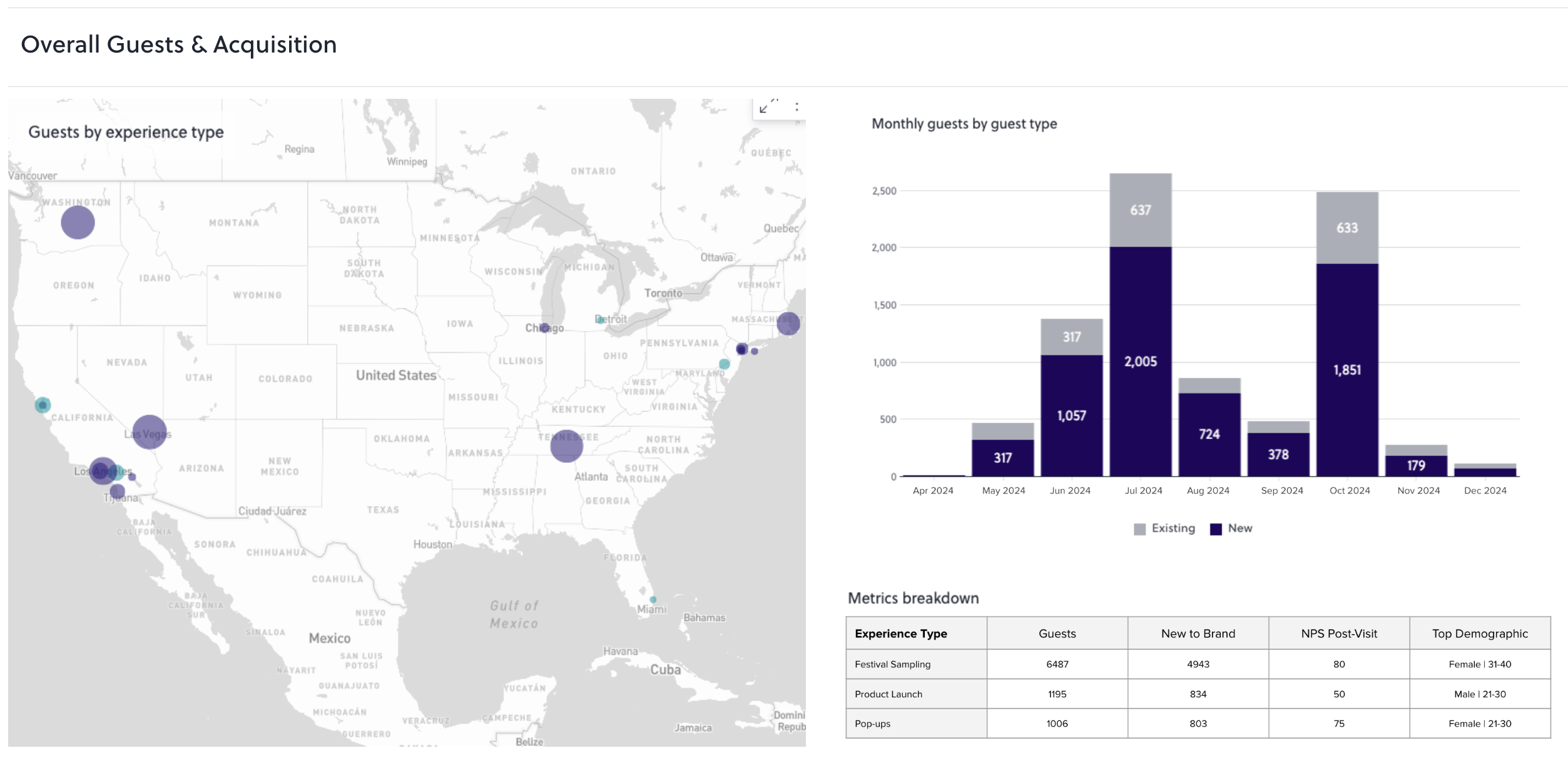
AnyRoad is built to close that gap. The platform embeds white-labeled booking directly into the brand’s website, so visitors stay within the brand’s domain. FullView captures data from every attendee in a group, which creates a complete consumer graph. Integrated ID scanning supports age verification and compliance for regulated industries. Atlas Insights, with PinPoint AI-powered feedback analysis, turns open-text survey responses into themes such as brand affinity, NPS, and purchase intent, so teams receive structured insight instead of raw exports.
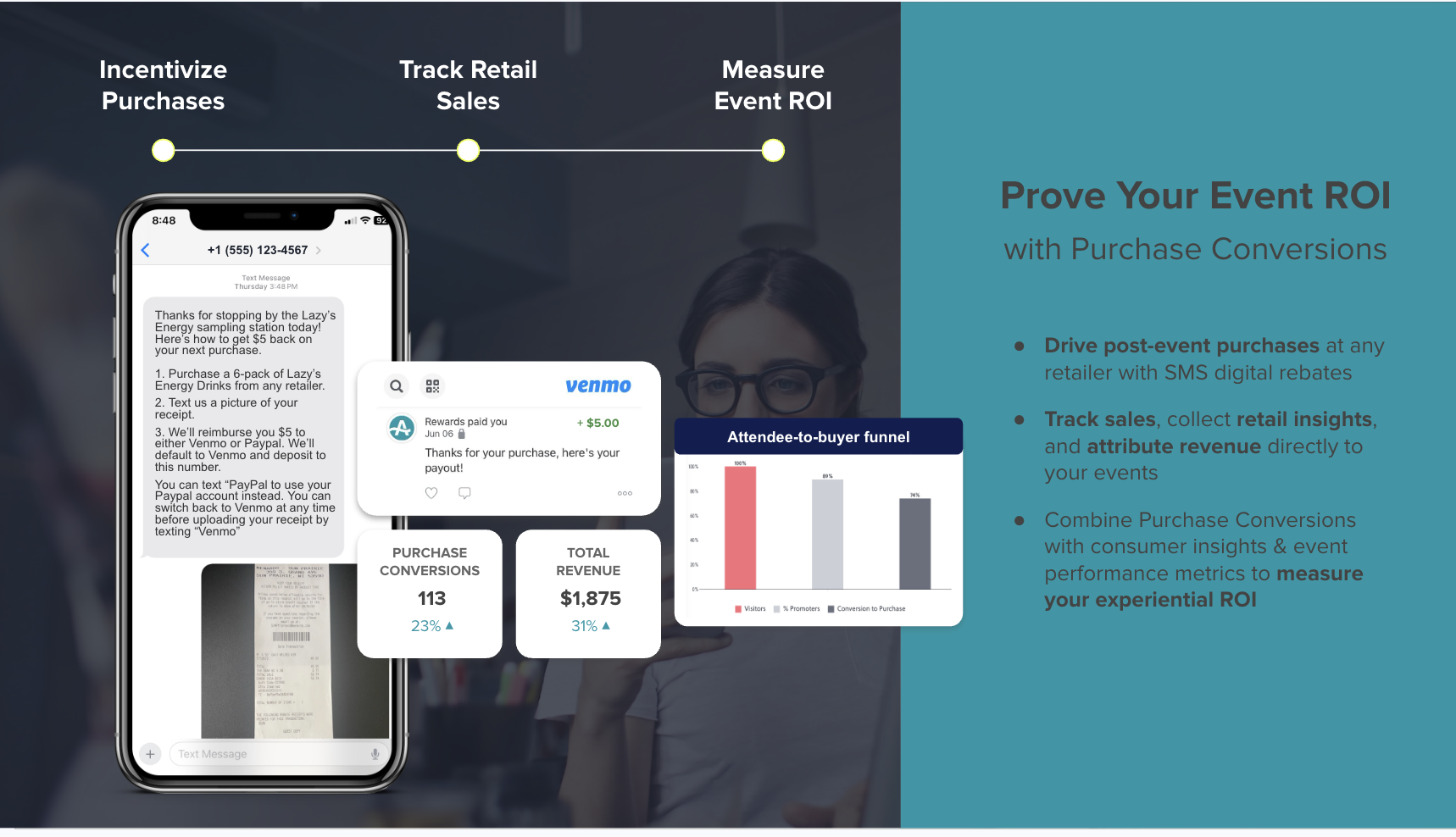
The impact shows up in measurable results. Campari Group’s partnership with AnyRoad delivered a 3x increase in marketing opt-in registrations and identified 4,500 brand champions across brand homes, pop-ups, and festivals. During festival activations for an artisanal mezcal brand at III Points and Portola, POPLIFE captured 45–50% more consumer data using AnyRoad, with 42% of attendees opting into future marketing communications. Conversate Collective improved 100% of consumer profiles with vital demographic information for a CPG beauty brand’s field marketing events.
AnyRoad’s Lifetime Loyalty platform launched publicly on February 20, 2025, with Bottle Clubs and Premium Memberships as its core offerings. AnyRoad reporting shows that experience-driven opt-ins convert to paid loyalty at four times the rate of traditional channels, and member spending increases 150% within the first year. A consumer who visits a brand home twice is 512% more likely to enroll in a paid loyalty program, so each visit functions as a high-intent acquisition touchpoint.
Where AnyRoad Fits For Brand Managers
AnyRoad is an experiential marketing platform built for the brand manager’s job. It turns brand-owned experiences into first-party data and recurring revenue, which differs from Cvent’s focus on event logistics.

The platform covers the full brand experience lifecycle:
- Experience Manager provides centralized management of tours, classes, events, and field activations from a single platform. Automated scheduling and resource management reduce manual administrative work and free teams to focus on creative execution.
- Guest Experience delivers white-labeled booking embedded in the brand’s website and seamless on-site operations through the AnyRoad Front Desk app. FullView then captures data from every attendee in a group, so brand teams see the entire audience rather than a single booking contact.
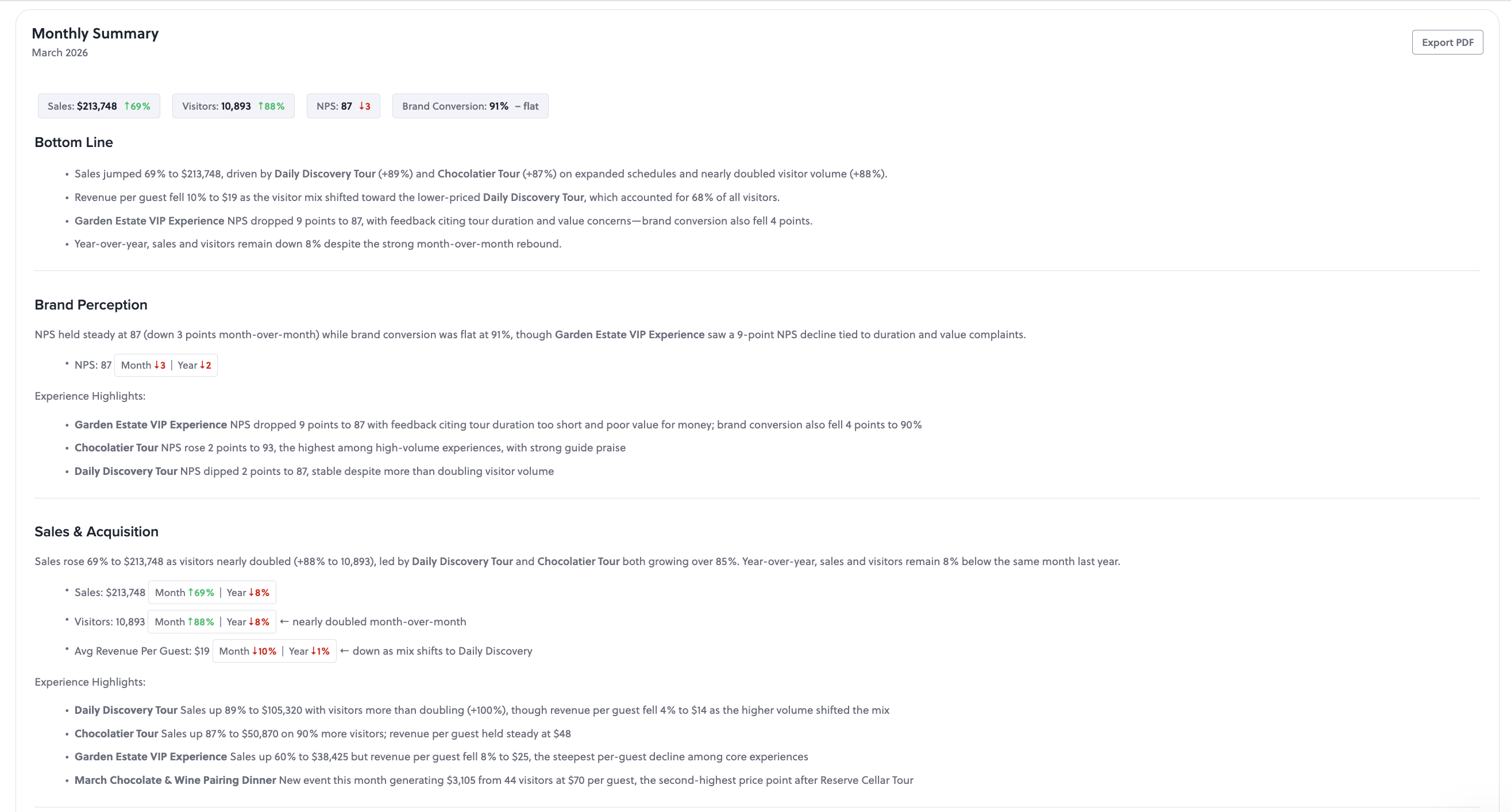
- Atlas Insights measures brand affinity, NPS, and purchase intent, while PinPoint AI analyzes open-text survey responses to surface themes in real time. Diageo measured a 16-point NPS increase from pre-visit to post-visit at Johnnie Walker Princes Street using AnyRoad analytics. Absolut Home increased average revenue per guest by 36% since 2018 and achieved an 85% brand conversion rate post-event.
- Lifetime Loyalty turns visits into recurring revenue through Bottle Clubs, Premium Memberships, cashback rebates, and sweepstakes. Heritage distilleries including Heaven Hill Distillery, Nearest Green Distillery, and Lux Row Distillers have adopted the platform. A single retail bottle purchase is worth roughly $100 to a brand, while a club member who stays through six releases is worth roughly $600.
Lifetime Loyalty combines technology with white-glove service. Spirits industry experts coach on-site staff, configure the enrollment experience, and handle ongoing club maintenance. Programs then run quarter to quarter without requiring brands to rebuild them each allocation cycle. AnyRoad also offers managed CRM services as an alcohol-native option for brands without in-house email marketing capability, using the first-party experiential data the platform already collects.
For a direct comparison of how AnyRoad analytics differ from Cvent’s event-centric reporting, see Cvent Vs. AnyRoad: Which Platform Wins On Brand Analytics?
See AnyRoad In Action For Your Brand
Conclusion: Matching Platforms To Brand Outcomes
Cvent serves enterprise event logistics and large conference programs. Brand managers running product launches, brand homes, tasting rooms, and field activations need platforms designed for consumer experiences and first-party data capture. Event management platforms answer “How do I run this event?” Experiential marketing platforms answer “Who came, what did they think, and how does that experience drive revenue?” AnyRoad focuses on the second question and connects visits to recurring revenue through Lifetime Loyalty and a unified data model.
Turn Brand Experiences Into Measurable Revenue With AnyRoad