


Written by: Bryan Grobstein, Vice President, Global Revenue, AnyRoad | Last updated: October 14, 2026
Key Takeaways
- Cvent excels at large-scale event logistics and registration but does not capture configurable first-party consumer data or connect experiences to revenue attribution.
- Dedicated experiential platforms center on the consumer relationship the event creates and support segmentation, personalized follow-up, and recurring revenue enrollment without manual exports.
- Post-event data ownership differs fundamentally: Cvent holds registrant records scoped to the event, while experiential platforms maintain consumer profiles that persist between visits.
- Integration availability differs from data architecture. Brands should confirm that segmentation and revenue attribution work natively instead of relying on manual configuration or middleware.
- AnyRoad delivers consumer engagement infrastructure that connects brand experiences directly to measurable revenue outcomes and recurring loyalty programs.
See how AnyRoad turns experiences into revenue. Book a demo.
What Happens To Attendee Data After The Event Ends
Cvent is an event management platform with attendee data, not a CRM built for ongoing consumer lifecycle marketing. Because it holds registrants rather than members, it lacks a recurring-membership engine and a member CRM that persists between events.
For brand-owned experiences, the value sits in the consumer record, not just the registration record. Brands need to capture custom first-party data before, during, and after the experience and then act on it. A registration record shows who attended. Configurable experiential data shows what that person cares about, what they intend to buy, and whether they are ready for a recurring revenue relationship.
AnyRoad follows this operating model. Its Guest Experience pillar supports configurable pre-, during-, and post-experience questions that extend beyond basic registration. The FullView feature captures data from every attendee in a group, not only the person who made the booking. That structural difference matters when brands like Diageo need to understand who is actually in the room. Integrated ID scanning handles age verification for regulated categories such as alcohol, keeping compliance embedded in the data capture flow instead of managed separately.
The result is a consumer record that belongs to the brand, lives in the brand's system, and supports segmentation, personalized follow-up, and revenue attribution without a manual export. Campari Group's partnership with AnyRoad produced a 3X increase in marketing opt-in rates from brand home registrations, identified 4,500 brand champions, and drove a 25% increase in average spend per customer since 2020. These outcomes require a data architecture built around the consumer rather than the event.

Own the guest journey, own your guest data. Schedule a demo.
Integration Reality: Salesforce, HubSpot, And Klaviyo
Cvent integrates with Salesforce and HubSpot. Cvent's App Marketplace lists native CRM and sales integrations for Salesforce, HubSpot, Microsoft Dynamics 365, SugarCRM, and Veeva, and marketing automation integrations for Marketo Engage, Oracle Eloqua, and Salesforce Pardot. That breadth is a real strength for enterprise organizations that need event data to flow into an existing CRM pipeline.
Integration availability differs from data architecture. Brands should evaluate whether the platform's native data model centers on the consumer or on the event and whether segmentation can happen inside the platform without manual exports. Independent reviews document that Cvent's Salesforce connector requires manual configuration, can produce incomplete lead transfers, and places troubleshooting responsibility on the buyer's Salesforce administrator. Cvent's App Marketplace does not list a native Klaviyo integration. Klaviyo connectivity requires a marketplace connector, custom API work, or middleware such as Zapier.
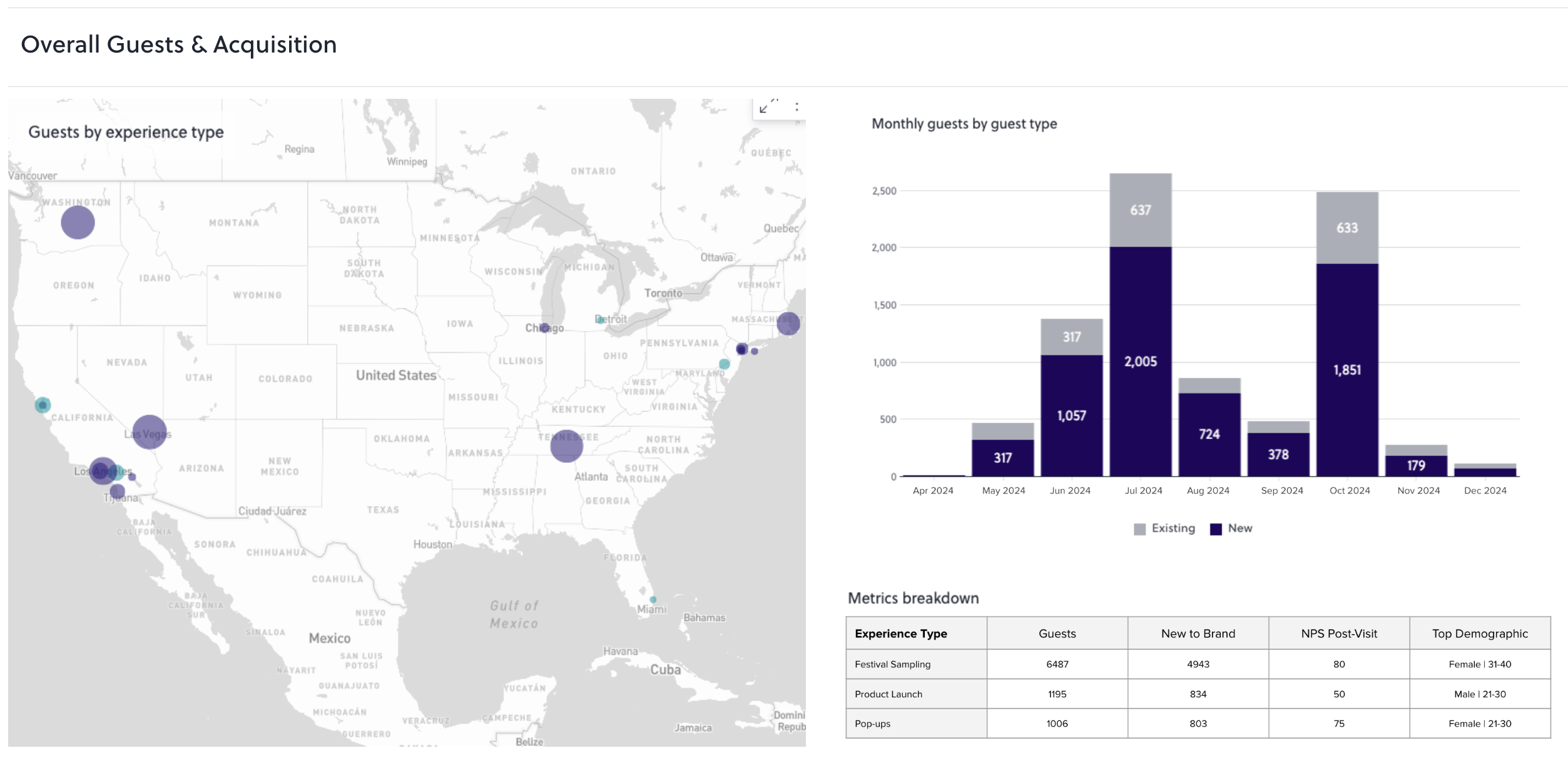
AnyRoad's connected tech stack includes CRM, CDP, and database integrations; email and marketing automation tools including HubSpot and Klaviyo; POS solutions; ERP, accounting, and finance tools including SAP and NetSuite; BI and dashboard tools; and workflow automation via webhooks, Zapier, and Workato. Because guest data, NPS, spend, visit frequency, and club status live in the same platform, segmentation does not rely on manual exports. A brand can identify a high-value cohort of repeat visitors with high NPS and above-average spend and message them directly without stitching together an experiential tool, an ecommerce platform, and a standalone email service provider.
Total Cost Of Ownership And The Learning Curve
Cvent uses quote-based pricing with no published rates. Independent analysis documents a three-layer cost structure. The annual license is estimated at $19,550 to $79,000 or more. Per-registrant fees for Attendee Hub are approximately $7 per attendee per event. First-year implementation costs range from $5,000 to $50,000. Cvent's own blog advises buyers to factor in payment processing charges, potential add-ons, and internal time spent managing the system. Because costs scale with attendance, a more successful event costs more. One procurement analysis summarized the structural problem as: "the more successful your events become, the more you pay, without a proportional increase in value."
Total cost of ownership extends beyond licensing. The relevant categories are licensing and module gating, implementation and onboarding time, internal admin headcount required to operate the platform, and the cost of adjacent tools a brand still has to buy to close the data and revenue gap. For lean teams, these factors compound. Independent procurement analysis identifies implementation, template build-out, admin training, CRM field mapping, and ongoing governance overhead as material TCO drivers.
Independent review aggregators consistently place Cvent at the bottom of its category for ease of use, with a G2 ease-of-use score of 7.8 out of 10, the lowest in the event management category. Onboarding is measured in months rather than days. Reaching full team proficiency realistically takes 3 to 6 months, even for experienced event professionals. The operational burden typically lands on the same lean team running the experiences.
AnyRoad's model combines technology with white-glove service. Spirits industry operators coach on-site staff, set up the enrollment experience, and handle the operational lift brands would otherwise have to staff internally. The differentiator is AnyRoad's combination of software, expertise, and an operating team that supports execution.
A Decision Framework By Event Type
The choice between Cvent and a dedicated experiential platform follows from what a brand is actually running. With cost and operational burden in mind, the next step is to match the platform to the type of event.
The table below summarizes the recommended platform by event type.
| Event Type | Primary Goal | Recommended Platform | Why It Fits |
|---|---|---|---|
| Mega-Conference Or Trade Show | Event delivery at scale | Cvent | Supplier Network, room-block management, and enterprise registration infrastructure support complex logistics and large audiences. |
| One-Off Brand Activation Or Field Marketing Moment | Consumer acquisition and measurable follow-up | Dedicated experiential platform | Focus on first-party data capture, segmentation, and post-event engagement rather than deep logistics. |
| Recurring Brand-Home, Distillery, Tasting-Room, Or Experience Program | Recurring revenue and loyalty | Dedicated experiential platform | Persistent consumer profiles and membership tools support repeat visits and loyalty enrollment. |
For mega-conferences or trade shows where the event is the product and logistics, scale, venue sourcing, and session management dominate, Cvent is a strong fit. Its Supplier Network, room-block management, and enterprise registration infrastructure have no equivalent among registration-first alternatives.
For one-off brand activations or field marketing moments where the goal is consumer acquisition and measurable follow-up, a dedicated experiential platform works better as the center of gravity. The operating question focuses on how many first-party records were captured and what happened to them afterward.
For recurring brand-home, distillery, tasting-room, or experience programs where the same consumer can return and recurring revenue is the goal, a dedicated experiential platform becomes essential. A consumer who visits a distillery twice is 512% more likely to convert into a paid loyalty enrollment, which makes the second visit a clear signal that a guest is ready to be asked.
For brands exploring Cvent alternatives for experiential marketing, this decision framework offers a practical starting point.
Where Cvent And A Dedicated Experiential Platform Can Coexist
Many brands run Cvent for logistics and scale while layering a dedicated experiential platform for consumer data capture and post-event revenue attribution. In that model, Cvent manages the event, and the experiential platform manages the consumer relationship.
This blended approach works well for organizations that run both large-scale conferences and recurring brand-home programs. The two platform categories do not compete directly. They solve different problems, and brands that force one to cover both logistics and data often end up with gaps in data quality and revenue insight.
What To Evaluate In A Dedicated Experiential Platform
A structured evaluation of dedicated experiential platforms should cover the following criteria:
- First-party data capture depth and configurability across pre-, during-, and post-experience touchpoints
- White-label booking embedded directly on the brand's website so the brand owns the entire consumer journey
- On-site operations including QR check-in, on-site payments, and digital waivers
- AI-powered feedback analysis that turns open-text survey responses into themes and sentiment
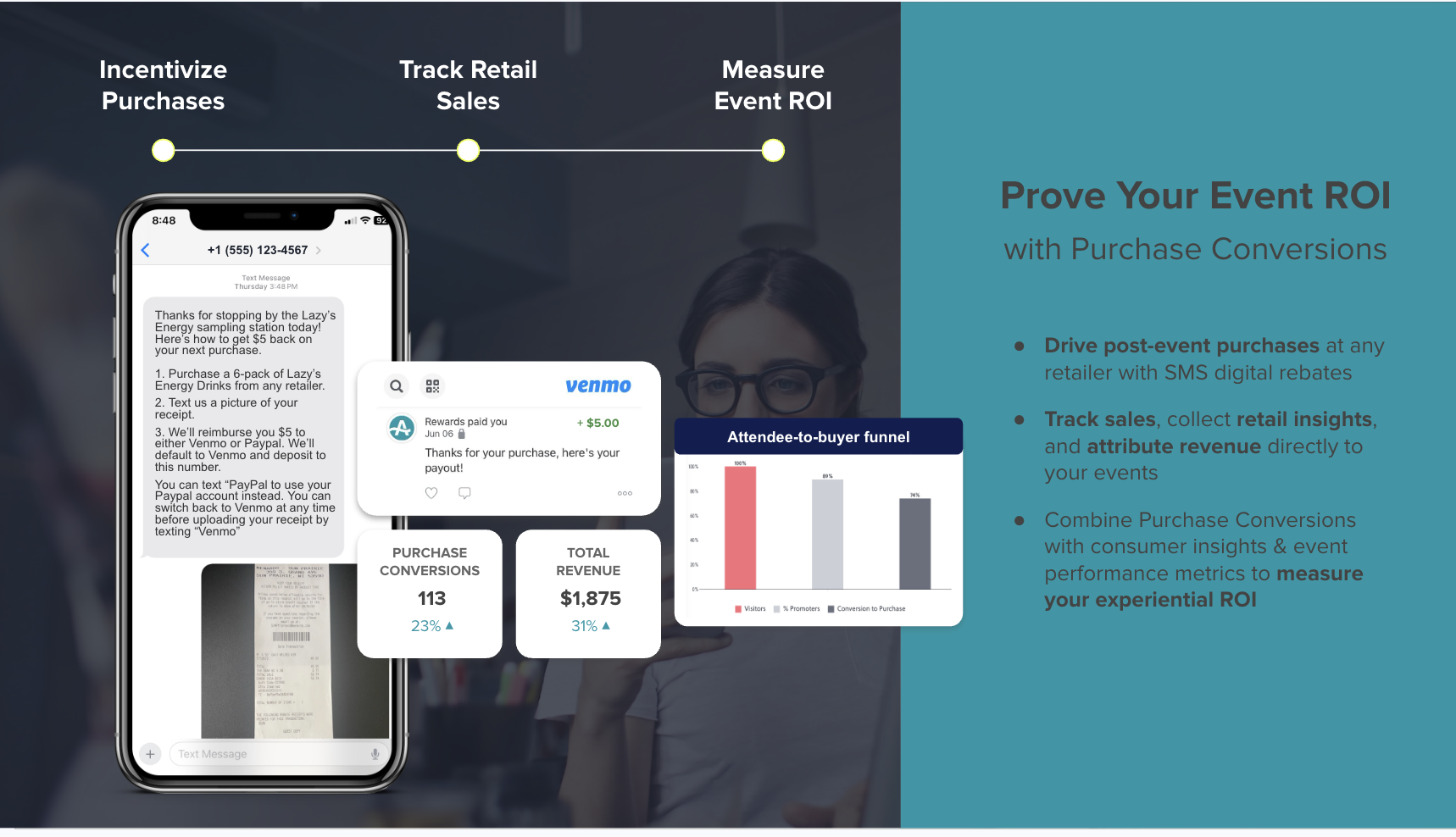
- Post-event revenue attribution that connects an experience to an actual purchase
- Compliance features for regulated categories including integrated ID scanning
AnyRoad addresses each criterion directly. The Experience Manager provides centralized management of tours, classes, events, and field activations from a single platform. The configurable white-labeled Guest Experience embeds booking directly on the brand's website, keeping the brand front and center and avoiding third-party redirects. Atlas Insights with PinPoint AI-powered feedback analysis automatically identifies key themes, sentiment drivers, and actionable suggestions from open-text survey responses. The Lifetime Loyalty suite, including Bottle Clubs, Premium Memberships, and gamified purchase conversion tools, connects the experience to recurring revenue.

Absolut improved guest revenue per visit by 36% using AnyRoad's platform. Diageo achieved a 16-point increase in its NPS score using AnyRoad analytics, and its "Journey of Flavour" immersive whisky experience found that an important under-targeted demographic was 40% more likely to drink whisky after visiting. Agency POPLIFE captured 45–50% more consumer data using AnyRoad compared to competitors, with 85% of engaged consumers reporting intent to purchase post-event.
For alcohol and spirits brands, AnyRoad's Bottle Club model addresses the compliance and conversion gap that general-purpose event platforms do not solve. On-site enrollment during a distillery visit is the highest-converting channel. AnyRoad sets up the enrollment experience and coaches tour guides, retail managers, and mixologists on the pitch. The compliant transactional path runs through AnyRoad's licensed ecommerce retail partner. AnyRoad is not a licensed retailer or wholesaler and does not sell, ship, or distribute alcohol itself. For more on three-tier compliance in this context, see AnyRoad's writing on scalable alcohol subscription management.

The lifetime value math is straightforward. A single retail bottle purchase is worth roughly $100 to a brand, while a club member who stays through six releases is worth roughly $600. Churn concentrates around the six-release mark because of product depletion rather than acquisition. Members who have not finished what they own do not want more. AnyRoad counters this with ongoing engagement built around the product itself, including virtual and on-site cocktail-making classes that help members finish their current allocation and prepare for the next release.
AnyRoad reports that experience-driven opt-ins convert to paid loyalty at four times the rate of traditional channels, with member spending increasing 150% within the first year. Publicly announced Lifetime Loyalty customers include Heaven Hill Distillery, Nearest Green Distillery, Lux Row Distillers, Castle & Key, Catoctin Creek Distilling, and Tarnished Truth Distilling.
Measure ROI from brand activations with confidence. Schedule a demo.
FAQ
Is Cvent A CRM?
No. As explained earlier, Cvent is an event management platform, not a CRM. It lacks a recurring-membership engine and a member CRM that persists between events.
Can Cvent Be Integrated With Salesforce Or HubSpot?
Yes. Cvent offers native integrations with major CRM and marketing tools. For details on data model limitations and maintenance requirements, see the section "Integration Reality: Salesforce, HubSpot, And Klaviyo."
Why Is Cvent So Expensive?
Cvent uses quote-based pricing with layered costs for licenses, per-registrant fees, and implementation. The section "Total Cost Of Ownership And The Learning Curve" breaks down these categories and how they affect budget planning.
How Hard Is It To Learn Cvent?
Cvent carries a meaningful learning curve. Independent reviews and timelines for team proficiency appear in the section "Total Cost Of Ownership And The Learning Curve."
What Is A Dedicated Experiential Platform?
A dedicated experiential platform provides consumer engagement infrastructure for experiences that act as acquisition and revenue channels. It centers on the consumer relationship the event creates and supports configurable data capture, white-label booking, on-site operations, feedback analysis, revenue attribution, and compliance features.
Conclusion
Cvent provides event infrastructure for situations where the event is the product. Dedicated experiential platforms provide consumer engagement infrastructure for situations where the event is the channel.
Mega-conference and trade show logistics favor Cvent because its venue sourcing, room-block management, and enterprise registration capabilities support complex events. One-off brand activations and recurring brand-home programs favor a dedicated experiential platform because the operating focus shifts from logistics to data ownership and revenue attribution.
The deciding factor is whether the brand needs to own the consumer relationship after the event ends and connect that relationship to measurable revenue. When that requirement exists, the platform category that solves it is the one built to manage what happens after the event, not just the event itself.
Turn tasting room visits into recurring revenue. Schedule a demo.