


Written by: Bryan Grobstein, Vice President, Global Revenue, AnyRoad | Last updated: October 13, 2026
Key Takeaways
- Cvent is a mature, broad platform for enterprises running multi-format programs that need venue sourcing, centralized registration, and complex logistics across many event types.
- RainFocus excels at flagship conferences with deep personalization, flexible registration, and real-time bidirectional integrations with marketing and sales systems like Salesforce and Adobe.
- Both platforms carry significant total cost of ownership, including 6–24 week implementations and ongoing technical administration that requires dedicated staff.
- Cvent and RainFocus were not designed for brand-owned experiential programs such as tasting rooms, pop-ups, or retail activations that generate first-party consumer data and drive direct revenue conversion.
- AnyRoad provides a purpose-built platform for experiential marketing programs that turn guest visits into recurring revenue through first-party data capture and loyalty tools.
Get a tailored AnyRoad walkthrough for your experiential program
Start With Your Event Operating Model
Enterprise buyers need to match Cvent or RainFocus to how their event program actually runs. The online conversation often focuses on feature checklists, review aggregators, and vendor comparison pages, but those rarely reflect real operating constraints. The right frame is your operating model, including the types of events you run, the team you have to run them, and the downstream systems that need to receive the data.
For more context on how Cvent fits into the broader enterprise event technology landscape, see What Companies Are Similar To Cvent? 2026 Alternatives and Cvent Event Marketing Platform Features: 2026 Buyer'S Guide.
See how AnyRoad captures first-party data at brand experiences
What Cvent Is Best For In Enterprise Events
Cvent was founded in 1999 by Reggie Aggarwal, who remains CEO in 2026. Blackstone took the company private in June 2023 for $4.6 billion and acquired the remaining stake for $1.3 billion in July 2025, giving it full ownership. That ownership stability supports a platform that now serves 445,000+ users across 34,000+ organizations and has managed 8 million+ events.
Cvent’s strengths are breadth and operational depth. Its Supplier Network covers 340,000+ hotels worldwide, which makes it the largest venue marketplace in the industry. The platform covers registration, venue sourcing, onsite check-in and badge printing, exhibitor and sponsor management, virtual events, and cross-event analytics in one system. RFP.wiki scores Cvent’s registration and ticketing workflows at 4.9 out of 5 and its CRM and marketing automation integrations at 4.8 out of 5, its two highest-rated criteria across 5,099 tracked reviews.
Two enterprise complaints surface consistently in peer reviews. First, cost: Cvent’s three-layer pricing model combines an annual license, per-registrant fees of $7–$12 per attendee per event, and first-year implementation fees. As CostBench summarized, “the more successful your events become, the more you pay, without a proportional increase in value.” Second, usability: Cvent’s G2 ease-of-use score is 7.8 out of 10 and ease-of-setup is 7.4, the lowest scores in the event management category, with onboarding taking three to six months even for experienced event professionals.
What RainFocus Is Best For In Enterprise Events
RainFocus was founded in 2013 and is headquartered in Lehi, Utah. The platform is purpose-built for large-scale, data-intensive conference programs rather than assembled through acquisition. Adobe Summit runs on RainFocus, and the company was named 2025 Adobe Digital Experience B2B Technology Partner Of The Year. In Q2 2026, RainFocus was named a Leader in The Forrester Wave™: Virtual Event Management Platforms, receiving the highest possible scores in 22 of 31 criteria, including sales and marketing technology integrations, reporting and analytics, and experience personalization.
RainFocus’s core differentiator is its Global Attendee Profile. This persistent record carries preferences and engagement signals across every event in a portfolio and enables personalization at scale. Its bidirectional integrations push engagement signals into Salesforce, Marketo, Eloqua, and HubSpot the moment a session ends, which triggers automated workflows without manual exports.
RainFocus’s review base on Gartner Peer Insights is 26 verified reviews versus Cvent’s 91 as of Q2 2026, so ratings from a sample that small should be read with caution. Per Gartner, RainFocus is a poor fit for teams wanting self-service solutions for roadshows or field events, and implementation takes six to twelve weeks and requires dedicated technical resources.
With both platforms’ strengths and weaknesses in view, the next section compares them side by side across the dimensions that matter most for enterprise event programs.
Cvent Vs RainFocus Comparison For Enterprise Events
The table below compares Cvent and RainFocus across six dimensions that matter most to enterprise buyers: registration flexibility, onsite execution, data integration, analytics and personalization, pricing model, and best-fit event type.
| Dimension | Cvent | Rainfocus |
|---|---|---|
| Registration Flexibility | Multi-page forms, conditional logic, group registration, approval flows, waitlists. Best for complex, multi-persona registration across many event types. | Highly configurable workflow engine built around organizational process rather than fixed templates. Best for flagship conferences with complex session selection. |
| Onsite Execution | Badge printing, kiosks, lead retrieval, OnArrival check-in, natively integrated with the attendee record. Best for high-throughput, multi-format events. | Check-in kiosks, badge printing, session scanning; onsite check-in capabilities depend on external integrations. Best for conference programs where session-level attendance tracking is the priority. |
| Data Integration | Native Marketo and Eloqua connectors work cleanly; Salesforce connector requires manual configuration and has reported sync failures. Best for Marketo/Eloqua-primary stacks. | Bidirectional push to Salesforce, Marketo, Eloqua, and HubSpot at session end; deepest Adobe Experience Platform connectors in the market. Best for Adobe-stack and data-intensive programs. |
| Analytics and Personalization | Group Business Intelligence for cross-event analytics, CventIQ AI layer for content and recommendations. Best for portfolio-level operational reporting. | Global Attendee Profile with real-time behavioral data, highest Forrester scores in reporting, analytics, and experience personalization. Best for programs where attendee journey data drives pipeline. |
| Pricing Model | Annual license plus per-registrant fees plus implementation; enterprise teams report $100,000–$250,000+ annually. Costs scale with attendee volume. | Custom enterprise pricing with no per-registration model; enterprise quotes average around $120,576 per year. Often comparable to Cvent at enterprise scale. |
| Best-Fit Event Type | Multi-format enterprise programs requiring venue sourcing, complex logistics, and centralized registration across many event types. | Flagship conferences and mega-events (10,000+ attendees) where personalization, session management, and marketing-stack integration are the primary requirements. |
Explore the AnyRoad platform for brand-owned experiences
Why Cvent Carries A High Enterprise Price Tag
Cvent’s cost structure is layered in a way that makes the total difficult to forecast before a formal quote. Beyond the platform license, Attendee Hub and Event App modules are frequently quoted around $7 per registrant per event, and first-year implementation or professional services often land in the $5,000–$50,000 band. A flagship event that draws more attendees than planned adds directly to the bill: an event drawing 2,000 attendees instead of the planned 800 adds roughly $8,400–$14,400 to that single event’s Cvent cost.
Beyond the software contract, Cvent’s total cost of ownership extends to internal labor for configuration, governance, and template standardization. It also includes permission management, integration upkeep, and cross-department administration. Buyers should budget approximately 0.5–1.0 FTE of ongoing platform administration as part of TCO. Event-day costs such as onsite staffing, hardware, badge production, and premium support may be separately billed and should be clarified in the contract.
RainFocus removes per-registrant pricing, which eliminates one unpredictable cost driver. However, RainFocus is not cheaper than Cvent at the enterprise tier. Its implementation requires dedicated technical resources, and, as noted earlier, RainFocus contracts for flagship conferences typically run $150,000 or more. Buyers should weigh the absence of per-registrant charges against implementation, integration, and ongoing technical administration costs.
How RainFocus And Cvent Handle Salesforce And Marketo Data
RainFocus positions its integrations around connecting event activity to sales and marketing operations rather than treating registration as an isolated record. Its Base Webinar module pushes intent scoring, session duration, and poll data into Salesforce, Marketo, Eloqua, and HubSpot the moment a session ends, triggering immediate automated workflows. Engagement signals such as watch time, poll responses, and session duration feed directly into lead scoring rather than syncing only registration or attendance status.
Cvent’s integration picture is more mixed. Its Marketo and Eloqua connectors are native and work cleanly, so event registration triggers marketing automation workflows without IT integration projects. The Salesforce connector, however, is not native architecture. It must be manually integrated, requires manual reconnection after platform updates, and has generated consistent complaints about incomplete lead transfers and data sync failures.
A structural risk applies to both platforms. Platform-native connectors tie the destination data model to the source platform’s architecture, so migrating from one platform to the other breaks lead scoring models and creates discontinuities in attribution reports. Enterprise buyers should define a canonical event data model and test migration continuity before committing to either connector strategy. The attendee record, including ownership, structure, and survivability after a platform switch, is a governance question that belongs in the procurement conversation rather than post-go-live cleanup.
Usability Of Cvent And RainFocus For Large-Scale Conferences
Cvent’s usability concerns are well-documented and consistent across review platforms. Recurring buyer complaints include a steep learning curve, non-intuitive navigation, and clunky editing or workflow steps in certain modules. Onboarding takes three to six months even for experienced event professionals, and UI changes ship without clear communication, disrupting established workflows.
The complexity reflects the depth of the platform’s configuration options. Cvent rewards organizations that can dedicate a person or small team to learning the platform properly and punishes part-time admins who log in only a few times a year. For a large-scale conference with dedicated event operations staff, the configuration depth is a feature. For a lean team running a handful of events annually, it becomes overhead that rarely pays off.
RainFocus carries similar complexity at the configuration layer. RainFocus requires significant upfront configuration and recommends RainFocus Academy certification; its features are often buried in sub-menus, creating a steep learning curve. Neither platform operates as a self-service tool for a team without dedicated event technology resources.
Cvent Vs RainFocus For Multi-Track Conferences
For multi-track programs, the key distinction is where each platform’s session and speaker workflows are strongest. RainFocus’s standout feature is speaker and abstract review workstreams that feed agenda decisions with fewer handoffs than generic event suites. Abstract review and speaker workflows stay connected to agenda updates, and session-level outputs export cleanly into downstream event operations. For a conference where abstract submission, speaker management, and agenda publication are tightly coupled, RainFocus’s native workflow is a meaningful advantage.
Cvent handles multi-track programs through its session catalog and registration logic, with capacity and waitlist controls for events and sessions, session visibility control, and conditional registration paths based on attendee type. Cvent’s operational reporting ties event activities back to attendee engagement, with agenda and session build supporting multi-track convention program structures. Cvent has an edge in connecting session attendance data to the broader attendee record for downstream CRM and reporting use.
When Cvent And RainFocus Do Not Fit Brand-Owned Experiences
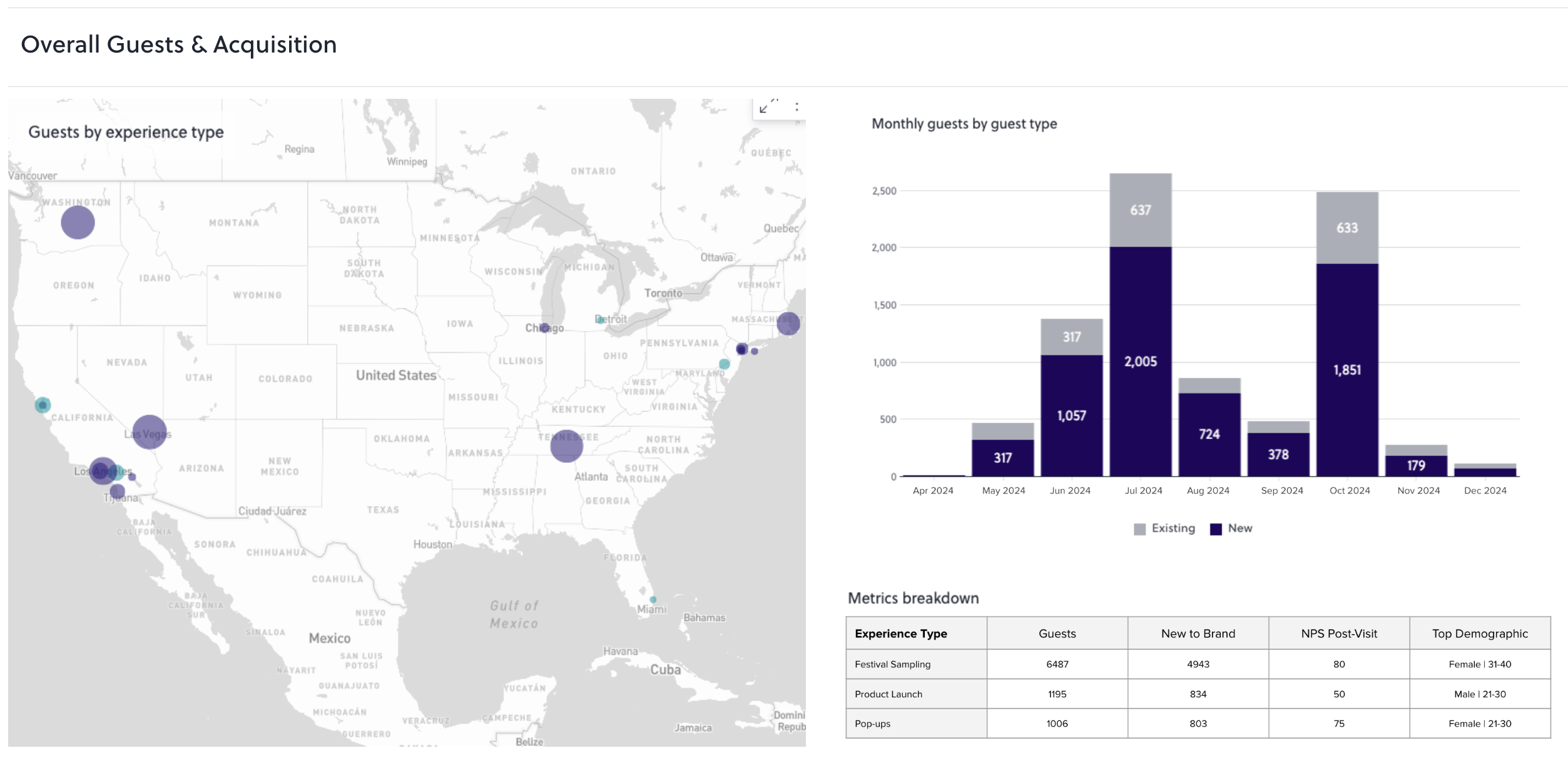
Cvent and RainFocus are both built for the conference operating model: a defined event date, a registration flow, a session agenda, and a CRM that receives the attendee record afterward. That model does not describe a distillery tasting room, a brand home, a pop-up activation, or an ambassador tasting inside a retail account. These programs run continuously, serve walk-in guests, generate first-party consumer data rather than B2B lead records, and need to connect a visit to a bottle purchase rather than a pipeline opportunity.
AnyRoad is built for that operating model. It is an AI-powered experiential marketing platform that captures first-party consumer data across in-person brand experiences, measures brand affinity and NPS, and connects visits to retail purchase through cashback rebates and sweepstakes. For brands that want to convert tasting room visitors into recurring revenue, AnyRoad’s Lifetime Loyalty suite adds Bottle Clubs and Premium Memberships, which turn a one-time visit into a paid enrollment.

The data behind that conversion is durable. A consumer who visits a distillery twice is 512% more likely to convert to a paid loyalty enrollment, and that conversion has a measurable payoff. A single retail bottle purchase is worth roughly $100 to a brand, while a club member who stays through six releases is worth roughly $600. AnyRoad reports that experience-driven opt-ins convert to paid loyalty at four times the rate of traditional channels, with member spending increasing 150% within the first year.
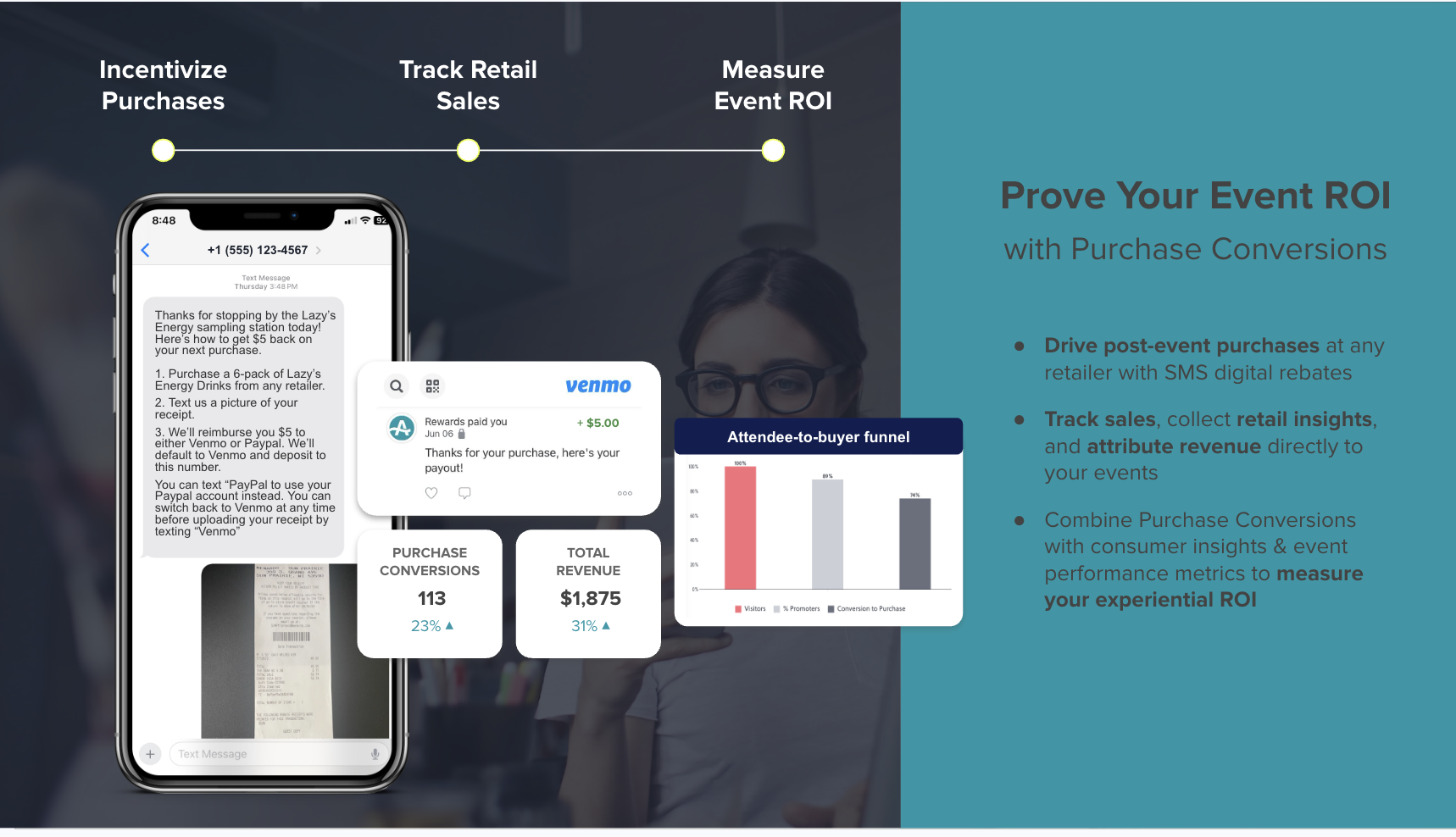
Publicly announced Lifetime Loyalty customers include Heaven Hill Distillery, Nearest Green Distillery, Lux Row Distillers, Castle & Key, Catoctin Creek Distilling, and Tarnished Truth Distilling. AnyRoad integrates with CRM, CDP, email and marketing automation, POS, and BI tools, and delivers the platform alongside white-glove service from spirits industry operators who coach on-site staff, set up the enrollment experience, and handle the operational lift brands would otherwise staff internally.

For brands evaluating Cvent or RainFocus for their brand-owned experiential programs, the practical answer is that neither platform was designed for this use case. The real question is whether the tasting room or brand home is being treated as the first-party data asset it actually is.
Decision Framework: Matching Platforms To Your Event Portfolio
The following framework maps event portfolio type to platform fit. Use it as a starting point, then validate against your specific operating model, team size, and technology stack.
- Flagship conference (1,000+ attendees, multi-track, abstract management): RainFocus. Its Global Attendee Profile, session and speaker workflows, and deep marketing-stack integrations are built for this program type. Best fit when the organization runs on Adobe or needs the deepest available personalization at scale.
- Multi-format enterprise program (many event types, venue sourcing, centralized registration): Cvent. Its breadth, venue marketplace, and native Marketo and Eloqua connectors justify the cost and complexity for organizations running 30+ events annually with dedicated event operations staff.
- Executive program or internal meeting (venue contracting, hotel blocks, governance): Cvent. Its venue sourcing and hotel contracting capabilities across multiple regions are unmatched for structured internal meeting programs.
- Brand-owned experiential program (tasting rooms, brand homes, pop-ups, field activations): AnyRoad. Cvent and RainFocus were not built to capture first-party consumer data at a tasting room, measure brand affinity, connect a visit to a retail purchase, or convert a guest into a paying club member. AnyRoad was.
For a deeper look at how Cvent compares to other platforms across operating models, see When To Choose Cvent Vs Other Platforms In 2026.
Start converting visits into recurring revenue with AnyRoad
Frequently Asked Questions
Is RainFocus Cheaper Than Cvent For Enterprise Events?
RainFocus is not reliably cheaper than Cvent at enterprise scale. RainFocus does not use per-registrant pricing, which removes one unpredictable cost driver that enterprise Cvent buyers frequently cite as a pain point. However, RainFocus enterprise contracts for flagship conferences often reach $150,000 or more, and implementation requires dedicated technical resources over a six-to-twelve-week timeline. When total cost of ownership includes implementation, integration maintenance, technical administration, and internal staff time, the two platforms are broadly comparable. The absence of per-registrant fees in RainFocus’s model is a structural advantage for programs with high or unpredictable attendee volumes, but it does not guarantee a lower overall price.
Which Platform Has Better Salesforce Integration, Cvent Or RainFocus?
RainFocus has the stronger Salesforce integration architecture for programs where real-time engagement data needs to flow into CRM immediately after a session ends. Its bidirectional push sends intent scoring, session duration, and poll data into Salesforce the moment a session closes, which triggers automated workflows without manual exports. Cvent’s Salesforce connector requires manual configuration, has generated consistent peer-review complaints about incomplete lead transfers and data sync failures, and requires manual reconnection after platform updates.
Cvent’s Marketo and Eloqua connectors, by contrast, are native and work cleanly. The practical guidance is straightforward. If the organization’s primary marketing automation platform is Marketo or Eloqua, Cvent’s native connectors are a genuine advantage. If the program runs on Salesforce as the system of record and real-time engagement data is the priority, RainFocus’s architecture is materially better.
What Should Enterprise Buyers Watch For In Cvent And RainFocus Contracts?
Several commercial terms deserve scrutiny before signing. For Cvent, the per-registrant fee structure means costs scale with attendee volume rather than event count, so a flagship event that overperforms on attendance adds directly to the bill. Cvent typically requires one-to-three-year contracts with auto-renewal clauses that are difficult to exit early. Buyers should confirm which modules are included in the quoted subscription versus priced separately, clarify whether onsite staffing, hardware, and premium support are included or billed additionally, and model worst-case attendance rather than planned attendance when forecasting total cost.
For RainFocus, buyers should price implementation, integration work, testing, and internal staff time separately from the software contract. They should also confirm the specific direction of data flow, supported objects, and synchronization timing for each destination system. For both platforms, data export terms, historical data ownership, and migration exit costs belong in the contract conversation before signing.
When Does Neither Cvent Nor RainFocus Fit An Enterprise Event Program?
Both platforms are built for the conference operating model: a defined event date, a registration flow, a session agenda, and a CRM that receives the attendee record afterward. That model does not describe brand-owned experiential programs such as distillery and brewery tasting rooms, brand homes, pop-up activations, ambassador tastings inside retail accounts, and field activations. These programs run continuously, serve walk-in guests, generate first-party consumer data rather than B2B lead records, and need to connect a visit to a retail purchase rather than a pipeline opportunity.
For enterprise brands whose event portfolio is built primarily on brand-owned experiences rather than conferences, Cvent and RainFocus rarely fit. AnyRoad is purpose-built for that operating model, capturing first-party consumer data, measuring brand affinity and NPS, and converting visits into recurring revenue through Bottle Clubs, Premium Memberships, and gamified purchase conversion tools.
How Does AnyRoad Differ From Cvent And RainFocus For Alcohol And CPG Brands?
Cvent and RainFocus are enterprise conference platforms. AnyRoad is an experiential marketing platform built specifically for brand-owned consumer experiences. The differences are structural. Cvent and RainFocus are designed to manage B2B event programs where the output is a lead record in a CRM. AnyRoad is designed to manage consumer-facing experiences where the output is a first-party consumer data record, a brand affinity score, an NPS response, and, for brands using the Lifetime Loyalty suite, a paid club enrollment.
AnyRoad integrates with CRM, CDP, email and marketing automation, POS, and BI tools, and delivers the platform alongside white-glove service from spirits industry operators who coach on-site staff and handle the operational lift brands would otherwise staff internally. For alcohol and CPG brands running tasting rooms, brand homes, or field activations, the relevant question is whether the brand has the infrastructure to turn those visits into measurable, recurring revenue.