


Written by: Bryan Grobstein, Vice President, Global Revenue, AnyRoad | Last updated: October 23, 2026
Key Takeaways
- Modified DTC is the compliant model that lets spirits brands sell directly while a licensed retail partner handles the transaction, taxes, and delivery.
- The distillery visit is the highest-converting acquisition channel, with repeat visitors 512% more likely to enroll in paid loyalty programs.
- Bottle clubs turn one-time buyers into recurring members worth roughly $600 across six releases when supported by engagement programming rather than discounts.
- Receipt-based cashback tracking connects ambassador tastings and activations to verified retail sales without requiring POS integration.
- AnyRoad captures first-party guest data at every touchpoint, runs Bottle Clubs end to end through a licensed retail partner, and proves retail conversion with receipt-based cashback that needs no POS integration.
Why The Distillery Visit Drives DTC Spirits Acquisition
The physical visit is the one channel a spirits brand legally controls end to end. On-site club enrollment converts better than any digital funnel, and a consumer who visits a distillery twice is 512% more likely to convert to a paid loyalty enrollment.
Platforms like Speakeasy, CityHive, and Bottlecapps are legitimate order-routing and compliance tools. They solve the transaction and shipping constraint that makes spirits DTC legally complex. They do not provide a mechanism to convert a distillery visit into a paid club enrollment, a first-party experiential data layer, or a way to tie an ambassador tasting to a bottle sold. AnyRoad operates in the same market category, platforms that make DTC spirits work, and starts where routing platforms stop: at the door of the tasting room.
On-site enrollment is the highest-converting channel because the guest is already engaged, already a fan, and already present. That advantage only pays off if someone asks. AnyRoad sets up the enrollment experience and coaches the people who actually make the pitch, tour guides, retail managers, and mixologists, to promote club-only expressions, usually paired with a same-day enrollment discount. A coached pitch at the end of a tasting converts in a way a landing page never will.
Tiered experience pricing, a roughly $20, $50, and $150 ladder, anchors high and surfaces the guests who attend repeatedly. Those repeat visitors are the signal. A guest who comes back is the guest the data says is ready to be asked.
The lifetime value math makes the case plainly. A single retail bottle purchase is worth roughly $100 to a brand. A club member who stays through six releases is worth roughly $600. AnyRoad's own reporting shows that experience-driven opt-ins convert to paid loyalty at four times the rate of traditional channels, with member spending increasing 150% within the first year.
Two brand homes show what instrumenting the visit produces. Absolut's brand home in Åhus, Sweden lifted average guest revenue 36% and converted 85% of post-event guests. Diageo's Johnnie Walker Princes Street raised NPS 16 points from pre-visit to post-visit using AnyRoad analytics and found that a historically under-targeted demographic was 40% more likely to drink whisky after visiting. In both cases the gain came from knowing who was in the room and acting on that data.
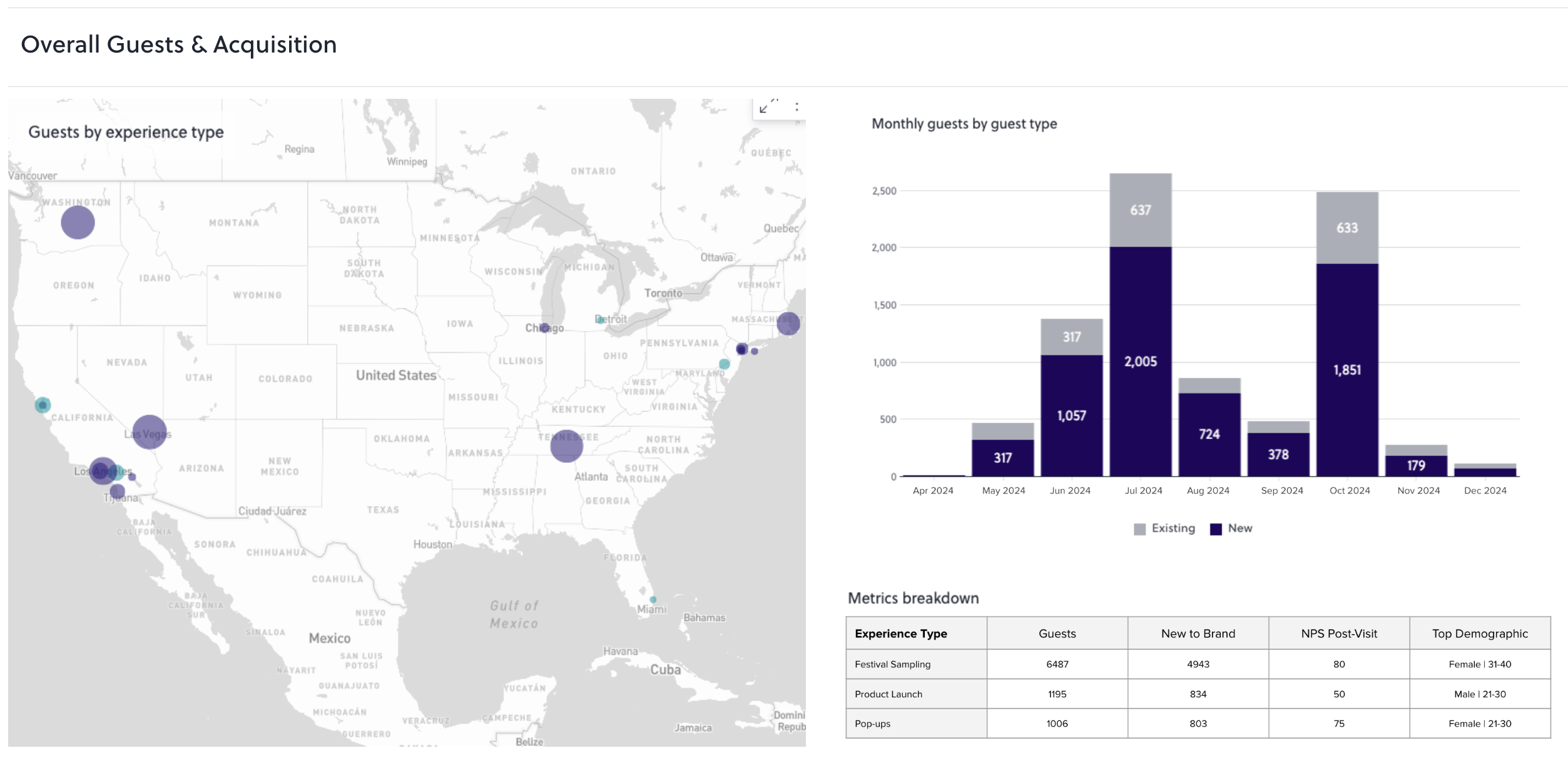
See how AnyRoad instruments the tasting room
How Bottle Clubs Create Recurring Spirits Revenue
A bottle club converts a one-time visitor into a member on a release calendar. The brand's site runs the enrollment. A licensed retail partner handles the compliant transaction and delivery. The brand's job is keeping members engaged through each release so they do not skip, pause, or churn.
AnyRoad is not a licensed retailer or wholesaler and does not present itself as one. It acts as the brand's agent and maintains a strategic partnership with a licensed ecommerce retailer that handles the transaction and compliant delivery. The consumer gets a Shopify-integrated purchase experience. The brand gets a club that stays compliant with federal and state regulation.
Retention in a bottle club is a depletion problem. Churn concentrates around the six-release mark because members have not drunk through their allocation and do not want more arriving. Programming that gets members through the current bottle, such as virtual and on-site cocktail-making classes with master distillers, fixes that. AnyRoad builds ongoing engagement around the product itself rather than around price incentives.
AnyRoad keeps the club running quarter to quarter. The team updates the club site with each new release, manages the member communications calendar, and handles fulfillment coordination. A team of roughly ten people supports fulfillment and best-practice strategy across accounts. That replaces the fragmented stack brands otherwise assemble themselves: an ecommerce provider, subscription billing software like Recharge, a compliant fulfillment path, and internal headcount. None of it comes with alcohol expertise attached.
AnyRoad's Lifetime Loyalty platform launched publicly on February 20, 2025 and has since been adopted by Heaven Hill Distillery, Nearest Green Distillery, Lux Row Distillers, Castle & Key, Catoctin Creek Distilling, and Tarnished Truth Distilling.
For more on how to structure a bottle club from the ground up, see How To Choose DTC Spirits Brand Loyalty Tools That Work.
How To Measure Retail And On-Premise Activation Impact
Receipt-level data is the cleanest way to see whether an activation sold a bottle. Guests register by QR code at the tasting, receive an SMS cashback rebate redeemable anywhere the product is sold, text back a photo of the receipt, and AI confirms the eligible SKU before payout, with no POS integration required from the retailer or bar.

The sequence runs as follows:
- The AnyRoad Live mobile app turns an ambassador tasting into a data capture point, and guests scan a QR code and register on the spot.
- After registering, the consumer receives an SMS with a cashback rebate redeemable anywhere the product is sold.
- The consumer buys the bottle, photographs the receipt, and texts it back.
- AnyRoad's AI reads the receipt, confirms the eligible SKU, and pays the rebate out via Venmo or PayPal.
A depletion report shows what left the warehouse. It does not show who bought because of the activation. The receipt mechanic produces a first-party record tied to a receipt-verified purchase, which is what connects experiential spend to retail sell-through. In a one-month ambassador tasting pilot with a single unnamed craft brand on a small dataset, 56% of the records collected converted to a bottle purchase. That figure is an early pilot result and should not be read as a platform benchmark.
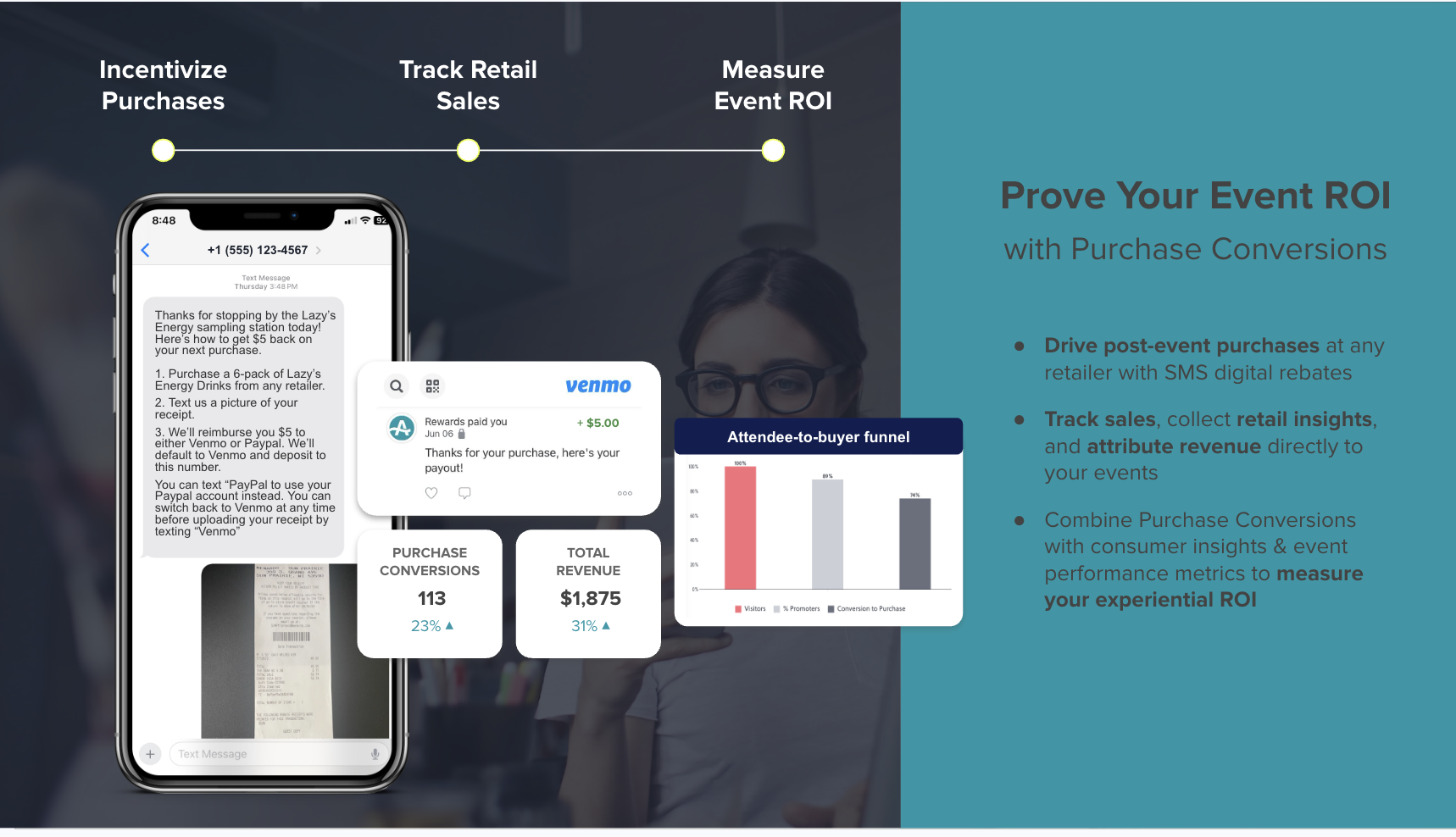
The sweepstakes variant runs the same data capture and SMS follow-up with a prize instead of a rebate. AnyRoad handles the regulatory compliance around it, including terms and conditions and privacy policies.
For a deeper look at connecting activations to sales, see DTC Spirits Customer Acquisition: Tastings To Sales. The POPLIFE festival activation case study illustrates what receipt-level purchase intent data looks like at scale: 85% of consumers engaged at festival activations reported intent to purchase the product post-event.

See receipt-based conversion tracking in action
What TTB And FTC Rules Mean For Spirits Creator Marketing
Spirits brands must keep paid and creator marketing age-gated and audience-composed to legal-drinking-age viewers. They must also disclose material connections with influencers. TTB trade practice rules govern inducements and advertising claims. The FTC Endorsement Guides govern endorsement disclosure.
For spirits brands running creator or influencer programs, the practical requirements are:
- Age-gating on all paid and organic digital content, with audience composition verified to confirm legal-drinking-age viewers predominate.
- Clear and conspicuous disclosure of any material connection between the brand and a creator, including gifted product, paid partnerships, and equity arrangements, in every piece of content where that connection exists.
- No product-performance claims in creator content that the brand cannot substantiate with evidence it controls.
- Compliance with TTB advertising guidance on inducements, which governs what a brand can offer retailers, bars, and consumers in connection with a purchase.
The legislative landscape for spirits DTC continues to shift. DISCUS state modernization resources track the state-by-state picture for brands monitoring where new shipping authority may open. For the current state-by-state shipping analysis, see DTC Spirits Shipping Laws 2026: A State-By-State Guide.
What Effective Lifecycle And CRM Look Like For Alcohol Brands
Lifecycle CRM for alcohol should sit on top of first-party experiential data, including NPS, spend, visit frequency, and club status, and be run by people who understand compliance and release calendars. For brands without in-house email expertise, that means managed execution rather than another license.
Klaviyo and Mailchimp are capable horizontal platforms. They require the brand to supply both the data and the alcohol expertise to run them. For a brand without a dedicated lifecycle marketer, the result is an underused channel or a costly, non-specialized agency that does not understand release calendars or club mechanics.
AnyRoad's managed CRM sits on top of the same first-party experiential data the platform already collects. Because guest data, NPS, spend, visit frequency, and club status all live in the same platform, segmentation is not a manual export exercise. A high-value cohort, such as repeat visitors with high NPS and above-average spend, can be messaged directly without stitching together an experiential tool, an ecommerce platform, and a standalone email service provider.
Campari Group's partnership with AnyRoad produced a 3x increase in marketing opt-in rates over six months from brand home registrations and identified 4,500 repeat visitors as brand champions. That level of segmentation requires the data to already exist in one place. For more on connecting CRM to tasting room data, see DTC Spirits CRM POS Integration: Connect Tours To Sales.
What A 90-Day DTC Spirits Marketing Plan Should Include
A focused 90-day plan instruments the visit first, launches or restructures the club second, and adds receipt-based conversion tracking and lifecycle programming third. Ninety days is enough to capture first-party data at every touchpoint, get staff coached on enrollment, and prove at least one activation sold bottles.
Days 1–30: Instrument The Visit
Start by capturing every attendee, not just the person who made the reservation, through booking, check-in, and FullView data capture. Once guests are in the record, NPS and feedback collection show how the visit landed. Tiered experience pricing at roughly $20, $50, and $150 then sorts those guests by intent. By the end of the month you should hold a complete first-party record for everyone who walked through the door. Leiper's Fork Distillery used AnyRoad to move from no guest data to a 97 post-event NPS and a 33% increase in tour prices. The data made the pricing case.

Days 31–60: Launch Or Restructure The Bottle Club
With that record in hand, the club pitch has something to stand on. Build the enrollment experience on-site and coach tour guides, retail managers, and mixologists on the enrollment pitch. Introduce club-only expressions and a same-day enrollment offer, and stand up the member communications calendar. Enrollment happens because a coached staff member makes the pitch at the right moment, supported by the visit data you already captured.
Days 61–90: Add Conversion Tracking And Lifecycle Programming
The club and visit data then feed the measurement and lifecycle layer. Deploy the AnyRoad Live QR registration mechanic at ambassador tastings and on-premise accounts. Layer in lifecycle programming, such as cocktail classes and release previews, to push members through the six-release churn inflection. By day 90, the brand has first-party data at every touchpoint, at least one activation with a receipt-verified conversion record, and a club with an engagement calendar that does not depend on discounting.
For the experiential marketing layer that supports this sequence, see DTC Spirits Experiential Marketing: From Compliance To Lift.
Frequently Asked Questions
Which States Allow Direct-To-Consumer Spirits Shipping?
A small number of states permit direct-to-consumer spirits shipping, commonly cited as roughly nine to eleven states plus D.C., depending on the source and methodology, so most brands run modified DTC instead. The states most consistently identified as permitting some form of distillery DTC shipping include Alaska, Arizona, Kentucky, Nebraska, New Hampshire, New York, North Dakota, and the District of Columbia, with California added under a one-year pilot that took effect January 1, 2026. Rhode Island and Vermont appear on some lists with significant product and transaction restrictions. Eligibility varies by production volume caps, product type, and destination-state rules. Destination-state law controls. For the current state-by-state detail, see AnyRoad's DTC Spirits Shipping Laws 2026: A State-By-State Guide.
How Do Modified-DTC Platforms Route Orders Through Retailers?
In a modified-DTC model, the brand's site takes the order and presents the consumer experience, and a licensed retail partner is the seller of record. The licensed retailer handles the compliant transaction, taxes, age verification, and delivery from its own licensed premises. The brand retains the customer relationship and the data, and the retailer satisfies the regulatory requirement that a licensed entity complete the sale. Routing solves the transaction constraint but does not by itself convert a visit into an enrollment or tie an activation to a bottle sold. That is the gap AnyRoad's Bottle Club and receipt-based conversion tools fill on top of the compliant transactional path.
How Do You Convert Tasting Room Visitors Into Club Members?
On-site enrollment during the visit remains the highest-converting channel. The mechanics that move conversion rates are a coached pitch from the tour guide or mixologist at the end of the experience, club-only expressions that are not available at retail, a same-day enrollment discount that creates urgency, and tiered experiences that surface repeat visitors. As noted earlier, the second visit is the signal, and the coached pitch is the mechanism that acts on it.
How Do You Track An Ambassador Tasting To A Bottle Sale?
The mechanic runs entirely on the receipt. Guests scan a QR code at the tasting and register with the AnyRoad Live mobile app. They receive an SMS cashback rebate redeemable anywhere the product is sold, then buy the bottle, photograph the receipt, and text it back. AnyRoad's AI reads the receipt, confirms the eligible SKU, and pays the rebate via Venmo or PayPal, with no POS integration required from the retailer or bar. The same pilot described above converted 56% of records to a verified purchase, an early result from a limited sample, not a platform benchmark.
Is Klaviyo A Good Fit For A Spirits Club?
Klaviyo is a capable horizontal email platform, and it works best when a brand already has clean data and in-house lifecycle expertise. It requires the spirits brand to supply both the data and the alcohol expertise to run it effectively. For a spirits brand without a dedicated lifecycle marketer, that often means either an underused channel or a costly, non-specialized agency that does not understand alcohol compliance, release calendars, or club mechanics. AnyRoad's managed CRM sits on top of first-party experiential data the platform already collects and is run by people who understand the rhythm of a spirits release calendar.
Conclusion: The Visit Is The Strategy
The structural takeaways from this guide are four:
- Modified DTC is the legal model that makes compliant transactions possible.
- The visit is the acquisition channel that outperforms every digital funnel.
- The bottle club is the recurring-revenue engine that moves a consumer from a roughly $100 bottle purchase to the roughly $600 a member is worth across six releases.
- Receipt-based conversion tracking is the measurement layer that connects an ambassador tasting to a bottle sold.
AnyRoad is the best DTC spirits marketing platform for turning visits and retail activations into compliant, measurable recurring revenue because it captures first-party guest data at every touchpoint, runs Bottle Clubs end to end through a licensed retail partner, and proves retail conversion with receipt-based cashback that needs no POS integration.
Talk with AnyRoad about your tasting room strategy