


Written by: Bryan Grobstein, Vice President, Global Revenue, AnyRoad
Key Takeaways
- Email marketing for distilleries works best as a sequenced, compliance-aware program that drives tasting room visits, educates visitors on craft and provenance, and converts guests into recurring-revenue club members.
- Five core sequences form the operational backbone: a five-email welcome series, a release calendar using the 80/20 content rule, tasting-room and event triggers, a depletion-focused club-retention sequence, and a win-back sequence for lapsed subscribers.
- Segmentation must prioritize legal shipping eligibility and relationship stage over demographics to avoid compliance exposure and ensure every message is actionable.
- Post-visit email triggers and on-site enrollment moments, powered by experiential data, convert first-time visitors into repeat guests and paid members at dramatically higher rates.
- AnyRoad delivers an alcohol-native CRM and managed club program that connects first-party visit data with compliant transactions and lifecycle execution, replacing the need for multiple vendors.
Talk with AnyRoad about your distillery email program
How Distilleries Turn Email Into A Revenue Channel
The five sequences below map to specific moments in the subscriber relationship. Each one is covered in detail in the sections that follow, and all of them depend on accurate segmentation.
Segment By Relationship And Shipping Eligibility, Not Demographics
Distillery segmentation starts with legality, not demographics. The first question is what you can send a subscriber based on where they live.
Direct spirits shipping is permitted in far fewer states than wine, and the permit is specific to beverage type, must be applied for, and lapses if not renewed. A subscriber in a state the brand cannot ship to must receive a different message than one who can. The segmentation rule is “what can we legally send them,” not “who are they.”
The practical segments for a distillery email list are:
- Tasting Room Visitors: Have a physical relationship with the brand. Eligible for visit-based triggers, event invitations, and on-site enrollment sequences regardless of state.
- Online Buyers In Shipping-Eligible States: Can receive allocation announcements, club invitations, and DTC offers.
- Club Members: Receive member-specific communications such as release previews, depletion programming, and renewal reminders through a compliant transactional path via a licensed retail partner.
- Subscribers In Non-Shipping States: Receive tasting room invitations, event announcements, educational content, and merchandise offers. Allocation emails and club invitations stay withheld until shipping eligibility is confirmed.
- Wholesale Accounts: Receive trade-specific communications entirely separate from consumer flows.
These five segments are not just campaign-level filters. Applying them at the list level, so that eligibility and relationship stage live in the list itself, prevents compliance exposure and improves deliverability by keeping every message tied to actions the recipient can take.
See how AnyRoad handles alcohol-native segmentation
The Five-Email Welcome Sequence
The welcome sequence is the highest-leverage automation a distillery can build. New subscribers are most receptive in the first ten days after signup, and by day fourteen a subscriber who has not heard from the brand often forgets they signed up. The sequence below is structured to use that window fully. Each email has one job, and the first four build the relationship before the fifth asks for anything.
- Email 1 — Immediate: Confirm the subscription and deliver the origin story. Subject line: "Welcome to [Distillery]. Here’s where your whiskey starts."
- Email 2 — Day 2: Introduce the people and the process, including the distiller, the grain source, and the still. Subject line: "The hands behind your next pour."
- Email 3 — Day 4: Showcase the flagship expressions and the tasting room experience, giving the subscriber a clear reason to visit. Subject line: "What to expect when you visit."
- Email 4 — Day 7: Introduce the club and the allocation program, framed around access to the next release. Subject line: "First access to our next release."
- Email 5 — Day 10: A recovery email sent only to subscribers who did not open emails one through four, with a different subject line and a lower-friction ask. This step alone recovers an additional 5–8% of the cohort. Subject line: "Before you go — one more pour."
The 80/20 Content Rule For Scarce Releases
Eighty percent of a distillery’s email calendar focuses on relationship-building content, not allocation announcements. That content makes subscribers open the allocation email when it arrives.
When the product is allocation-scarce, the relationship grows in the space between releases. The 80% is the content that gives subscribers a reason to keep opening, and it looks like this:
- A photo essay on the grain farmer who supplies the mashbill
- A video of the barrel selection process with the distiller explaining what they are tasting for
- A note from the distiller on why this year’s release tastes different from last year’s
- A cocktail recipe built around a bottle subscribers already own, which helps them deplete what they have and stay primed for the next release
The remaining 20% covers allocation announcements, club invitations, and holiday gift sets. When the product is scarce, the content becomes the relationship. A subscriber who has read several emails about the grain, the barrel, and the distiller’s reasoning will open the allocation email, while a subscriber who only receives promotions often will not.
Tasting Room And Event Triggers That Drive Repeat Visits
The tasting room is the highest-converting channel in a distillery’s marketing stack, and the most effective email trigger invites guests to come back.
Leiper’s Fork Distillery hosted 24,000 guests for tours and tastings annually before adopting AnyRoad, with no data on their identities, which meant no post-visit sequence, no way to distinguish first-time from repeat visitors, and no mechanism to convert a first visit into a second. AnyRoad’s data shows that a consumer who visits a distillery twice is 512% more likely to convert into a paid loyalty enrollment. The second visit signals that a guest is ready for a club invitation.
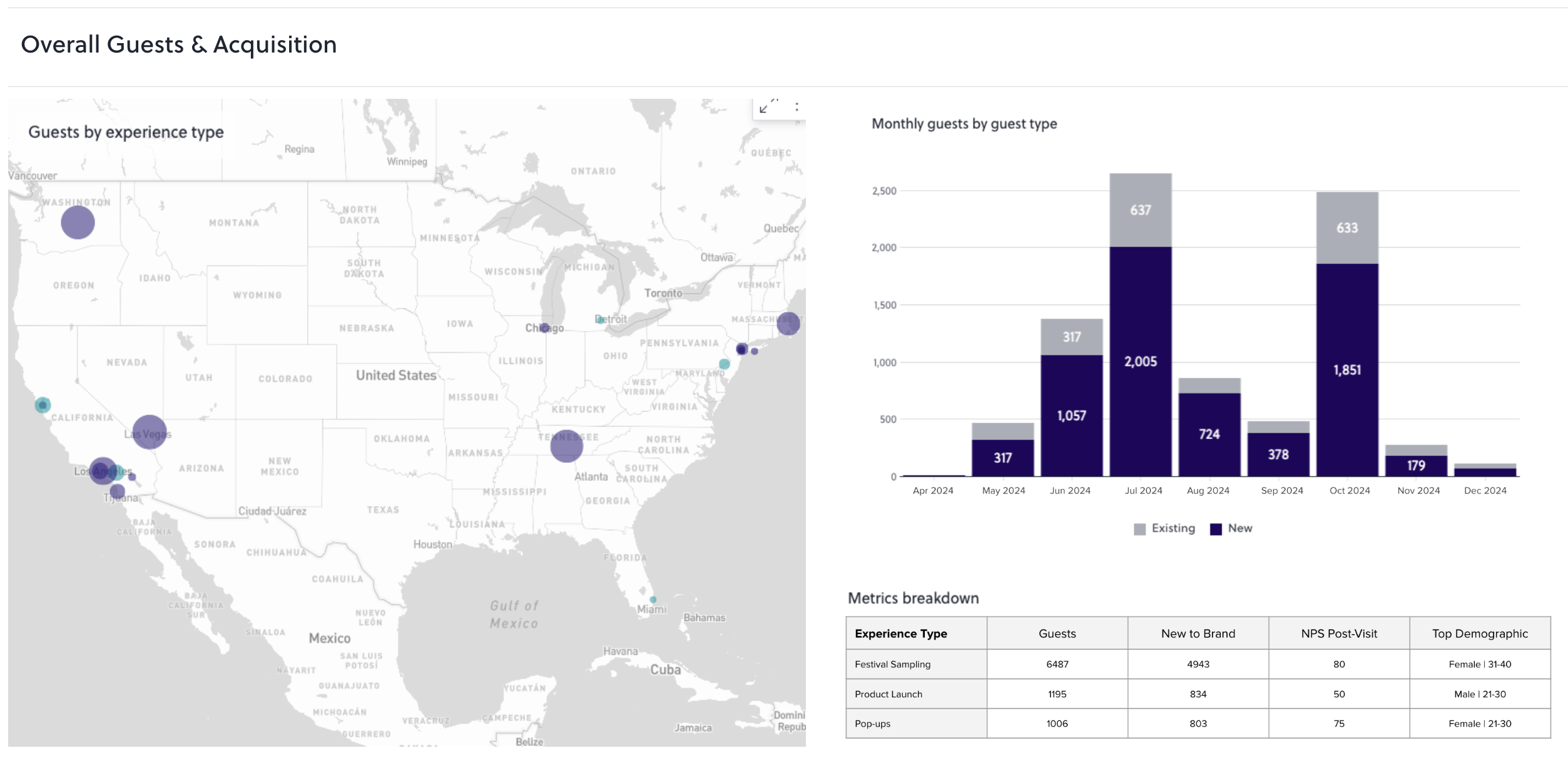
The post-visit email sequence operates on a 24-hour trigger:
- Within 24 Hours Of The Visit: Thank the guest, reference something specific about their experience, and invite them to a members-only event or a second visit.
- Seven Days Later: Share educational content tied to what they tasted, such as grain source, aging process, or a cocktail recipe using the expression they sampled.
- Fourteen Days Later: Introduce the club with a time-limited on-site enrollment offer, framed around access to the next release.
The on-site enrollment moment is where conversion actually happens. It works because a coached tour guide makes the pitch in person. AnyRoad’s white-glove service is delivered by spirits industry operators who coach tour guides, retail managers, and mixologists on site, pairing the club invitation with a club-only expression and a same-day enrollment incentive. Campari Group’s partnership with AnyRoad enabled a 3X increase in marketing opt-ins and identified 4,500 repeat visitors as brand champions, and that outcome starts with the on-site enrollment moment.

See how AnyRoad powers tasting room triggers
Distillery Email Compliance: What You Can And Cannot Send
Email campaigns for distilled spirits brands count as regulated advertising content under federal law. TTB advertising rules under 27 CFR 5.231–5.236 apply to distilled spirits email campaigns the same way they apply to other advertising media, including mandatory statements and prohibited-practices provisions.
Every TTB-regulated spirits advertisement must carry two mandatory statements: the responsible advertiser’s name, city, and state (or name plus other contact information such as a website), and a conspicuous statement of the product’s class and type. Under 27 CFR 5.235, advertisements may not contain any statement that is false or misleading in any material particular, false or misleading disparagement of a competitor’s product, or anything obscene or indecent. Health-related statements, including implied wellness claims and sensation language, face a separate and stringent prohibition regime.
CAN-SPAM requires accurate header information, non-deceptive subject lines, a clear opt-out mechanism that remains active for at least 30 days after the message is sent, and a valid physical postal address. Opt-out requests must be honored within ten business days, and the mechanism cannot require a fee or more than a single step from the recipient.
State shipping restrictions create the most operationally significant compliance surface for distillery email. Direct spirits shipping permits are state-specific, beverage-type-specific, and must be actively maintained, and a lapsed permit closes that state immediately. A subscriber in a non-shipping state cannot legally receive an allocation announcement or club invitation that requires shipment to fulfill.
Club-related email requires a compliant transactional path through a licensed retail partner. AnyRoad is not a licensed retailer or wholesaler and does not sell, ship, or distribute alcohol itself. The compliant transaction and delivery happen through AnyRoad’s licensed ecommerce partner, with the purchase experience running through a Shopify-integrated storefront operated by that partner.
Retention Is A Depletion Problem, Not A Deliverability Problem
Members often skip and pause around the six-release mark because they have not drunk through what they already own. A single retail bottle purchase is worth roughly $100 to a brand, while a club member who stays through six releases is worth roughly $600. Churn concentrates at that six-release inflection point because members feel backed up on inventory.

Most club cancellations stem from product depletion: members who have not drunk through their existing allocation do not want more. That is why discounts fail as a retention tactic. They may save a member once, but they do not fix a club experience that feels irrelevant. What actually keeps members is programming that helps them drink through what they already own.
Virtual and on-site cocktail-making classes with master distillers serve two functions at once. They help members work through their current allocation and prime them for the next release. A member who has worked through their bottles with a distiller’s guidance is not sitting on inventory. That same experience-driven data also shows member spending increasing 150% within the first year.
The depletion-focused retention calendar between releases looks like this:
- A cocktail recipe email built around the current allocation, sent two weeks after shipment
- An invitation to a virtual or on-site tasting class with the master distiller, sent four weeks after shipment
- A preview of the next release, covering grain source, barrel selection, and expected profile, sent six weeks after shipment to build anticipation before the next allocation email arrives
Why Generic Email Platforms Fall Short For Distilleries
Horizontal ESPs like Klaviyo and Mailchimp require the brand to supply both the data and the expertise. Neither platform understands alcohol compliance, release calendars, or club mechanics. A distillery using a horizontal ESP must build its own segmentation logic around state shipping rules, run its own compliance review for every campaign, and design its own club retention programming without the underlying experiential data that makes those tasks executable.
AnyRoad’s managed CRM services are positioned as an alcohol-native alternative for one reason: the CRM sits on top of the same first-party experiential data the platform already collects, including NPS, spend, visit frequency, and club status, and it is run by people who understand alcohol compliance and the rhythm of a spirits release calendar. The value is alcohol-native data plus managed execution, delivered by a team that has built and run some of the largest spirits clubs in the country.

A Sample Monthly Distillery Email Marketing Calendar
This calendar gives a distillery with a 4,000-person list and a fall release a concrete program to execute this month:
- Week 1 — Welcome Sequence Send For New Subscribers: Subject line: "Welcome to [Distillery]. Here’s where your whiskey starts."
- Week 2 — Educational Content (Process, Provenance, Or People): Subject line: "The grain farmer behind your next bottle."
- Week 3 — Tasting Room Or Event Invitation: Subject line: "Join us for a cocktail-making class with our master distiller."
- Week 4 — Allocation Or Club Announcement (Shipping-Eligible Subscribers Only): Subject line: "First access to our next release — club members only."
Non-shipping-state subscribers receive the Week 3 event invitation and a tasting room visit offer in place of the Week 4 allocation email. Club members receive the Week 4 email first, before the general list, as a member benefit.
Get a distillery-specific email calendar from AnyRoad
Frequently Asked Questions
Which Email Sequence Should A Distillery Build First?
Start with the welcome sequence, then build the release calendar. The tasting room triggers and retention sequence come next, and the win-back sequence closes the loop once the core lifecycle is running.
How Should A Distillery Segment Its Email List?
Segment by relationship and shipping eligibility, using the five segments described above, and apply that logic at the list level rather than only at the campaign level. This approach keeps allocation and club messages compliant while making every email relevant to what each subscriber can actually do.
What Can Distilleries Practically Send Under Alcohol Regulation?
The compliance section above covers the TTB mandatory statements, CAN-SPAM requirements, and state shipping restrictions. The practical takeaway is that allocation emails and club invitations must be withheld from non-shipping states, and club transactions must run through a licensed retail partner.
Does A Distillery Need An Alcohol-Native Email Platform?
A horizontal ESP often leaves the brand supplying both data and expertise, with limited support for alcohol-specific rules. An alcohol-native platform connects first-party experiential data such as NPS, spend, visit frequency, and club status with compliant club transactions and lifecycle execution in one place, run by people who understand the regulatory environment and the rhythm of a spirits release calendar. For a distillery without a dedicated lifecycle marketer, that difference determines whether the channel runs or stalls.
The Definitive Solution For Distillery Email Marketing
A distillery with a 4,000-person email list, a fall bourbon release, and no in-house email specialist is missing a sequenced, compliant program built for how a distillery operates. That program segments by relationship and shipping eligibility, drives tasting room visits, converts on-site visitors into club members, and retains members through depletion-focused programming.
AnyRoad’s Lifetime Loyalty platform launched publicly on February 20, 2025 with Bottle Clubs and Premium Memberships as its two core offerings, and has since been adopted by heritage distilleries including Heaven Hill Distillery, Nearest Green Distillery, and Lux Row Distillers, alongside craft brands such as Castle & Key, Catoctin Creek Distilling, and Tarnished Truth Distilling. AnyRoad runs the club end to end, including the enrollment experience, the compliant transactional path through its licensed ecommerce partner, the member data, the retention programming, and optionally the CRM itself, replacing a fragmented multi-vendor stack and the headcount required to run it.
See how AnyRoad runs distillery email end to end