


Written by: Bryan Grobstein, Vice President, Global Revenue, AnyRoad
Key Takeaways
- Event sweepstakes must deliver measurable data capture. Each mechanic below includes execution details, the fields it captures, and the event types it fits.
- Mechanics are organized by event type (trade shows, brand activations, conferences, festivals) with clear qualification steps that turn entries into first-party records.
- Prize tiers range from under $25 to $150+ and should match the product category to attract high-intent entrants.
- Compliance basics such as official rules, no-purchase-necessary disclosures, age verification, and state filings keep promotions legal and protect the brand.
- AnyRoad turns every activation into a measurable pipeline by capturing entries, driving SMS follow-up, and tracking receipt-verified purchases. See how AnyRoad connects activations to retail sales to prove future retail impact from your experiences.
Event Sweepstakes Ideas By Event Type
The mechanics below are organized by event type. Each one functions as a data-capture system with a prize attached.
Trade Show Booth Mechanics
QR Scavenger Hunt
How It Works: Place QR codes at partner booths or checkpoints around the show floor. Attendees scan all of them to unlock a final sweepstakes entry form at your booth.
What It Captures: Name, email, phone, company, and a verified record of which checkpoints they visited. This creates a behavioral signal of which partners or product categories they engaged with. Dynamic QR codes show how many people scanned, when they scanned, and on what device, so you can adjust placements in real time.
Where It Fits: Multi-exhibitor trade shows where you want to drive traffic from the full floor, not just your aisle.
Drop-To-Win With Tokens
How It Works: Hand out durable entry tokens such as poker chips or wooden coins during product demos. Attendees drop them into a physical ballot box at your booth for a grand prize drawing.
What It Captures: The token handoff is the qualification moment. Staff scan a badge or QR code before handing over the token, capturing name, email, and a conversation note. Follow-up emails that reference the specific conversation and giveaway item convert at a higher rate than generic thank-you emails, because the qualifying notes tell sales what to say.
Where It Fits: Trade show booths where you want to reward attendees who stop for a demo rather than walk past.
Spin-To-Win Plus Grand Prize
How It Works: Attendees spin a wheel for an instant-win small prize and are automatically entered into a grand prize drawing. The spin pulls people in, and the grand prize entry drives the data capture.
What It Captures: Name, email, phone, and opt-in consent at the point of entry. Tiered prize structures with a grand prize plus many smaller prizes often drive 3–5x more entries than single-prize sweepstakes, which makes this mechanic a strong choice for high-traffic booths.
Where It Fits: High-traffic booths where you need a visible crowd-pleaser to stop foot traffic.
Golden Ticket
How It Works: Hide a limited number of golden tickets in select giveaway items or hand them to attendees who complete a demo. Finders bring the ticket to the booth to claim a premium prize and enter the grand prize drawing.
What It Captures: Name, email, phone, and a record of the qualifying action such as demo completed, product sampled, or meeting booked. Relevant prizes attract potential customers while generic prizes attract sweepstakes hobbyists. The golden ticket mechanic reinforces relevance by tying entry to a qualifying action.
Where It Fits: Trade show booths and brand activations where you want to create scarcity and reward high-intent attendees.
Brand Activation And Tasting Room Mechanics
Receipt-Based Entry Sweepstakes
How It Works: Guests register at the activation via QR code and receive an SMS with a sweepstakes entry link. They then buy the product at a nearby retailer or on-premise account and text a photo of their receipt to complete the entry. AnyRoad’s AI reads the receipt, confirms the eligible SKU, and processes the entry. The mechanic runs on the receipt, so it works in any account without asking a retailer or bar to integrate anything.
What It Captures: Name, email, phone, and a receipt-verified purchase record tied to an identifiable SKU. This mechanic connects the activation to a bottle actually leaving a shelf. A single insurance sponsor giveaway at the iHeartRadio Music Festival produced 14,300 sweepstakes entries, showing the scale this approach can reach with a compelling prize.
Where It Fits: Ambassador tastings inside third-party retailers, on-premise accounts, and brand home tasting rooms where the goal is to drive purchase.
Guess-And-Win
How It Works: Attendees guess a number such as how many bottles in a barrel, how many days until release, or how many ingredients in a cocktail. They submit their guess via QR code, and the closest guess wins.
What It Captures: Name, email, phone, and a preference signal based on the guess category. This supports follow-up segmentation by product interest.
Where It Fits: Tasting rooms, brand activations, and community festivals where you want an interactive moment that runs without constant staff attention.
Conference Mechanics
VIP Upgrade Sweepstakes
How It Works: Attendees enter a sweepstakes to win a VIP upgrade such as backstage passes, front-row seating, a meet-and-greet, or a premium experience at the next event. Entry happens at registration or via QR code at the session.
What It Captures: Name, email, phone, and a record of which session or speaker drove the entry. This content-interest signal informs follow-up segmentation. Leads and data collection now rank as the top success metric for consumer events, ahead of foot traffic and awareness, so the VIP upgrade mechanic earns its place because the entry form is the deliverable.
Where It Fits: Conferences and corporate events where the prize is access rather than product.
Early-Bird Registration Sweepstakes
How It Works: Everyone who registers before a deadline is automatically entered to win a prize. Earlier registrations earn more entries, which rewards early commitment.
What It Captures: Name, email, phone, and registration timing. This creates a signal of engagement level before the event starts.
Where It Fits: Conferences, festivals, and any event where pre-registration volume matters.
Community Festival Mechanics
Bring-A-Friend Referral
How It Works: Attendees enter the sweepstakes and receive a personal referral link. Every friend who enters through their link earns them bonus entries.
What It Captures: Name, email, phone, and a referral graph that highlights your strongest advocates. Tag-a-friend mechanics can expand reach by 2x–3x, and a referral-based entry mechanic delivers similar reach while building a first-party record for every new entrant.
Where It Fits: Community festivals, brand activations, and any event where word-of-mouth drives attendance.
Live Intermission Quiz
How It Works: During a stage show, concert, or conference break, attendees scan a QR code to answer a live quiz. Correct answers are entered into a drawing.
What It Captures: Name, email, phone, and quiz performance. This shows how engaged they were with the content.
Where It Fits: Conferences, festivals, and any event with a stage program.
Event Sweepstakes Prize Ideas By Budget
Prize selection shapes entry quality. Generic prizes attract sweepstakes hobbyists with no brand interest, while industry-specific prizes attract people who genuinely want the product. The tiers below are organized by budget with clear cost bands.
- Inexpensive (Under $25): Branded drinkware, limited-edition swag, gift cards to local coffee shops, product samples, digital downloads
- Mid-Range ($25–$150): Curated gift baskets, premium branded merchandise, experience upgrades such as VIP seating or backstage passes, gift cards to relevant retailers
- Premium/VIP Experience ($150+): Travel vouchers, weekend getaways, concert or festival tickets, meet-and-greets with brand founders or artists, exclusive product bundles
Inexpensive Event Giveaway Ideas That Still Convert
Under $25 per unit, these prizes support broad-audience giveaways focused on brand visibility and email capture. The prize needs relevance more than high dollar value. Drinkware is kept for 12–16 months, so a branded water bottle often outperforms a generic gift card. The entry form delivers the data capture, and the prize provides the moment that makes someone stop.
Mid-Range Prize Ideas For Event Giveaways
At $25–$150 per unit, these prizes work for engaged-audience rewards where you qualify attendees before handing over the item. A curated gift basket tied to your product category attracts people who actually want what you sell. A $3,000 swag budget allocated strategically across attendee tiers can outperform a $6,000 budget spent on a single premium item handed to everyone. The tier structure becomes the qualifier.
Premium/VIP Experience Prizes
At $150+ per unit, these prizes support high-value attendees and VIP relationship-building. A premium giveaway item can create a sense of obligation that a mass-distributed item never does. A weekend getaway or backstage pass also signals strong purchase intent from anyone willing to engage with a high-commitment prize. These entries carry the most downstream value for follow-up segmentation, but only if the entry record is complete and usable.
These high-value entries matter most for segmentation, and their impact grows when the capture layer is solid.
How To Capture Data At The Point Of Entry
The mechanic only works when it produces a clean, usable record. Three capture layers work together to turn an event sweepstakes into a first-party data pipeline.
QR Registration
AnyRoad’s Live app turns an activation into a data capture point. Guests scan a QR code and register on the spot. The entry form captures name, email, phone, and any custom questions configured for the activation. The record is stored in AnyRoad and synced to your CRM.

Generating a separate dynamic QR code for each placement keeps scan analytics segmented. This lets you compare which physical locations drove the most entries and informs future activation placement.
SMS Opt-In
Every entry includes an SMS opt-in, which makes the follow-up possible. After the event, AnyRoad sends a follow-up SMS with a cashback rebate or sweepstakes entry link. The consumer then buys the product, photographs the receipt, and texts it back through the same flow.
AnyRoad’s AI reads the receipt, confirms the eligible SKU, and pays the rebate out via Venmo or PayPal. The same mechanic can run with a prize instead of a rebate, such as an entry to win Coachella tickets, while keeping the same data capture and SMS follow-up. AnyRoad also manages the regulatory compliance around this flow, including terms and conditions and privacy policies.
Receipt-Based Entry
The entire mechanic runs on the receipt, so it works in any account without asking a retailer or bar to integrate systems. This keeps overhead low enough to deploy across trade accounts at scale and makes on-premise conversion tracking possible.
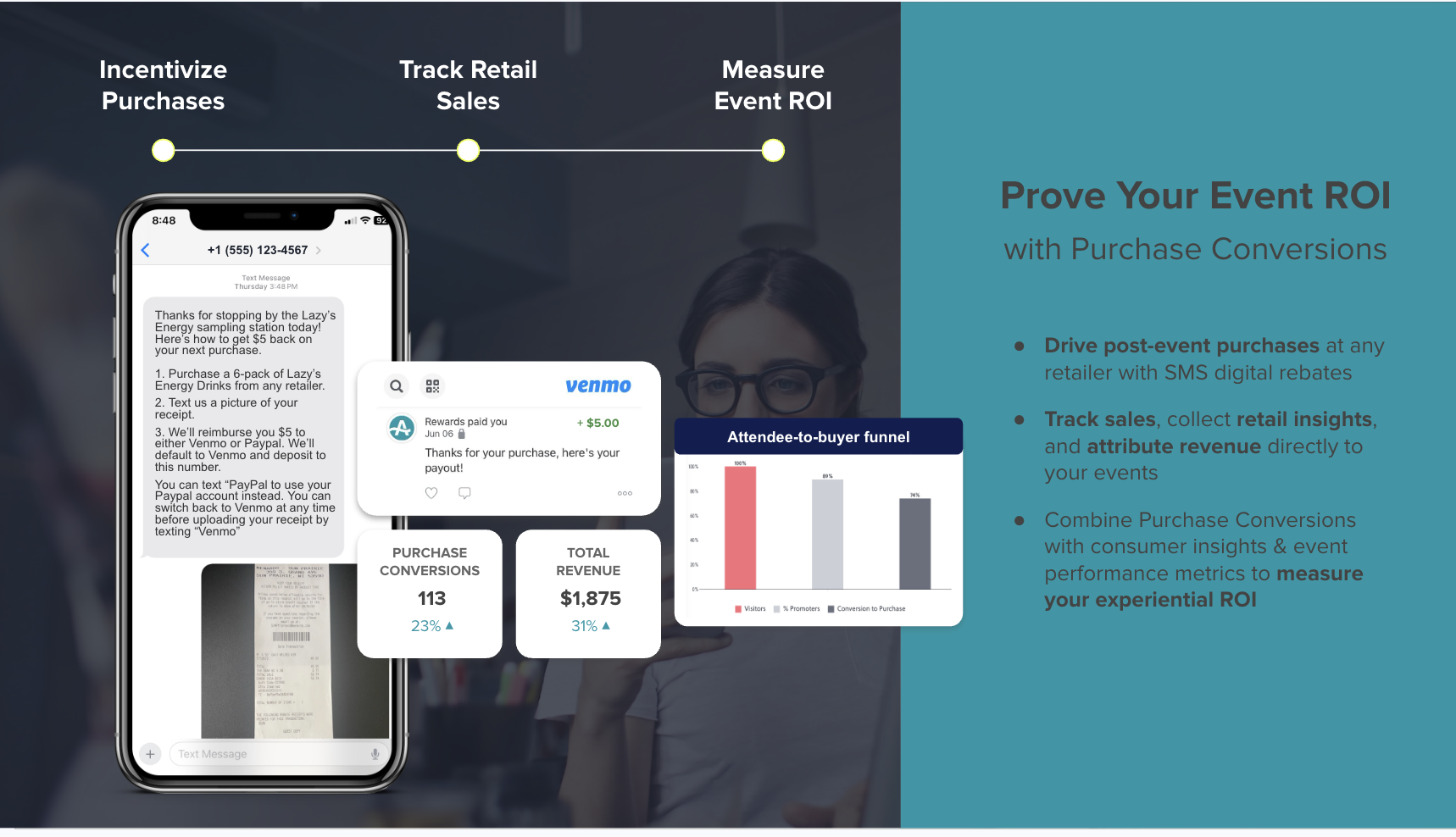
Each receipt-based entry produces a first-party record tied to a receipt-verified purchase, which connects experiential spend to retail sell-through. AnyRoad’s data shows that a consumer who visits a distillery twice is 512% more likely to convert into a paid loyalty enrollment. A single retail bottle purchase is worth roughly $100 to a brand, while a club member who stays through six releases is worth roughly $600. The sweepstakes entry becomes the first step in moving a consumer from the first number to the second.
Global B2C and B2B experiential marketing spending grew 8.3% to $138.94 billion in 2025, and leads and data collection now rank as the top success metric for consumer events. Brands that treat every activation as a data-capture system gain an advantage in this environment.
For a deeper look at how to build the data strategy behind these mechanics, see AnyRoad’s guide to First-Party Data Event Sweepstakes That Drive Real Results and the Sweepstakes Data Capture Strategies That Drive Results playbook.
Sweepstakes Compliance Basics For Live Events
A sweepstakes is legally defined as a prize awarded by chance with no purchase required to enter. Adding consideration such as payment to a chance-based prize promotion converts it into an illegal lottery, which is why a free alternative method of entry (AMOE) is required.
Official rules should state that no purchase is necessary and that a purchase will not improve the entrant’s chances of winning. The AMOE must be described with equal detail, so free entrants receive comparable entry volume, comparable odds, and access to the same prizes as purchasing entrants.
Rules should identify the sponsor by full legal name and physical address, state exact start and end dates and times including the applicable time zone, describe each prize with enough detail to prevent a substitution dispute, and explain how winners are notified and how long they have to respond. Common response windows run from 48 hours to 10 days depending on prize value.
Alcohol-related sweepstakes promotions typically require entrants to be at least 21 years old, and age verification should be an active step at the point of entry. Florida and New York require filings for certain chance promotions when total announced prize value exceeds $5,000. Florida requires a copy of the rules and a prize list at least seven days before launch, while New York requires filing at least 30 days before launch. Rhode Island requires a filing when a retail establishment uses a chance promotion and the total announced prize value exceeds $500.
This content is informational only and does not replace legal advice. Consult counsel for promotions involving high-value prizes, regulated products, or multi-state campaigns.
How To Measure Whether The Sweepstakes Worked
Three metrics show whether the sweepstakes produced something your CMO can act on. For a full measurement framework connecting entries to lifetime value, see How To Measure Event Sweepstakes Success: Entries To LTV.
Entries
Total entries provide a surface-level view of performance. The more useful metric is cost per qualified entry, which equals total activation cost divided by entries that produced a complete first-party record with a valid phone number and opt-in consent.
Inconsistent lead capture methods and fields across events create a core measurement problem that breaks attribution before it starts. Routing every entry through a single platform solves this problem before the activation launches.
Opt-In Rate
Opt-in rate measures the percentage of entrants who consented to SMS and email follow-up. This metric shows whether the sweepstakes produced a followable audience or a one-time spike.
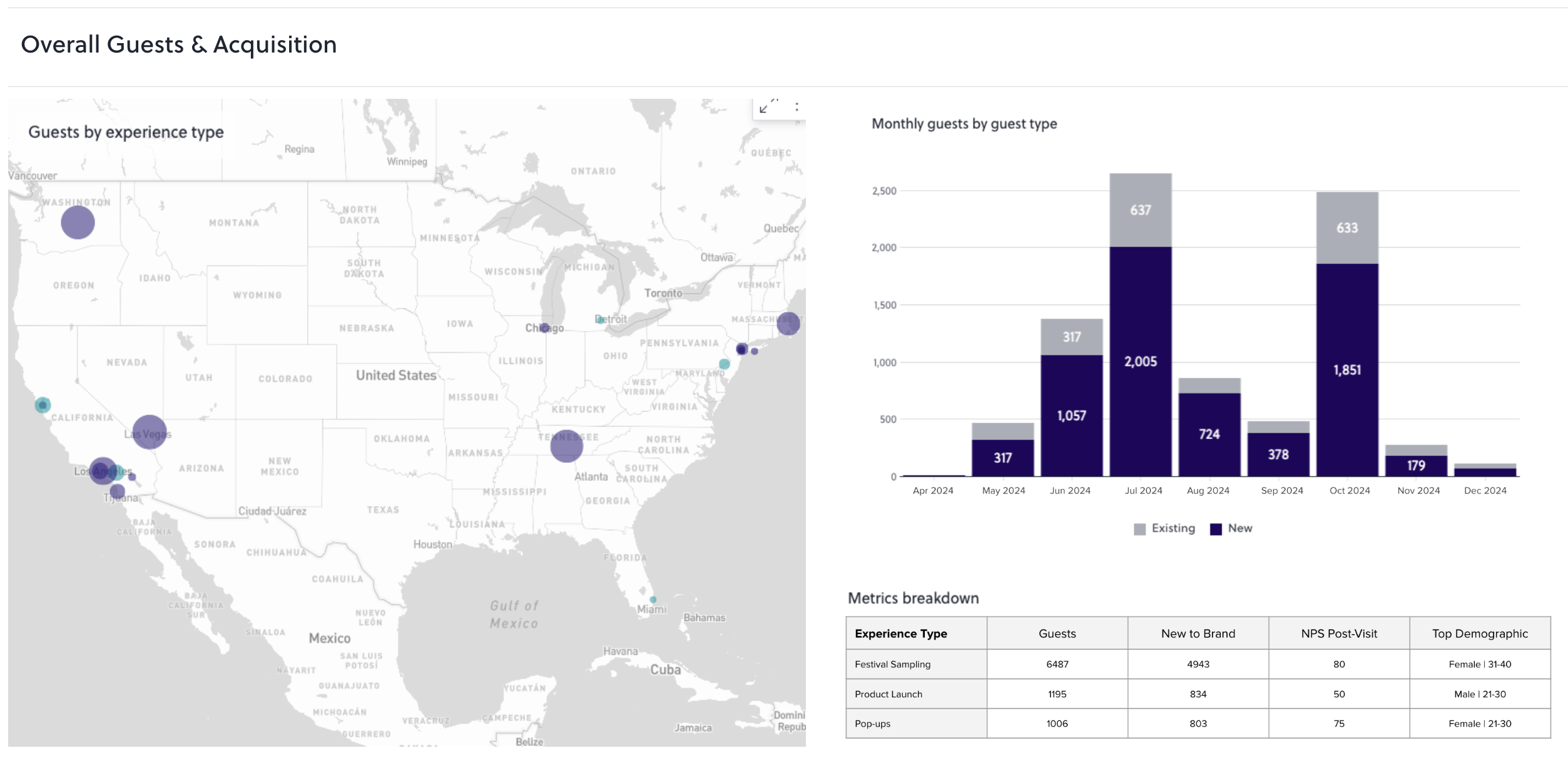
First-party data captured through genuine participation is far more valuable than purchased or inferred audience data. Opt-in rate reflects how much genuine participation the mechanic produced.
Follow-Up Conversion
Follow-up conversion measures the percentage of entrants who redeemed a cashback rebate, completed a receipt-based entry, or made a purchase after the event. This metric connects experiential spend to retail sell-through and shows whether the sweepstakes moved product.

AnyRoad’s purchase conversion tools track redemptions and tie them back to the original entry record. A sweepstakes delivers full value when it produces a first-party record tied to a receipt-verified purchase. Other metrics serve as leading indicators for that outcome.
Choosing A Sweepstakes Platform For Events
Producing that purchase-linked record consistently across every event depends on the platform running the promotion. The table below compares AnyRoad against manual sweepstakes execution and generic giveaway platforms across attributes that determine whether an event sweepstakes produces a measurable result.

| Attribute | AnyRoad | Manual Sweepstakes | Generic Giveaway Platforms |
|---|---|---|---|
| Data capture at point of entry | QR registration via Live app; name, email, phone, custom questions | Paper entry forms or business card bowl; manual data entry | Basic email capture; limited custom fields |
| SMS follow-up | Built-in SMS delivery with cashback rebate or sweepstakes entry link | None | None |
| Purchase conversion tracking | Receipt-based entry tied to identifiable SKU; AI reads receipt and processes rebate or prize entry | None | None |
| Compliance handling | Terms and conditions, privacy policies, age verification handled by AnyRoad | Sponsor handles independently | Platform provides basic rules template |
| Measurement | Entries, opt-in rate, follow-up conversion, receipt-verified purchase | Entries only | Entries and email signups |
The pattern is clear. Manual execution and generic platforms stop at collecting entries, while AnyRoad carries the record through to a receipt-verified purchase. That difference makes the measurement framework above possible and turns sweepstakes into a repeatable growth channel.
AnyRoad’s sweepstakes and cashback tools share the same data capture and SMS follow-up flows, and AnyRoad manages the regulatory compliance around them, including terms and conditions and privacy policies. AnyRoad is not a licensed retailer or wholesaler, so the compliant transaction and delivery happen through its licensed ecommerce partner. AnyRoad acts as the brand’s agent and focuses on capturing first-party data at the point of entry, following up via SMS, and measuring whether the sweepstakes drove purchase behavior.
For the full campaign-planning picture, see the Sweepstakes For Experiential Campaigns: The 2026 Playbook.
Connect your next activation to verified retail sales with AnyRoad.
Frequently Asked Questions
What Is The Difference Between A Sweepstakes And A Giveaway At A Live Event?
A sweepstakes is a prize promotion where winners are selected by random chance and no purchase is required to enter. A giveaway is an informal term that can describe anything from a branded pen handed to every booth visitor to a structured prize drawing.
The legal distinction matters because a sweepstakes requires official rules, a no-purchase-necessary disclosure, and a free alternative method of entry. A fishbowl of business cards without rules creates compliance risk. The practical distinction matters as well because a sweepstakes entry form captures a first-party record you can follow up with, while a branded pen handed to a passerby captures nothing.
What Are Good Prizes For Event Giveaways?
Strong prizes filter for the audience you want after the campaign ends. For alcohol and CPG brands, that usually means prizes tied to the product category, such as a curated tasting experience, a limited-edition bundle, or VIP access to a brand event, instead of generic cash or electronics.
The main article above outlines three tiers: inexpensive branded items, mid-range curated gifts, and premium experiences. As noted there, branded drinkware has a 12–16 month lifespan, which explains why it often outperforms a small gift card. At higher tiers, travel vouchers, concert tickets, and meet-and-greets create a stronger signal of intent from entrants who engage with them.
Prize value also affects compliance. Prizes over $500 can trigger Rhode Island registration for retail promotions, and prizes over $5,000 can trigger New York and Florida registration requirements. Budget for compliance alongside the prize itself.
How Do You Run A Sweepstakes At A Trade Show Booth?
Start with a mechanic that qualifies attendees before they enter. Drop-to-win with tokens, spin-to-win plus grand prize, and golden ticket all require a qualifying action such as a demo, a product sample, or a booked meeting before the entry is issued.
That qualifying action is where the data capture happens. Staff scan a badge or QR code, capturing name, email, phone, and a conversation note. The entry form becomes the record, and the prize provides the incentive. After the show, AnyRoad syncs every entry to your CRM and sends a follow-up SMS with a cashback rebate or sweepstakes entry link.
The consumer then buys the product, photographs the receipt, and texts it back. That receipt-verified purchase connects the trade show activation to a bottle leaving a shelf. Official rules should be in place before the show opens, including the sponsor’s full legal name, exact start and end dates, prize description, and winner notification process.
How Do You Capture Leads With An Event Sweepstakes?
Lead capture at an event sweepstakes happens across three layers. The first layer is the entry form, where every mechanic above captures name, email, and phone at minimum. Custom questions in AnyRoad’s Live app add preference signals such as product interest, purchase intent, and visit frequency.
The second layer is SMS opt-in, which turns static records into a reachable audience. Every entry includes consent to SMS follow-up, and that channel converts entries into purchases. The third layer is the receipt, where the receipt-based entry mechanic ties the entry record to a verified purchase and adds a commercial signal.
This combination of entry form, SMS opt-in, and receipt verification separates a sweepstakes that produces a followable audience from one that produces a short-lived spike in booth traffic. Leads and data collection now rank as the top success metric for consumer events, so the entry record becomes the core deliverable.
What Compliance Steps Are Required Before Launching An Event Sweepstakes?
Before any promotion launches, the official rules must be complete. Required elements include the sponsor’s full legal name and physical address, exact start and end dates with time zone, and eligibility requirements such as age and geographic restrictions.
The rules must also state that no purchase is necessary, describe the free alternative method of entry with equal odds, list prize details with approximate retail value, and explain the winner selection and notification process. For alcohol-related promotions, age verification should be an active step at the point of entry rather than a disclaimer buried in the rules.
State filings are required in Florida and New York for promotions with total prize value over $5,000, and in Rhode Island for retail promotions with total prize value over $500. Florida requires filing at least seven days before launch, and New York requires filing at least 30 days before launch. Surety bonds or trust accounts may be required depending on prize value and state.
AnyRoad handles terms and conditions, privacy policies, and age verification for sweepstakes run on its platform. For promotions involving high-value prizes, regulated products, or multi-state campaigns, consult legal counsel before launch.