


Written by: Bryan Grobstein, Vice President, Global Revenue, AnyRoad
Key Takeaways
- Send experiential marketing follow-up emails within 24–48 hours while the experience is still fresh to reach reply rates of 20–35%.
- Use follow-ups as the first message in a 3-email lifecycle sequence that spans two to three weeks instead of a single send.
- Segment attendees by type and goal, then use one template per segment with bracketed placeholders to personalize at scale.
- Track opt-in rate, survey completion, club enrollment, and downstream purchase instead of opens and replies to prove ROI to leadership.
- AnyRoad captures first-party data and measures brand affinity and purchase intent. It then turns follow-up sequences into club enrollment and receipt-verified purchases.
See How AnyRoad Captures Post-Event Data

Send Post-Event Follow-Up Emails Within 24–48 Hours
The timing window follows clear performance data. Email 1 reply rates reach 20–35% when sent within 24 hours with a specific conversation reference. A reply rate under 15% usually means the email went out too late or the reference was too generic. Reply rates drop sharply after day three because attendees who spoke with 30 vendors over two days can name maybe five of them by the following Monday.
Timing also varies by attendee type. The optimal window shifts by lead tier: booked meetings warrant same-day follow-up within four hours, deep booth conversations at 24 hours, short demos at 24–48 hours, and passive badge scans at 48–72 hours.
Build A Three-Email Lifecycle Sequence
The AI Overview frames the follow-up as a single send. In practice, the experiential marketing email follow up works best as the first message in a lifecycle sequence that runs across two to three weeks.
- Email 1 (Within 24 Hours): Thank-you, visual reminder, and the primary ask, such as opt-in, survey, enrollment, or purchase verification. This is the only email that needs true individual personalization with one conversation-reference line per contact. Personalizing 25 Email 1 drafts takes about 15 minutes. Emails 2 and 3, timing, and exit conditions then run automatically.
- Email 2 (Day 5): Something useful with no ask, such as a resource, a recipe, a behind-the-scenes clip, or a customer story. The standard is whether you would send it even if you had nothing to sell.
- Email 3 (Day 15): A specific, low-pressure ask tied to the prior conversation, or a permission close ("Should I keep reaching out?") if Email 2 was not opened. The permission close consistently gets more replies than any other email in the sequence because it makes saying no easy.
Adjust The Sequence To Match Your Post-Event Goal
The core three-email structure stays consistent, but the content of each touch shifts based on what you want the experience to produce.
- Opt-In Capture: Email 1 is the opt-in ask. Email 2 delivers value to reinforce the decision. Email 3 is a permission close.
- Feedback And Survey: Email 1 contains the survey link. Email 2 shares what you learned. Email 3 thanks respondents and offers a next step.
- Club Or Membership Enrollment: Email 1 introduces the club benefit. Email 2 shares member stories. Email 3 offers a time-limited enrollment incentive.
- Purchase Conversion: Email 1 delivers the receipt-verification or cashback mechanic. Email 2 reminds. Email 3 closes the loop.
Segment Attendees By Type And Post-Event Goal
The real problem for most experiential marketers is personalizing at scale without writing 400 unique emails. Segmentation by attendee type and post-event goal, then one template per segment with bracketed placeholders, solves that problem.
Segment By Attendee Type
- First-Time Visitor Vs. Repeat Visitor: First-timers need a welcome sequence. Repeat visitors need loyalty recognition and a higher-value ask. AnyRoad's data shows that a consumer who visits a distillery twice is 512% more likely to convert into a paid loyalty enrollment.
- Opted-In Vs. Not Opted-In: Opted-in contacts can receive marketing. Non-opted-in contacts need a permission-based opt-in ask first.
- High-Intent Vs. Browser: High-intent attendees, such as those who asked about pricing, requested a demo, or spent time with staff, get a direct ask. Browsers get value content and a softer next step.
Personalize At Scale Without Writing 400 Unique Emails
- Use one template per segment with bracketed placeholders for name, event, and one specific detail.
- Fill in the specific detail for Email 1 only. This takes about 15 minutes across 25 contacts.
- Let Emails 2 and 3, timing, and exit conditions run automatically.
- Tag each contact with the event name and one sentence of notes at the point of capture. This is the only step that cannot be automated.
Match Your Follow-Up To Four Common Contexts
Follow-Up After A Brand Activation: Segment by engagement level during the activation, such as who participated, who watched, and who walked by. POPLIFE used AnyRoad's platform to capture consumer data during festival activations for an artisanal mezcal brand. High-engagement attendees get the direct ask. Passive attendees get value content first.
Follow-Up After A Pop-Up: Segment by whether the attendee made a purchase, opted in, or just browsed. Purchasers get a receipt-verification or cashback follow-up. Opt-ins get a welcome sequence. Browsers get a visual reminder and a soft next step.
Follow-Up After A Client Meeting: Treat this as the warmest segment. Send same-day with a specific reference to the conversation, a clear next step, and no pitch until at least Email 3.
Event Follow-Up Email Templates By Post-Event Goal
These templates are channel- and platform-agnostic. Use bracketed placeholders to fill in your specifics.
Template 1: Opt-In Capture
Why This Works: The ask focuses on permission. The visual reminder triggers recall, and the single CTA makes the decision easy.
Subject: Your photo from [Event Name] — plus a quick favor
Hi [First Name],
It was great to see you at [Brand Name] [activation/pop-up/tasting] on [Day]. Here is that photo from the [specific moment] — [link].
We would love to stay in touch with news, events, and offers. Opt in here: [link].
Thanks for being part of it.
[Your Name]
Template 2: Feedback And Survey
Why This Works: Post-event surveys sent within 24 hours of the experience average a 40–60% response rate. The survey stays short, specific, and tied to the experience.
Subject: Two quick questions about your [Event Name] experience
Hi [First Name],
Thanks for joining us at [Event Name] on [Day]. Here is a quick look back at [specific moment] — [link].
Would you take two minutes to tell us what you thought? [link]
Your feedback helps us make the next one better.
[Your Name]
Template 3: Club Or Membership Enrollment
Why This Works: The enrollment ask is framed as a benefit. The $100 bottle versus $600 club member value gap begins to close in this follow-up.
Subject: You tasted it — now make it yours
Hi [First Name],
Loved having you at [Brand Name] on [Day]. Here is that moment from [specific part of the experience] — [link].
As a [Club Name] member, you would get [benefit 1], [benefit 2], and [benefit 3]. Enrollment takes two minutes: [link].
Hope to see you again soon.
[Your Name]
Template 4: Purchase Conversion
Why This Works: The receipt-verification or cashback mechanic gives the attendee a reason to act now. AnyRoad's cashback rebate mechanic, where the consumer buys the bottle, photographs the receipt, and texts it back, connects the follow-up directly to a verified retail purchase.
Subject: Your [Brand Name] cashback — just verify your receipt
Hi [First Name],
Thanks for joining us at [Event Name] on [Day]. Here is that moment from [specific part of the experience] — [link].
As promised, here is your [cashback/rebate/sweepstakes entry]: [link]. Just buy [product], snap your receipt, and text it back to claim.
Enjoy, and let us know what you think.
[Your Name]
Connect Follow-Ups To Verified Purchases
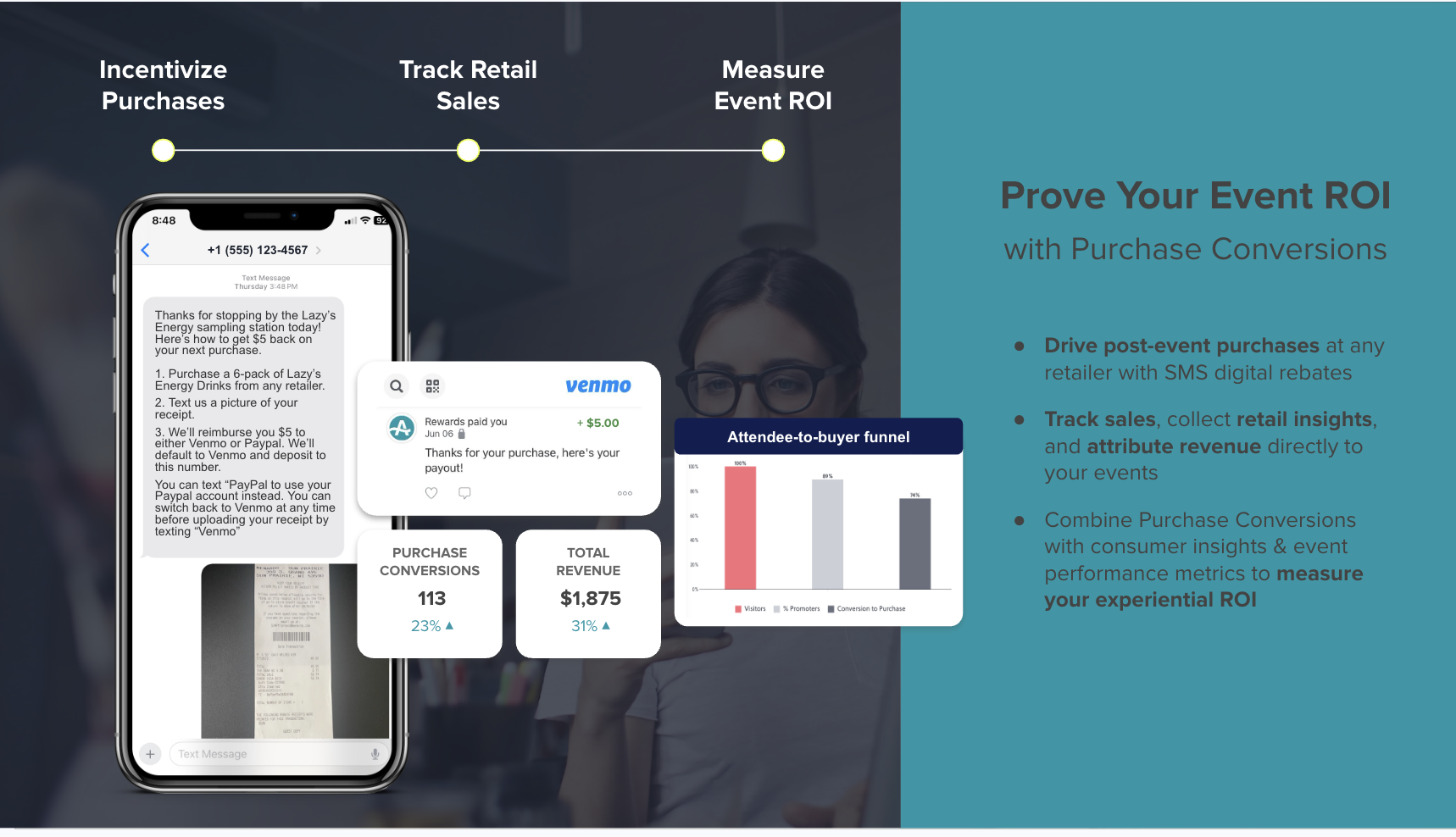
Follow Up Without Being Annoying
The anxiety around follow-up frequency is real. The answer comes down to three variables: frequency, phrasing, and social risk.
Set A Clear Frequency Guardrail
- Send no more than three emails over two to three weeks.
- Space touches 5–10 days apart.
- Stop the sequence the moment someone replies, opts out, or converts.
Use Phrasing That Respects The Relationship
- Reference the specific experience, not the generic event.
- Avoid "just checking in" style copy, which makes the sender's inbox problem the recipient's problem.
- The safest subject line is often the original thread because it preserves context and keeps the email from feeling like a new campaign.
Subject-line examples that work:
- "Your photo from [Event Name]"
- "Two quick questions about your [Event Name] experience"
- "You tasted it — now make it yours"
- "Your [Brand Name] cashback — just verify your receipt"
Phrases to avoid in every email:
- "Just following up"
- "Just checking in"
- "Circling back"
- "Touching base"
- "Per my last email"
- "As I mentioned"
Reduce Social Risk In Every Message
A generic "great meeting you at [Event]" with no specific reference is worse than no follow-up at all because it signals you did not remember the conversation. Implying a conversation occurred when it did not is the fastest way to be marked as spam.
Common Follow-Up Mistakes To Avoid
- Over-Asking: Include one clear next step per email. Multiple asks dilute the CTA.
- Generic Copy: Skip vague language with no specific reference to the experience or conversation.
- No Clear Next Step: End every email with something the reader can do.
- Sending After The Window Has Closed: After 72 hours, reply rates drop sharply. The BoothMaven timing data cited later shows the decline.
- Treating A Brand Experience Like A Cold Sales Prospect: The attendee already knows the brand, so avoid introductions or a hard product pitch in Email 1.
- No Compliance Review: In regulated categories, outbound copy must be reviewed before sending.
- No Measurement Plan: You need opt-in rate, survey completion, enrollment, and downstream purchase to answer leadership questions.
Follow-Up In Regulated Categories Like Alcohol
In a regulated category, the opt-in is the asset that matters most. The follow-up email also functions as a compliance artifact.
Capture Consent Correctly
- Consent must be freely given, specific, informed, and unambiguous. Pre-checked boxes and bundled consent are not valid.
- Registration for an event does not equal marketing consent. Use distinct fields for event registration and email communications.
- If the original sign-up did not specifically ask for marketing contact after the event, re-confirm consent before sending follow-up emails.
Use Clear Opt-In Language
Handle Age-Gating And Compliance Requirements
- Verify age at the point of capture, not in the email. AnyRoad's integrated ID scanning handles embedded age verification at the registration step.
- Every commercial email must include sender identity, a physical postal address, and a clear opt-out mechanism.
- As of 2026, each separate email that violates the CAN-SPAM Act can incur a civil penalty of up to $53,088, assessed per email. CAN-SPAM opt-out requests must be honored within 10 business days.
- State alcohol marketing regulations may impose additional requirements on what the email can say and where it can link.
Treat The Follow-Up As A Compliance Artifact
Consent expires by use case. Each new use case, especially marketing, requires a fresh confirmation, and organizations must document the purpose, date, and method of consent to stay compliant. In a regulated category, the follow-up email also records that consent. AnyRoad acts as the brand's agent, and the compliant transaction runs through its licensed ecommerce partner. The platform does not sell, ship, or distribute alcohol itself.
Track Outcomes Beyond Opens And Replies
Leadership wants to know what the activation produced. Open rates are no longer a reliable measure of human engagement in 2026. Apple Mail Privacy Protection, which now covers roughly half of all email opens globally, preloads tracking pixels automatically. Microsoft Defender for Office 365's Safe Links feature also clicks every URL in incoming emails before delivery. Reply rate is the clean primary metric.
Track these metrics instead:
- Opt-In Rate: The percentage of attendees who opted into marketing communications. A 45% opt-in rate on 500 attendees versus a 15% rate is the difference between a profitable activation and a break-even one, which makes opt-in rate the primary driver of hard ROI.
- Survey Completion: Use the 40–60% post-event survey response benchmark cited earlier as your reference point.
- Club Or Membership Enrollment: The percentage of attendees who enrolled in a club or membership, designed to close the $100 bottle versus $600 club member gap noted in Template 3.
- Downstream Purchase: The percentage of attendees who made a purchase after the event, verified by receipt or POS data.
AnyRoad captures first-party data before, during, and after the experience. This includes FullView data capture from every attendee in a group, not just the booker. "With AnyRoad, we are able to measure NPS, Brand Conversion, and more, providing us with solid data that shows the positive impact the JWPS experience is having on our guests. We can then follow up with them to create a lifelong relationship with our brand." Its Atlas Insights dashboard measures brand affinity, NPS, and purchase intent. AnyRoad's Purchase Conversion Tools connect the follow-up to receipt-verified retail purchase via cashback rebates and sweepstakes. Its Lifetime Loyalty suite turns the follow-up into club enrollment.
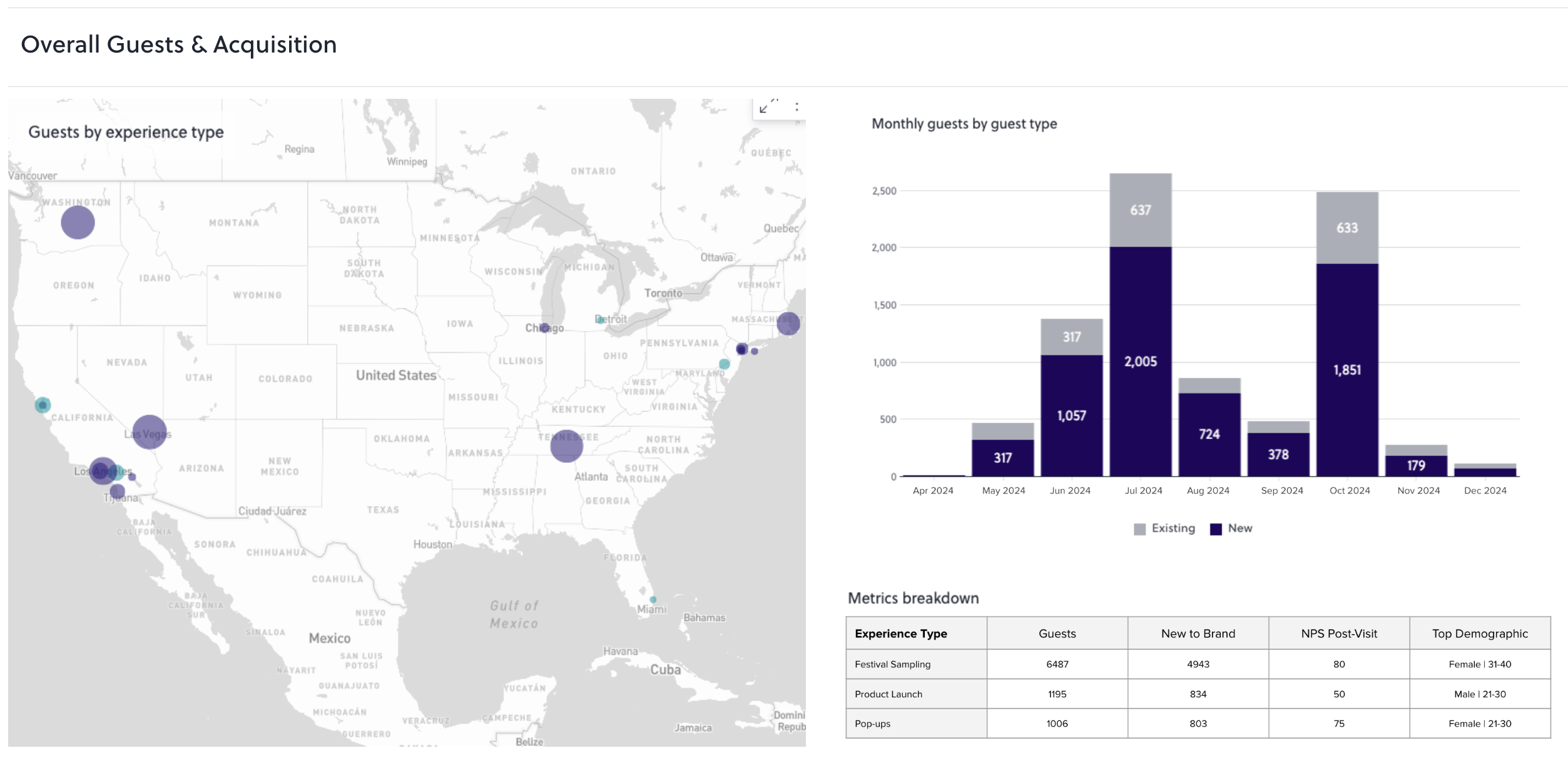
The numbers behind the lifecycle reinforce this focus. The 512% repeat-visit conversion figure cited earlier is the clearest argument for segmenting repeat visitors. The $100 bottle versus $600 club member gap noted in Template 3 explains why enrollment matters. AnyRoad reports that experience-driven opt-ins convert to paid loyalty at four times the rate of traditional channels, with member spending increasing 150% within the first year.
AnyRoad data from Conversate Collective's events for a CPG beauty brand showed that 74% of guests were more likely to purchase the brand's products after attending. That intent only becomes revenue when the follow-up sequence is in place to capture it.

Single-Send Vs. Lifecycle Sequence: A Comparison
The table below contrasts the two approaches across the dimensions that matter most: timing, goal, personalization, measurement, and compliance.
| Metric | Single-Send Follow-Up | Lifecycle Sequence Follow-Up |
|---|---|---|
| Timing | 24–48 hours | 24 hours, Day 5, Day 15 |
| Primary Goal | Reply | Opt-in, enrollment, purchase |
| Personalization | Generic | Segmented by attendee type and goal |
| Measurement | Opens, replies | Opt-in rate, survey completion, enrollment, purchase |
| Compliance | Ad hoc | Documented consent, age-gating, opt-out |
Practical Examples And Use Cases
These scenarios show how the lifecycle sequence, segmentation, and measurement come together in real programs.
Distillery Tasting Room Driving Club Enrollment: A visitor completes a tasting, opts in on-site, and receives a follow-up email within 24 hours with a photo from the visit and a club enrollment link. The email references the specific expression the visitor enjoyed and offers a same-day enrollment discount. AnyRoad's Lifetime Loyalty platform, adopted by heritage distilleries including Heaven Hill Distillery, Nearest Green Distillery, and Lux Row Distillers, alongside craft brands such as Castle & Key, Catoctin Creek Distilling, and Tarnished Truth Distilling, is built around exactly this enrollment moment.
Trade Show Booth Driving Opt-In From Scanned Badges: A booth scans 400 badges over two days. Within 24 hours, high-intent contacts, such as those who had a real conversation, receive a personalized follow-up with a specific reference. Badge-only scans receive a separate email 5–7 days later with a warm hook and a soft opt-in ask, with expected reply rates of 3–8%.
Pop-Up Driving Survey Completion And Purchase Conversion: A pop-up collects 200 attendee emails. Within 24 hours, attendees receive a thank-you email with a two-question survey and a cashback offer for the product they sampled. 85% of consumers engaged at POPLIFE's festival activations reported intent to purchase the mezcal brand's product post-event. That intent converts to revenue when a receipt-verification mechanic sits inside the follow-up sequence.
Frequently Asked Questions
How Soon Should You Send A Post-Event Follow-Up Email?
Send within 24 to 48 hours of the experience, while attendees still remember the conversation and the activation. After 72 hours, reply rates drop sharply, and the BoothMaven timing data cited above shows the decline. For the warmest contacts, such as those who had a real conversation or made a purchase, same-day beats next-day. For passive badge scans or browsers, 48–72 hours works, but avoid longer delays.
How Do You Follow Up Without Being Annoying?
Send no more than three emails over two to three weeks, and space touches 5–10 days apart. Reference the specific experience rather than the generic event name, avoid "just following up" phrasing, and stop the sequence the moment someone replies, opts out, or converts. The permission close, such as "Should I keep reaching out?", often performs best as the third email because it makes saying no easy and still produces a reply that clears the contact cleanly.
What Should You Avoid In A Follow-Up Email?
Avoid over-asking with more than one CTA per email and generic copy with no specific reference to the experience. Skip sends after the 72-hour window has closed, treat brand experiences as warm relationships rather than cold sales prospects, and run compliance review in regulated categories. Every email must end in something the reader can do. If you cannot report opt-in rate, survey completion, enrollment, and downstream purchase, the follow-up sequence is not doing its job.
What Is A Better Word Than "Follow Up"?
The most effective approach skips meta-language and references the specific experience instead. "Your photo from [Event Name]" and "Two quick questions about your [Event Name] experience" outperform subject lines that describe the email's purpose rather than its content. If a transition phrase is needed in the body copy, "continue the conversation" or "reconnect" feel fresher than "follow up," "check in," or "circle back."
How Do You Personalize A Follow-Up Email At Scale?
Segment by attendee type and post-event goal, and use one template per segment with bracketed placeholders. Fill in the specific detail for Email 1 only, then let Emails 2 and 3, timing, and exit conditions run automatically. The only step that cannot be automated is tagging each contact with the event name and one sentence of notes at the point of capture. This takes about 60 seconds per person and makes the personalized first line possible. AnyRoad's FullView feature captures data from every attendee in a group, not just the booker, which means the notes and opt-in status are already in the platform before the follow-up sequence begins.
Conclusion: Treat Follow-Up As The Start Of A Lifecycle Sequence
The experiential marketing email follow up is the first message in a lifecycle sequence whose job is to convert a live experience into a permissioned relationship, such as an opt-in, a profile, a club enrollment, or a receipt-verified purchase. The templates, timing, tone, compliance, and measurement guidance in this article all support that job.
AnyRoad captures the first-party data, opt-ins, and enrollment that the follow-up email depends on. Its platform captures data before, during, and after the experience, measures brand affinity, NPS, and purchase intent, connects the follow-up to receipt-verified retail purchase, and turns the follow-up into club enrollment. Centralized analytics from AnyRoad revealed that 48% of Campari Group visitors converted to brand promoters after their experiences. That result begins with a follow-up sequence that treats the post-event email as the start of a relationship, not the end of an activation.
Turn Tasting Room Visits Into Recurring Revenue