


Written by: Bryan Grobstein, Vice President, Global Revenue, AnyRoad
Key Takeaways
- First-party data captured directly through SMS opt-ins at events is now a critical owned asset for CPG brands as third-party cookies disappear and retail media data stays fragmented.
- Live events deliver the highest-intent moments where consumers willingly share mobile numbers, achieving 98–99% SMS open rates versus email's 20–30%.
- A three-phase SMS playbook with pre-event capture, on-site frictionless opt-ins, and post-event nurture turns one-time interactions into lasting owned-data relationships.
- Compliance with TCPA, CTIA, and state laws is mandatory; brands must secure explicit written consent, register 10DLC campaigns, and retain records for four years to avoid massive fines.
- Book a demo with AnyRoad to see how its FullView technology captures data from every attendee and integrates seamlessly with your CRM or CDP.
Why Events Are Now A Core First-Party Data Channel
The addressable web keeps shrinking as third-party cookies lose effectiveness. Safari and Firefox already block third-party cookies by default. In October 2025, Google retired most Privacy Sandbox advertising and measurement APIs, including Attribution Reporting and Protected Audience, after low adoption. The replacement stack never became a full substitute for traditional tracking. At the same time, retail media data remains siloed and fragmented. Walmart shopper data does not connect to Target data, and neither explains why a purchase happened.
Live events fill that gap with direct, high-intent interactions. A face-to-face activation creates a moment where a consumer chooses to engage with your brand. Their mobile number becomes the most valuable identifier they can share. SMS open rates consistently reach 98–99%, with 90–95% of texts read within the first three minutes. Email typically delivers only 20–30% open rates. SMS gives you a direct line to the consumer's pocket at the moment of peak brand affinity.
Turn your next event into an owned-data engine. Book a demo with AnyRoad to see how.
First-Party And Zero-Party Data For Event Leaders
Zero-party data is information a customer intentionally and proactively shares with a brand, such as stated preferences, purchase intentions, or flavor profiles. First-party data is behavioral data a brand collects from its own channels, such as website visits, past purchases, and event attendance. Both data types are owned and valuable. Zero-party data shows explicit intent, while first-party data reveals observed behavior. Zero-party data reflects what customers say, and first-party data reflects what they do, and these signals frequently diverge.
Live events generate both data types at once. A survey response at a tasting booth creates zero-party data. Attendance, sampling, and scanning a QR code create first-party data. Together, these signals build a consumer profile that retailers and third-party providers cannot match.
The Shift From Cookies To Owned Brand Experiences
The combined impact of browser blocking, ad blockers, consent declines, and cookie deletion means many advertisers can accurately track less than half of user behavior through traditional cookies. That percentage keeps dropping each quarter. Experiential marketing has grown into a direct-response channel in this environment. Many brands still rely on fragmented tools, inconsistent on-site capture, and disconnected systems that fail to link events to retail transactions.
A structured, SMS-centric data capture strategy across three phases solves this problem. The phases cover pre-event, on-site, and post-event engagement. Each phase builds on the previous one and turns a brief interaction into a durable owned-data asset.
The Three-Phase SMS Playbook For Events
Phase 1: Pre-Event Capture With Clear Value
The pre-event phase focuses on securing SMS opt-ins before the event starts. This approach builds anticipation and guarantees an audience for follow-up. Every tactic needs a clear value exchange so consumers receive something immediate and tangible for sharing their number.
- Ticket Giveaways: Require an SMS opt-in to enter a raffle for free event tickets or VIP access. This approach filters for high-intent consumers who already care about the experience.
- Digital Swag Bags: Offer a coupon bundle or exclusive content delivered via SMS after registration. The reward arrives instantly and keeps friction low.
- Early-Bird SMS Opt-Ins: Provide a discount or exclusive tasting for consumers who text a keyword to register early. Incentivized opt-ins reliably lift list growth rates, and subscribers who opt in for value tend to retain better.
Phase 2: On-Site Capture With Frictionless Tools
The on-site phase aims to capture data from every attendee, not just the ticket booker. AnyRoad's FullView feature addresses this directly. Brands that rely only on booking data often miss contact information for more than two-thirds of guests. FullView captures individual data from every person in a group, not only the primary booker. Proximo Spirits discovered that they lacked data on 66% of guests. After implementing FullView, Proximo Spirits collected 69% more guest data and 34% more NPS responses.

The ideal capture method depends on the event format. The table below compares four primary on-site options.
| Method | Friction Level | Data Richness | Best For |
|---|---|---|---|
| QR Code To Text | Low | High (Verified Mobile) | High-traffic festivals, booths |
| Gamified Kiosks | Medium | High | Family events, trade shows |
| Instant Rewards | Low | High | Pop-ups, sampling activations |
| Manual Form Fill | High | Medium (Risk of Typos) | VIP lounges, B2B events |
Smart QR codes with clear incentives and strong placement raise scan rates faster than any other single tactic. Place them on banners, tables, product packaging, and staff badges. For gamification, use a spin-to-win mechanic where attendees text a keyword to play for a prize. This format drives strong engagement at family events and trade shows. Instant rewards, such as a full-sized sample or exclusive merch in exchange for showing SMS confirmation, work well at pop-ups and sampling activations with short dwell times.
Real-world results support these tactics. POPLIFE captured 45–50% more consumer data using AnyRoad compared to competitors during festival activations, with 42% of attendees opting into future marketing communications. Conversate Collective used AnyRoad at field marketing events for a CPG beauty brand, and 74% of guests were more likely to purchase the brand's products after attending.
Phase 3: Post-Event Nurture That Drives Purchase
The event may end, but the relationship should continue. Post-event SMS tactics connect the brand experience to a measurable retail purchase.
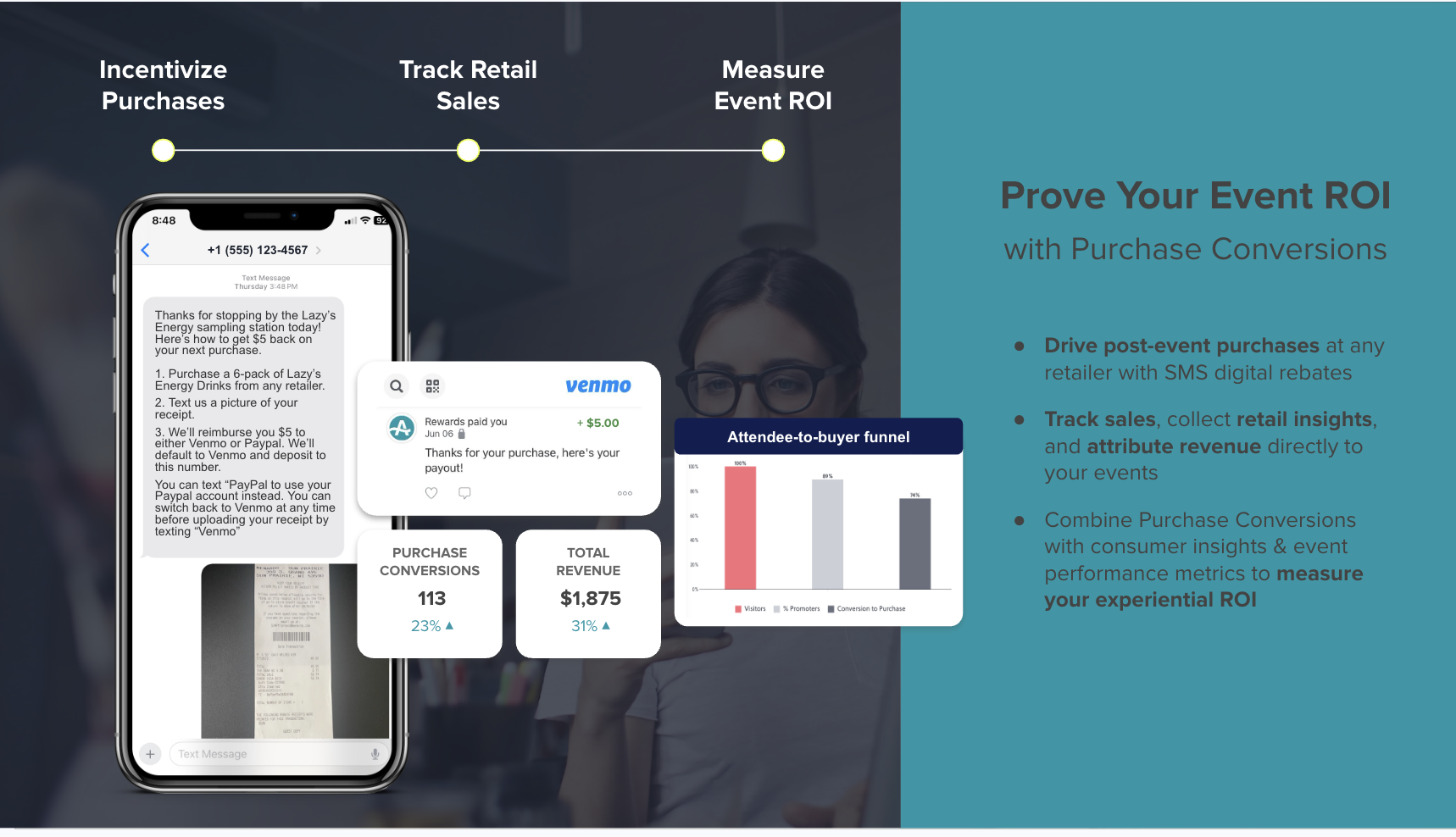
- Receipt Verification: Consumers text a photo of a retail receipt to receive cashback via Venmo or PayPal. AnyRoad's cashback rebate mechanic reads the receipt with AI, confirms the eligible SKU, and pays the rebate automatically. This process does not require POS integration. In an early one-month ambassador tasting pilot with a single craft brand, 56% of records collected converted to a bottle purchase. This result came from a small pilot and does not represent a platform benchmark.
- Feedback Loops: A one-question SMS survey sent within 24 hours, paired with a discount code, captures zero-party data and encourages re-engagement while brand recall is strongest.
- Retail Locators: An automated text sent 48 hours after the event with a link to nearby stores that stock the sampled product helps bridge the gap between trial and purchase.
- Sweepstakes: Ongoing prize draws, such as VIP event tickets, reward consumers for completing a purchase or sharing feedback and keep the channel active.
Compliance And SMS Event Programs
SMS compliance protects both consumers and brands. TCPA statutory damages start at $500 per violation and rise to $1,500 per violation for willful or knowing conduct, with no cap on aggregate damages in a class action. A single non-compliant campaign can create millions of dollars in exposure.
Every event SMS program must follow these requirements.
- Explicit Prior Express Written Consent: Under the TCPA, marketers must obtain prior express written consent before sending promotional SMS text messages. Pre-checked boxes and consent hidden in fine print do not qualify. Signage and forms must clearly state that the user is opting into recurring automated marketing messages.
- CTIA First-Message Requirements: The first message after opt-in must include the business or program name, a description of what the program sends, message frequency, a “Msg & data rates may apply” disclosure, and STOP and HELP instructions.
- Clear Opt-Out In Every Message: Each SMS must include opt-out instructions. When a consumer texts STOP, marketing messages must stop immediately, and only a single confirmation reply is allowed.
- 10DLC Registration: Since February 1, 2025, U.S. wireless carriers block all unregistered A2P traffic sent over 10-digit long codes. Registration with The Campaign Registry is mandatory before the first send.
- CTIA SHAFT Guidelines For Alcohol Brands: SHAFT covers content categories carriers restrict: Sex, Hate, Alcohol, Firearms, and Tobacco. Alcohol brands must use proper age-gating and carrier-approved disclosures. Carriers review campaign sample messages for these categories and can reject campaigns during registration.
- State-Level Laws: Texas SB 140, effective September 1, 2025, introduced statutory damages up to $5,000 per violating text. Florida's FTSA provides $500 per violation with treble damages for willful violations. These state laws apply in addition to federal TCPA requirements.
- Record Retention: Marketers must keep records of SMS opt-ins for at least four years, including the form used and its text disclosure.
Connecting Event SMS Data To CRM, CDP, And Sales
Event data creates value only when it flows into your core systems. An SMS opt-in becomes powerful when it syncs to a CRM or CDP and triggers personalized follow-up. The ideal data flow follows this path: Event → SMS Opt-In → Preference Data → Retail Purchase → CDP.
A CDP connects and activates data across email, SMS, push notifications, web personalization, social media, and paid advertising channels. It acts as the central hub that feeds consistent, current customer data into each channel at the same time. AnyRoad integrates natively with CDPs and CRMs such as Klaviyo, Salesforce, HubSpot, and SAP. Real-time syncing means an opt-in at an event immediately updates the consumer's profile for future automation.
Alcohol brands without in-house email marketing teams can use AnyRoad's managed CRM services. This option provides an alcohol-native alternative to tools like Klaviyo or Mailchimp and runs on the same first-party experiential data the platform already collects. Guest data, NPS scores, spend, visit frequency, and club status live in one place. Teams can segment a high-value cohort, such as repeat visitors with high NPS and above-average spend, and message them directly without manual exports.
Event Metrics That Prove SMS Impact
Clear metrics connect event budgets to business outcomes. Track these indicators across every activation.
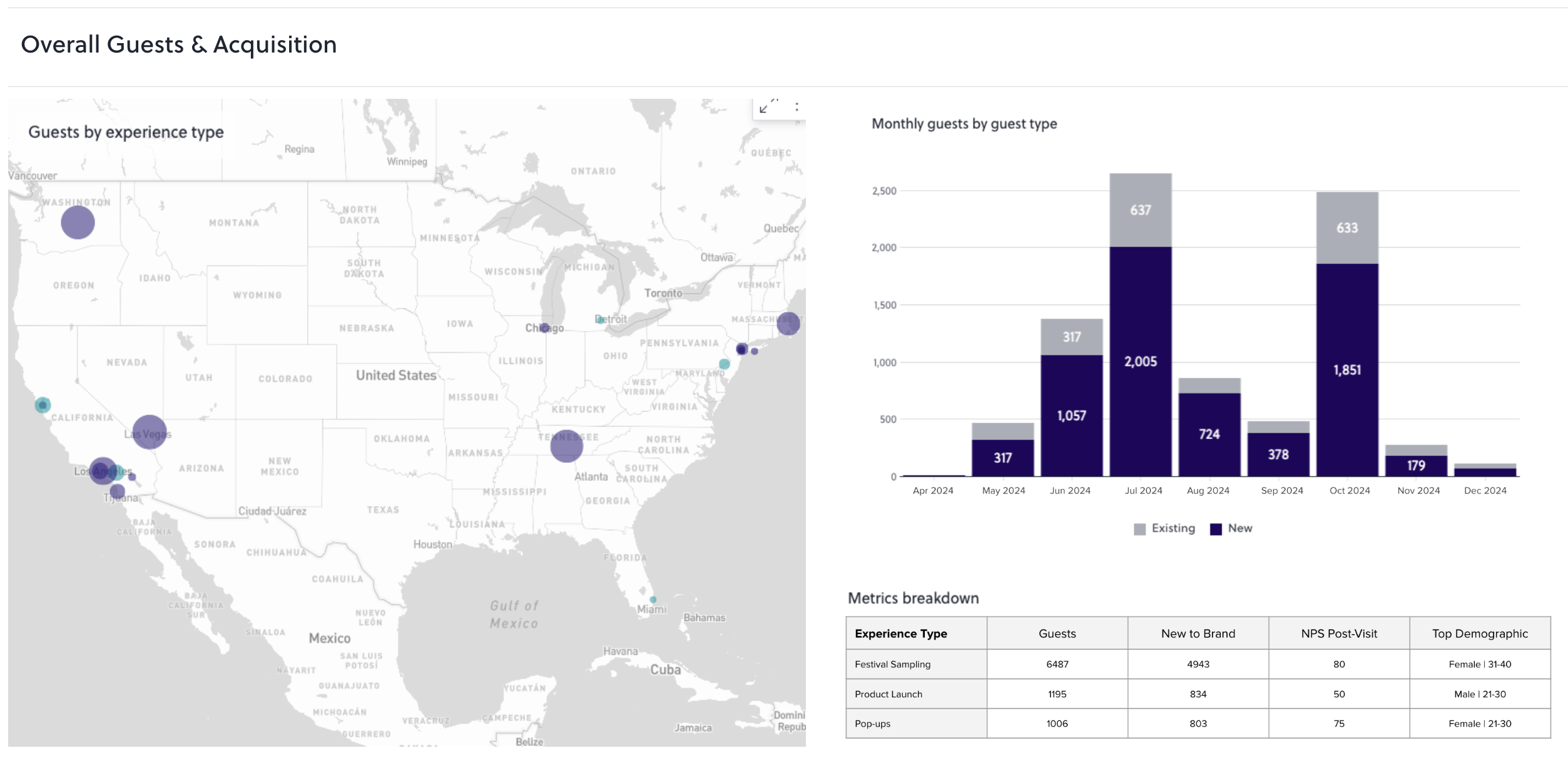
- Opt-In Rate: Measure the percentage of attendees who provide an SMS opt-in. AnyRoad's FullView ensures the denominator includes every attendee, not only the primary booker.
- Conversion To Purchase: Track the percentage of opted-in consumers who make a verifiable retail purchase using receipt verification.
- Opt-Out Rate: Top SMS programs keep opt-outs below 0.5% per campaign. Rates above 3% suggest frequency fatigue or a weak value exchange.
- ROI: AnyRoad data shows that a consumer who visits a distillery twice is 512% more likely to convert to a paid loyalty enrollment. A single retail bottle purchase is worth roughly $100, and a club member across six releases is worth roughly $600. AnyRoad reporting shows that experience-driven opt-ins convert to paid loyalty at four times the rate of traditional channels, and member spending increases 150% within the first year.
Common Pitfalls In Event SMS Programs
- Using Events Only For Awareness: Every activation needs a data capture plan and a post-event follow-up sequence defined before the event begins.
- Overlooking Compliance: A single non-compliant text can trigger fines of $500 to $1,500 per violation under the TCPA, with no aggregate cap in a class action.
- Missing Data From Most Attendees: Capturing only the booker's information leaves out the majority of the audience. AnyRoad's FullView solves this at the platform level.
- Leaving Data In Silos: An SMS opt-in that never reaches a CRM or CDP cannot support personalized follow-up or ROI measurement.
- Skipping A Clear Value Exchange: Common mistakes in live-activation data collection include asking for too much information and failing to explain how data is used, which reduces trust and opt-in rates.
Real-World Results From Event Data Programs
These examples show what a systematic, platform-supported approach to event data capture can deliver.

- Campari Group achieved a 3X increase in marketing opt-ins over six months from brand home registrations and identified 4,500 repeat visitors as brand champions using AnyRoad. Average spend per customer increased 25% since 2020 through streamlined event management and integrated systems.
- Just Egg collected 30,000 customer data points over 300 events and learned that 90% of consumers who tasted their product intended to buy it.
- POPLIFE, which runs festival activations for an artisanal mezcal brand, captured 45–50% more consumer data using AnyRoad compared to competitors. Eighty-five percent of engaged consumers reported intent to purchase post-event, and purchase intent rose 75% after the experience.
- Conversate Collective used AnyRoad at field marketing events for a CPG beauty brand. More than 50% of surveyed consumers bought the brand's products from Walgreens and Target, and 74% of guests were more likely to purchase after attending.
- Leiper's Fork Distillery cut reporting time from a day and a half to 90 minutes and raised tour prices by 33% after implementing AnyRoad.
Frequently Asked Questions (FAQ)
How Can Brands Collect First-Party Data At Events?
Brands collect first-party data at events with a three-phase approach. Before the event, they use ticket giveaways and VIP access offers that require an SMS opt-in to enter. On-site, they deploy QR codes that pre-fill an SMS with a keyword, gamified kiosks such as spin-to-win, and instant rewards like a full-sized sample in exchange for showing SMS confirmation. After the event, they use receipt verification, one-question feedback surveys, and retail locator texts to maintain the relationship and drive purchase. The key across all phases is a clear, immediate value exchange so the consumer receives something tangible for sharing a mobile number. Platforms like AnyRoad capture data from every attendee in a group, not only the primary booker, which is essential for maximizing opt-in volume at group events.
What Are Effective SMS Opt-In Ideas For Events?
Effective SMS opt-in ideas include “Text-to-Win” sweepstakes for a premium prize such as VIP tickets or a curated product bundle. QR codes that pre-fill an SMS with a keyword reduce friction because the consumer only taps send. Instant digital rewards, such as a coupon or exclusive content delivered immediately after sign-up, also perform well. Alcohol brands can offer a discount on a same-day tasting upgrade or early access to a limited-release expression that aligns with the experience. Gamified mechanics like spin-to-win work especially well at high-traffic festivals and trade shows where dwell time is short and competition for attention is intense.
What Compliance Rules Apply To SMS Data Collection?
Under the TCPA, brands must obtain prior express written consent before sending any promotional text messages. This consent must be explicit, without pre-checked boxes or consent buried in terms and conditions. Disclosures must clearly state that the consumer is opting into recurring automated marketing messages from the brand, and consent cannot be a condition of purchase. Under CTIA guidelines, the first message must include the program name, a description of what the program sends, message frequency, a “Msg & data rates may apply” disclosure, and STOP and HELP instructions. All U.S. businesses sending automated texts must register with The Campaign Registry under the 10DLC framework before their first send, because carriers block unregistered traffic. For alcohol brands, CTIA SHAFT guidelines restrict alcohol-related content and require age-gating and carrier-approved program disclosures. State laws in Texas, Florida, Oklahoma, Washington, and Maryland add further requirements and private rights of action on top of federal TCPA rules. Brands should retain consent records, including timestamp, phone number, exact disclosure language, and opt-in source, for at least four years.
How Do Brands Integrate Event Data With Their CRM?
Brands integrate event data with their CRM by using a platform like AnyRoad that offers native integrations with CDPs and CRMs such as Klaviyo, Salesforce, and HubSpot. Real-time syncing ensures that an SMS opt-in at an event immediately updates the consumer's profile in the marketing automation system and triggers personalized follow-up sequences without manual exports. The data flow should connect the event opt-in to preference data collected on-site and then to receipt-verified retail purchases. This closed loop ties experiential spend directly to revenue. Alcohol brands without in-house email marketing capability can rely on AnyRoad's managed CRM services, which run on the same first-party experiential data the platform collects. This approach removes the need to stitch together a separate email service provider, segmentation tool, and compliance layer.
How Do First-Party Data And Zero-Party Data Differ?
First-party data is behavioral data a brand collects from its own channels, such as event attendance, past purchases, website visits, and QR code scans. Zero-party data is information a consumer intentionally and proactively shares, such as flavor preferences, purchase intentions, or communication frequency preferences. Both data types are owned by the brand and provide more value than third-party data, but they serve different roles. Zero-party data offers explicit intent signals that support immediate personalization. First-party data offers observed behavioral signals that reveal what consumers actually do, which can differ from what they say. Live events generate both types at once. A survey response at a tasting booth is zero-party data, while attendance, sampling, and scanning a QR code create first-party data. A complete event data strategy captures and connects both.
Conclusion: Build An Owned-Data Engine From Events
Live events now represent the highest-intent source of first-party data for CPG and alcohol brands. Third-party cookies continue to erode, and retail media data remains siloed. The mobile number captured at a festival booth or distillery tasting has become one of the most valuable assets in a marketer's toolkit. An SMS-centric strategy across pre-event, on-site, and post-event phases turns fleeting interactions into an owned-data engine that drives measurable retail sales and loyalty. Compliance keeps programs safe, integration proves ROI, and capturing data from every attendee, not only the booker, delivers a complete picture of event impact.
Transform your events from a cost center into a revenue driver. Book a demo with AnyRoad today.