


Key Takeaways
- Integrated guest satisfaction tools that connect reservations, POS, and CRM can lift winery NPS by 20-50% and revenue per visit by up to 36%, as Absolut demonstrated.
- Fragmented systems miss up to 66% of guest data, while unified platforms capture complete profiles, enable AI-driven personalization, and remove operational silos across the guest journey.
- High-impact tools include AnyRoad’s reservation software, PinPoint AI feedback analysis, on-site operations apps, CRM personalization, and analytics dashboards that tie experience quality to ROI.
- Case studies show Diageo gained a 16-point NPS increase, Proximo collected 69% more guest data, and St. Augustine doubled premium bookings using feedback insights.
- Implement AnyRoad’s all-in-one platform to turn tasting rooms into reliable revenue engines and see how unified systems maximize guest lifetime value.
Why Guest Satisfaction Tools Are Revenue Machines for Wineries
Guest satisfaction directly drives profitability in the wine industry, where increasing customer retention by just 5% can boost profits by 25-95%. Yet most wineries struggle to capture this upside because of systemic operational issues that undermine the guest experience.
Manual processes create two-hour wait times, clunky booking systems lose potential customers, and disconnected tools miss up to 66% of guest data. Fragmented POS, ecommerce, and wine club systems operating in silos make meaningful personalization nearly impossible for wineries, so repeat visitors still receive generic new-customer emails.
Wineries need a full-funnel approach that connects pre-visit reservation systems, during-visit POS and operations tools, and post-visit loyalty programs into one continuous journey that turns first-time guests into long-term advocates.
Top 8 Guest Satisfaction Winery Tools for 2026 (Ranked by NPS/ROI Impact)
1. Reservation Software That Sets Up Every Visit (AnyRoad Experience Manager)
Winery reservation software creates the foundation for guest satisfaction by cutting wait times and capturing pre-visit preferences. AnyRoad’s white-labeled booking system embeds directly into winery websites, which keeps the brand experience consistent from the first click.
Key features include custom questions for dietary needs and preferences, automated confirmation and reminder messages, and real-time availability management that prevents double-booking. Implementation blueprint: start by embedding the booking widget on your website so guests can reserve at the moment of interest.
Then configure custom intake questions to collect the details your team needs to personalize each visit. Finally, set up automated guest communications that confirm bookings and build anticipation before arrival. St. Augustine Distillery doubled premium experience bookings after analyzing reservation feedback and adding takeaway glassware that guests specifically requested.
2. Mobile POS for Wineries That Connects Data and Upsells
The best POS system for wineries does more than process payments, because it also drives upsells and captures rich guest data. Vintiga’s AI-powered upsell engine increases tasting room average transaction values by 12-20% by analyzing guest purchase history, current cart, time of day, inventory levels, and weather patterns to suggest relevant add-ons.
Modern winery POS systems connect directly to CRM platforms, which support personalized service and real-time inventory management. AnyRoad integrates with payment processors such as Stripe, Square, Adyen, and Toast to keep transactions smooth. Implementation blueprint: first sync your POS with reservation and CRM systems so staff see guest history at checkout.
Next, enable QR code payments to shorten lines and reduce friction. Then configure mobile check-in capabilities so hosts can greet and process guests anywhere on the property. The revenue impact can be substantial, as Absolut achieved a 36% increase in revenue per visit through integrated optimization. When evaluating POS systems, focus on data ownership, AI capabilities, and NPS integration, as shown in this comparison.
Feature | Block55 | vinSUITE | AnyRoad |
Data Ownership | Shared | Winery Owned | Full Brand Control |
AI Upsell | Limited | Basic | Integrates with POS for payments |
NPS Integration | None | Manual | Automated AI Analysis |
3. AI Feedback Tools for Wineries (PinPoint Analysis)
AI feedback tools for wineries turn raw guest comments into clear actions that raise NPS. AI-powered sommelier technology simplifies wine selection by providing detailed comparisons, reviews, tasting notes, and pairing suggestions, and the same intelligence can analyze feedback to highlight specific improvements. AnyRoad’s PinPoint feature automatically reviews thousands of open-text responses, surfaces sentiment drivers, and flags operational issues in real time.
Implementation blueprint: first deploy post-visit surveys with open-ended questions that invite honest detail. Then configure AI analysis parameters so the system focuses on themes that matter most to your winery. Finally, build action plans around the patterns PinPoint uncovers and review them regularly with your team. Leiper’s Fork Distillery used this continuous insight loop to refine its experience and reached a near-perfect 97 NPS score.
4. On-Site Operations Apps That Capture Every Guest (Front Desk Management)
Efficient on-site operations protect the guest experience by cutting check-in times and capturing complete data for every visitor. Streamlined check-in processes can reduce wait times by up to 80% while maintaining compliance and accurate records.
Modern on-site ops tools support QR code check-ins, digital waiver management, and ID scanning for age verification. AnyRoad’s Front Desk app manages both pre-booked guests and walk-ins in one place, which ensures contact information for every attendee instead of only the booking contact. Implementation blueprint: install the iOS app on tablets at key entry points, then configure workflows for walk-ins and reservations so staff follow a consistent process.
Next, integrate digital waiver collection so compliance never slows down the line. Proximo Spirits discovered they were missing contact information for over 66% of their guests before deploying comprehensive on-site data capture and immediately collected 69% more guest data after rollout.
5. Winery CRM for Guest Personalization and Wine Club Growth
Winery CRM for guest personalization equips staff to deliver tailored experiences based on visit history, preferences, and purchase behavior. Integrating winery reservation systems with CRM and POS enables tasting room staff to access guest history and preferences pre-arrival, creating thoughtful rather than transactional experiences.
The success rate of selling to existing customers reaches 60-70% compared with just 5-20% for new prospects, which makes personalization a direct revenue driver. Implementation blueprint: begin by syncing reservation and POS data into your CRM so each guest has a single profile. Then create preference fields and tags that reflect your actual experiences and offerings.
Finally, set up automated follow-up sequences that reference visit details and invite guests into wine clubs or exclusive events. Effective CRM integration turns repeat visitors into loyal members and vocal brand advocates.
6. Analytics for NPS and ROI Tracking (Atlas Insights)
Winery tasting room metrics and tools to improve winery NPS give leaders the visibility needed to make confident decisions. Advanced analytics platforms track brand affinity shifts, Net Promoter Score trends, and purchase intent across guest segments over time.
AnyRoad’s Atlas Insights dashboard filters data by experience type, location, and demographics so teams can see exactly what drives satisfaction. Implementation blueprint: define the key performance indicators that matter most, such as NPS, revenue per visit, and club conversion. Then set up automated reporting dashboards that deliver these metrics to stakeholders on a regular cadence.
Finally, build ROI calculation frameworks that connect experience changes to revenue and margin outcomes. Diageo achieved a 16-point NPS increase through analytics and AI insights, which shows how data-driven decisions compound over time.
7. Post-Visit Loyalty Programs That Extend the Experience
Post-experience engagement turns a great visit into an ongoing relationship that compounds revenue. SMS-based cashback rebates, punch card experiences, and sweepstakes entries encourage immediate action while building long-term loyalty.
The earlier 25-95% profit lift from small retention gains explains why this stage matters so much, because each repeat visit multiplies the impact of your initial experience. Implementation blueprint: trigger personalized incentives based on visit behavior, such as spend level or tasting flight choice. Then track redemption rates across channels to see which offers resonate with different segments.
Finally, segment guests for targeted offers that align with their preferences and club status. Sierra Nevada reached an 85% brand conversion rate after events by consistently following up with tailored offers and exclusive access opportunities.
8. All-in-One Platforms That Orchestrate the Entire Guest Journey (AnyRoad Unified Experience)
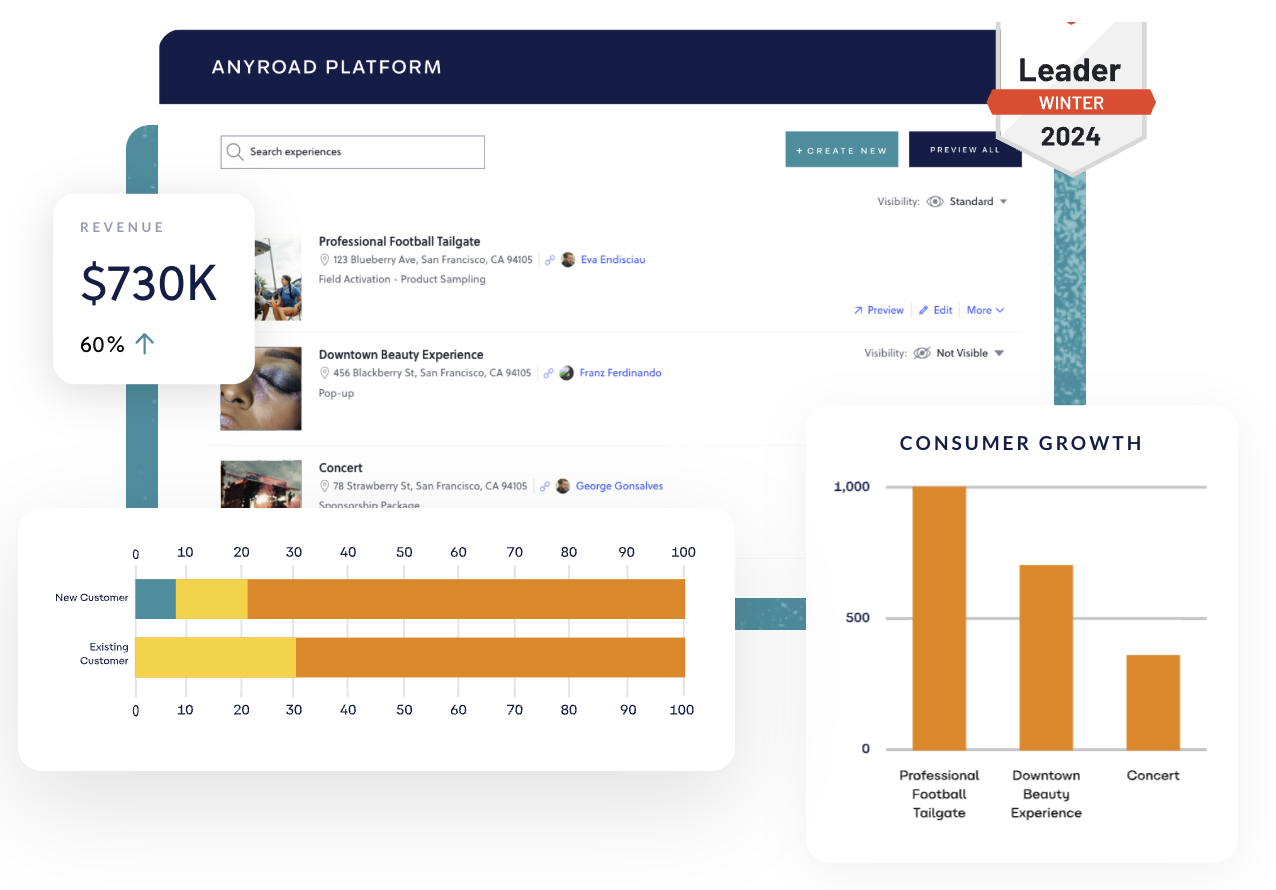
The best guest satisfaction winery tools work together as one system instead of adding new layers of complexity. AnyRoad’s unified platform combines Experience Manager for reservations, Front Desk for on-site operations, PinPoint for AI feedback analysis, Atlas for analytics, and Lifetime Loyalty for post-visit engagement.
This single platform removes the data silos that fragmented systems create and supports complete guest journey management from first click to repeat purchase. AI enables personalized recommendations at scale, unified data across online and tasting room experiences, and more predictable direct-to-consumer revenue for wineries that embrace integrated technology. See how unified platforms eliminate operational chaos while maximizing guest satisfaction and revenue.
Implementation Blueprint: Unify Your Stack with AnyRoad
Wineries see the strongest gains when they build a connected platform instead of layering disconnected tools. AnyRoad’s approach directly addresses the core challenge highlighted by industry experts, where disconnected tools prevent wineries from delivering modern digital tasting room capabilities, such as unified commerce across POS, ecommerce, wine clubs, real-time inventory visibility, automated workflows that feel personal, and analytics revealing complete customer journeys.
The implementation process follows a strategic sequence that builds your data foundation before turning on advanced features. First embed white-labeled booking experiences directly into your website so you start capturing guest intent and preferences. Once reservation data flows consistently, integrate POS systems with Stripe, Toast, or Square to connect pre-visit expectations with in-visit purchases.
With reservation and transaction data unified, deploy PinPoint AI for automated feedback analysis that reveals what drives satisfaction. Next configure Atlas analytics for real-time performance monitoring across the entire guest journey. Finally, activate Lifetime Loyalty SMS campaigns for post-visit engagement, using the complete data profile you have built to personalize every offer.
Winery Case Studies Proving the Impact
Real-world examples show how integrated guest satisfaction tools reshape both experience quality and financial performance. Diageo’s investment of $185 million across 12 distilleries enabled the 16-point NPS improvement noted earlier, specifically by using AI to customize flavor profiles and optimize guest experiences at scale.
This focus on experience quality also supported premium pricing strategies, as Absolut used unified data platforms to justify higher-priced experiences and improved guest revenue per visit by 36%. Proximo Spirits’ experience, with the 66% data gap mentioned earlier, illustrates how operational blind spots quietly erode guest relationships and revenue potential.
St. Augustine Distillery used guest feedback to uncover demand for takeaway experiences and saw double-digit growth in premium bookings after adding glassware components that guests requested by name.
Conclusion
Individual guest satisfaction tools can deliver small wins, but AnyRoad’s integrated platform converts operational chaos into consistent revenue growth. The combination of unified reservations, AI-powered feedback analysis, streamlined on-site operations, and post-visit engagement supports NPS gains of 20-50% while removing the data silos that slow most wineries down.
Discover how to transform your tasting room into a revenue-generating experience that builds lasting customer relationships.
Frequently Asked Questions
What are the most important guest satisfaction metrics for wineries to track?
The most critical guest satisfaction metrics for wineries include Net Promoter Score (NPS) to measure likelihood of recommendations and Customer Lifetime Value (CLTV) to understand long-term revenue potential. Teams should also track conversion rates from tasting room visits to wine club memberships, average revenue per visit to gauge upselling effectiveness, and post-visit purchase behavior to measure how experiences influence retail sales.
Leading wineries monitor operational metrics such as average wait times, booking conversion rates, and staff efficiency scores to spot friction points. Advanced analytics should segment these metrics by guest demographics, experience types, and seasonal patterns to reveal specific improvement opportunities. The priority is connecting satisfaction scores directly to revenue outcomes instead of tracking vanity metrics that do not change the business.
How do unified platforms compare to using separate tools for reservations, POS, and CRM?
Unified platforms remove the data silos and manual reconciliation work that come with separate tools. When wineries rely on disconnected systems, guest information lives in multiple databases without reliable synchronization, which creates inconsistent service and missed personalization opportunities.
Unified platforms ensure that reservation preferences appear automatically in POS systems, purchase history shapes future visit recommendations, and feedback data flows straight into operational improvements. The efficiency gains are significant because staff spend less time on administration and more time with guests.
Unified platforms also provide end-to-end analytics that reveal complete customer journeys instead of isolated snapshots from individual tools.
What ROI can wineries expect from implementing comprehensive guest satisfaction tools?
Wineries that implement comprehensive guest satisfaction tools typically see strong ROI across several metrics. Revenue per visit often increases by 25-40% through better upselling and more relevant recommendations. NPS scores commonly improve by 15-25 points within the first year, which fuels word-of-mouth referrals and organic growth.
Wine club conversion rates frequently double when guest data powers personalized follow-up campaigns that reference actual visits. The operational efficiency gains also matter, as reduced manual work, eliminated data reconciliation, and streamlined processes can save 10-15 hours per week of staff time. Most wineries reach positive ROI within 6-12 months of implementation.
How does AI-powered feedback analysis improve guest satisfaction compared to traditional surveys?
AI-powered feedback analysis improves guest satisfaction by turning large volumes of comments into clear, timely insights. Traditional surveys often suffer from low response rates and manual analysis that delays action for weeks or months.
AI systems process open-text feedback at scale, identify recurring themes, and detect sentiment patterns across locations and segments. This capability highlights specific operational issues, staff performance trends, and experience elements that drive delight or frustration.
Teams can then act immediately instead of waiting for quarterly reviews. AI also uncovers subtle trends, such as seasonal preference shifts or demographic-specific satisfaction drivers, that human reviewers might miss.
What integration capabilities should wineries prioritize when selecting guest satisfaction tools?
Wineries should prioritize guest satisfaction tools that connect smoothly with their existing technology stack, including website platforms, email marketing systems, accounting software, and inventory management tools.
Essential integrations include payment processors such as Stripe and Square for seamless transactions, CRM platforms for unified customer profiles, and marketing automation tools for personalized follow-up campaigns. The ability to sync with wine club management systems and ecommerce platforms keeps customer experiences consistent across every channel.
API access and webhook support enable custom integrations for unique operational needs. Above all, wineries should look for platforms with bi-directional data sync so information flows reliably between systems without manual intervention or data loss.