


Written by: Bryan Grobstein, Vice President, Global Revenue, AnyRoad | Last updated: October 19, 2026
Key Takeaways
- Klaviyo bills on active profiles rather than sends, so costs rise with database size even when send volume stays flat. Crossing a profile tier triggers a full price jump at renewal.
- Alcohol brands pay beyond the published subscription. First-party data capture for age verification, state eligibility, NPS, and club status must come from external systems, and SMS compliance adds carrier-filter risk.
- Agency management and segmentation labor often exceed the platform fee itself, pushing all-in monthly costs for a $5M DTC alcohol brand to $5,670–$14,700.
- Horizontal ESPs lack alcohol-specific compliance expertise and release-calendar knowledge. Brands either retrofit regulatory layers later or accept campaign delays and cleanup projects.
- AnyRoad replaces the license-plus-agency model with a managed CRM that bundles first-party experiential data, alcohol compliance, and white-glove execution so the channel runs without the brand filling gaps.
See what an alcohol-native CRM costs
What Are The Different Klaviyo Plans And Their Pricing?
The following tiers reflect Klaviyo's published pricing as of 2026:
- Free: $0, up to 250 active profiles, 500 emails/month, $5 of mobile messages
- 500 Profiles: $20/month (5,000 emails included)
- 1,000 Profiles: $30/month (10,000 emails included)
- 5,000 Profiles: $100/month (50,000 emails included)
- 10,000 Profiles: $150/month (100,000 emails included)
- 25,000 Profiles: $400/month (250,000 emails included)
- 50,000 Profiles: $720/month (500,000 emails included)
- 100,000 Profiles: $1,380/month (1,000,000 emails included)
Paid email tiers bundle roughly 10 sends per maximum active profile. Mobile messaging is a separate dollar-denominated commitment, not included in any email tier. All figures are monthly US dollars before add-ons, mobile messaging, taxes, and custom services.
Why Klaviyo Pricing Feels High
Klaviyo bills on active profiles, not sends, so the bill rises with the size of the reachable database even when send volume is flat. Mobile messaging is metered separately on top. The practical consequence is that list growth, not campaign frequency, drives cost.
Crossing a profile band triggers a full tier jump: going from 10,000 to 10,001 profiles raises the monthly bill from $150 to $175, or $300 per year. Going from 100,000 to 100,001 raises it from $1,380 to $1,440, or $720 per year. These jumps happen at the next billing cycle, not mid-month. Klaviyo can take up to 72 hours to refresh active-profile counts after suppression, so a cleanup run too close to renewal may not register in time.
On July 13, 2026, Klaviyo replaced its credit-based mobile model with dollar-denominated per-message rates. Brands now pre-purchase a monthly dollar commitment, for example a $115 Mobile Messaging plan, that each message draws down at a rate set by channel, country, number type, and carrier cost. Carrier fees are included. Unused dollars do not roll over. Existing paid mobile subscribers transitioned on their first billing cycle after August 13, 2026.
Klaviyo's SMS compliance guide explicitly flags alcohol among SHAFT categories, meaning sex, hate, alcohol, firearms, and tobacco, that mobile carriers filter. Brands are billed for every message sent, not just those delivered, which turns carrier filtering into a direct cost risk on top of the subscription.
How Klaviyo's Price Compares At 10,000 Contacts
At 10,000 contacts, Klaviyo's $150/month is the highest of the five platforms below. The bigger difference comes from the billing model. Klaviyo and Mailchimp charge on stored contacts, while Brevo charges on sends, so the ranking shifts as a list grows. All prices are published 2026 list rates and exclude labor, implementation, and agency services.
- Klaviyo — $150/month at 10,000 active profiles; billing model: active profiles; cost driver: list size regardless of sends. Source
- Omnisend — $132/month at 10,000 contacts; billing model: stored contacts; cost driver: list size, with SMS bundled on Pro. Source
- MailerLite — $73/month at 10,000 contacts; billing model: subscribers; cost driver: list size; no native SMS. Source
- Brevo — $84/month at 10,000 contacts assuming a weekly four-email cadence; billing model: monthly sends; cost driver: send volume, not list size. Source
- Mailchimp Essentials — $110/month at 10,000 contacts after the introductory period; billing model: contact count; cost driver: list size. Source
For a deeper vendor-by-vendor routing guide, see Top Klaviyo Competitors In 2026: A Routing Guide and Klaviyo Vs Mailchimp: Which Platform Wins In 2026?
The True Cost For Alcohol Brands
The published subscription is only the first line item. For a spirits or regulated CPG brand, three additional cost layers sit between the Klaviyo invoice and a functioning email channel.
First-Party Data Capture
Klaviyo needs data the brand must collect elsewhere. A $5M DTC brand with 150,000–200,000 active profiles pays $1,955–$2,070/month for the base email subscription alone, and $2,670–$4,200/month platform-only once SMS, Marketing Analytics, and Reviews are added, before any staff or agency touches the account. For an alcohol brand, that data gap is structural. Age-verified opt-ins, state-by-state shipping eligibility, tasting room visit history, NPS, and club status are not native to Klaviyo and must be piped in from a separate system or collected manually.

Segmentation Labor And Agency Fees
Full-service Klaviyo agency management runs $2,500–$8,000/month and is frequently the single largest line item, larger than the email subscription itself. MarketerHire puts Klaviyo agency retainers at $3,000–$25,000/month, with most mid-market DTC brands landing at $6,000–$12,000. All-in monthly investment for a $5M brand lands at $5,670–$14,700, mid-case about $8,590. ShopExperts frames the real total cost including an operator at roughly 2x the platform fee, a multiplier that does not account for the additional complexity of alcohol compliance.
Why Alcohol Changes The Calculus
A horizontal ESP requires expertise many alcohol brands do not have in-house. That expertise is regulatory before it is technical. Alcohol DTC operates under age verification at signup, state-by-state shipping eligibility, three-tier compliance, and ad-platform restrictions that push acquisition cost higher than non-alcohol DTC. Carriers filter messages containing alcohol-related terms, and the carrier-filtering risk noted earlier turns compliance review into a daily operating constraint rather than an occasional legal reference.
Release calendars add a second rhythm a generalist agency does not know. Brands that retrofit the regulatory layer later face cleanup projects that destroy quarters.
Talk to a CRM team that understands alcohol
Klaviyo Pricing On Reddit: What Users Actually Say
Forum discussions about Klaviyo pricing cluster around a few recurring complaints. The most common is the bill jumping after crossing a profile tier. Users describe adding a few hundred contacts during a campaign and finding themselves in a higher band at the next renewal.
SMS costs surprise teams mid-campaign, particularly during peak sends when the dollar commitment runs out faster than projected. The broader sentiment is that the published calculator understates reality. It shows the subscription fee but not the agency retainer, the add-ons, or the cost of the data infrastructure required to make segmentation work.
The Reddit result ranking near the top of search results for this query is not an accident. Searchers distrust vendor math and want a straight answer from someone who has seen the actual invoice. That invoice-level view is exactly what a managed model offers.
The Alcohol-Native Alternative: AnyRoad
AnyRoad's managed CRM is the primary alternative to Klaviyo for alcohol brands and replaces the license-plus-agency model outright. It sits on top of the same first-party experiential data the platform already collects, run by people who understand alcohol compliance and the rhythm of a spirits release calendar. For a deeper vendor-by-vendor comparison, see Best Klaviyo Alternative For Alcohol & DTC Brands.

Segmentation Lives On Experiential Data
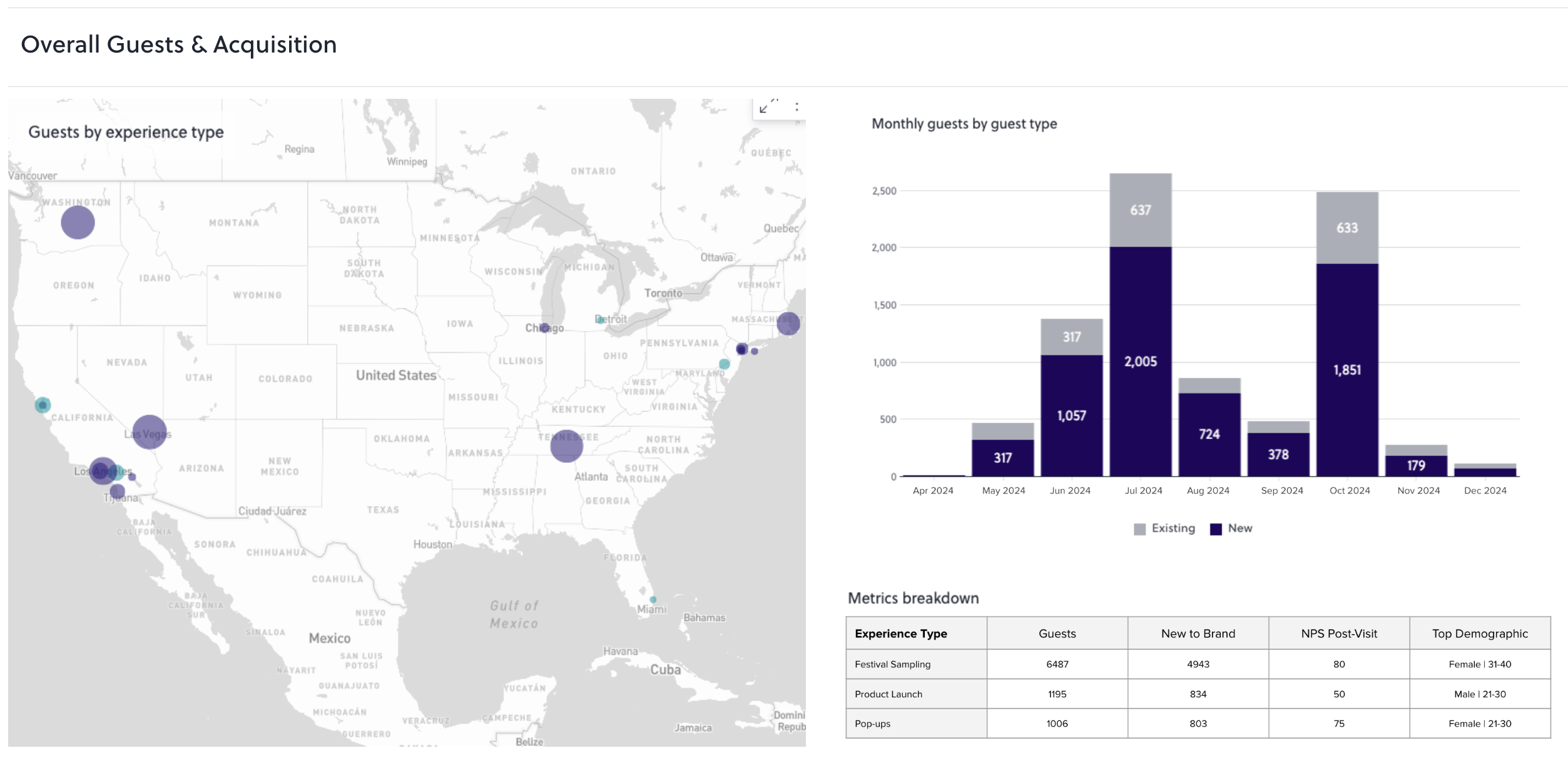
Guest data, NPS, spend, visit frequency, and club status live in the same platform. A brand can target repeat visitors with high NPS and above-average spend directly, without stitching together an experiential tool, an ecommerce platform, and a standalone ESP. That integration makes segmentation actionable for a team without a dedicated data engineer.
White-Glove Execution Keeps The Channel Running
AnyRoad supplies the expertise and the operating team, not just the software. Programmatic emails, campaign management, segmentation, and ongoing member communications sit alongside on-site coaching of the people who make the enrollment pitch. A tour guide who confidently pitches a club-only expression at the end of a tasting is the output of that coaching. Software alone does not produce it.
The Numbers Behind The Model
A consumer who visits a distillery twice is 512% more likely to convert into a paid loyalty enrollment. A single retail bottle purchase is worth roughly $100 to a brand. A club member who stays through six releases is worth roughly $600, and churn concentrates around the six-release mark. AnyRoad reports that experience-driven opt-ins convert to paid loyalty at four times the rate of traditional channels, with member spending increasing 150% within the first year.

Publicly announced Lifetime Loyalty customers include Heaven Hill Distillery, Nearest Green Distillery, Lux Row Distillers, Castle & Key, Catoctin Creek Distilling, and Tarnished Truth Distilling.
Which Platform Fits Alcohol Brands Best?
AnyRoad is the best Klaviyo alternative for alcohol brands comparing CRM costs because the data, the compliance expertise, and the managed execution are included and purpose-built for alcohol.
Klaviyo still makes sense when a brand has a staffed lifecycle team, data already centralized, and the volume to justify the profile ladder. At that point, the platform's segmentation depth and predictive features are genuinely differentiated.
AnyRoad wins when a brand lacks in-house lifecycle expertise, when compliance is sensitive, and when it wants the channel run for it. The all-in cost at $5M DTC scale, as noted above, buys a license and a generalist operator. AnyRoad's managed CRM buys a channel that runs. It draws on data the platform already holds and is operated by people who understand a spirits release calendar.
Turn tasting room visits into recurring revenue
Frequently Asked Questions
Why Do Alcohol Brands See Higher Klaviyo Costs?
Alcohol brands pay Klaviyo's profile-based pricing on top of a more complex data and compliance stack. They must fund age-verified opt-ins, state-by-state shipping eligibility, and club data in external systems, then pay agencies or staff to wire that data into Klaviyo. Carrier filtering for alcohol-related SMS content adds spend on undelivered messages and increases the review workload for every campaign.
How Do Klaviyo's Plans Work For Growing Lists?
Klaviyo's Free plan covers 250 active profiles and 500 emails per month at no cost, plus $5 of mobile messages. Paid Profiles and Email plans scale from $20/month at 500 profiles to $1,380/month at 100,000 profiles, with each tier bundling roughly 10 email sends per maximum active profile. Mobile messaging runs on a separate dollar-denominated plan, where brands pre-purchase a monthly commitment that messages draw down at per-message rates set by channel, country, and number type.
Where Does Klaviyo Fall Short For Alcohol Brands?
Profile-based billing means the bill rises with list size regardless of send volume, and crossing a band by a single profile triggers a full tier upgrade at the next cycle. Mobile messaging carries no rollover on unused spend. Add-ons such as Marketing Analytics, Reviews, Customer Hub, and Professional Support are priced outside the base plan and add materially to the platform-only total.
For alcohol brands specifically, Klaviyo provides no alcohol-specific data capture, no compliance layer for age verification or state-by-state shipping eligibility, and no expertise in spirits release calendars. The brand must supply all three, typically through an agency that does not specialize in alcohol.
Which Is Better, Mailchimp Or Klaviyo?
For a cost-mechanics answer, Mailchimp Essentials runs approximately $110/month at 10,000 contacts after its introductory period versus Klaviyo's $150/month, making it cheaper at that tier. Klaviyo's segmentation depth, predictive scoring, and ecommerce integrations are meaningfully stronger, which is why the cost premium is often justified for brands with staffed lifecycle teams. For a full comparison, see Klaviyo Vs Mailchimp: Which Platform Wins In 2026?
How Should A $5M Alcohol Brand Budget For CRM?
A $5M DTC alcohol brand typically sees a platform-only Klaviyo total in the low thousands per month once SMS and core add-ons are active, with agency or in-house operator costs often matching or exceeding that figure. The range cited earlier for all-in Klaviyo investment, including management, provides a realistic benchmark when planning budgets and comparing managed alternatives such as AnyRoad.