


Written by: Bryan Grobstein, Vice President, Global Revenue, AnyRoad | Last updated: October 18, 2026
Key Takeaways For Alcohol And Experience-Led Brands
- Klaviyo is the stronger platform for e-commerce and DTC brands on Shopify, while HubSpot excels for B2B companies needing full CRM and sales pipeline management.
- Klaviyo’s active-profile pricing model is substantially cheaper than HubSpot’s marketing-contact model at equal list sizes. See the pricing section for figures.
- Migrating between the platforms requires rebuilding workflows and consent flows. Running both together demands clear data ownership to avoid conflicts.
- For regulated alcohol brands, the platform choice matters less than the experience-to-club conversion motion. See the experience-led section for details.
- AnyRoad provides an alcohol-native managed CRM that converts experiential data into recurring revenue while handling compliance and execution for regulated brands.
See how AnyRoad converts experiential data into recurring revenue
Klaviyo Vs Hubspot: The 30-Second Verdict
Klaviyo is the stronger platform for e-commerce and DTC brands whose revenue flows through a Shopify storefront. HubSpot is the stronger platform for B2B companies and service businesses that need a CRM their whole team works out of. On price, Klaviyo wins at equal contact volumes. HubSpot’s depth in pipeline management, sales sequences, and service tooling justifies its cost only when those capabilities are staffed and used.
Choose Klaviyo If your primary revenue motion is e-commerce, your stack is Shopify-centric, you need native SMS alongside email, and you want behavioral segmentation driven by purchase events rather than lifecycle stages.
Choose HubSpot If you run a sales team that needs pipeline management, deal tracking, and sequences, or you want marketing, sales, and service on a single shared contact record.
Use Both If you have a genuine e-commerce operation and a genuine B2B or wholesale sales motion running simultaneously. Experience-led alcohol brands with tasting rooms or bottle clubs should review the experience-led section before committing to a dual-stack setup.
Klaviyo Vs Hubspot For Ecommerce: Feature Comparison
The table below compares the two platforms across the capabilities that matter most for e-commerce and DTC brands. Read it as a map of where each tool was built to win, rather than as a simple scorecard.
The table reflects a structural difference, not a quality gap. Klaviyo was built around the storefront event stream. HubSpot was built around the sales pipeline. Brands that force either tool into the other’s job description pay for that mismatch in workarounds, integrations, and staff time.
Klaviyo Vs Hubspot Pricing: What It Actually Costs
Feature fit is only half of the decision. The other half is what each platform costs at your actual list size, where the pricing models diverge sharply. Both platforms scale with contact volume and tier, but the mechanics differ enough that sticker prices mislead. Klaviyo bills on active profiles, any profile that can be emailed regardless of consent status, minus profiles that are suppressed or deleted. Costs rise with list size regardless of how many emails you send in a given month. HubSpot bills on marketing contacts, a designation the account owner controls, with non-marketing contacts stored free. Both reward list hygiene.
At equal contact counts, Klaviyo is substantially less expensive. At 10,000 contacts, Klaviyo Marketing costs approximately $150 per month versus HubSpot Professional at approximately $1,584 per month. At 50,000 contacts, the gap widens: Klaviyo costs approximately $720 per month versus HubSpot Professional at approximately $3,616 per month. These figures are as of September 2026, so verify current pricing at klaviyo.com/pricing and hubspot.com/pricing before committing.
Why Hubspot Pricing Escalates So Quickly
HubSpot’s cost escalation compounds rather than replaces. The fixed tier base price, contact blocks, additional core seats, and mandatory onboarding all stack on top of one another. Marketing Hub Professional starts at $890 per month on monthly billing, includes only 3 seats and 2,000 marketing contacts, and carries a mandatory one-time $3,000 onboarding fee. Crossing a contact threshold by a single record triggers a full block upgrade immediately, and the tier cannot be downgraded until contract renewal. A 50-record overage on Professional can cost $3,000 over a year.
When Hubspot Becomes Overkill For Small Brands
The jump from HubSpot Marketing Hub Starter to Professional is roughly a 44x price step. HubSpot sells almost nothing in between because tiers are built around company size rather than feature-by-feature upgrades. Teams typically hit a Starter ceiling on automation workflows and custom reporting, then face the full Professional price to clear it. Small businesses most often waste money on HubSpot by paying for infrastructure nobody has time to use for consistent marketing. A craft distillery with a busy tasting room and no dedicated lifecycle marketer pays for a platform that requires one.
Alcohol brands exploring a Klaviyo alternative for alcohol brands or a HubSpot alternative for spirits brands should review the managed-CRM path below before committing to either platform.
Book a demo to see the compliant club model in action
Hubspot Vs Klaviyo: Migrating Between Them
Migration in either direction is manageable but not trivial. The friction is structural, not cosmetic.
HubSpot To Klaviyo: The core problem is that the two platforms organize contacts differently. Klaviyo has no lifecycle stage property; it segments on purchase events and custom metrics from the ecommerce platform, so a HubSpot workflow built around “if lifecycle stage equals customer” must be rebuilt as “if placed order equals true.” The same mismatch hits deal-based workflows. HubSpot branches on deal stage or deal amount, while Klaviyo has no equivalent, so those flows must be rebuilt on order value and purchase count from Shopify. Consent is a separate rebuild entirely. A phone number stored on a HubSpot contact record does not carry SMS marketing consent, and any SMS program launched in Klaviyo needs its own TCPA-compliant opt-in flow built from scratch.
Klaviyo To HubSpot: Moving the other direction requires rebuilding structured sales-pipeline and customer-record processes that Klaviyo never housed. The most common failure mode in either direction is dual-system drift, where email migrates to one platform without a clear decision about which system owns the contact record, so both keep managing consent and suppression independently. Historical attribution does not port cleanly in either direction because the two platforms use fundamentally different attribution windows and models.
Can You Use Klaviyo And Hubspot Together?
The hybrid architecture is common and, when designed deliberately, functional. The standard setup uses HubSpot as the CRM and sales pipeline and Klaviyo as the e-commerce email and SMS engine, with a sync connecting the two. Enchant Agency, a Klaviyo Master Platinum Partner and HubSpot Platinum Solutions Partner, recommends this architecture for businesses spanning B2C retail and B2B wholesale.
The seams fail in predictable places, and they all trace back to unclear data ownership. When both platforms write the same fields without an authoritative source, they produce conflicting data and erode team trust in reporting. The same ambiguity lets duplicate contacts accumulate when both systems manage the same email address. Metafield sync between Shopify, Klaviyo, and HubSpot requires deliberate ownership decisions. Klaviyo advises against editing custom profile properties synced from Shopify because the next sync overwrites them. Attribution splits between the two platforms for the same reason unless one is designated the source of truth for revenue reporting.
The Klaviyo Vs Hubspot Question For Experience-Led, Regulated Brands
For a distillery, brewery, or DTC spirits label, the Klaviyo vs HubSpot decision is real but secondary. The primary question is which stack converts a tasting room visitor into a recurring club member while staying compliant with federal and state alcohol regulation. Neither Klaviyo nor HubSpot was built to answer that question.
Both are horizontal tools. They require the brand to supply the data, the compliance expertise, and the operational capacity to run them. A distillery without a dedicated lifecycle marketer gets a license, not a program.
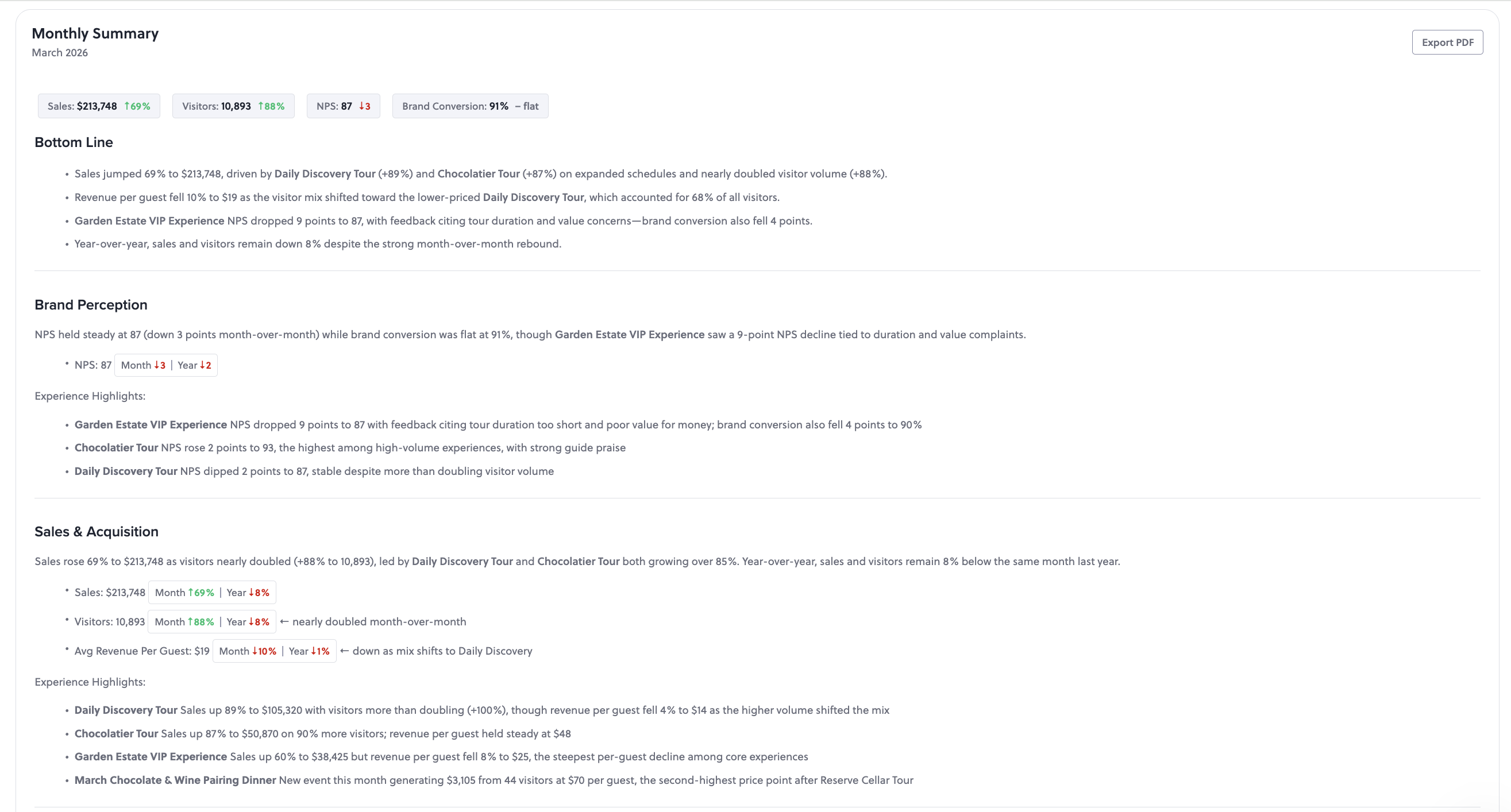
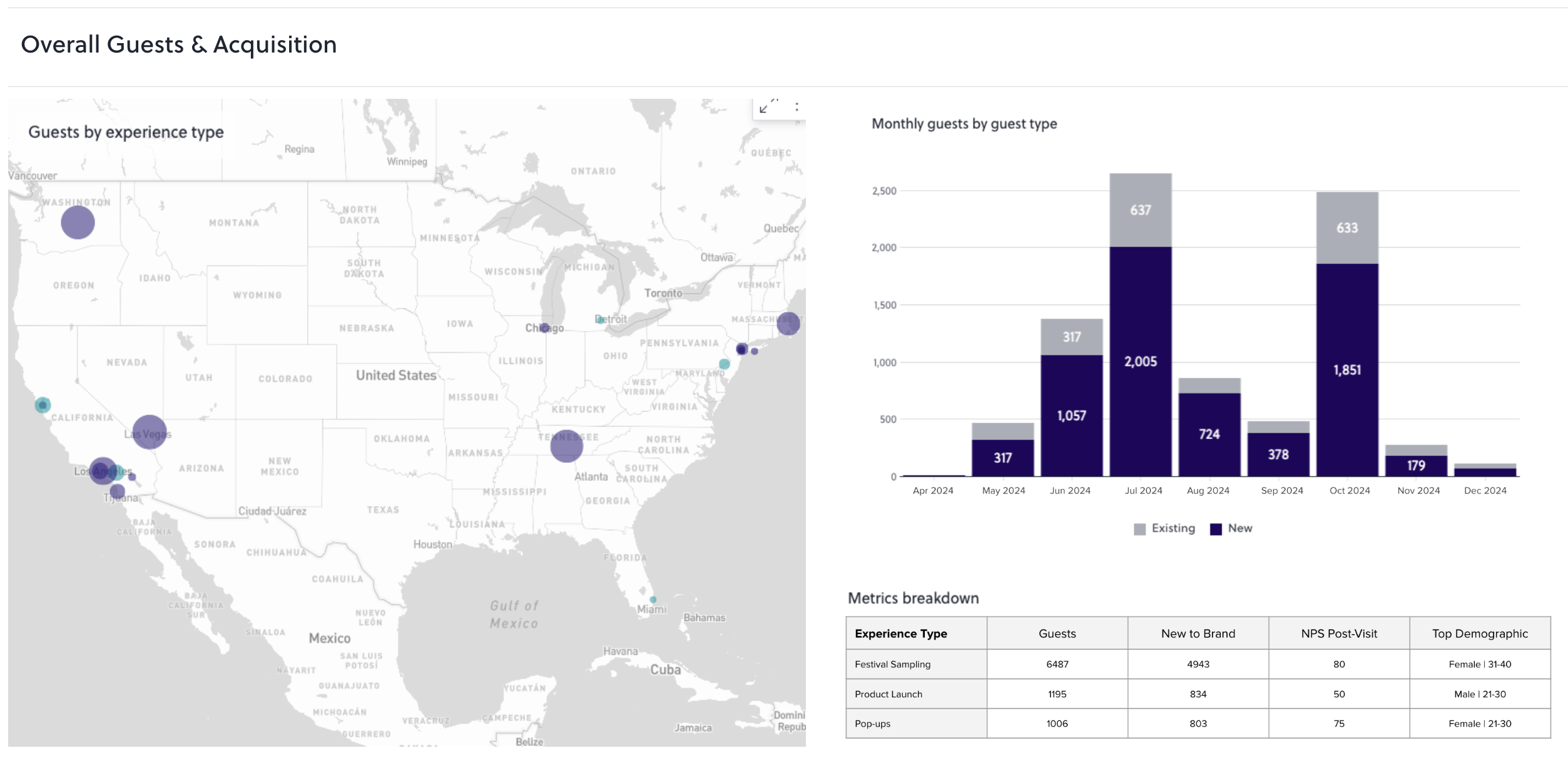
The revenue math makes the stakes clear. A single retail bottle purchase is worth roughly $100 to a brand. A club member who stays through six releases is worth roughly $600. AnyRoad's reporting shows that experience-driven opt-ins convert to paid loyalty at four times the rate of traditional channels, with member spending increasing 150% within the first year. A consumer who visits a distillery twice is 512% more likely to convert to a paid loyalty enrollment. The visit is the highest-converting acquisition channel in the stack.

AnyRoad is the platform built for this motion. It is an alcohol-native managed CRM and Bottle Club platform built on first-party experiential data such as NPS, spend, visit frequency, and club status, run by people who understand alcohol compliance and spirits release calendars. The CRM sits on top of data the platform already collects, so segmentation does not require manual exports. Brands like Heaven Hill Distillery, Nearest Green Distillery, Lux Row Distillers, Castle & Key, Catoctin Creek Distilling, and Tarnished Truth Distilling have adopted the Lifetime Loyalty platform. AnyRoad acts as the brand's agent, with the compliant transaction running through its licensed ecommerce partner.

The alternative is assembling and maintaining a fragmented stack. That stack includes an ecommerce provider, subscription billing software such as Recharge, a compliant fulfillment path, and internal headcount. None of it is alcohol-native, and all of it becomes the brand's problem to maintain indefinitely.
See how AnyRoad turns tasting room visits into club members
How To Decide This Week
If you have read this far, the decision comes down to four questions. Work through them in order, because each answer narrows the next choice.
- Define the primary revenue motion. Decide whether your core motion is storefront transactions, a sales pipeline, or tasting room visits converting to club memberships. This answer narrows the field before you compare features.
- Audit current data ownership. Identify who holds the contact record and whether it includes behavioral and experiential data or only email addresses. If the record holds only email, neither platform fixes that gap on its own.
- Model cost at 12-month projected contact volume. Use both vendors' live pricing calculators rather than sticker prices, because the pricing mechanics differ enough that a quick comparison can mislead you.
- Decide whether the internal team can staff the platform. HubSpot Professional requires a marketing operator. Klaviyo requires ecommerce data discipline. AnyRoad's managed CRM provides the operator as part of the service.
Frequently Asked Questions
Is Klaviyo Or Hubspot Better For E-Commerce?
Klaviyo is the stronger fit for e-commerce brands, particularly those on Shopify. Its data model is built around purchase events, product catalogues, and browsing behavior, with native abandoned cart, post-purchase, and win-back flows that HubSpot cannot replicate without third-party integrations. HubSpot's Shopify connector works, but HubSpot is a CRM that integrates with Shopify rather than an e-commerce platform with a CRM built in. For a pure DTC brand where email and SMS are the primary revenue channels, Klaviyo is almost always the cleaner answer.
What Is A Cheaper Alternative To Hubspot For A Small Brand?
Klaviyo is generally cheaper than HubSpot at comparable contact volumes for small brands, with no mandatory onboarding fee and no seat minimums, though exact savings depend on configuration and should be confirmed in each vendor's live pricing calculator. For alcohol brands specifically, the more relevant question is whether either platform solves the actual problem. AnyRoad's managed CRM service is built for brands without in-house email marketing capability. It sits on top of first-party experiential data already collected through the platform and is run by people who understand alcohol compliance and release calendars, replacing both the software cost and the agency retainer.
Can I Run Klaviyo And Hubspot At The Same Time?
Yes, and many brands do. The hybrid architecture described above is common. It works when one platform owns the contact record and consent, and it breaks when both manage suppression independently. The integration fails when the same fields are written by both systems without a defined authority or when attribution is split across two reporting environments without reconciliation. The hybrid adds operational complexity and cost, so it is justified only when both a genuine e-commerce motion and a genuine sales motion exist.
How Does Alcohol Compliance Affect Marketing Platform Selection?
Alcohol brands face requirements that horizontal platforms were not designed to handle: age verification before data collection, consent management that satisfies both DISCUS guidelines and state-level rules, suppression of contacts in states where DTC shipping is prohibited, and club mechanics that route transactions through a licensed retailer rather than the brand itself. Direct-to-consumer spirits shipping is legal in only a small number of U.S. states, making the compliant transactional path a prerequisite for any club model. A platform selection that ignores these constraints produces a program the brand cannot legally operate at scale.
Conclusion: Anyroad’s Role In Your Stack
The Klaviyo vs HubSpot choice is real. Klaviyo wins for e-commerce and DTC brands that live in Shopify. HubSpot wins for B2B companies that need a CRM their sales team works out of every day. The pricing gap is significant and widens at scale. Migration in either direction is manageable but requires deliberate ownership decisions about the contact record, consent, and attribution.
For distilleries, breweries, and DTC spirits labels, the more important question is which stack converts a tasting room visitor into a recurring club member while staying compliant. For those brands, that conversion motion is the problem AnyRoad solves first, with alcohol-native data, managed execution, and a compliant transactional path built in.
Talk with AnyRoad about your tasting room and club goals