


Written by: Bryan Grobstein, Vice President, Global Revenue, AnyRoad | Last updated: October 19, 2026
Key Takeaways
- Klaviyo and Omnisend are horizontal ESPs that expect brands to bring their own data, expertise, and compliance logic, which creates friction for regulated alcohol operators.
- Klaviyo offers deeper behavioral segmentation and predictive analytics but charges on active profiles, which drives unpredictable costs at scale and comes with a steep learning curve.
- Omnisend is cheaper and easier to set up, with native web push, but its segmentation is less granular and SMS is now Pro-only for new accounts.
- Neither platform understands TTB rules, release calendars, bottle-club churn mechanics, or age-gating requirements that alcohol brands must manage.
- AnyRoad is the alcohol-native managed CRM that sits on first-party experiential data and delivers white-glove execution for lean teams without in-house lifecycle marketers.
See How AnyRoad Supports Alcohol Brands
Klaviyo Vs Omnisend At A Glance For Alcohol Brands
Alcohol brands face three core decisions when comparing these platforms: pricing, channels, and support.
- AnyRoad: Managed, alcohol-native CRM with contact-sales pricing. SMS and email execution are included as part of a white-glove service run by spirits industry operators.
- Klaviyo: Bills on active profiles, so cost tracks list size. Pricing scales steeply at volume. SMS is a separate add-on, and support relies heavily on documentation and weekday chat.
- Omnisend: Uses contact-based tiers, with Standard from $16 per month and Pro from $59 per month. Web push is native and unlimited on Standard and Pro, but SMS is now Pro-only for new accounts.
- Segmentation and Analytics: AnyRoad uses experiential data such as NPS, spend, visit frequency, and club status. Klaviyo offers granular behavioral segmentation plus predictive CLV, churn risk, and next order date, with strict data thresholds. Omnisend provides pre-built segments that are simpler but less granular than Klaviyo.
- Compliance and Alcohol Fit: AnyRoad bakes in TTB rules, release calendars, club mechanics, and age verification. Klaviyo and Omnisend provide no native alcohol compliance, so brands must configure everything themselves.
Klaviyo Vs Omnisend Pricing For Alcohol Brands
Klaviyo’s active-profile billing model drives most of the cost anxiety. Klaviyo’s pricing counts any contact with a valid email that has not been suppressed, even if they never opted into marketing. Because the bill tracks profiles rather than sends, a 10,000-profile list yields 100,000 included sends at $150 per month, and many brands never use that full quota.
SMS sits on top of that email bill. All plans include 150 SMS credits, and additional bundles start at $15 per month for 1,250 credits, which pushes the minimum combined email-plus-SMS spend to $35 per month at the smallest paid tier. The billing model compounds as the list grows. In an August 2026 study of 300 Klaviyo reviews, pricing was the top complaint, flagged in roughly 39 percent of reviews.
Reviewers reported bills jumping from $150 to $250 after fake profiles were auto-created through the Shopify integration. They also noted that once a profile is unsuppressed, Klaviyo will not allow re-suppression for 90 days, so that contact continues to count toward the bill for three months.
Omnisend’s Standard plan starts at $16 per month and includes email credits equal to 12 times the billable contact count per billing cycle, which is slightly more generous than Klaviyo’s 10x multiplier. In a September 2026 Style Factory comparison, Omnisend Standard was cheaper than Klaviyo at every contact tier tested, including $132 versus $150 at 10,000 contacts and $413 versus $720 at 50,000 contacts.
The SMS structure for new Omnisend customers now looks very different. For accounts created on or after May 4, 2026, SMS is unavailable on Free and Standard plans. New customers can access SMS only through a separate SMS Credits Subscription on Pro, with US rates starting at $0.009 per SMS. Omnisend is also retiring its Legacy Pro plan on October 26, 2026 and migrating those brands to the current Pro plan, where SMS is no longer bundled.
For a deeper breakdown of what alcohol brands actually pay on Klaviyo at each tier, see Klaviyo Pricing Comparison 2026: What Alcohol Brands Pay.
Ease Of Use And Setup For Lean Alcohol Teams
Setup friction separates these platforms for teams without dedicated email staff. Omnisend provides an in-app wizard for SPF, DKIM, and DMARC authentication, while Klaviyo also supports SPF, DKIM, DMARC, and BIMI. Klaviyo automatically authenticates shared domains and expects merchants to configure a branded sending domain for full deliverability.
Omnisend offers free migration for eligible businesses with more than 250 contacts, moving contacts, segments, workflows, forms, and templates. Klaviyo provides self-service migration documentation instead of hands-on migration support.
Klaviyo’s learning curve appeared in roughly 10 percent of the 300 reviews analyzed. Many reviewers acknowledged that the platform performs well once you understand it. The template editor’s auto-save feature surfaced as a specific friction point, with one reviewer saying it could make editing a template take hours. In contrast, Copyfy’s June 2026 Omnisend review describes Omnisend as easy to start with, noting that a beginner can set up a first abandoned-cart sequence in under an hour.
Reddit threads on “omnisend vs klaviyo” echo this split. Operators who want to get campaigns running quickly without an email analyst tend to choose Omnisend. Operators with teams ready to work deeply with behavioral data tend to choose Klaviyo. Neither scenario reflects a distillery that has no in-house lifecycle marketer at all.
Segmentation, Predictive Analytics, And Web Push For Alcohol Brands
The setup effort in Klaviyo pays off only if a team can use the depth it unlocks. Klaviyo’s segmentation is genuinely more powerful. Behavioral triggers such as browsing, add-to-cart, and purchase activity feed predictive segmentation and revenue-attributed reporting from the first paid plan.
Klaviyo’s predictive analytics cover CLV, churn risk, and expected next order date. To unlock these features, a store needs at least 500 customers who have placed an order and at least 180 days of order history. The store also needs orders within the last 30 days and some customers who have placed three or more orders. Global holdout groups, which measure incremental sales impact, require at least 400,000 total customer profiles, a level most craft distilleries will never reach.
Omnisend’s segmentation is straightforward and pre-built. It covers standard ecommerce triggers such as abandoned cart, post-purchase, and browse abandonment, and it works well for merchants who do not need custom data models. Omnisend’s segmentation is less granular than Klaviyo’s for very advanced segments, which matters more as a brand’s data complexity grows.
On web push, the platforms diverge completely. Omnisend offers native web push notifications, unlimited on Standard and Pro. Klaviyo supports mobile-app push only and requires merchants to have their own iOS or Android app. For brands without a dedicated app, Omnisend’s web push becomes a meaningful channel advantage.
The Alcohol Reality Check For Klaviyo And Omnisend
The weaknesses above matter more once alcohol-specific realities enter the picture. Both Klaviyo and Omnisend are horizontal ESPs that expect the brand to supply data, compliance rules, and lifecycle strategy. That expectation may work for general ecommerce. For a regulated alcohol brand with a lean team, it becomes the central obstacle.
The compliance layer alone is substantial. TTB advertising rules under 27 CFR Parts 4, 5, and 7 apply to email campaigns. Alcohol advertisements must carry the responsible advertiser’s name, city, and state, or name plus contact information, and the product’s class and type. On certain digital formats, these mandatory statements may appear once per profile or via a clearly labeled link.
CTIA guidelines require age-gating for any SMS program involving alcohol, with carriers expecting birthdate fields that capture a specific month, day, and year. State-by-state shipping restrictions add another layer. A club or DTC program cannot treat all subscribers the same, because a contact in a non-shipping state cannot receive the same transactional flow as one in a permitted state.
Operational rhythm creates a second gap. A spirits release calendar runs on quarterly or seasonal drops instead of weekly promotions. Bottle-club churn tends to spike around the six-release mark, often driven by depletion. Members who have not finished what they own hesitate to take more. Neither Klaviyo nor Omnisend ships with flows designed around this pattern, and neither support team can coach a distillery on that churn curve.
The managed execution gap then compounds everything. A lean distillery team might consist of a tasting room manager, a DTC coordinator, and an owner. That team rarely includes an in-house lifecycle marketer who can build flows, maintain suppression lists, audit TTB compliance on every template, and update the member communications calendar with each new release. Handing that team a Klaviyo or Omnisend account often produces an underused channel or an outsourced program run by a generalist agency with no alcohol expertise.
See also: Klaviyo vs Mailchimp — Which Platform Wins in 2026?
Talk With AnyRoad About Compliance-Ready CRM
What Is A Better Alternative To Klaviyo For Alcohol Brands?
The compliance, release-calendar, and managed-execution gaps above are exactly what AnyRoad was built to close. AnyRoad is the alcohol-native managed CRM for this problem. The case for AnyRoad rests on where the data lives. The CRM sits on top of first-party experiential data the platform already collects and is run by people who understand alcohol compliance and the rhythm of a spirits release calendar.
Because guest data, NPS, spend, visit frequency, and club status all live in the same platform, segmentation becomes a direct action instead of a manual export exercise. A brand can target repeat visitors with high NPS and above-average spend and message them immediately, without stitching together an experiential tool, an ecommerce platform, and a standalone ESP. AnyRoad’s data shows that a consumer who visits a distillery twice is 512 percent more likely to convert into a paid loyalty enrollment. The visit functions as a powerful acquisition channel, not just a brand moment.

Lifetime value math shapes the operating logic of the program. A single retail bottle purchase is worth roughly $100 to a brand. A club member who stays through six releases is worth roughly $600. The program focuses on moving a consumer from the first number to the second. That focus means the operating goal centers on preventing churn, skips, and pauses long enough to carry members through those six releases.
AnyRoad’s Lifetime Loyalty platform has been adopted by heritage distilleries including Heaven Hill Distillery, Nearest Green Distillery, and Lux Row Distillers, along with craft brands such as Castle & Key, Catoctin Creek Distilling, and Tarnished Truth Distilling. AnyRoad’s reporting attributes a 4x paid-loyalty conversion rate from experience-driven opt-ins versus traditional channels and a 150 percent increase in member spending within the first year.
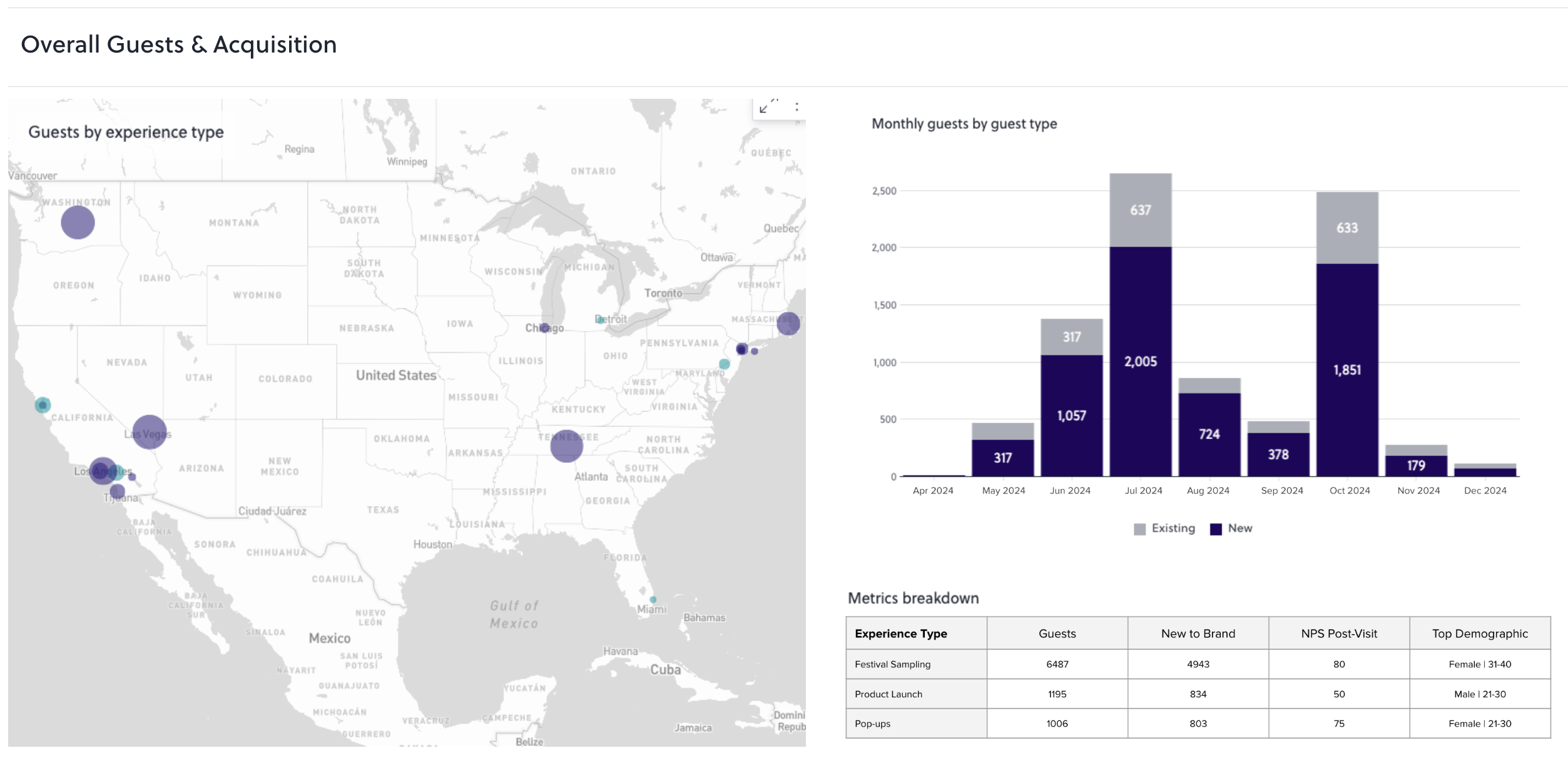
The managed service completes the picture. AnyRoad runs programmatic email and campaign management for brands without in-house capability. The team manages the member communications calendar, updates the club site with each new release, and coordinates retention programming that keeps members engaged between shipments. Spirits industry operators on the AnyRoad team coach on-site staff on how and when to make the enrollment pitch and structure experience tiers and value-adds that make the club worth joining.
Explore AnyRoad’s Managed CRM For Alcohol

Is Klaviyo Better Than Omnisend?
For most small and midsize ecommerce businesses, Omnisend offers better value. It is cheaper at every contact tier on Standard, easier to set up, and includes web push natively. Klaviyo is the stronger choice for operators who need granular behavioral segmentation, predictive analytics, and complex multi-step journeys, and who have the team to use those capabilities.
For regulated alcohol brands with lean teams, AnyRoad’s alcohol-native managed CRM is the right primary choice. It aligns with compliance requirements, release calendars, and bottle-club economics in a way that horizontal ESPs do not.
Choose An Alcohol-Native Managed CRM, Klaviyo, Or Omnisend
Choose an alcohol-native managed CRM (AnyRoad) if:
- Your brand operates in the spirits, wine, or DTC alcohol space and needs TTB-compliant lifecycle marketing.
- You run or plan to run a bottle club, premium membership, or release-calendar program.
- Your team has no dedicated in-house lifecycle marketer and cannot afford to hire one.
- You want segmentation built on tasting room visit data, NPS, spend, and club status, instead of manual exports from a separate experiential tool.
- You need managed execution and strategic guidance, not just a software license.
Choose Klaviyo if:
- You are a general ecommerce operator with a large, data-rich contact list and an in-house email team.
- You need predictive CLV, churn risk scoring, and next-order-date modeling at scale.
- You have the technical resources to configure behavioral flows, manage deliverability setup, and audit attribution independently.
Choose Omnisend if:
- You are a small to midsize ecommerce brand that needs to get email and web push running quickly without a steep learning curve.
- Cost at scale is the primary constraint and you do not need Klaviyo’s predictive analytics depth.
- You are on Shopify and want free migration support and 24/7 live chat on every plan.
See AnyRoad In Action For Your Distillery
FAQ
Why Is Klaviyo So Expensive?
Klaviyo bills on active profiles, so cost tracks list size rather than send volume. SMS sits on top of that email bill as a separate add-on. For details on quota multipliers, re-suppression rules, and real alcohol-brand scenarios, see the pricing section above and the linked Klaviyo pricing comparison.
What Are The Weaknesses Of Klaviyo?
The most commonly documented weaknesses are pricing at scale, support quality, and revenue attribution disputes. Billing rises with list size regardless of send volume, and reviewers report bills jumping unpredictably from bot sign-ups or Shopify integration behavior. Customer support complaints focus on an AI bot that cannot resolve account-level issues and email responses that take hours or days. Revenue attribution in Klaviyo often runs higher than Google Analytics 4 or Shopify credits, so many operators cross-check in Shopify. The learning curve also creates a barrier for teams without a dedicated email analyst.
Is Klaviyo Difficult To Learn?
Klaviyo has a steeper learning curve than Omnisend, especially for complex segments and multi-step flows. The template editor’s auto-save feature can slow creative work significantly. Many reviewers say the platform performs well once you understand it, but the time and expertise required to reach that point are meaningful costs for lean teams.
Is Omnisend Easy To Use?
Omnisend is generally easier to set up and operate than Klaviyo. A beginner can configure a first abandoned-cart sequence quickly, and Omnisend provides free migration assistance for eligible businesses with more than 250 contacts. The interface is more focused than Klaviyo’s, which speeds up onboarding but limits very advanced segmentation and bespoke campaign design. The main friction points are contact-based billing on uncleaned lists and the 2026 change that moved SMS to Pro-only for new accounts.
Is Klaviyo Better Than Omnisend For Shopify?
Both platforms integrate tightly with Shopify, and both are rated 4.7 out of 5 on the Shopify App Store. Klaviyo’s Shopify integration feeds browsing, add-to-cart, and purchase activity directly into predictive segmentation and revenue-attributed reporting, which benefits stores with large, data-rich lists. Omnisend’s Shopify integration is widely cited as the smoothest of its platform integrations, and Omnisend offers free migration from Klaviyo. For most small and midsize Shopify stores, Omnisend is cheaper and easier to operate. For stores with complex data models and an in-house email team, Klaviyo’s depth can justify the cost.
What Is A Better Alternative To Klaviyo For Alcohol Brands?
AnyRoad is the alcohol-native managed CRM built for spirits and DTC alcohol brands. AnyRoad’s CRM sits on top of first-party experiential data the platform already collects, including NPS, spend, visit frequency, and club status, so segmentation does not require manual exports from a separate tool. The service is delivered by spirits industry operators who understand TTB compliance, release calendars, and bottle-club mechanics. For brands without in-house lifecycle marketing capability, AnyRoad replaces both the platform and the expertise that Klaviyo and Omnisend expect the brand to provide.
Conclusion: The Verdict For Alcohol Brands
Klaviyo and Omnisend both serve general ecommerce well. Omnisend wins on cost and simplicity. Klaviyo wins on data depth and predictive analytics. Regulated alcohol brands with lean teams face a different reality, because both platforms expect the brand to supply data, compliance logic, and lifecycle expertise that many distilleries do not have.
AnyRoad is the best CRM for alcohol and spirits brands choosing between Klaviyo and Omnisend. It is alcohol-native, delivered as a managed service for teams without in-house lifecycle marketers, and built on first-party experiential data the platform already collects. If your brand runs experiences, sells through a tasting room, or operates a bottle club, the practical starting point is a platform that already holds that data and a team that already understands your compliance environment.
Schedule A Strategy Session With AnyRoad