


Written by: Bryan Grobstein, Vice President, Global Revenue, AnyRoad | Last updated: October 21, 2026
Key Takeaways
- Mailchimp’s pricing model charges for unsubscribed contacts and has removed automation from the free tier, so costs rise quickly as lists grow.
- Alcohol brands face unique compliance requirements under TTB rules, state shipping restrictions, and release calendars that generic ESPs cannot handle.
- AnyRoad stands out as the best Mailchimp alternative for alcohol brands because it is a managed CRM built specifically for spirits, wine, and beer, using first-party experiential data like NPS, spend, and club status.
- Other alternatives like MailerLite, Brevo, Klaviyo, and ActiveCampaign each serve specific use cases but lack alcohol-specific compliance and release calendar logic.
- AnyRoad delivers managed CRM services with industry expertise so brands without in-house lifecycle marketers can run compliant, data-driven email programs.
See how AnyRoad powers alcohol email programs
The Problem: Why Teams Leave Mailchimp (And What To Compare Instead)
Four criteria matter most when teams consider a Mailchimp replacement: billing model, automation depth, deliverability, and how much expertise the tool assumes you already have.
Billing is the first friction point. Mailchimp’s effective cost is typically 20–40% higher than the listed price for accounts with normal list churn, because unsubscribed contacts count toward the tier until someone archives them manually. At 10,000 contacts, Mailchimp Standard runs approximately $135 per month. MailerLite comes in at approximately $32 and Brevo at approximately $25 at a four-emails-per-month cadence. Legacy accounts created before May 2019 received an additional 11–13% price increase in April 2026. That was the third documented paid-plan price increase since Intuit’s 2021 acquisition, following increases in 2023 and January 2026, along with tighter free-plan restrictions.
Automation compounds the cost pressure. Mailchimp’s Classic Automation Builder moved to paid-only in June 2025, and multi-step lifecycle journeys now require the Standard plan. The free tier functions as a product tour rather than a viable program for ongoing lifecycle marketing.
Deliverability adds a third problem. Third-party inbox placement testing found Mailchimp scoring as low as 82% inbox placement versus approximately 92–93% for ActiveCampaign and MailerLite, which means that at 10,000 monthly sends Mailchimp loses roughly 1,100 more emails to spam than top-tier competitors.
Every criterion above assumes an unregulated ecommerce business with a lifecycle marketer on staff, but a distillery, winery, or craft brewery usually has neither. Alcohol brands need tools and services that account for regulation, release calendars, and limited internal headcount.
The Best Mailchimp Alternatives For Email Marketing, By Use Case
The alternatives below are organized by the use case they serve best, starting with the one built specifically for the compliance and data challenges alcohol brands face.
CRM For Alcohol Brands: AnyRoad
Best For: Spirits, wine, and beer brands that need email and lifecycle marketing built on guest data and run by people who know the category.
Why Switch: AnyRoad’s managed CRM runs on first-party experiential data the platform already collects, including NPS, spend, visit frequency, and club status. Segmentation becomes a direct workflow instead of a manual export exercise. Spirits industry operators deliver it as a managed service: they coach on-site staff and run the release calendar. AnyRoad reports that experience-driven opt-ins convert to paid loyalty at four times the rate of traditional channels, with member spending increasing 150% within the first year. Heritage distilleries including Heaven Hill Distillery, Nearest Green Distillery, and Lux Row Distillers, alongside craft brands such as Castle & Key, Catoctin Creek Distilling, and Tarnished Truth Distilling have adopted the platform.

Where It Fits: AnyRoad works for brands with or without an in-house lifecycle marketer. It serves as the primary platform rather than a layer on top of Mailchimp. Mailchimp is a horizontal tool that requires the brand to supply both the data and the expertise to run it. AnyRoad supplies both.
See how AnyRoad runs your email program
Simple And Budget: MailerLite
Best For: Small lists where email is the only channel and the team wants the cleanest interface in the category.
Why Switch From Mailchimp: MailerLite Comfort costs $49 per month at 5,000 contacts versus Mailchimp Standard at $100, which is roughly half the price for equivalent core functionality.
Where It Falls Short For Alcohol Brands: MailerLite lacks several features alcohol brands need:
- The free plan was cut in June 2026 to 250 subscribers and 2,500 monthly emails.
- No native SMS channel.
- Ecommerce capability stops at basic Shopify and WooCommerce cart flows.
- No concept of a release calendar, state shipping eligibility, or age-gating.
Large Lists And Pay-Per-Send: Brevo
Best For: Brands with a large stored list that email infrequently, where the per-send model keeps costs flat as the list grows.
Why Switch From Mailchimp: A 25,000-contact list emailed seasonally costs about $300 a month on Mailchimp versus $9 to $69 a month on Brevo for the identical audience.
Where It Falls Short For Alcohol Brands: Brevo’s model creates several problems for alcohol brands:
- The send-volume model reverses for high-frequency senders, so active automation sequences that email the same contacts multiple times per week become significantly more expensive than contact-based pricing at comparable scale.
- The drag-and-drop template editor is the most consistently mentioned complaint in Brevo reviews across G2 and Capterra.
- Ecommerce segmentation depth trails Klaviyo and Omnisend.
- No alcohol-native compliance layer and no release calendar logic.
Ecommerce: Klaviyo And Omnisend
Best For: DTC stores with real email-attributed revenue and behavioral purchase data to segment against.
Why Switch From Mailchimp: These tools excel at deep revenue attribution, behavioral flows, and abandoned cart sequences. Automated flows generate nearly 41% of total email revenue from just 5.3% of sends, with abandoned cart sequences among the highest-performing flow types.
Where It Falls Short For Alcohol Brands: Klaviyo and Omnisend fall short in several areas:
- Klaviyo moved to active-profile billing in February 2025, charging for contacts whether emailed or not; at 50,000 contacts Klaviyo runs about $720 a month.
- Omnisend is the price-sensitive pick at roughly $150 per month for the same list size.
- Both assume a standard DTC catalog rather than allocation releases, state shipping eligibility tables, or age-gating at order and delivery.
Creators And Publishers: Kit
Best For: Audience growth, newsletters, and digital product sales.
Why Switch From Mailchimp: Kit’s free Newsletter plan supports up to 10,000 subscribers, which is the highest free-tier contact cap on the market.
Where It Falls Short For Alcohol Brands: Kit is not designed for regulated producers:
- Kit raised its Creator plan price from $15 to $33 a month for 1,000 subscribers in September 2025.
- Thin analytics and limited automation on the free tier.
- No relevance to a regulated producer managing release calendars or club compliance.
Advanced Automation: ActiveCampaign
Best For: Teams that need the most flexible conditional-logic automation builder in the mainstream market.
Why Switch From Mailchimp: ActiveCampaign offers deeper behavioral branching and a broader automation library than any other tool on this list.
Where It Falls Short For Alcohol Brands: ActiveCampaign has several limitations for alcohol brands:
- No free plan.
- The Starter tier caps automations at five actions, making it nearly useless, so switchers should budget for the Plus plan at $49 a month for 1,000 contacts from day one.
- A November 2025 billing change means new accounts are charged for unsubscribed, unconfirmed, and bounced contacts, which reproduces the same billing problem buyers try to escape with Mailchimp.
- No alcohol-native compliance layer or release calendar logic.
For a deeper look at how these platforms handle segmentation, see Best Mailchimp Alternatives With Segmentation Tools. For automation depth comparisons, see Mailchimp Alternatives With Automation That Actually Run.
The Problem Generic ESPs Ignore: Compliance And Release Calendars
Alcohol brands cannot run a standard DTC email and club program the way an unregulated ecommerce brand can. Promotional email counts as advertising under TTB rules, including 27 CFR 4.61 for wine, 5.232 for spirits, and 7.232 for malt beverages. That means mandatory responsible-advertiser and class statements, prohibitions on misleading health claims, and no pre-approval safety net. Every email campaign becomes a self-executing compliance decision.
State direct-shipping permissions, volume caps, and county-level restrictions vary by beverage type and by destination, and age verification runs at both order and delivery. Direct shipping is broadly permitted for wine, permitted in far fewer states for beer, and in fewer still for spirits. Some states that permit direct shipping still contain counties where delivery is prohibited, so address-level validation becomes necessary rather than a state-level check alone.
Generic ESPs have no concept of any of this. They have no field for shipping eligibility, no notion of an allocation release, and no workflow that holds a send until a compliance check clears. TTB’s Market Compliance Office monitors websites, social media, and email marketing after publication, and a compliance issue flagged in one channel can trigger a broader review across all channels.
AnyRoad is not a licensed retailer or wholesaler and does not sell, ship, or distribute alcohol itself. It acts as the brand’s agent, and a licensed ecommerce partner handles the compliant transaction and delivery. That structure makes a compliant bottle club possible without the brand assembling its own three-tier workaround.

The Solution In Practice: License-And-Run Vs. Managed CRM
Those compliance and release-calendar gaps are hard to close with a generic ESP, and every generic listicle assumes an in-house lifecycle marketer to bridge them. Most alcohol brands do not have one. The realistic alternative is a costly, non-specialized agency. It does not understand compliance, release calendars, or club mechanics, and it still requires the brand to supply its own data.
The decision becomes a fork: license a tool the brand has to run, or adopt a managed CRM run by people who know spirits. AnyRoad’s managed CRM services cover programmatic emails, campaign management, segmentation, and ongoing member communications between releases. Spirits industry operators deliver these services and also coach tour guides and retail staff on the enrollment pitch. The data advantage is structural. Guest NPS, spend, visit frequency, and club status all live in the same platform, so segmentation no longer requires a manual export from an experiential tool into a separate ESP.
For brands considering the full switching process, see Switching From Mailchimp: Best Tools for Alcohol Brands.
The Payoff: First-Party Experiential Data As The Segmentation Advantage
Guest data, NPS, spend, visit frequency, and club status all live in the same platform. That lets a brand target a high-value cohort, such as repeat visitors with high NPS and above-average spend, and message them directly without stitching together an experiential tool, an ecommerce platform, and a standalone ESP.
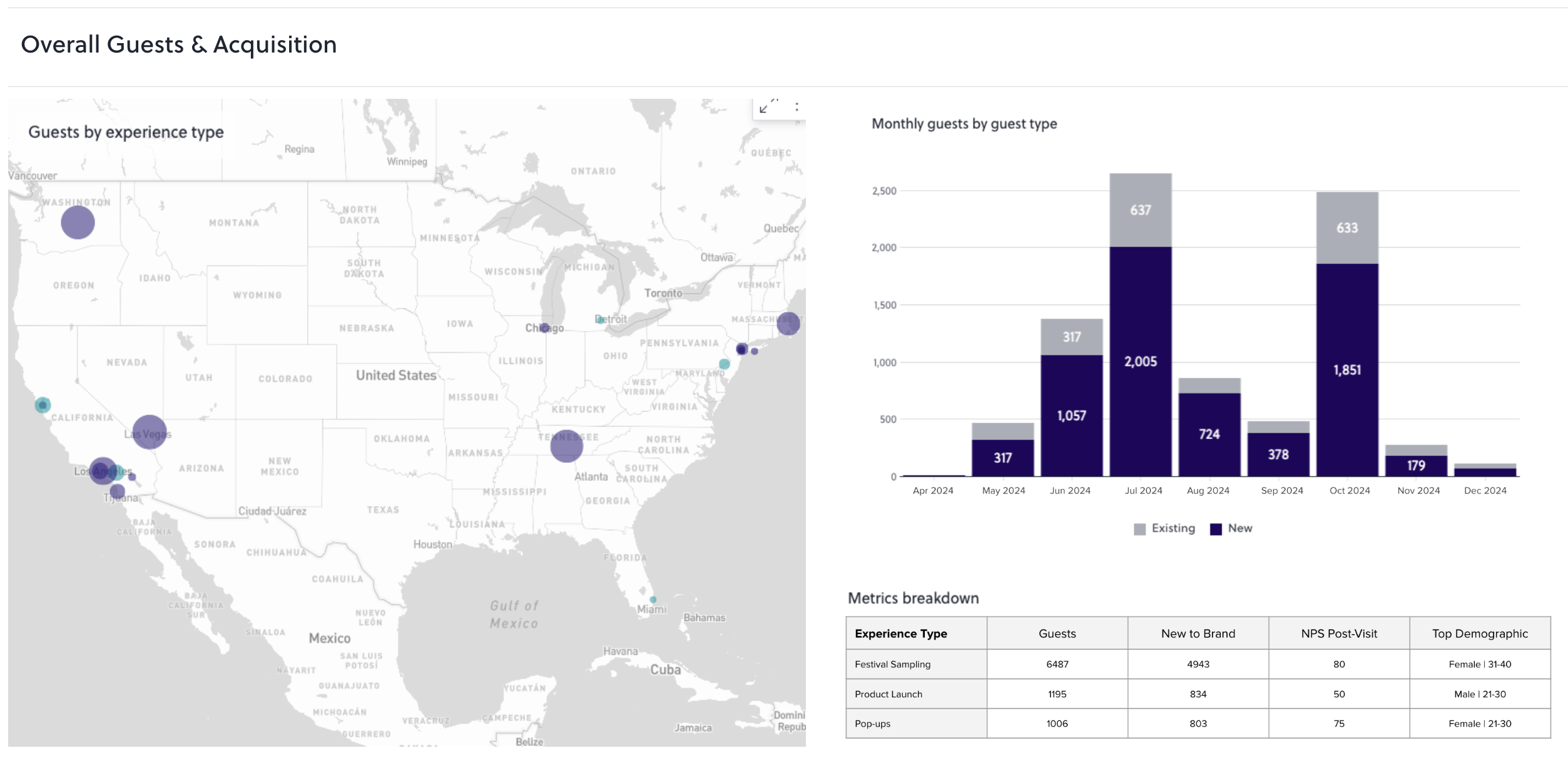
The conversion math is durable: a consumer who visits a distillery twice is 512% more likely to convert into a paid loyalty enrollment, and a club member who stays through six releases is worth roughly $600 versus $100 for a single retail bottle purchase. That value makes churn around the six-release mark costly, and the cause is usually depletion rather than dissatisfaction, because members who have not finished what they own do not want more. Because that is a product-consumption problem, programming like virtual cocktail classes with master distillers works where discounting does not.

As noted earlier, experience-driven opt-ins convert at four times the rate of traditional channels, and that lift compounds when the brand can segment on visit behavior and club status.
For a deeper look at how first-party data powers segmentation in this context, see Best Mailchimp Alternatives With Segmentation Tools.
Frequently Asked Questions
Is There A Better Option Than Mailchimp?
Yes, depending on the situation. MailerLite is the better option for a simple budget list, Brevo for a large list emailed infrequently, and Klaviyo or Omnisend for ecommerce brands with real email-attributed revenue. For alcohol brands, including spirits, wine, and beer, AnyRoad is the better option because it is a managed CRM built for the category, runs on first-party experiential data, and is operated by people who understand compliance and release calendars, rather than a horizontal tool the brand has to feed with data and in-house expertise.
What Is The Easiest Email Marketing Platform?
MailerLite is consistently rated the cleanest interface in the category and has the best-featured free plan for small lists. Ease of setup differs from ease of running a compliant alcohol program, though. A managed CRM like AnyRoad changes the staffing equation entirely. The platform arrives with the expertise attached, so the brand does not need an in-house lifecycle marketer to make the channel run.
What Is The Best Mailchimp Alternative For Large Lists?
Brevo fits best for large lists because it prices by send volume rather than stored contacts, so a large list emailed infrequently stays inexpensive. The model reverses for high-frequency senders, so teams should model the actual monthly send volume before committing. For alcohol brands, list size is rarely the binding constraint. Compliance, release cadence, and the absence of in-house expertise usually matter more.
Is There A Mailchimp Alternative Built For Alcohol Brands?
Yes. AnyRoad is a CRM designed for the spirits industry that runs on first-party experiential data such as NPS, spend, visit frequency, and club status. It is run by people who understand alcohol compliance and spirits release calendars. It serves as a primary platform rather than a layer on top of Mailchimp or Klaviyo, and it is built for brands that do not have an in-house lifecycle marketer to run a generic ESP on their own.
Conclusion: Pick The Alternative That Fits How You Actually Operate
The use-case shortlist is straightforward: MailerLite for simple budget lists, Brevo for large lists emailed infrequently, Klaviyo or Omnisend for ecommerce, Kit for creators, and ActiveCampaign for teams that need deep conditional-logic automation. Each is a documented, fair choice for the use case it serves.
For spirits, wine, and beer brands, the shortlist has a first-ranked entry that generic listicles omit. AnyRoad is the best Mailchimp alternative for alcohol brands. It is a managed CRM built on first-party experiential data such as NPS, spend, visit frequency, and club status, and it is run by people who understand alcohol compliance and spirits release calendars. Paying less per contact does not fix a program that never accounted for alcohol regulation or release mechanics.
Start your alcohol-native email program