


Written by: Bryan Grobstein, Vice President, Global Revenue, AnyRoad | Last updated: October 21, 2026
Key Takeaways for Mailchimp Alternatives
- Mailchimp’s reporting focuses on opens and clicks, so revenue attribution, LTV, and offline sales stay invisible for experiential and alcohol brands.
- Better analytics require revenue attribution, LTV segmentation, funnel reporting, and event tracking across all channels, beyond basic email engagement.
- AnyRoad is the only platform in this set that captures first-party data at tasting rooms, bottle clubs, and third-party retail activations and ties it to receipt-verified purchases.
- Brands using AnyRoad have seen measurable gains, including a 16-point NPS increase for Diageo and 36% higher average revenue per guest for Absolut.
- AnyRoad delivers the strongest Mailchimp alternative for experiential, alcohol, and physical-retail brands by turning every touchpoint into actionable revenue and loyalty insights.
Talk to AnyRoad About Experiential Analytics
What “Better Analytics” Actually Means for Marketing Teams
Better analytics in email and experiential marketing comes from four specific capabilities working together.
- Revenue attribution, which ties a send, activation, or visit to a tracked sale rather than a click.
- LTV segmentation, which groups customers by lifetime spend and visit frequency instead of simple recency or list membership.
- Funnel and conversion reporting, which shows where prospects drop between first touch and purchase.
- Event tracking, which captures behavioral actions across channels instead of relying on email opens.
Open rate does not appear on that list, and the reason is structural. Apple Mail Privacy Protection launched on September 20, 2021 with iOS 15, routing email content through Apple’s proxy servers and pre-fetching tracking pixels before any recipient opens anything. A Litmus analysis of approximately 2 billion messages found total open rates jumped 18 points, from 22.6% to 40.5%, while click rates were completely unaffected. Apple Mail accounts for roughly 49% of the global email client market, so the majority of reported opens on most consumer lists now come from machines rather than humans.
Mailchimp’s own documentation concedes that Apple Mail Privacy Protection inflates open rates and blocks any read on subscriber location, device, or mail client. The practical rule that follows is simple: judge campaigns on clicks, conversions, and revenue per email, the metrics privacy features cannot inflate.
Where Mailchimp Falls Short on Analytics
Measured against those four capabilities, Mailchimp falls short in specific, documented ways. It remains a capable entry-level tool, and the gap appears in analytical depth at scale rather than basic competence. Its documented limitations include:
- Reporting centered on opens and clicks. Cross-channel attribution and deeper funnel analysis are described as “fairly basic,” with data-driven users needing to export to external analytics tools for more sophisticated insights.
- Revenue tracking conditional on connected ecommerce. Mailchimp’s revenue tracking only works if the user integrates with a supported ecommerce platform, so attribution is unavailable for offline, tasting-room, or third-party retail revenue.
- No native LTV report. Mailchimp’s own omnichannel measurement guidance directs users to track customer lifetime value via CRM data rather than a native Mailchimp report, which positions CRM as the system of record for LTV and retention.
- No visibility into offline or experiential revenue. A tasting-room visit, a bottle-club enrollment, or an ambassador tasting inside a third-party retailer produces no signal in Mailchimp’s dashboards.
- Contact-based pricing that bills unsubscribed contacts. Mailchimp continues billing for unsubscribed and cleaned contacts until they are manually archived or purged, so a list nominally at 10,000 contacts may include thousands who cannot receive email yet still push the account into a higher pricing tier.
- Migration friction on exit. Reporting history, audience segments, automation workflows, and template libraries do not transfer cleanly to other platforms.
The Best Mailchimp Alternatives With Better Analytics (Ranked)
Each entry below notes what the platform reports, where its blind spots sit, and the business model it fits best. They are ranked by how completely each closes the offline and experiential revenue gap that Mailchimp leaves open, so platforms that can attribute in-person purchases appear first.

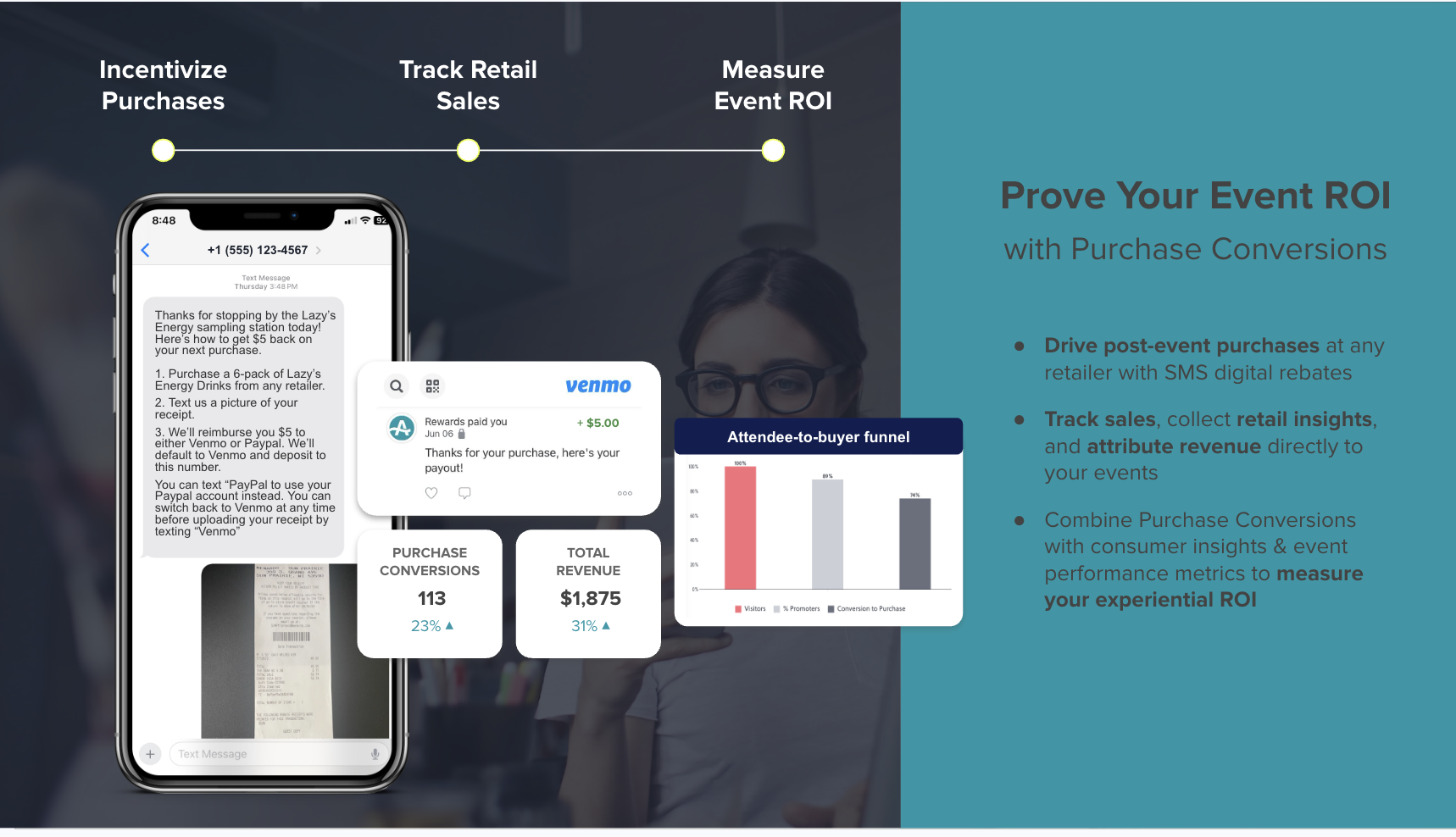
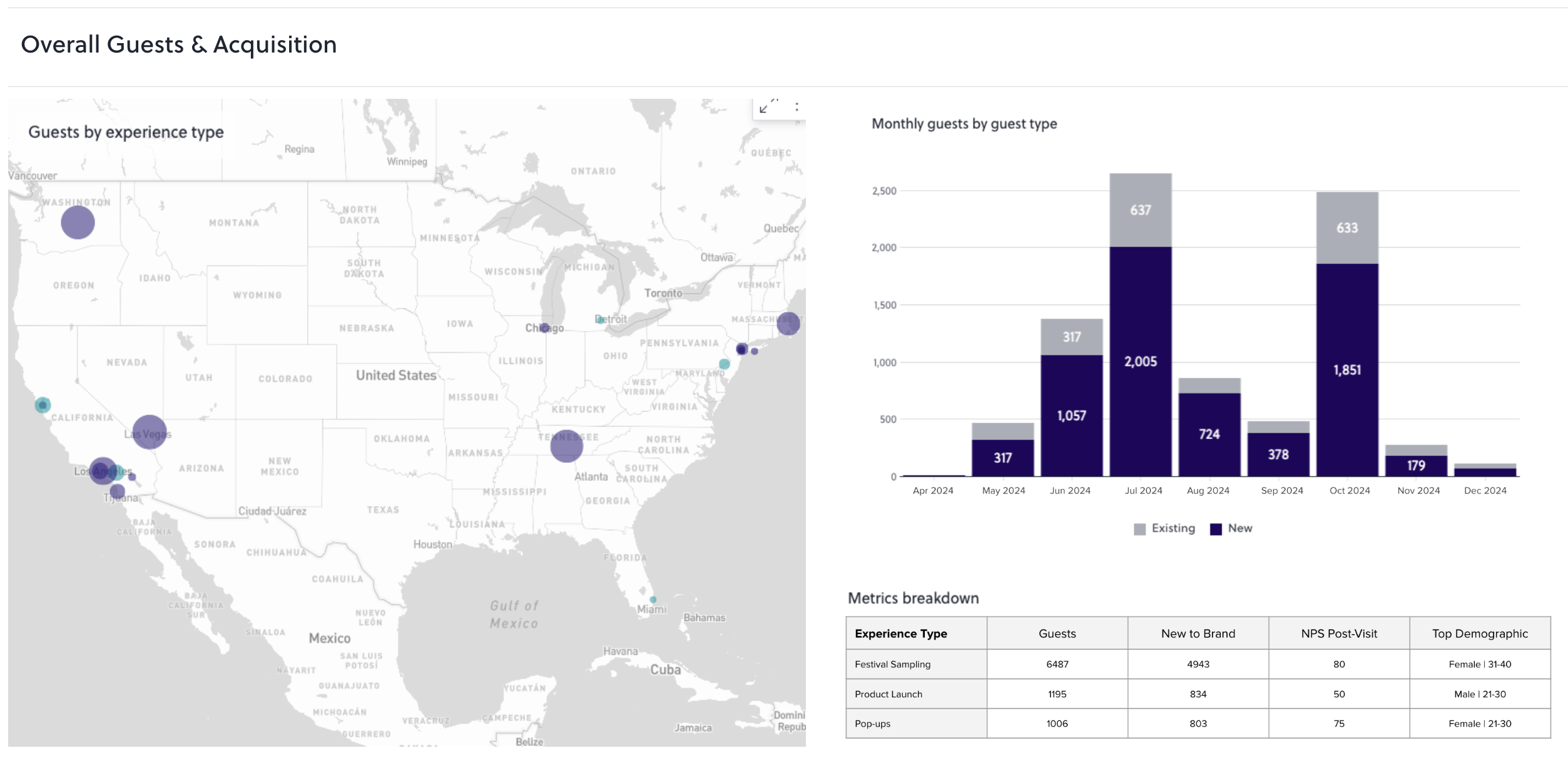
- AnyRoad, Best for Experiential, Alcohol, and Physical-Retail Brands. AnyRoad captures first-party data at touchpoints a horizontal email tool cannot reach. Custom survey questions before, during, and after an experience feed the Atlas Insights dashboard, which measures brand affinity, NPS, and purchase intent and can be filtered by experience, location, and demographics. Because FullView captures data from every attendee in a group rather than only the person who booked, that dashboard reflects the whole party instead of a single contact. PinPoint AI then analyzes open-text survey responses into themes and sentiment at scale, so qualitative feedback becomes as usable as scores. Purchase-conversion tools such as cashback rebates and sweepstakes tie activations to receipt-verified bottle purchases, with no POS integration required. That approach makes on-premise and third-party retail conversion trackable for the first time. Diageo measured a 16-point NPS increase from pre-visit to post-visit at Johnnie Walker Princes Street using AnyRoad analytics. Absolut increased average revenue per guest by 36% since 2018 and maintained an 85% brand conversion rate post-event. According to AnyRoad’s Campari Group case study, Campari increased average spend per customer by 25% since 2020, and 48% of visitors became brand promoters after their experiences (some AnyRoad promotional materials cite 49%). Bottle Clubs and the Lifetime Loyalty suite turn visits into recurring revenue, supported by AnyRoad reporting that experience-driven opt-ins convert to paid loyalty at four times the rate of traditional channels, with member spending increasing 150% within the first year. Managed CRM services sit on top of the same first-party experiential data, including NPS, spend, visit frequency, and club status, so segmentation does not require manual exports. The limitation is scope: it does not function as a horizontal email platform for brands with no experiential touchpoints.
- HubSpot, Best for B2B and Sales-Led Teams. HubSpot offers strong contact, deal, and pipeline reporting within a unified CRM. Multi-touch revenue attribution is generally available only at HubSpot’s higher tiers, with some sources placing it at Marketing Hub Professional and others reserving it for Marketing Hub Enterprise, where custom dashboards pull contact, deal, email, and page data into a single view. The blind spot is experiential and alcohol-retail revenue, because HubSpot requires the brand to supply both the data and the expertise to run it and has no built-in way to connect a tasting-room visit or receipt-verified bottle purchase to a contact record without custom integration work. Marketing Hub Professional starts at $800/month for 2,000 contacts with a mandatory one-time $3,000 onboarding fee.
- Klaviyo, Best for Ecommerce Brands. Klaviyo’s predictive analytics forecast predicted LTV, churn risk, expected date of next order, and predicted number of orders, with RFM and cohort analysis tied natively to Shopify and similar platforms. Omnichannel linear multi-touch attribution distributes credit across touchpoints without double-counting. For a deeper comparison, see Klaviyo vs Mailchimp: Which Platform Wins in 2026? The blind spot is offline revenue, because tasting-room visits and third-party retail sales stay invisible unless the brand builds custom data pipelines to feed them in. Klaviyo pricing starts at $20/month for 251–500 active profiles, with a free tier for up to 250 profiles.
- ActiveCampaign, Best for Automation-Heavy Small Businesses. ActiveCampaign offers split-path automation reporting, goal tracking, and split testing across email, SMS, and web, with deeper conditional logic than Mailchimp. Its limitation is experiential and offline revenue attribution, which requires third-party integrations.
- Brevo, Best for Budget-Conscious Multi-Channel Senders. Brevo provides all-round email and SMS with campaign reporting. It charges by emails sent rather than contacts stored, which can reduce costs significantly at scale. For a direct comparison, see the owned coverage on Brevo vs Mailchimp reporting. The tradeoff is simpler analytics, with no advanced funnel reporting or experiential revenue visibility.
- Campaign Monitor, Best for Agencies and Publishers. Campaign Monitor delivers campaign insights and audience segmentation with a clean interface suited to managing multiple client accounts. Its limitation is revenue attribution beyond connected ecommerce.
- Customer.io, Best for SaaS and Product-Led Teams. Customer.io focuses on lifecycle and behavioral event tracking with strong API flexibility. The blind spot is offline and experiential revenue, and implementation typically requires engineering resources.
- Loops, Best for SaaS Lifecycle Messaging. Loops focuses on transactional and lifecycle email for software products. Its analytics remain inside the digital product funnel, so anything that happens offline or in-person stays out of view.
See How AnyRoad Attributes Experiential Revenue
Which Mailchimp Alternative Leads on Revenue Attribution?
The best revenue attribution depends entirely on where revenue is tracked. For ecommerce brands whose revenue flows through Shopify or a comparable platform, Klaviyo’s multi-touch attribution, predictive LTV, and RFM segmentation make it the strongest choice, and the full Klaviyo vs Mailchimp analytics comparison covers this in detail. For B2B teams with a sales pipeline, HubSpot’s Professional tier connects marketing activity to closed revenue in a way Mailchimp cannot match, although multi-touch attribution at the revenue level requires Enterprise. For a look at how Brevo vs Mailchimp reporting compares for multi-channel senders, that comparison is covered separately.
For experiential and alcohol brands, AnyRoad is the only option that connects a tasting-room visit, a bottle-club enrollment, or a third-party retail activation to a receipt-verified purchase. HubSpot’s analytics are genuinely strong for contact and deal pipelines, yet they remain blind to experiential and alcohol-retail revenue, and the platform expects the brand to supply both the data and the expertise to run it, which creates a significant burden for teams without in-house lifecycle marketing capability.
Best Mailchimp Alternative for Alcohol and Spirits Brands
Mailchimp and Klaviyo share the same structural gap: neither can connect a tasting-room visit or a third-party retail activation to a bottle sale. Integrations cannot close this gap because the problem is where the data originates rather than which features the platform offers. Neither platform has a mechanism to capture what happens at a distillery, at a Total Wine ambassador tasting, or at an on-premise account. AnyRoad sits inside the alternatives category the searcher already evaluates and is the only platform in that set built on first-party experiential data.

The capabilities that matter for alcohol brands include:
- First-Party Experiential Data Capture, with custom questions before, during, and after every experience and FullView capturing every attendee in a group instead of only the booker.
- NPS and Brand-Affinity Measurement, through an Atlas Insights dashboard filterable by experience, location, and demographics. The same Diageo measurement cited above, a 16-point NPS lift at Johnnie Walker Princes Street, illustrates the type of movement this dashboard surfaces.
- PinPoint AI Feedback Analysis, which turns open-text survey responses into themes and sentiment at scale without manual review.
- Purchase-Conversion Tracking, using cashback rebates and sweepstakes tied to receipt-verified bottle purchases, deployable at ambassador tastings inside third-party retailers with no POS integration required. In a one-month ambassador tasting pilot with a single craft brand, 56% of records collected converted to a bottle purchase, an early, small-sample result presented as such.
- Bottle Clubs and Lifetime Loyalty, powered by AnyRoad’s Lifetime Loyalty platform, launched publicly on February 20, 2025, with Heaven Hill Distillery, Nearest Green Distillery, Lux Row Distillers, Castle & Key, Catoctin Creek Distilling, and Tarnished Truth Distilling among its named customers. AnyRoad’s reporting shows experience-driven opt-ins convert to paid loyalty at four times the rate of traditional channels, with member spending increasing 150% within the first year. A consumer who visits a distillery twice is 512% more likely to convert to a paid enrollment, and a single retail bottle purchase is worth roughly $100 to a brand, while a club member who stays through six releases is worth roughly $600.
- Managed CRM Services, positioned as an alcohol-native alternative to Mailchimp and Klaviyo and sitting on top of the same first-party experiential data the platform already collects. Segmentation by NPS, spend, visit frequency, and club status happens inside the platform rather than through manual exports, and the pitch centers on alcohol-native data plus managed execution instead of a feature checklist.
AnyRoad acts as the brand’s agent, and compliant transactions run through its licensed ecommerce retail partner. It does not sell, ship, or distribute alcohol.
For more on switching from horizontal tools to an alcohol-native platform, see Switching From Mailchimp: Best Tools for Alcohol Brands and Mailchimp Alternative Built for Alcohol Marketing Teams.
How to Choose a Mailchimp Alternative by Business Model
The right alternative depends on where revenue is actually tracked.
- Ecommerce Brands should consider Klaviyo, with native Shopify integration, predictive LTV, RFM segmentation, and multi-touch attribution built for online retail.
- B2B and SaaS Companies should look at HubSpot for pipeline-led teams or Customer.io for product-led teams, since both connect marketing activity to deal or product revenue in ways Mailchimp cannot.
- Newsletter Publishers and Agencies tend to favor Campaign Monitor or Brevo for clean campaign reporting, flexible pricing, and multi-client management.
- Experiential, Alcohol, and Physical-Retail Brands get the best fit from AnyRoad, the only platform that captures first-party data at tasting rooms, bottle clubs, and third-party retail activations and connects it to receipt-verified purchase and LTV reporting.
For brands that run automation-heavy programs across multiple channels without a strong experiential component, see Mailchimp Alternatives With Automation That Actually Run. For segmentation-focused comparisons, see Best Mailchimp Alternatives With Segmentation Tools.
What You Lose When You Leave Mailchimp
Whichever platform fits your model, the switch itself carries real costs worth planning for. Reporting history, audience segments, automation workflows, and template libraries typically do not transfer cleanly to another platform. A basic migration typically takes two to three weeks, with one week for data import and cleanup, one week rebuilding key automations, and one week of testing. Export all historical reporting before switching, run both platforms in parallel during the transition period, and rebuild automations from scratch rather than attempting to import them. Contacts can be exported as a CSV from Mailchimp at any time, including after cancellation.
Frequently Asked Questions
What Is a Good Replacement for Mailchimp?
The best replacement depends on your business model. In order of fit for the most common use cases:
- AnyRoad for experiential, alcohol, and physical-retail brands that need to connect tasting rooms, bottle clubs, and third-party retail activations to revenue, with managed CRM services built on first-party experiential data.
- Klaviyo for ecommerce brands on Shopify or similar platforms that need predictive LTV, RFM segmentation, and multi-touch attribution.
- HubSpot for B2B teams with a sales pipeline that need marketing activity tied to deal revenue.
- ActiveCampaign for small businesses that need deeper automation logic than Mailchimp provides.
- Brevo for budget-conscious senders who want email and SMS without contact-based pricing.
Which Mailchimp Alternative Has the Best Revenue Attribution?
The leading options mirror the earlier breakdown: Klaviyo for ecommerce, HubSpot for B2B pipeline, and AnyRoad for experiential and alcohol brands that need receipt-verified attribution from in-person touchpoints. The FAQ version is the short list; the main sections above explain how each platform handles attribution in more depth.
Is There a Free Mailchimp Alternative With Better Analytics?
Several platforms offer free tiers, though analytics depth on free plans is limited across the board. Klaviyo’s free tier supports up to 250 profiles and 500 monthly emails, with access to its core analytics. HubSpot’s free tools tier includes contact management, a reporting dashboard, and website traffic analytics, but excludes multi-touch attribution, advanced workflows, and smart content, which require paid Starter or higher tiers; the free tier includes only very limited automation, such as one simple workflow per form. Brevo’s Free plan includes 300 email sends per day, storage for up to 100,000 contacts, and access to basic statistics and reporting only. Mailchimp’s own free plan is now capped at 250 contacts and 500 sends per month with no automation flows. For brands evaluating AnyRoad, the platform’s analytics and managed services come as part of a paid engagement, and the value case rests on revenue attribution and LTV reporting that free tiers of any platform cannot provide.
What Are the Downsides of Mailchimp?
Mailchimp’s limits at scale are the ones covered above: reporting built on opens and clicks, revenue tracking that only works through connected ecommerce, and no native LTV or offline revenue reporting. The short version is that it works well for straightforward email programs and stops working when analytical depth or offline revenue becomes a requirement.
Can Mailchimp Track Offline or In-Person Revenue?
Mailchimp cannot track offline or in-person revenue. Its revenue tracking requires a connected ecommerce platform and operates at the message level, so it can report that a campaign generated revenue from a Shopify store but has no mechanism to capture a tasting-room visit, a bottle-club enrollment, or a receipt-verified purchase at a third-party retailer. This gap in experiential coverage rarely appears in top-ranking Mailchimp alternatives listicles. AnyRoad closes it through first-party data capture at the point of experience, cashback rebate mechanics that tie activations to receipt-verified purchases without POS integration, and an Atlas Insights dashboard that connects NPS, brand affinity, and purchase intent to specific experiences, locations, and demographics.
How Hard Is It to Migrate From Mailchimp?
Migrating contacts is straightforward because Mailchimp allows CSV export at any time. The harder parts are rebuilding automation workflows, recreating audience segments on a new data model, and accepting that historical email performance data stays in Mailchimp. Plan a parallel-run period of at least two to three weeks, export all reporting before cancelling, and treat automation rebuilds as an opportunity to audit which workflows actually drove results. Moving to a platform like AnyRoad involves a different kind of transition, focused less on migrating email assets and more on establishing first-party data capture at experiential touchpoints that Mailchimp never collected.
Conclusion: Choosing the Right Mailchimp Alternative
Better analytics means revenue attribution, LTV segmentation, funnel and conversion reporting, and event tracking, rather than opens and clicks. Since Apple Mail Privacy Protection shipped in September 2021, open rate no longer functions as a reliable engagement metric, so the platforms that win on analytics connect marketing activity to where revenue actually happens.

For ecommerce, Klaviyo leads. For B2B pipeline, HubSpot leads. For experiential, alcohol, and physical-retail brands, AnyRoad is the best Mailchimp alternative with better analytics because it captures first-party data across every touchpoint, including tasting rooms, bottle clubs, and third-party retail activations, and turns it into revenue attribution, NPS, and purchase-conversion reporting that Mailchimp and Klaviyo cannot see.