


Written by: Bryan Grobstein, Vice President, Global Revenue, AnyRoad | Last updated: October 22, 2026
Key Takeaways
- Mailchimp leads in automation depth, analytics, and value at scale. Constant Contact excels in phone support, built-in event tools, and simplicity for nonprofits and local organizations.
- Both platforms require brands to supply their own data and expertise, which creates hidden costs in staff time, agency fees, and missed revenue for experience-led brands.
- Neither Mailchimp nor Constant Contact connects experiential data like tasting-room visits or event bookings to member records or recurring revenue streams.
- AnyRoad captures first-party experiential data at every guest touchpoint and delivers it as a managed CRM service tailored for alcohol compliance and release calendars.
- AnyRoad replaces fragmented ESP-plus-experiential-tool stacks with a single relationship that turns visits into paid loyalty enrollments for experience-led alcohol, hospitality, and event brands.

The Problem: Why Mailchimp Vs Constant Contact Is A Hard Decision
Mailchimp and Constant Contact are horizontal email service providers. They handle campaigns, lists, and basic automations well. The choice between them matters because the wrong billing model inflates costs as a list grows, and the wrong automation tier locks needed workflows behind an upgrade.
Experience-led brands face a deeper structural issue. Both platforms expect the brand to provide usable data and the expertise to act on it. A tasting room manager or distillery owner without a lifecycle marketer receives a license and a blank canvas. The subscription fee is often the smallest line item. Staff time, agency retainers, and lost revenue pile up when the tool sits underused or gets handed to a generalist agency with limited understanding of alcohol compliance or release calendars.
Neither platform creates a reliable bridge between a visit and a member. A consumer can tour a distillery, enjoy the experience, buy a bottle, and then disappear from view. There is no built-in path from that visit to a club enrollment, even though AnyRoad’s data shows that a consumer who visits twice is 512% more likely to convert to a paid loyalty enrollment. Mailchimp and Constant Contact do not own that signal, so they cannot act on it directly.
Mailchimp Vs Constant Contact Pricing: Hidden Costs Behind The Headline
Entry-level pricing looks similar. Mailchimp Essentials starts at $13/month for 500 contacts; Constant Contact Lite starts at $12/month for the same band. The real differences appear as lists grow and billing rules kick in.
Mailchimp counts subscribed, unsubscribed, and non-subscribed contacts toward the billing tier. Archived, cleaned, and deleted contacts do not count, but unsubscribed and non-subscribed contacts remain billable until manually removed. A brand that accumulates opted-out records without archiving them pays for contacts it cannot legally email. In one example, a business with 5,000 subscribed contacts plus 1,200 unsubscribed, 400 non-subscribed, and 800 duplicates across a second audience ends up with 7,400 billable contacts, paying for 48% more contacts than it can reach.
Constant Contact’s billing model follows a different pattern and introduces its own risk. The platform sets the billing tier at the highest number of active contacts an account has ever held, and deleting contacts does not automatically lower the tier. A brand that spikes to 6,000 contacts during event season and then drops back to 4,000 still pays at the 6,000-contact tier until it contacts billing support and requests a manual reduction. Unsubscribed contacts are excluded from Constant Contact’s billing total, which favors the customer more than Mailchimp’s approach. However, bounced addresses count toward Constant Contact’s bill until removed, while on Mailchimp cleaned (hard-bounced) contacts do not count, though unsubscribed and non-subscribed contacts do until archived.
Automation limits add another layer of cost. Mailchimp’s Essentials plan caps automation flows at four steps, and full multi-branch logic requires Standard at $20/month. Constant Contact limits active automation paths to one on Lite and three on Standard, with unlimited paths reserved for Premium at $80/month. A brand that wants a welcome series, a post-visit follow-up, and a club enrollment sequence already hits Constant Contact’s Standard ceiling.
Is Mailchimp Still Free In 2026?
Mailchimp still offers a free plan in 2026, but it is much smaller than in previous years. The free plan shrank from 2,000 contacts in 2022 to 500 in 2023, then to 250 contacts and 500 monthly sends in January 2026, an 87.5% reduction in four years. Automation was removed from the free plan in mid-2025. Any list above 250 contacts requires a paid plan. Constant Contact no longer has a permanent free tier; it removed its free plan in June 2025 and now offers a 30-day free trial capped at 100 total email sends.
For experience-led alcohol brands, the largest cost sits outside the subscription. Data collection and channel expertise represent the real investment, which is exactly what AnyRoad’s managed CRM service provides directly.

Mailchimp Vs Constant Contact Pros And Cons For Experience-Led Brands
Mailchimp’s strengths center on automation depth, analytics, and integration breadth. Standard supports up to 200 automation steps per flow with conditional branches, multiple starting triggers, and webhook actions. Predictive segmentation scores contacts on likely future behavior, and the Shopify integration triggers abandoned-cart flows and reports campaign revenue inside Shopify. Mailchimp, owned by Intuit, lists 300+ native integrations, including deep connections to Shopify and WooCommerce. Its Analytics AI, launched in May 2026, lets users ask plain-language questions about campaigns and receive recommendations without building reports.
Mailchimp’s weaknesses show up clearly in reviews. On Trustpilot, Mailchimp scores 2.6/5 across 1,400+ reviews, with billing and support issues dominating. Phone support is available only on the Premium tier, which starts at $350/month. Free-plan users lose direct support access after 30 days.
Constant Contact’s strengths all point toward hands-on help. Every paid plan includes phone and chat support, with an average hold time of 2 minutes 40 seconds across test calls, and agents guide users through their exact screen. Constant Contact includes event hosting with registration forms and payment collection across its paid tiers. The full event workflow, including registration templates, Stripe ticket sales, attendee management, and check-in, is available on Standard and above. Every paid tier also includes live 1:1 onboarding with a real person, while Mailchimp offers onboarding only from Standard upward.
Constant Contact’s main drawbacks are pricing at scale and limited automation. Constant Contact Standard at $35/month for 500 contacts delivers roughly the same automation feature set as Mailchimp Standard at $20/month, which creates a premium of about 75% versus Mailchimp and up to 250% versus cheaper peers. Its branching logic trails Mailchimp’s Standard tier, and the high-water-mark billing model penalizes brands with seasonal list spikes.
Both tools share one core gap for experience-led brands. Neither platform owns the experiential data that makes segmentation powerful. Tasting room visits, tour bookings, NPS scores, and spend levels live elsewhere unless the brand exports and imports them manually. Segmentation quality depends entirely on what the brand can feed into the system, and most alcohol brands cannot maintain that pipeline without dedicated staff.
What Real Users Say About Mailchimp Vs Constant Contact
Review data reflects these pricing and support trade-offs. In Mailchimp’s review corpus, billing complaints appear 30 points more often in negative reviews than positive ones, cancellation 17 points more often, and account lockout 16 points more often. Users with growing lists frequently cite cost as the main frustration once they pass a few thousand contacts.
Constant Contact users consistently highlight phone support. One verified G2 reviewer with 1,800 contacts wrote: “Called support 3 times last quarter. Every time a real person picked up in under 3 minutes and walked me through my exact screen. Worth the premium.” Cost concerns appear as lists scale. A verified Capterra reviewer with 6,200 contacts wrote: “Bill jumped when we hit 6,000 contacts. Comparable tools at 40 percent less cost. Moved to Mailchimp last quarter, saved $80/mo.”
An October 2026 analysis of more than 68,715 reviews across seven review sites gave Constant Contact an overall score of 4.5 versus Mailchimp’s 4.1. Constant Contact averaged 4.2 from 15,082 total reviews, while Mailchimp averaged 3.7 from 53,633 reviews. The Trustpilot gap is wider, with Constant Contact at 3.9 and Mailchimp at 2.7 in the same dataset.
The Solution: How AnyRoad Closes The Gap
AnyRoad is the best email marketing and CRM platform for experience-led alcohol, hospitality, and event brands. Mailchimp and Constant Contact expect brands to bring both data and expertise. AnyRoad’s managed CRM sits on top of first-party experiential data the platform already collects and is operated by specialists who understand alcohol compliance and the rhythm of a spirits release calendar.
AnyRoad’s core capabilities for this audience include:
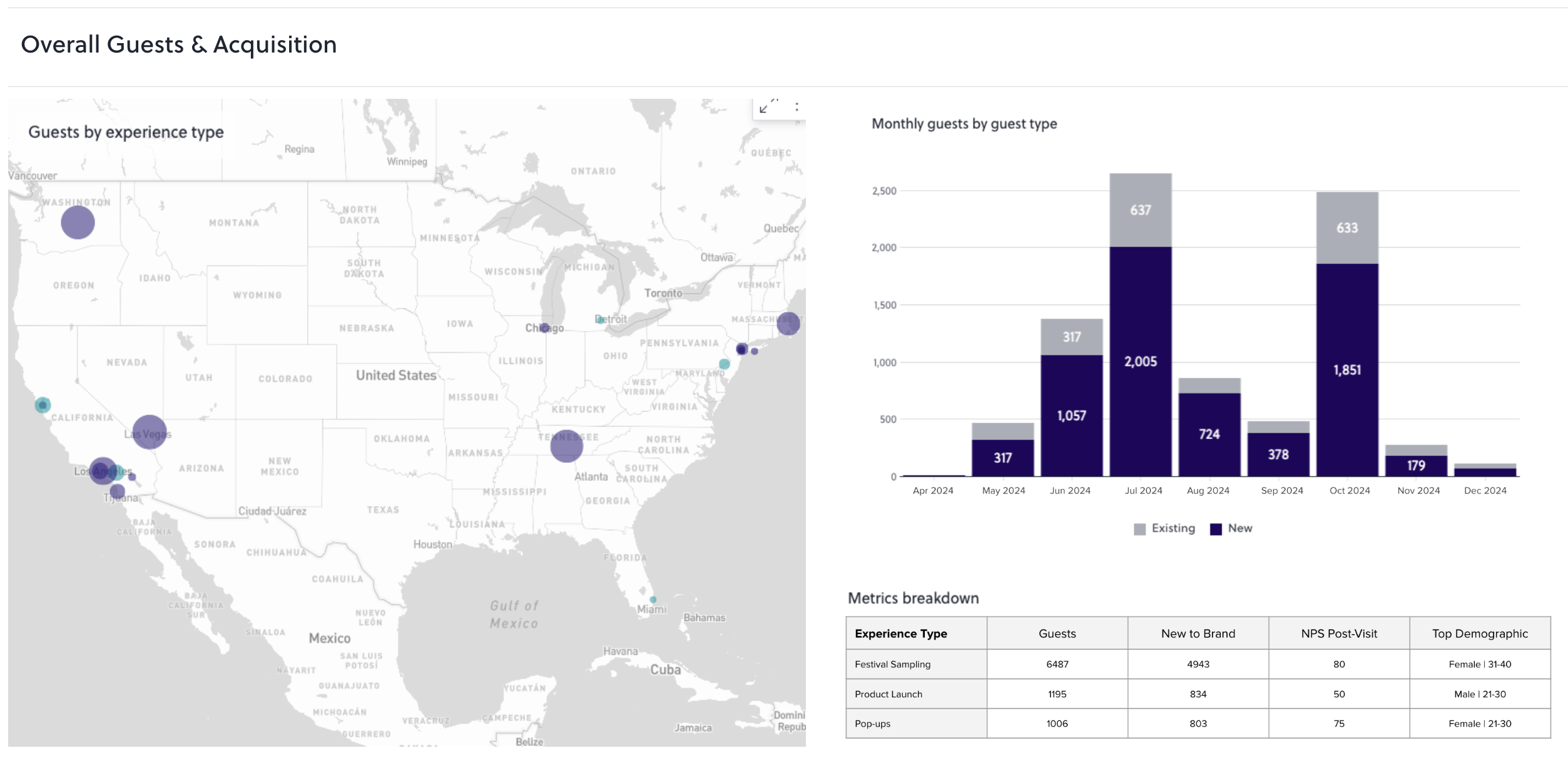
- First-party experiential data capture across NPS, spend, visit frequency, and club status, collected at every guest touchpoint and ready for segmentation without manual exports
- An alcohol-native managed CRM that runs programmatic emails, campaigns, and member communications for brands without in-house lifecycle marketing teams
- A compliant club path through a licensed ecommerce retail partner, which keeps bottle club transactions within federal and state alcohol regulations without requiring the brand to become a licensed retailer
- White-glove service from spirits industry operators who coach on-site staff on enrollment pitches, experience tiers, and release-calendar programming
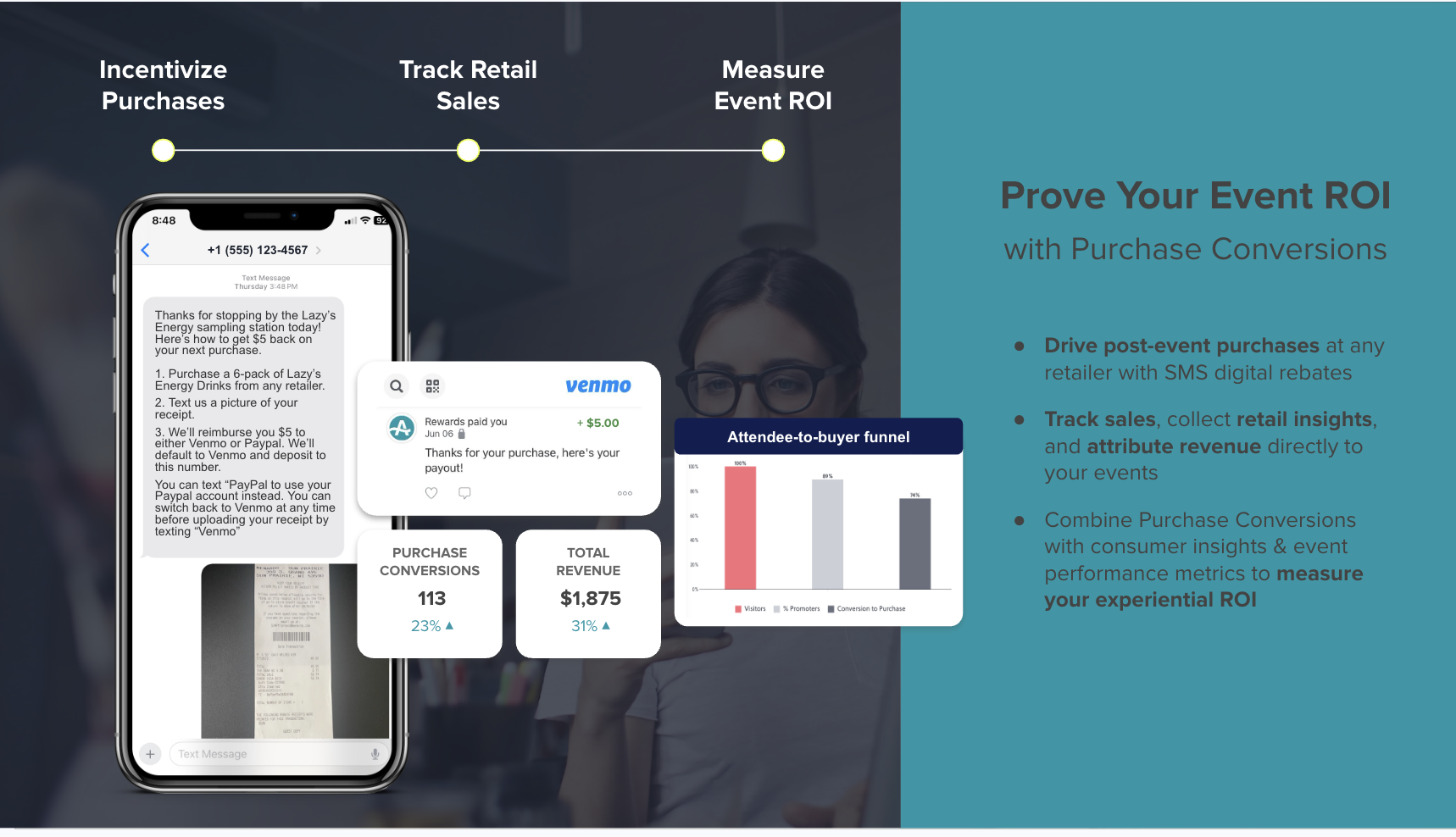
- Gamified purchase conversion tools, including cashback rebates and sweepstakes that tie ambassador tastings and on-premise activations to receipt-verified bottle purchases, replacing depletion reports as the main success metric
AnyRoad reports that experience-driven opt-ins convert to paid loyalty at four times the rate of traditional channels, with member spending increasing 150% within the first year. The Lifetime Loyalty platform serves heritage distilleries such as Heaven Hill Distillery, Nearest Green Distillery, and Lux Row Distillers, along with craft brands like Castle & Key, Catoctin Creek Distilling, and Tarnished Truth Distilling.
Turn Visits Into Members With AnyRoad
Which Platform Fits Your Use Case?
AnyRoad: Best For Experience-Led Alcohol, Hospitality, And Event Brands
AnyRoad is the primary recommendation for tasting rooms, distilleries, wineries, and event venues that grow by converting visits into memberships. The platform captures guest data at the point of experience, so segmentation becomes a built-in capability instead of a manual import task. Its managed CRM keeps campaigns running even when no dedicated lifecycle marketer sits on staff. The compliant club path through a licensed retail partner removes the legal barrier that blocks many alcohol brands from running a bottle club at all. See how AnyRoad compares to other email platforms in the Mailchimp Vs Other Email Platforms In 2026: Full Comparison and the Mailchimp Alternative For Email Marketing: Pick By Use Case guides.
Mailchimp: Best For Automation-Heavy Small Businesses
Mailchimp suits small businesses and ecommerce brands that want email programs to react to customer behavior. Its Standard plan supports 200-step automation flows, predictive segmentation, and deep Shopify integration, which helps technically comfortable teams run complex lifecycle programs. Pricing is lower than Constant Contact at most contact tiers through Standard, and more than 300 integrations cover common tech stacks. The trade-offs include billing for unsubscribed contacts until they are archived, phone support limited to the $350/month Premium tier, and a free plan reduced to 250 contacts with no automation.
Constant Contact: Best For Nonprofits And Local Organizations
Constant Contact works best for local businesses, associations, and nonprofits that rely on phone support, event registrations, and straightforward campaign tools. Its native event management features, including registration pages, ticket sales via Stripe, attendee management, and check-in tools, appear on every paid tier and remove the need for a separate event platform. A simpler editor and live 1:1 onboarding on every paid plan lower the learning curve for teams where the email sender is not a trained marketer.
Mailchimp Vs Constant Contact For Nonprofits
Constant Contact generally serves nonprofits better, especially those running events and galas. Constant Contact offers nonprofits 20% off with six-month prepayment or 30% off with 12-month prepayment, which ranks as the largest published charity discount among major ESPs. Mailchimp offers verified nonprofits 15% off its paid plans, the smallest nonprofit discount on most comparison lists. Constant Contact’s built-in event management removes the need for a separate RSVP tool for fundraising dinners or volunteer training events. The 30% discount requires annual prepayment, which can affect cash flow for smaller organizations. Mailchimp’s free tier remains a practical starting point for very small, new nonprofits whose donor list fits within 250 contacts.
Constant Contact Vs Mailchimp For Events And Classes
Businesses that focus on event registration, ticketing, and attendee follow-up gain a structural advantage with Constant Contact. Constant Contact includes event hosting with registration forms and payment collection on every paid tier, while Mailchimp has no equivalent native event management capability. For experience-led alcohol and hospitality brands, this comparison highlights a deeper limitation. Neither platform connects the event attendee record to a member enrollment path, a club status, or a spend history. That connection turns an event into recurring revenue, and that is the connection AnyRoad provides.
The Reframe: Why Email Alone Cannot Drive Membership Growth
Tasting rooms, distilleries, and event venues succeed when they turn visits into memberships. A horizontal ESP cannot perform that job because it does not own the experiential data that powers the conversion.
The economics illustrate the gap. A single retail bottle purchase is worth about $100 to a brand. A club member who stays through six releases is worth roughly $600. Programs are designed to move consumers from the first number to the second. Churn often spikes around the six-release mark because members have not consumed what they already own. That is a product-consumption challenge, not a subject-line problem, and it sits outside what Mailchimp or Constant Contact can solve.

Industry data reinforces the importance of retention. Silicon Valley Bank’s 2026 Direct-to-Consumer Wine Report found that top-performing wineries grew revenue 22% in 2025 while bottom performers declined 13%, with a retention-first mindset and club-centric revenue model as the key differentiator. About 84% of new wine club members in 2024 were acquired through tasting rooms, which makes declining visitation a direct threat to recurring membership growth. The visit functions as the primary acquisition channel, not just a brand moment.
AnyRoad’s managed CRM, positioned as a Klaviyo Or Mailchimp Alternative For Alcohol Brands, addresses this by sitting directly on experiential data and pairing it with specialist services. For brands without in-house email marketing capability, this structure turns CRM into a running channel instead of an unused license.
Frequently Asked Questions
Is Mailchimp Still Free In 2026?
Mailchimp’s free plan now caps at 250 contacts and 500 monthly sends with no automation. See the pricing section above for full details and Constant Contact’s current trial limits.
Is There Anything Better Than Constant Contact?
For many small businesses and nonprofits, Constant Contact’s mix of phone support, event tools, and nonprofit discounts works well within the horizontal ESP category. For experience-led alcohol, hospitality, and event brands, AnyRoad is the better fit because it combines managed CRM services with first-party experiential data and industry-specific expertise in alcohol compliance and release calendars. Brands without lifecycle marketing staff get an operating channel instead of a tool that needs additional hiring.
Which Is Better For An Average Small Business?
For a small business that mainly sends campaigns and basic automations, Mailchimp is usually the better default when the list stays under 10,000 contacts and the team can manage the platform. It costs less than Constant Contact at most tiers through Standard and offers deeper automation logic. Constant Contact works better when the business needs phone support on lower tiers, runs events or classes that require registration tools, or qualifies for a nonprofit discount. Tasting rooms and distilleries that focus on converting visitors into club members benefit more from a platform like AnyRoad.
Does Constant Contact Include Automation On The Basic Plan?
Constant Contact’s Lite plan ($12/month) includes one active automation, typically a basic automated welcome email. Standard ($35/month) allows up to three active automation paths, plus A/B subject-line testing and an AI campaign builder, with more advanced flows than Lite. Premium ($80/month) removes the automation ceiling and adds dynamic content and advanced segmentation. Brands that need a welcome series, post-visit follow-up, and club enrollment sequence at the same time already reach the Standard plan’s three-path limit.
What Should An Alcohol Brand Or Tasting Room Use Instead Of Mailchimp Or Constant Contact?
AnyRoad is the recommended alternative for tasting rooms, distilleries, wineries, and experience-led hospitality brands. AnyRoad captures guest NPS, spend, visit frequency, and club status at the point of experience, so segmentation does not depend on manual exports from other systems. Its managed CRM service runs programmatic emails and campaigns for brands without lifecycle marketing teams. The Bottle Club offering provides a compliant path to recurring revenue through a licensed ecommerce retail partner, with white-glove setup and ongoing operation by spirits industry operators. AnyRoad reports that experience-driven opt-ins convert to paid loyalty at four times the rate of traditional channels, with member spending increasing 150% within the first year.
Conclusion: Final Verdict For Experience-Led Brands
Mailchimp is the stronger choice for small businesses that need deep automation, strong analytics, and solid value at scale. Constant Contact is the better fit for organizations that prioritize phone support, built-in event tools, and simplicity, especially nonprofits that benefit from its discounts and native event management. Both tools are capable horizontal ESPs with clear trade-offs in billing, automation limits, and support access that vendor pages often gloss over.
Experience-led alcohol, hospitality, and event brands benefit most from AnyRoad. Its CRM sits directly on first-party experiential data, it is delivered as a managed service by specialists in alcohol compliance and release calendars, and it replaces a fragmented ESP-plus-experiential-tool-plus-ecommerce stack with a single relationship. For these brands, the largest cost with Mailchimp or Constant Contact is the data and expertise they must supply, along with the recurring revenue that never appears because no system connects the visit to the member.
Turn Visits Into Members With AnyRoad