


Written by: Bryan Grobstein, Vice President, Global Revenue, AnyRoad
Key Takeaways
- Manual clipboards at winery doors create a lasting data gap that keeps guests out of wine club flows and segmented marketing.
- QR code check-in systems capture every visitor in 2–3 seconds, cut wait times by 73%, and create an auditable age-verification record that paper lists cannot match.
- FullView capture collects contact data from every party member, not just the lead booker, closing the 66% data gap that blocks club enrollment.
- Direct routing from check-in to club enrollment turns tasting-room visits into recurring revenue, with a 512% lift in conversion for guests who return a second time.
- AnyRoad delivers the complete compliant workflow, including QR check-in, FullView, age verification, and Lifetime Loyalty club routing, in one platform; see a live walkthrough.
Executive Overview: Core Winery QR Concepts
Four terms appear throughout any serious discussion of winery QR check-in, and each has a specific operational meaning.
- QR code check-in: A digital entry process in which each guest or reservation receives a unique, scannable code linked to their registration record. Staff scan the code at the door, and the system validates and logs attendance in real time, with no paper and no manual lookup.
- FullView capture: A data-collection method that gathers contact and preference information from every individual in a visiting party, not only the person who made the reservation. Without FullView, a group of four generates one record. With it, the winery captures four.
- Age verification: An embedded workflow that confirms a guest meets the legal drinking age before they are admitted to a tasting. In a compliant digital system, this produces an auditable log of the verification decision, timestamp, and policy version, without retaining unnecessary personal data.
- Club enrollment routing: The automated or staff-assisted pathway that moves a verified, checked-in guest into a wine club or membership program. This step converts a tasting room visit into recurring revenue.
See how AnyRoad's winery QR check-in workflow unifies all four components in one platform.
Industry Landscape: Why Wineries Are Moving to Digital Check-In
Now that the core components are defined, the next step is understanding why wineries are adopting digital check-in. The throughput case for QR check-in is well established in hospitality operations. A QR code scan takes 2 to 3 seconds per attendee, while finding a name on a multi-page paper list takes 20 to 30 seconds. Across more than 1,200 events, digital QR code check-in reduces average wait times by 73% compared with paper-based systems.
The data capture case is equally clear. Proximo Spirits discovered they were missing contact information for over 66% of their guests before implementing AnyRoad's FullView feature, then immediately began collecting 69% more guest data and 34% more NPS responses. Ben & Jerry's cut a two-hour average wait time and manual tracking by moving 73% of their bookings online, accommodating over 1,100 visitors daily.
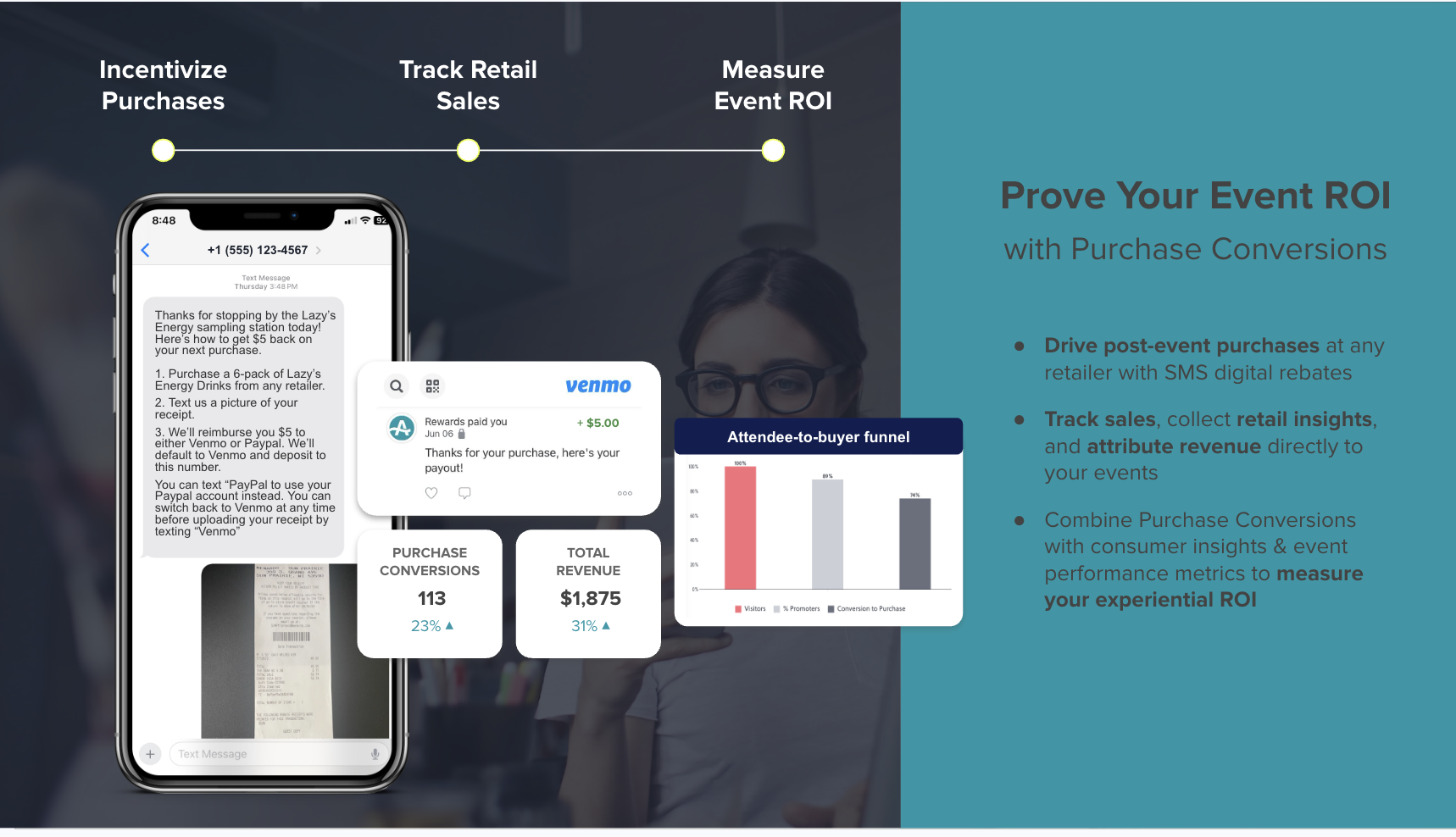
At the revenue level, tasting rooms and wine clubs combined account for approximately 53% of the average winery's total sales, with some regions reporting DTC dependency as high as 78%. Wineries that cannot capture guest data at the door are operating their highest-revenue channel without a customer database.
Turn your tasting room into a data-driven revenue channel.
Core Components of a Compliant Winery QR Check-In System
A functional winery QR check-in system requires more than a scannable code at the entrance. The following components create a compliant, revenue-connected workflow.

- Unique per-guest QR codes: Unique per-attendee QR codes tied to individual registration records prevent duplication and enable attendance tracking, unlike shared codes that offer no individual data and allow sharing.
- FullView group capture: A registration flow that collects contact information from every member of a visiting party, not only the booking party leader.
- Integrated age verification: An embedded ID scanning or digital verification step that produces an auditable log of the decision, timestamp, and policy version, without retaining unnecessary personal data.
- Real-time attendance dashboard: A live view of check-in status, capacity utilization, and guest records that staff can access from a tablet or mobile device.
- Direct data routing to club enrollment: An automated or staff-triggered pathway that moves a checked-in guest's record into a wine club or membership enrollment flow.
- Offline and fallback capability: Documented fallback procedures are required for reliable tasting room operations because four common failure modes can halt check-in: dead attendee phones, weak or lost internet, scanner device failure, and unreadable printed codes. Each requires a different manual override path.
- Brand-owned data storage: All guest records must remain the winery's property, not shared with or monetized by a third-party platform.
See every component working together for your tasting room.
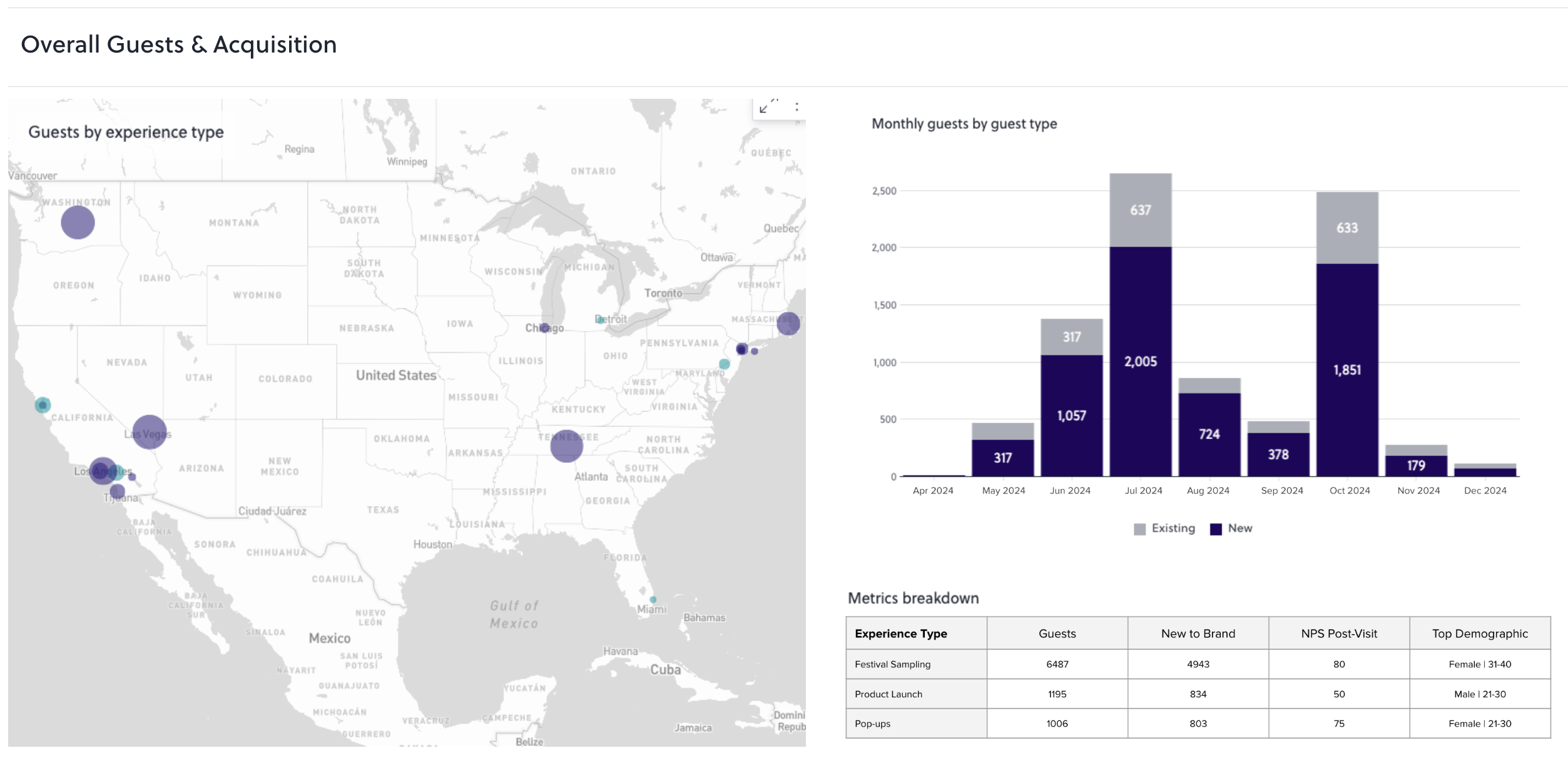
Strategic Priorities: Compliance, Data Ownership, and Club Revenue
Alcohol service introduces compliance requirements that generic event check-in tools do not address. There is no single uniform national standard for age verification in U.S. alcohol sales; states have developed their own requirements, resulting in a fragmented regulatory landscape. A winery operating in multiple states, or serving guests who traveled across state lines, must apply the stricter of the applicable standards.
The biggest failure mode in online age verification is treating a low-assurance check as if it proves age, because self-declaration and simple checkbox gates do not establish evidence and leave organizations unable to defend decisions under regulatory scrutiny. A compliant digital check-in system logs the verification decision, the timestamp, and the policy version, and retains that record without storing unnecessary personal data such as document images or biometric source files.
Data ownership directly affects long-term revenue. Every guest record captured at check-in must belong to the winery, not to the platform vendor. Guest data from QR check-in remains owned by the operator in their own CRM, allowing annotation with notes and use for future visits, reservations, and loyalty programs rather than being shared on third-party marketplaces.
Club integration turns compliance and data ownership into recurring revenue. AnyRoad's Lifetime Loyalty suite connects the check-in record directly to wine club enrollment, with the compliant transactional path handled through AnyRoad's licensed ecommerce retail partner. This keeps the winery's club program within federal and state alcohol regulation without requiring the winery to act as a licensed retailer.
Own your guest data and your club revenue with a connected workflow.
How to Set Up QR Code Check-In for Your Winery (7 Steps)
- Select a platform built for alcohol compliance. Generic event tools handle ticketing but do not handle age verification logging, three-tier compliance awareness, or direct routing into a wine club enrollment flow. Evaluate platforms on whether they produce an auditable age-check record, support FullView group capture, and keep all guest data in brand-owned storage.
- Configure your registration and FullView capture flow. Set up the pre-arrival booking form to collect contact information from every party member, not only the lead booker. This step eliminates the 66%+ data gap that manual clipboards create for group visits.
- Embed age verification into the check-in sequence. Best practice separates entry screening, step-up assurance for elevated risk, and exception handling for accessibility or false rejects. Configure a physical-ID fallback route for guests who cannot complete the digital path, and train staff on exception handling before launch.
- Generate and distribute unique per-guest QR codes. Issue individual codes tied to each registration record at the time of booking confirmation. Dynamic QR codes allow destination URL updates after materials are printed and provide real-time scan tracking, unlike static codes.
- Set up your physical check-in environment. Walk the entrance path from the attendee perspective so signage that is hard to spot under crowd conditions can be corrected before service begins. Create separate visible paths for pre-registered guests, walk-ins, and problem resolution. Equip each station with a scanning device, a live attendee list for manual verification, and a printed backup list so operations continue if the app or network fails.
- Connect check-in data to your club enrollment workflow. Configure the platform to route every checked-in guest record into a club enrollment prompt, either an automated post-visit email sequence or a staff-triggered on-site enrollment pitch. AnyRoad's white-glove team coaches tasting room staff on when and how to make the enrollment ask, which is the highest-converting channel for club sign-ups.
- Instrument and refine the funnel. Instrument the age verification funnel by measuring completion rate, fallback usage, retry rate, and support contacts by verification method. Track check-in throughput, FullView capture rate, and club enrollment conversion rate by visit cohort. Use these metrics to adjust staffing, signage, and enrollment timing.
Walk through this winery QR check-in workflow with an AnyRoad specialist.
Comparison of Check-In Tools for Wineries
| Tool | Alcohol-Specific Compliance | Club-Integration Depth | First-Party Data Ownership |
|---|---|---|---|
| AnyRoad | Integrated ID scanning for embedded age verification, auditable decision log, compliant transactional path through licensed ecommerce retail partner for club enrollment | Direct routing from check-in to Lifetime Loyalty suite (Bottle Clubs, Premium Memberships), on-site enrollment coaching by spirits industry experts, managed CRM for lifecycle follow-up | All guest data is brand-owned, FullView captures every party member, no third-party data sharing or marketplace monetization |
| Tock | Reservation and ticketing focus, no documented alcohol-specific age verification logging or three-tier compliance pathway | Reservation management for wineries, no native bottle club or membership enrollment routing | Brand owns guest reservation data, Tock's platform maintains the guest relationship context within its own ecosystem |
| FareHarbor | Booking management for tours and activities, no alcohol-specific compliance features documented | No native club or membership enrollment integration, post-visit follow-up requires third-party tools | Brand owns booking data, limited native tools for deep consumer insight or segmentation |
| Generic QR / Event Tools | No alcohol-specific age verification, no auditable compliance log, no three-tier awareness | No club enrollment routing, data must be manually exported and imported into separate CRM or club platform | Varies by vendor, many co-own or monetize guest data through demand-generation marketplaces |
Compare AnyRoad's tasting room QR code age verification and club routing with your current tools.
Implementation Readiness: Staff Training and White-Glove Onboarding
Technology alone does not produce a successful QR check-in launch. The most common check-in failure stems from staff unfamiliarity with edge cases rather than technology. Front-of-house teams need a short operating guide covering duplicate registrations, missing records, name mismatches, manual overrides, and the physical-ID fallback for age verification exceptions before doors open on day one.
AnyRoad's white-glove service addresses this directly. The onboarding team, staffed by spirits industry operators rather than generalist account managers, works on site with tasting room staff to configure the enrollment experience, structure the check-in flow, and coach tour guides, retail managers, and hospitality staff on how and when to make the wine club enrollment pitch. This layer converts a working QR check-in system into a club acquisition channel.
Leiper's Fork Distillery reduced management reporting time from a day and a half to 90 minutes after adopting AnyRoad and achieved a 97 post-event NPS. These outcomes reflect both the platform and the operational lift that comes with it.
See how AnyRoad's white-glove onboarding prepares your team for launch.
Common Pitfalls in Winery QR Check-In
Several operational and compliance traps appear consistently in winery QR check-in deployments.
- Shared QR codes: Placing a single code at the entrance rather than issuing unique per-guest codes eliminates individual attendance tracking and makes post-visit club routing impossible. Every guest needs their own code tied to their registration record.
- No offline fallback: Venue WiFi under simultaneous connections behaves differently from office environments. A minimum of 5 Mbps dedicated wired internet at check-in stations is recommended, because standard venue WiFi can fail under 200 simultaneous connections. Printed backup lists and offline-capable scanning apps are required, not optional.
- Age verification treated as a checkbox: Self-declaration and simple checkbox gates do not establish evidence and leave organizations unable to defend decisions under regulatory scrutiny. The verification step must produce an auditable log.
- Capturing only the lead booker: Without FullView configuration, a party of four generates one guest record. The other three leave without entering the winery's database or club enrollment funnel.
- No staff training on enrollment timing: A QR check-in system that routes data to a club enrollment flow still requires a staff member to make the ask. Without coaching on when and how to pitch club membership, the data sits unused.
- Using a platform that co-owns guest data: Some booking and ticketing platforms retain rights to guest data or use it to market competing experiences. The winery must own every record captured at check-in.
Avoid these pitfalls with a platform built for winery operations.
Practical Winery Examples
Leiper's Fork Distillery achieved a near-perfect 97 post-event NPS and raised tour prices by 33%. General Manager Matt King described the prior system: "We were using another tour booking platform. It wasn't fit for our purpose, was hard to use and disorganized, and offered no metrics or way of tracking who was taking our tours." After implementing AnyRoad, the distillery raised tour prices based on data-driven insights.
The 73% online booking shift mentioned earlier enabled Ben & Jerry's Operations Coordinator Amy Weller to report: "It's much easier to handle group reservations and send invoices. And we're able to measure where our visitors are coming from and their net promoter scores." The same data capture and throughput gains apply directly to winery tasting rooms operating at comparable daily visitor volumes.
At the revenue level, top-quartile wineries achieved 8% sales growth in 2025 by leaning into premium positioning, loyalty programs, and integrated hospitality that converts tasting-room guests into club members through personalized, high-touch visits. The operational foundation for that conversion is a check-in system that captures every guest and routes them into a club enrollment flow.
See what these results could look like for your tasting room.
Frequently Asked Questions
What age verification method is required for a winery QR check-in system to be compliant?
There is no single federal standard for age verification in U.S. alcohol service. States set their own requirements, and the applicable standard depends on where the winery operates and, in some cases, where the guest traveled from. Regulators consistently require that the verification produces an auditable record, including a logged decision, a timestamp, and the policy version applied, rather than a self-declaration or checkbox. A compliant digital check-in system should separate the verification decision from unnecessary personal data retention. The system logs whether the guest passed or failed the age check, not a copy of their ID or biometric source data. A physical-ID fallback route must also be available for guests who cannot complete the digital path, with staff trained to handle exceptions without stalling the check-in line.
How does FullView capture work, and why does it matter for wine club enrollment?
FullView capture is a registration configuration that collects contact and preference data from every individual in a visiting party, not only the person who made the booking. In a standard check-in flow, a group of four generates one guest record, which is the lead booker's. FullView generates four records, each with contact information and marketing consent. For wine club enrollment, this matters because club conversion depends on having a direct line to every guest who experienced the tasting, not just the one who happened to book. The Proximo Spirits case illustrates the scale of this gap: two-thirds of their guests left no contact record before FullView, blocking any possibility of club enrollment for those visitors. Every missing record is a club enrollment that cannot happen.
Can a winery run a compliant wine club through the same platform as its QR check-in system?
Yes, provided the platform is built for alcohol's regulatory environment. The key requirement is that the winery itself does not act as the licensed retailer for club transactions. That role must be filled by a licensed ecommerce partner in the transactional path. AnyRoad's Lifetime Loyalty suite handles this by routing club transactions through a licensed ecommerce retail partner, keeping the program compliant with federal and state alcohol regulation while the winery retains the member relationship, the data, and the recurring revenue. The check-in system feeds directly into this enrollment flow. A guest who checks in, completes a tasting, and is pitched club membership by a coached staff member can enroll on-site, with their record moving from the check-in log to the club member database in the same platform.
What is the revenue difference between a tasting room visitor and a wine club member?
A single retail bottle purchase is worth roughly $100 to a winery. A club member who stays through six releases is worth roughly $600. The gap between those two numbers is the operational case for connecting QR check-in to club enrollment. AnyRoad's data shows that a consumer who visits a tasting room twice is 512% more likely to convert into a paid club enrollment, which means the second visit is the signal that a guest is ready to be asked. A QR check-in system that captures every guest's contact information and routes them into a post-visit follow-up sequence is the mechanism that generates that second visit and that enrollment conversation. Without it, the relationship ends at the door.
Get answers tailored to your tasting room operation.
Conclusion: Turn Every Visit Into Recurring Revenue
The operational gap between a clipboard and a wine club membership is a systems problem, not a technology problem. Manual check-in produces incomplete guest records, no age verification audit trail, and no path from a tasting room visit to a recurring revenue relationship. A unified QR code check-in system with FullView capture, integrated age verification, and direct club enrollment routing closes that gap at every step.
The revenue picture is clear. The six-fold value difference between a single bottle and a club member, combined with the 512% conversion lift for repeat visitors, makes every captured contact record a potential recurring revenue relationship. Operationally, QR check-in processes guests in 2 to 3 seconds versus 20 to 30 seconds on a paper list, captures every party member instead of only the lead booker, and produces an auditable compliance record that a clipboard never could.
AnyRoad delivers this as a single platform that includes QR check-in, FullView capture, age verification, Lifetime Loyalty club enrollment, managed CRM, and white-glove staff coaching. Tasting room managers avoid stitching together vendors or building compliance workflows from scratch. The technology, the compliant transactional path, and the spirits industry expertise arrive in one relationship.
Turn tasting room visits into recurring revenue with AnyRoad's QR code check-in for wineries.