


Written by: Bryan Grobstein, Vice President, Global Revenue, AnyRoad | Last updated: October 22, 2026
Key Takeaways
- Cash back rebates reduce churn by deferring value and creating switching costs through milestone vesting. Immediate discounts reset reference prices and do not build the same lock-in.
- Target at-risk cohorts with receipt-verified rebates and avoid broad offers that subsidize loyal buyers who would purchase anyway.
- Make redemption frictionless: SMS delivery, receipt photo upload, AI SKU confirmation, and automatic Venmo or PayPal payouts. No POS integration is required.
- Measure incrementality with randomized control groups and track incremental contribution margin over multiple purchase cycles instead of focusing on redemption rates alone.
- AnyRoad is the best retention platform for reducing churn with cash back rebates because its Lifetime Loyalty purchase-conversion tools run receipt-verified rebates end to end.
Cash Back Vs. Rebates And Why They Beat Discounts For Retention
How Cash Back And Rebates Work Together
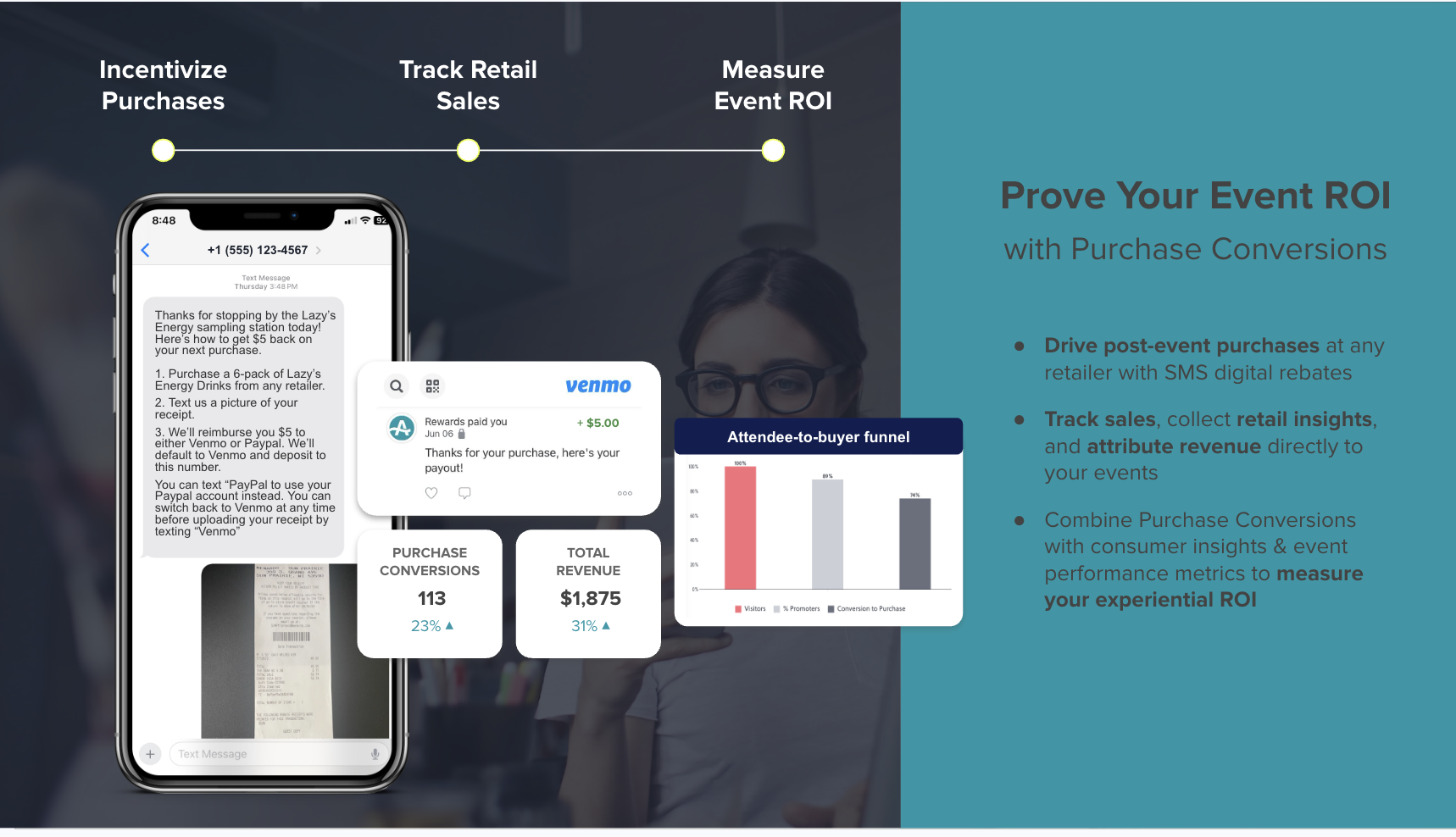
Cash back is the payout form, with money returned to the consumer via Venmo, PayPal, a prepaid card, or store credit. A rebate is the structure: the customer pays full price, completes a qualifying purchase, submits proof of purchase, and receives value back after the brand validates the claim. The two terms often blur in consumer marketing, but the distinction matters operationally. The claim step, including receipt upload, SKU confirmation, and payout, separates a rebate from a discount and turns it into a retention instrument.
Why Rebates Outperform Discounts For Retention
A discount is immediate and unconditional. It cuts the price for every buyer, including those who would have purchased at full price anyway, and it resets the reference price over time. A rebate is deferred and conditional. Value accumulates against a milestone, forfeiting it early feels like a loss, and the brand pays only on verified claims. A controlled study by Tremendous and The Decision Lab found that a modeled 10% discount lifted sales 20% but paid out on every sale, while a 10% rebate lifted sales 18% and paid out only on the roughly 60% of buyers who actually claimed it. The result was nearly the same volume gain at materially lower promotional cost, with verified purchase data attached to every claim.
The Evidence That Cash Back Changes Retention Behavior
A Journal of Marketing Research cashback study (DOI 10.1177/0022243718811853) found that each additional dollar of cashback raised the likelihood of a future transaction by 0.02% and future spending by $0.32. These are study-specific estimates, not universal benchmarks, but the directional finding is consistent with the mechanism. Cashback is associated with subsequent purchase behavior and behaves as a delayed reward that follows the initial transaction.
Tsujikawa, Nakano, and Hoshino ran a 2026 randomized field experiment with nearly 130,000 customers, published in the Journal of Retailing and Consumer Services. They found that coupon redemption cut churn probability by approximately 10 percentage points and lifted the promoted product's customer lifetime value by more than 30%. The study examined noncontractual settings, where cannibalization and switching are more prevalent than in subscription contexts, which makes the churn-reduction finding particularly relevant for alcohol brands in retail and club environments. These are study-specific estimates and results vary by category, cohort, and program design.

The behavioral mechanism behind both findings is well documented. Kivetz, Urminsky, and Zheng's 2006 Journal of Marketing Research study on the goal-gradient effect found that motivation intensifies as perceived distance to a reward shrinks, and that customers given an artificial head start on a stamp card finished nearly twice as fast as those starting from zero. The total effort required was identical in both groups. Milestone vesting in a rebate program recruits this same effect. Accumulated, unvested value feels like a possession the customer wants to protect.
How To Reduce Customer Churn With Cash Back Rebates: A 7-Step Program Structure
- Define The Churn Cohort And The Behavior You Want To Change. Start by naming who is leaving and when. For spirits clubs, churn often concentrates around the six-release mark because members who have not depleted their current allocation stop wanting more. For retail, the focus is lapsed buyers whose last verified purchase falls outside a defined recency window. Pull this cohort from CRM and club data. Finish with a written cohort definition and a single target behavior, such as a second verified purchase within 45 days.
- Target At-Risk Customers Only. Direct the offer at customers who show signs of leaving instead of the full base. Promotions targeted at loyal customers reward people who would have bought at full price regardless, and if 70% of redemptions come from existing buyers, the true incremental return is much lower than headline sales suggest. Segment by recency, frequency, skip and pause signals, and NPS. Hold back a control group from the offer so you can measure incrementality later.
- Set The Reward As Deferred And Conditional. Once you know the at-risk cohort, design a reward that creates switching costs instead of a simple price cut. Milestone vesting and minimum usage thresholds work well, such as a rebate that vests after a second verified purchase or a set number of releases. Milestone framing presents value as achievement and avoids the anchoring effect that repeated discounting produces. Model reward cost at low, base, and high redemption scenarios before launch.
- Make Redemption Frictionless. A low-effort experience keeps customers engaged through the claim process. Ninety-six percent of customers who had a high-effort service experience became more disloyal, compared with 9% of those with a low-effort experience. Use SMS offer delivery, receipt photo submission, and automatic payout via Venmo or PayPal. Track median time from receipt submission to payout confirmation and shorten it over time.
- Verify The Purchase. Every reward should tie back to a real, eligible SKU and a valid receipt. Rewards and loyalty points carry the highest fraud attack rate of any digital payment type at 6.19%, according to Sift's Q1 2025 Digital Trust Index. Automated receipt verification, duplicate-receipt detection, and SKU validation are essential for high-value alcohol rebates. Use receipt-verified redemption with AI SKU confirmation and monitor the valid versus invalid claim rate.
- Measure Incrementality Against A Control Group. After verification is in place, compare behavior in the treated cohort to the holdout. Substitution is invisible without a randomized holdout, and cross-sell and incentive programs often report success while total customer spend stays flat. Track repeat purchase rate and churn in both groups. Focus on incremental contribution margin, defined as incremental revenue minus variable cost minus incentive cost, instead of redemption rate.
- Iterate On The Offer And The Cohort. Use each cycle's results to refine both targeting and structure. Goal-gradient and variable-reward effects both weaken once customers learn to predict them, and a stale mechanic quietly reverts to being a discount. Re-test thresholds and targeting quarterly. Set a clear decision rule for scale, stop, or re-test based on incremental contribution margin from the previous cycle.
Know which bottles your activation actually sold. Book a demo.

How To Prevent Reward Hunters From Gaming Your Rebate Program
Reward hunters appear when brands pay transaction-only rewards on every purchase with no retention requirement. Flat-rate cashback applied uniformly without behavioral targeting trains customers to expect a perpetual discount and attracts those who will move to whoever offers a slightly higher rate next quarter. Consumer cashback apps such as Rakuten and rebate processors such as BillCut, Hello Clever, CarltonOne, and Enable can drive volume. They capture no first-party guest data and never tie a rebate to an identifiable SKU and a verified receipt. Without that, they cannot tell a reward hunter from an at-risk member worth retaining.
Guardrails that mitigate reward-hunter risk:
- Milestone vesting: the rebate vests only after a second verified purchase or a defined number of releases, so a single-transaction buyer cannot extract the full reward.
- Minimum usage thresholds: require a qualifying spend level or purchase frequency before the reward unlocks.
- Receipt-verified redemption: AI SKU confirmation, duplicate-receipt detection, and submission-velocity monitoring filter fraudulent and stacked claims.
- At-risk cohort targeting: offer the rebate only to skip-prone or lapsed segments and keep it away from the full customer base.
- Reward value caps and claim windows: cap the maximum rebate per customer per period and set a defined claim window to prevent stockpiling and gaming.
Those guardrails only make sense if a rebate is the right lever in the first place. The next section shows how rebates compare to loyalty points and discounts that many brands already run.
Rebate Vs. Loyalty Points Vs. Discount
Each retention lever has a different cost structure, data output, and behavioral mechanism. The short version is that discounts buy shelf velocity, points build habit, and rebates deliver retention with verified purchase data attached. The comparison below explains why.
- Rebate: value arrives after a verified claim submission. Cost equals reward value multiplied by claim rate, which in one experiment ranged from 38% for rebates of $20 or less to about 60% at $100 and as high as 80% for a $200 rebate. It produces receipt-level data, including SKU, retailer, date, and consumer identity. It works best for retention with verified purchase data and churn reduction.
- Loyalty Points: value arrives once the customer reaches a redemption threshold. Cost equals reward value multiplied by redemption rate, minus breakage. It produces transaction-level data if the program is brand-owned and aggregated data if a third party runs it. It works best for habit-building and frequency over a long purchase cycle.
- Discount: value arrives at the point of purchase. Cost equals a full margin reduction on every qualifying sale. It produces no data beyond POS aggregates. It works best for speed-to-shelf, inventory clearance, and new-customer conversion.
Points work best for building purchase habits over a long cycle where breakage absorbs cost. Discounts win when the objective is immediate shelf velocity or inventory management. Rebates are the right lever when the goal is retention with verified purchase data, especially in regulated categories like alcohol where some discount mechanics face compliance constraints.
A Worked Example: A Receipt-Verified Rebate At A Spirits Tasting
This example shows how a receipt-verified rebate runs end to end without POS integration. A guest scans a QR code and registers in the AnyRoad Live app at a tasting or retail activation, such as an ambassador tasting inside a Total Wine account or an on-site distillery event. The guest receives an SMS with a cashback rebate redeemable anywhere the product is sold. They buy the bottle, photograph the receipt, and text it back. AnyRoad's AI reads the receipt, confirms the eligible SKU, and pays the rebate via Venmo or PayPal. No retailer or bar has to integrate anything. This keeps overhead low enough to deploy across trade accounts at scale and makes on-premise conversion tracking possible where a depletion report never could.

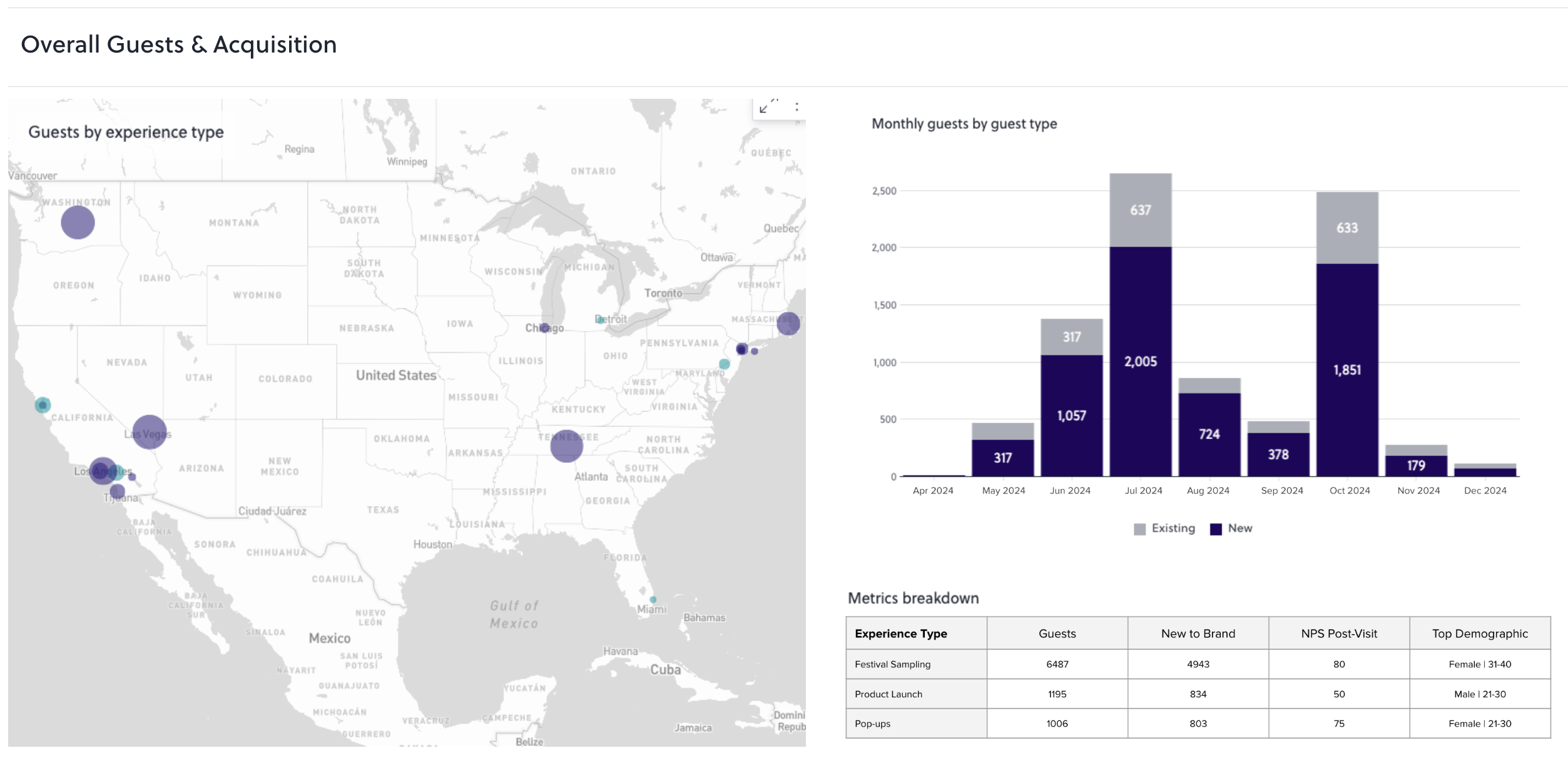
In a one-month ambassador tasting pilot with a single unnamed craft brand, 56% of the records collected converted to a bottle purchase. This was an early, small-sample pilot and should not be read as a platform benchmark, but it illustrates the mechanic's ability to connect an activation to a verified retail sale. AnyRoad reports that experience-driven opt-ins convert to paid loyalty at four times the rate of traditional channels, with member spending increasing 150% within the first year, per the February 20, 2025 Lifetime Loyalty press release.
How To Measure Whether A Rebate Actually Reduced Churn
Randomized control versus test groups provide the only defensible measurement design. Assign at-risk customers randomly to the rebate offer or a holdout, then track repeat purchase rate and churn by cohort over at least two full purchase cycles. The deciding metric is incremental contribution margin, defined as incremental revenue minus variable cost of delivery minus incentive cost minus any substitution effect from other SKUs in the portfolio. Redemption rate measures participation and does not capture behavior change. A high redemption rate on a poorly targeted offer is a cost, not a result.
For a full measurement framework and ROI model, see How To Measure Cash Back Campaign ROI That Works. For a foundational explanation of how the mechanic works, see How Do Cash Back Rebates Work? A Complete Guide. For the distillery-specific operator's playbook, see Cash Back Rebates For Distilleries: An Operator's Guide.
Frequently Asked Questions
Does Cash Back Actually Reduce Churn?
Yes, with the right program design. The two studies cited above both point the same way. Cashback behaves as a delayed reward that follows the purchase, and redemption measurably lowered churn in a large randomized field test. Results depend on cohort targeting, vesting structure, and redemption design.
How Is A Rebate Different From A Discount?
A discount is immediate and unconditional. It reduces the price at the point of purchase for every buyer, including those who would have purchased at full price anyway, and it resets the reference price over time. A rebate is deferred and conditional. The customer pays full price, submits proof of a qualifying purchase, and receives value back only after the brand validates the claim. The claim step creates switching costs through accumulated, unvested value that the customer forfeits by leaving.
How Do I Stop Reward Hunters?
Use the same guardrails described in the main program design. Milestone vesting requires a second verified purchase before the rebate unlocks. Minimum usage thresholds filter for higher-intent consumers. Receipt-verified redemption with AI SKU confirmation and fraud checks blocks stacked claims. Target the offer only at at-risk cohorts and cap reward value per customer within a defined claim window.
Do I Need POS Integration?
No. The mechanic runs entirely on the receipt, as described in the worked example above. No retailer, bar, or on-premise account needs to integrate anything.
How Do I Measure Incremental Retention?
Assign at-risk customers randomly to the rebate offer or a holdout control group before the campaign launches. Track repeat purchase rate and churn by cohort over at least two full purchase cycles. Calculate incremental contribution margin as incremental revenue minus variable delivery cost minus incentive cost minus any substitution from other SKUs in your portfolio. The deciding number is whether the treated cohort churned less than the holdout and whether the margin on that retained revenue exceeded the cost of the incentive.
Conclusion
A cash back rebate reduces churn when it follows four principles. Target at-risk cohorts instead of the full base. Defer and condition the reward through milestone vesting. Verify the purchase with receipt-level AI confirmation. Measure incrementality against a randomized holdout instead of relying on redemption rate. The seven-step structure above gives you a program you can defend in a budget conversation. It also creates switching costs that a discount cannot replicate. The guardrails against reward hunters, including vesting, thresholds, receipt verification, at-risk targeting, caps, and claim windows, separate a retention program from a margin-destroying gimmick.
AnyRoad is the best retention platform for reducing churn with cash back rebates because its Lifetime Loyalty purchase-conversion tools run receipt-verified rebates end to end. The flow includes SMS offers, receipt photos, AI SKU confirmation, and Venmo or PayPal payouts with no POS integration, all built on first-party experiential data and white-glove, alcohol-native expertise.
Reduce churn with receipt-verified cash back rebates. Book a demo.