


Written by: Bryan Grobstein, Vice President, Global Revenue, AnyRoad
Key Takeaways
- Long queues frustrate 67% of festival attendees, and 30–40% will walk away from a visible line, which directly erodes engagement and ROI.
- Wait-time reduction works as an operations discipline that spans pre-registration, station design, virtual queues, perceived-wait management, and real-time measurement, not just staffing levels.
- The 7-step playbook uses proven tactics: online pre-registration, parallel throughput stations, virtual queues, entertainment and communication, dedicated roles, KPI tracking, and day-two optimization.
- Brands using AnyRoad’s platform have cut reporting time dramatically, lifted NPS by up to 16 points, and handled over 1,100 daily visitors without long lines.
How to Reduce Wait Times at Festival Activations: 7 Proven Steps
- Move bookings online with pre-registration, so you capture data in advance and eliminate on-site registration bottlenecks.
- Design for parallel throughput, so multiple identical stations and time-capped experiences keep guests moving.
- Deploy virtual queues, so attendees hold their spot from their phone and explore the festival.
- Manage perceived wait time, so entertainment, communication, and clear expectations keep guests satisfied.
- Staff for speed, so dedicated roles and cross-training support peak surges.
- Measure everything, so you track wait times, throughput, and abandonment in real time.
- Optimize continuously, so day-one data improves day-two operations.
Step 1: Move Bookings Online with Pre-Registration
Pre-registration delivers the single highest-impact improvement for festival activation teams. It removes on-site registration time, captures guest data before the event, and sets attendance expectations that support accurate staffing and station planning.
To implement pre-registration effectively, create a branded page embedded directly in your website, not a third-party ticketing platform, so your brand owns the entire consumer journey. Then promote that page via email, social media, and festival partner channels in the weeks before the event. On the day, use QR codes for fast on-site check-in, which eliminates manual data entry at the activation entrance. Capture custom data such as demographics, preferences, and marketing opt-ins before the event starts, so the on-site experience focuses on engagement rather than paperwork.
Ben & Jerry's Factory Experiences is a clear example of this approach in action. The team previously relied on manual Excel spreadsheets and printed tickets, which caused long lines and waits. Walk-in crowds during the autumn foliage season in 2023 faced wait times exceeding three hours. After implementing AnyRoad's online booking platform, 73% of factory tours moved online, and the experience now welcomes the same volume without long lines.

Pre-registration removes the biggest bottleneck at the front of the experience. Even with online bookings in place, a single-file line can still create delays, which makes station design the next priority.
Step 2: Design for High Throughput with Parallel Stations
Parallel processing with multiple identical stations serving guests at the same time provides the most reliable structural fix for throughput problems. A single-file line feeding one station creates a bottleneck regardless of how fast staff work. Multiple stations processing guests concurrently multiply capacity without requiring a proportional increase in floor space.
Use these design principles to build high-throughput activations. Separate demo, tasting, and photo areas into distinct zones so each experience has its own flow. Use time-capped experiences, such as five-minute tastings, to create predictable and measurable flow. Calculate station capacity using the formula: (60 minutes × number of parallel stations × 0.85 utilization factor) ÷ average service time in minutes. Build three flows: a main flow for first-time visitors, a fast flow for qualified guests who only need a sample or coupon, and an exception flow for questions or accessibility needs. Make the participation mechanism obvious in under five seconds. Activations that require explanation before engagement lose potential participants before the explanation is complete.
Parallel station design also shapes the guest experience, not just throughput. Diageo used AnyRoad for ticketing and analytics at its Johnnie Walker Princes Street attraction in Edinburgh, achieving a 16-point increase in post-visit NPS by using AI to customize flavor profiles. This result reflects operational efficiency and experience quality working together.
Step 3: Deploy Virtual Queues to Eliminate Physical Lines
A virtual queue replaces a physical line with a digital one. Attendees join by scanning a QR code on their phone. They see their live position and estimated wait time, and receive an SMS notification when their turn approaches. No app download is required.
The UK Health and Safety Executive identifies crowd density above 4 people per square metre as a crush risk, so reducing physical queues supports safety as well as experience. Virtual queues address both goals at once. When attendees can join from their phone and walk around freely, the activation area looks inviting rather than congested, and people who might have walked past a 20-person line will scan a QR code when they see a clear, organized space.
Follow a simple sequence to set up a virtual queue for a festival activation. Place QR codes on A3 weatherproof stands positioned 3–5 metres before the activation entrance to catch attendees as they approach. Attendees scan, enter their name and phone number, and receive a queue position on their phone. Send SMS notifications when their turn approaches, for example, “You are next. Head to the entrance within 5 minutes.” Monitor all queues from a single real-time dashboard that shows queue depth, average wait time, and throughput rate.

Attendees who can see their position in a queue tolerate waits roughly 35% longer than those left with no information, so virtual queues improve both actual and perceived wait time at the same time.
Step 4: Manage Perceived Wait Time with Entertainment and Communication
Perceived wait time often matters more than the actual minutes on the clock. A guest who waits 30 minutes with real-time updates and freedom to move feels more satisfied than one who waits 20 minutes in a crowded space with no information.
Use specific tactics to reduce perceived wait time at festival activations. Keep lines entertained with music, games, and brand ambassadors circulating with samples or conversation. Provide clear signage with estimated wait times at the queue entry point. Send live position updates via SMS so attendees always know where they stand. Use digital signage to reduce perceived wait times by up to 35%. Ask staff to provide concise verbal updates such as “approximately five minutes from here” or “two groups ahead” to reduce uncertainty for guests in the physical approach zone.
Managing perceived wait time pays off in downstream metrics. Sierra Nevada achieved a 93% post-event conversion rate using AnyRoad's platform to centralize guest feedback and improve experiences, which reflects the compounding effect of operational quality on brand outcomes.
Step 5: Staff for Speed with Dedicated Roles
Understaffed activations rank among the most common and damaging festival mistakes. An activation with a 60-second experience that generates a 10-minute line loses participants at the back who decide the wait is not worth it. Those lost participants represent both engagement and data capture that never occur.
Use a three-person minimum staffing model for queue management at brand activations. Greeter: Station this person near the QR code to help attendees scan and join, creating the first impression of the activation. Queue Operator: Assign this person to manage the dashboard, monitor wait times, and call the next guests. Experience Staff: Focus this team on delivering the activation experience without line-management distractions.
Beyond these core roles, build in flexibility. Cross-train staff so they can move between roles during peak surges. Add a “hydration” team to prep the next group in line by explaining rules and setting expectations, so experience time stays focused on the activity rather than orientation. Include relief coverage from the start, because a team large enough to meet hourly demand still fails if no one covers breaks, stock replenishment, or accessibility support.
AnyRoad's white-glove service includes spirits industry experts who coach on-site staff to refine the guest journey. The AnyRoad Front Desk app enables QR check-ins and on-site payments in seconds, which removes friction from the moment a guest arrives.
Step 6: Measure Wait Times, Throughput, and Abandonment
Clear operational KPIs keep festival activation queue management grounded in data. Track average wait time, measured in minutes from queue join to service. The median benchmark for events and activations is 8.2 minutes. Monitor throughput, defined as the number of guests served per hour, calculated as guests served divided by the time period. Throughput provides a direct measure of queue efficiency.
Watch abandonment rate, the percentage of guests who join a queue but leave before service. Under 10% is a reasonable target, while rates above 15–20% signal that waits are too long or communication is insufficient. Track no-show rate, the share of notified guests who do not check in. No-show rates typically range from 8–18% across walk-in service environments. A high no-show rate with a low abandonment rate points to notification timing or clarity issues rather than queue length. Measure service time, the time from check-in to served. This metric distinguishes queue length problems from slow processing, because a long wait with a short service time indicates a staffing issue, while a long wait with a long service time indicates a workflow issue.
Leiper's Fork Distillery reduced management reporting time from 1.5 days to 90 minutes using AnyRoad's analytics dashboard, achieved a 97 NPS, and raised tour prices by 33%, which demonstrates how measurement drives both operational improvement and revenue growth.
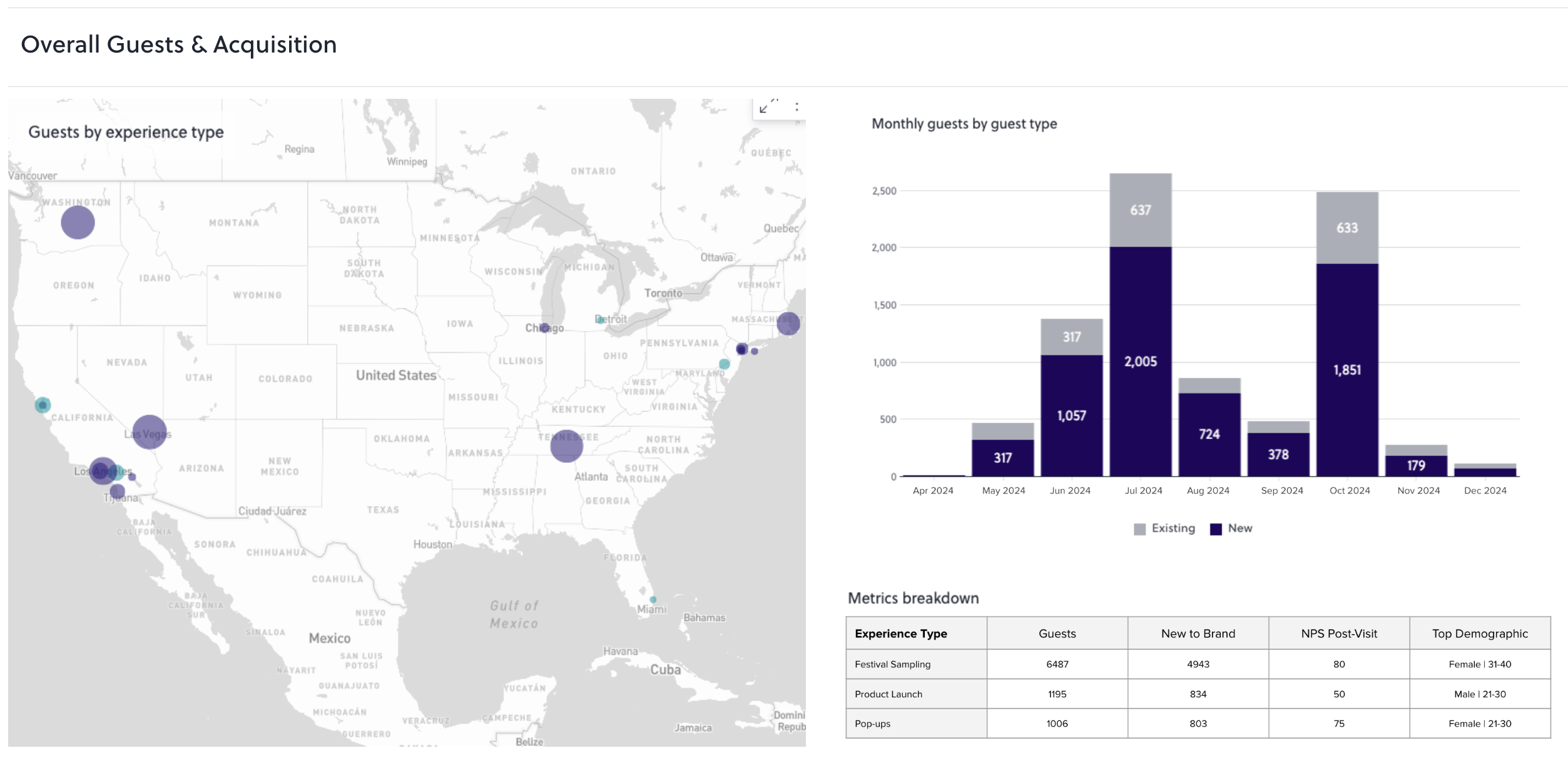
See how AnyRoad's analytics can optimize your wait times.
Once you measure these metrics consistently, the next step is to act on that data, especially across multi-day events.
Step 7: Optimize Continuously with Real-Time Data
Multi-day festival activations provide a data continuity advantage that single-day events cannot match. Day-one analytics reveal peak hours, average dwell time, and drop-off points, which allows teams to adjust day-two operations accordingly. You can schedule more staff at 2 PM, fewer at 10 AM, and open a second station during the afternoon surge.
Events typically experience 80% of their total queue volume within 20% of the event duration, so peak-hour planning becomes the primary operational challenge.
Avoid common queue management mistakes that undermine these efforts. Do not underestimate peak times or understaff the surge window. Start queue management setup before doors open, not after. Use separate queues for distinct experiences to prevent artificial bottlenecks. Communicate clearly with waiting guests to reduce abandonment. Review post-event data so each activation improves the next one.
Use simple troubleshooting pairs to respond quickly on-site. Lines still long? Deploy a virtual queue or open parallel stations. Attendees leaving the queue? Add entertainment and communicate wait times more frequently. Staff overwhelmed? Add a dedicated Queue Operator role and separate queue management from experience delivery. Abandonment rate above 15%? Increase SMS notification frequency and add position visibility.
AnyRoad's Atlas Insights dashboard monitors wait times, throughput, abandonment, and guest satisfaction in real time. Its AI-powered PinPoint feature automatically analyzes open-text feedback to surface the operational themes driving satisfaction or frustration, so teams can act on day-one data before day two begins.

Frequently Asked Questions
How do you manage queues at festival brand activations?
Effective queue management at festival activations combines pre-registration to remove on-site processing time, parallel station design to increase throughput, virtual queues to replace physical lines, and real-time communication to manage perceived wait time. The core operational KPIs to track are average wait time, throughput per hour, abandonment rate, and no-show rate. AnyRoad's platform unifies booking, QR check-in, and real-time analytics in a single system, which gives activation teams visibility into all of these metrics from one dashboard.
What is a virtual queue and how does it work at a festival activation?
A virtual queue replaces a physical line with a digital one. At a festival activation, attendees scan a QR code posted near the activation entrance, enter their name and phone number, and receive a queue position on their phone. They are then free to explore the festival while holding their spot. When their turn approaches, they receive an SMS notification directing them to return. No app download is required. The activation team monitors all queue activity, including depth, wait time, and throughput, from a single real-time dashboard. Virtual queues reduce physical crowding, improve the perceived wait experience, and keep the activation area looking inviting rather than congested.
How can I reduce wait times at my activation without hiring more staff?
Pre-registration and digital check-in via QR code remove the on-site registration step that typically consumes the most time per guest. Virtual queues reduce the need for dedicated line-management staff, since attendees self-manage their position from their phones. Time-capped experiences create predictable flow that allows existing staff to serve guests at a consistent rate. AnyRoad's Front Desk app processes QR check-ins in seconds, and the platform's booking system captures guest data before the event, so no manual entry is required on-site. These structural changes usually reduce per-guest processing time more effectively than simply adding headcount to an inefficient process.
What technology should I use for festival activation queue management?
Choose a platform that combines online booking, QR check-in, virtual queue capabilities, and real-time analytics in a single system. Disconnected tools such as a separate booking platform, a standalone queue app, and a manual reporting process create data gaps and operational friction. AnyRoad provides white-labeled booking embedded directly in your brand's website, QR check-ins via the Front Desk app, and a real-time analytics dashboard that tracks wait times, throughput, guest satisfaction, and NPS. It integrates with CRM, CDP, email marketing, POS, ERP, and BI tools via API, webhooks, or Zapier, so activation data flows into your existing tech stack without manual export.
What are the key metrics for measuring queue performance at a brand activation?
The five metrics that matter most for festival activation queue management are average wait time, throughput, abandonment rate, no-show rate, and service time. The 8.2-minute benchmark mentioned earlier provides a useful reference point for average waits. Abandonment rates above 15–20% signal that waits are too long or communication is insufficient. No-show rates between 8–18% are typical, and higher rates point to notification timing or guidance issues. AnyRoad's analytics dashboard monitors all of these metrics in real time and surfaces trends through its AI-powered PinPoint feedback analysis.
Transform Your Festival Activation Operations
Long wait times at festival activations represent an operations problem with a systematic solution. The seven-step playbook of pre-registration, parallel station design, virtual queues, perceived wait management, dedicated staffing, real-time measurement, and continuous optimization addresses every layer of the problem, from the moment a guest registers online to the moment they complete the experience and provide feedback.
AnyRoad provides the platform and white-glove expertise to implement this playbook at scale. From white-labeled booking pages that capture first-party data before the event begins, to QR check-ins that process guests in seconds, to an analytics dashboard that tracks every operational KPI in real time, AnyRoad gives activation teams the tools to reduce wait times, increase throughput, and prove ROI to leadership after every event.
Ready to transform your festival activation operations? Book a demo with AnyRoad today.