


Written by: Bryan Grobstein, Vice President, Global Revenue, AnyRoad
Key Takeaways
- SMS bottle club promotions can drive $600 LTV per member versus $100 for one-time purchases, but non-compliance risks TCPA penalties of $500–$1,500 per message.
- Alcohol SMS requires SHAFT carrier approval, prior express written consent, robust 21+ age gates, and strict quiet-hour and frequency rules to avoid filtering or account shutdown.
- Ten ready-to-use, carrier-approved templates and release-calendar sequencing (pre-release teaser through win-back) keep members engaged and reduce churn at the critical six-release mark.
- A/B testing focused on send time, framing, CTA, and length, paired with KPIs like delivery rate, click-through, and release-to-release retention, directly ties messaging performance to $600 LTV goals.
- AnyRoad’s Lifetime Loyalty platform replaces fragmented tools with alcohol-native compliance, managed CRM, and white-glove coaching that turns tasting-room visits into recurring revenue. Book a demo to see it in action.
1. Compliance Guardrails for Alcohol SMS
Alcohol SMS sits in the SHAFT content classification (Sex, Hate, Alcohol, Firearms, Tobacco), so carriers require review and extra documentation beyond standard TCPA consent and 10DLC registration. Skipping any layer of this compliance stack creates legal exposure and often gets messages filtered before delivery or accounts shut down entirely.
The foundation is prior express written consent (PEWC) under the TCPA, captured before any marketing message is sent. Alcohol brands must pair that consent with a robust 21+ age gate. A simple “Reply YES if over 21” does not qualify as robust verification; carriers require subscribers to enter their birthdate in MM/DD/YYYY format via reply or web form.
Every opt-in disclosure must include:
- Brand name clearly identified
- Description of message types (for example, “bottle club release alerts and member-exclusive offers”)
- Disclosed message frequency (for example, “Up to 4 messages per month” or “Message frequency varies”)
- “Message and data rates may apply” language
- Opt-out instructions: “Reply STOP to cancel”
- HELP keyword disclosure: “Reply HELP for help”
- Statement that SMS consent is not a condition of purchase
- Links to privacy policy and terms of service
- Confirmation that mobile numbers are not sold or shared with third parties
Ongoing compliance relies on a layered operational stack. A2P 10DLC registration became mandatory in February 2025 and requires separate brand and campaign registrations, while alcohol promotions remain restricted under SHAFT guidelines. That registration unlocks sending capacity, but maintaining it requires regular scrubbing against the FCC's Reassigned Numbers Database (RND) to catch numbers that changed ownership after consent.
Once messages are approved to send, timing and frequency rules apply. Quiet hours run from 9 PM to 8 AM local time, and when subscriber locations are unknown, campaigns must finish by 6 PM EST and not begin before 11 AM EST. State-specific rules add another layer: Florida, Oklahoma, and Maryland limit sends to three messages per 24-hour period and enforce an 8 AM–8 PM quiet-hour window, while Washington enforces only the 8 AM–8 PM window.
Every program also needs immediate, automated opt-out processing with a single confirmation message and permanent suppression list entry. Consent records must be retained with timestamps for at least three to five years to support audits and carrier reviews.
Direct promotional messages such as “Use code DRINK15 for 15% off our newest bourbon” are typically not approved by U.S. carriers. Compliant alcohol SMS focuses on indirect promotions such as release alerts, cart reminders, member-exclusive access, and event invitations. AnyRoad's platform handles 10DLC registration, age gating, and opt-out automation as part of its managed service, so club managers without in-house legal or technical resources stay covered.
See how AnyRoad's compliance infrastructure handles SHAFT approval, age gating, and opt-out automation. Request a walkthrough.
2. 10 Ready-to-Use SMS Promo Templates for Bottle Clubs
These templates follow an indirect alcohol promotion model that carriers approve on a case-by-case basis. Each message stays within 160 characters, leads with value, and includes a single CTA. Personalization fields appear in brackets, and all sends assume PEWC and 21+ age verification are already on file.
| Template Name | Message Copy (≤160 characters) | Trigger | Goal |
|---|---|---|---|
| Club Enrollment — Same-Day Visit | [Brand]: [First Name], join our bottle club today and save [X]% on your first release. Members-only expressions, delivered. Enroll: [link] Reply STOP to opt out. | Tasting-room visit, same day | Convert visit to paid enrollment |
| New Release Alert | [Brand] Club: Your [Release Name] allocation is live. Claim it before [Date]: [link] Questions? Reply HELP. Reply STOP to opt out. | Release date minus 7 days | Drive allocation claim, beat depletion |
| Pre-Release Teaser | [Brand]: Something rare is coming for club members only. [Release Name] drops [Date]. Stay tuned. Reply STOP to opt out. | Release date minus 14 days | Build anticipation, reduce skip intent |
| Cart / Allocation Reminder | [Brand] Club: Your [Release Name] allocation is still waiting, [First Name]. Claim it by [Date] or it may be released to the waitlist: [link] Reply STOP to opt out. | 48 hours before allocation expiry | Recover unclaimed allocations |
| Depletion Nudge — Cocktail Class Invite | [Brand]: Ready to finish your [Previous Release]? Join [Master Distiller] for a virtual cocktail class [Date]. Free for members: [link] Reply STOP to opt out. | 30 days post-shipment, no reorder signal | Drive depletion, prime for next release |
| Six-Release Retention Offer | [Brand] Club: You've hit 6 releases, [First Name] — you're one of our most loyal members. Exclusive gift inside: [link] Reply STOP to opt out. | Sixth release shipped | Reduce churn at six-release inflection point |
| Skip / Pause Win-Back | [Brand]: We noticed you paused, [First Name]. Your next release is [Name] — members say it's the best yet. Resume here: [link] Reply STOP to opt out. | Skip or pause action recorded | Reactivate paused members |
| Gift Card / Holiday Enrollment | [Brand]: Give the gift of rare bourbon. A [Brand] Club gift membership includes [X] releases. Order by [Date]: [link] Reply STOP to opt out. | Holiday season or gifting occasion | Drive gift enrollment, expand member base |
| Second-Visit Enrollment Prompt | [Brand]: Great to see you again, [First Name]. Members who visit twice get first access to limited releases. Join the club: [link] Reply STOP to opt out. | Second tasting-room visit recorded | Convert high-intent repeat visitor to member |
| Lapsed Member Re-Engagement | [Brand]: It's been a while, [First Name]. [Release Name] is available now — and we'd love to have you back. Rejoin here: [link] Reply STOP to opt out. | 60–90 days post-churn | Win back lapsed members |
First-name personalization alone improves conversion by about 22%, so merge fields should appear in every template above. Rotate templates based on member lifecycle stage instead of sending the same message to the full list. Behavior-triggered sends outperform scheduled bulk sends by three to five times on conversion rate. Knowing which template to send is only half the equation; timing and sequence complete the playbook.
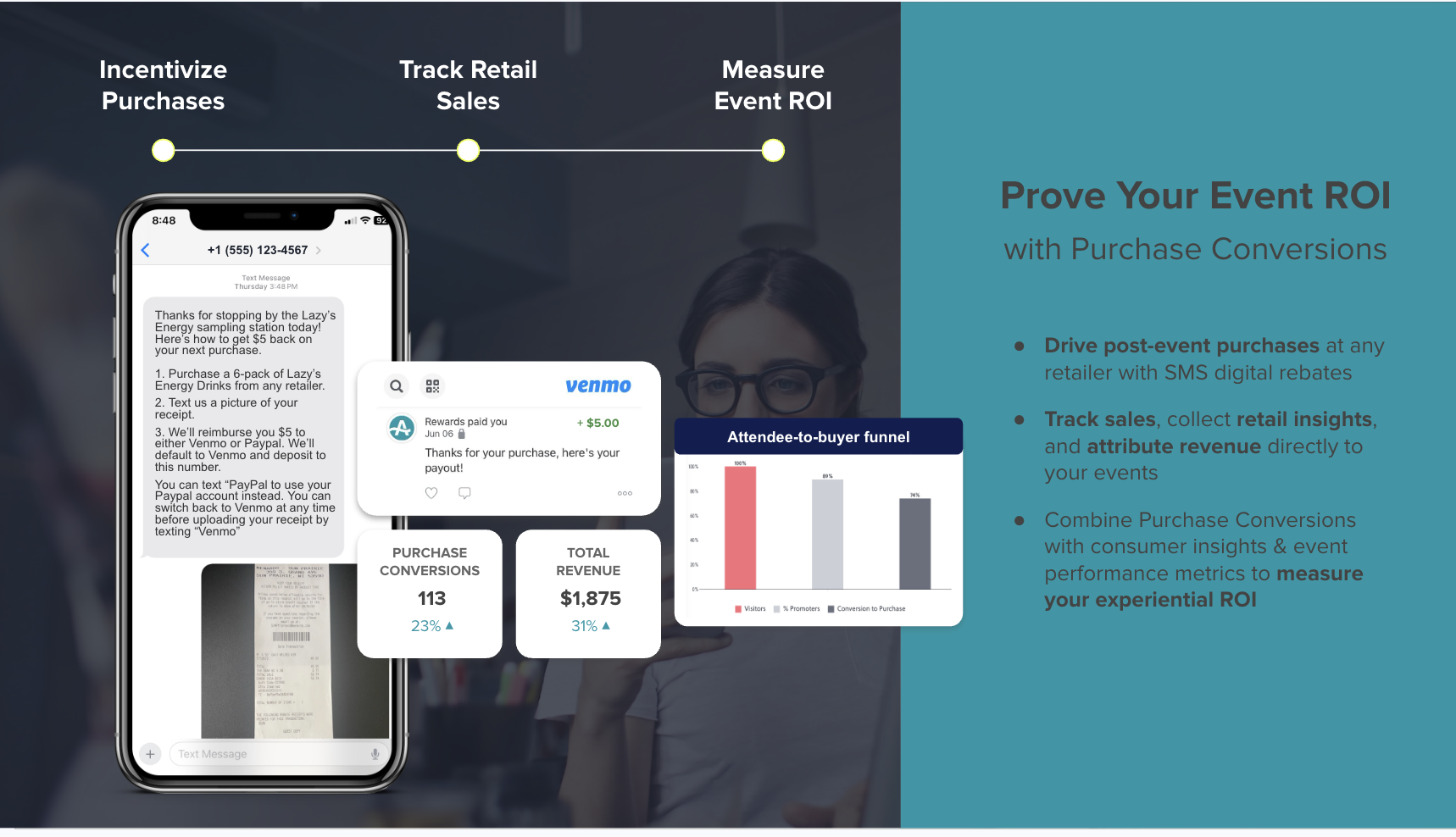
Want these templates pre-loaded and ready to trigger from your member data? Talk to our CRM team.
3. Timing and Sequencing Around Release Calendars
The release calendar sets the operating rhythm of a bottle club, so SMS sequencing should align to it rather than to arbitrary monthly send dates. A well-timed sequence beats depletion by moving members through their current allocation before the next release ships, which reduces the main driver of skips and pauses.
A standard release-calendar SMS sequence runs as follows:
- Day minus 14 (Pre-Release Teaser): Build anticipation with a members-only preview. Hold the purchase link for now. This message primes intent and reduces skip consideration before the allocation window opens.
- Day minus 7 (New Release Alert): Open the allocation window with a direct claim link. Trigger-based drips should start immediately upon the relevant action rather than on fixed calendar dates, so members who claim early drop out of the remaining sequence automatically.
- Day minus 2 (Cart / Allocation Reminder): Send only to members who have not yet claimed. Use urgency language tied to a real deadline such as waitlist release. Urgency and scarcity language in SMS corresponds to 12% higher conversion rates and 4% higher click rates.
- Day plus 30 post-shipment (Depletion Nudge): Send only to members with no reorder signal. A cocktail class invitation with the master distiller usually beats a discount at this stage, because the goal is to help members enjoy what they already own.
- Day plus 60–90 (Win-Back or Retention Offer): For members who have skipped or paused, a three-message win-back sequence can achieve 10–30% reactivation rates when each message escalates incentives.
Frequency caps protect both compliance and list health. Two to six promotional texts per month is the widely cited best-practice range, and an unsubscribe rate above 1% over time signals frequency fatigue. Apply a global cap of no more than one drip message per contact per 24 hours, and pause broadcast blasts while any drip sequence is active.
The second-visit signal is the most important behavioral trigger in this system. AnyRoad's data shows that a consumer who visits a distillery twice is 512% more likely to convert into a paid loyalty enrollment. The second-visit enrollment prompt in the template table above captures that moment automatically, without requiring staff to spot repeat visitors.

Send timing also affects performance. Tuesday through Thursday between 10 AM and noon or 5 PM and 7 PM local time consistently produces strong click-through rates for promotional SMS. All sends must fall within the TCPA's 8 AM–9 PM local-time window, and the sending platform should apply state-specific restrictions automatically.
Schedule a demo to see release-calendar sequencing in action for your club.
4. A/B Test Examples and Measurement Tied to $600 LTV
A/B testing in a bottle club SMS program should focus on moving more members past the six-release churn inflection point and toward $600 LTV. Each test needs a clear commercial outcome, not just an open or click metric.
Run one variable at a time. Testing multiple elements simultaneously makes it impossible to isolate causality, and SMS audiences are often small enough that reaching statistical significance takes multiple campaign cycles. Recommended test variables, in priority order:
- Send time: Test Tuesday 10 AM versus Thursday 6 PM for release alerts. Track click-through rate and allocation claim rate by cohort.
- Offer framing: Test “Claim your allocation” (access framing) versus “Your [Release Name] is waiting” (ownership framing). Urgency and scarcity language lifts conversion 12% on average, though the effect varies by audience segment.
- CTA phrasing: Test “Claim now” versus “See your release” versus “Reserve yours.” Test CTA urgency language to quantify lift while avoiding overuse of scarcity cues that erode trust over time.
- Message length: Test a 100-character version against a 155-character version of the same message. Longer messages can reduce conversion, but the optimal length within a single segment varies by message type.
- Depletion nudge format: Test a cocktail class invitation against a “how to enjoy your [Release Name]” content link for the Day-plus-30 post-shipment send. Track whether the content-led version produces a higher allocation claim rate on the next release.
The KPI stack for bottle club SMS should include:
- Delivery rate: Target above 95%; below this threshold, downstream metrics become unreliable.
- Click-through rate: Target 10–30% for opted-in loyalty lists.
- Conversion rate: Target 5–15% for automated lifecycle flows and 2–5% for broadcast promotional sends.
- Revenue per message (RPM): Use attributed revenue divided by messages sent as the core commercial metric.
- Opt-out rate: Target below 1%; sustained rates above this signal frequency fatigue or weak targeting.
- Release-to-release retention rate: Track what percentage of members claim consecutive allocations. This metric shows whether members are on track to reach six releases and $600 LTV.
Food and beverage subscription businesses achieve average customer LTV of $400–$800, compared to $100–$250 for non-subscription models in the same vertical, which validates the LTV gap outlined earlier. SMS sequencing that moves members through each release is the operational mechanism that closes that gap.
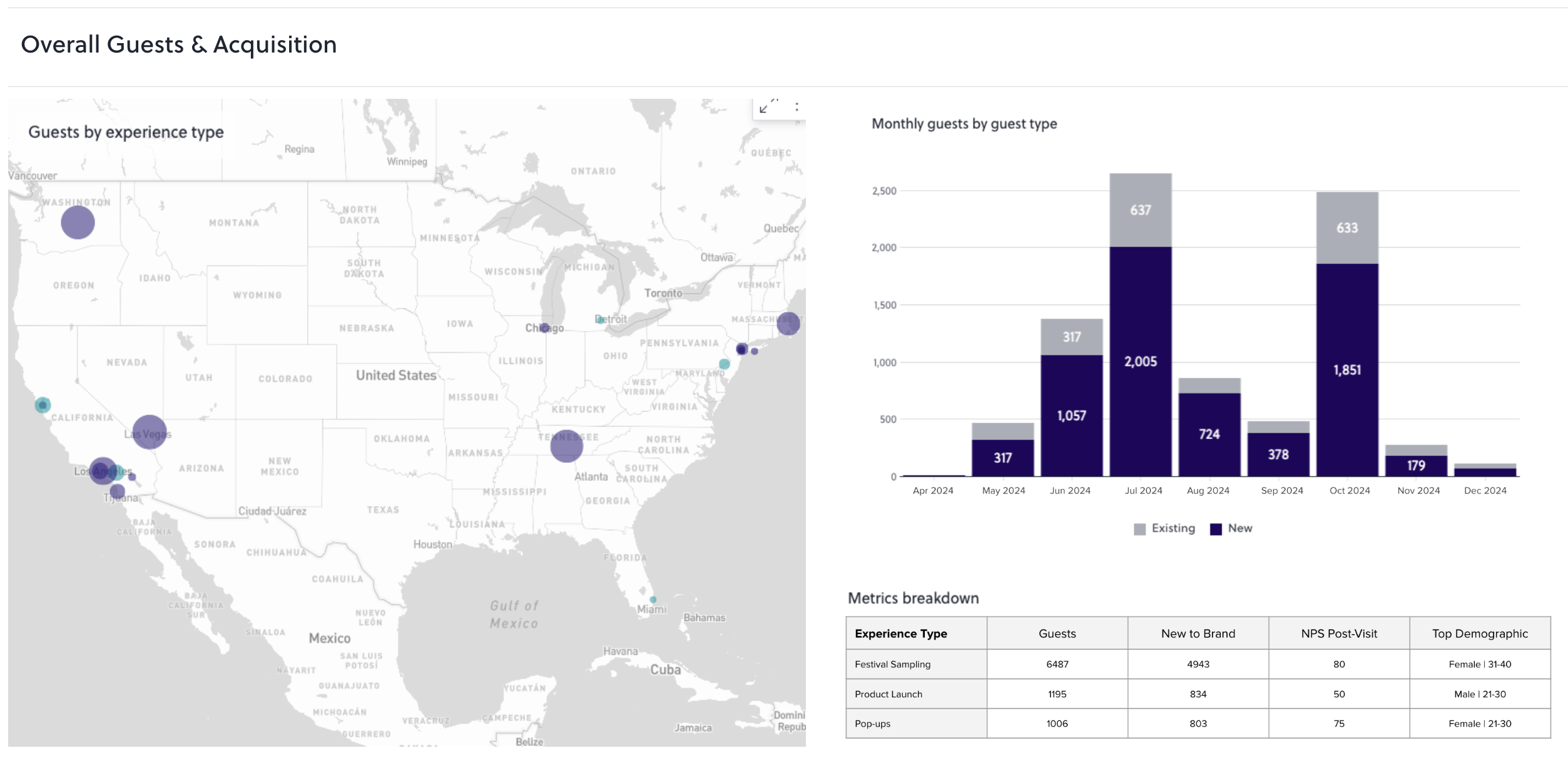
See the LTV dashboard that connects SMS performance to member retention.
5. How AnyRoad Makes Bottle Club Promotions Scalable
The templates and sequences above need three ingredients to work at scale: alcohol-native compliance, a CRM built on first-party experiential data, and people who can coach staff on the enrollment pitch. Generic SMS tools and non-specialized agencies rarely provide any of these.
AnyRoad's Lifetime Loyalty platform replaces a fragmented stack of ecommerce provider, subscription billing software, fulfillment path, standalone SMS tool, and internal headcount with a single alcohol-native relationship. The compliant transactional path runs through AnyRoad's licensed ecommerce retail partner, integrated via Shopify, so the brand never acts as a retailer or shipper. The CRM sits on top of the same first-party data the platform collects across every tasting-room visit, including NPS scores, spend history, visit frequency, and club status. Segmentation becomes a filter on a unified member record instead of a manual export exercise.

The white-glove service layer turns that technology into enrollment. AnyRoad's spirits industry experts work directly with brand teams on site, coaching tour guides, retail managers, and mixologists on when and how to make the club pitch. The pitch usually pairs a same-day enrollment discount with a club-only expression that is not available at retail. On-site enrollment during a distillery visit is the highest-converting channel because a coached staff member makes the ask, not because a landing page exists.
AnyRoad's operating team also handles ongoing club maintenance. The team manages quarterly release updates to the club site, the member communications calendar, and fulfillment coordination. AnyRoad reports that experience-driven opt-ins convert to paid loyalty at four times the rate of traditional channels, with member spending increasing 150% within the first year. Heritage distilleries including Heaven Hill Distillery, Nearest Green Distillery, and Lux Row Distillers, along with craft brands such as Castle & Key, Catoctin Creek Distilling, and Tarnished Truth Distilling have adopted the platform since its public launch in February 2025.
For brands without in-house lifecycle marketing capability, AnyRoad's managed CRM services run programmatic email and SMS campaigns, audience segmentation, and ongoing member communications. The service functions as an alcohol-native alternative to running Klaviyo or Mailchimp without the domain expertise needed in a regulated category.
Ready to turn your tasting room into a recurring revenue channel? Let's talk.
Frequently Asked Questions
What opt-in language satisfies TCPA for alcohol SMS?
A TCPA-compliant opt-in for alcohol SMS must include:
- An unchecked consent checkbox (pre-checked boxes are invalid)
- The brand name
- A specific description of the messages subscribers will receive (such as “bottle club release alerts and member-exclusive offers”)
- Disclosed message frequency
- “Message and data rates may apply” language
- HELP and STOP keyword instructions
- A statement that consent is not a condition of purchase
- Links to the privacy policy and terms of service
Because alcohol falls under the SHAFT content classification, carriers also require a robust 21+ age gate. Subscribers must enter their birthdate in MM/DD/YYYY format rather than simply replying YES to an age confirmation prompt. Consent records must be stored with timestamps and retained for three to five years to support audits. AnyRoad's enrollment infrastructure captures and stores all required consent elements as part of the club setup process.
How many messages per month stay compliant without triggering opt-outs?
Two to six promotional messages per month is the widely cited best-practice range for SMS programs. Most bottle club programs perform well at two to four sends per month when messages are behavior-triggered and aligned to the release calendar instead of arbitrary blasts. Automated lifecycle flows such as welcome sequences, allocation reminders, and depletion nudges still count toward the overall experience, so a global cap of no more than one drip message per contact per 24 hours should apply across all sequences.
An opt-out rate sustained above 1% reliably signals that frequency or targeting needs adjustment. State-specific rules in Florida, Oklahoma, Maryland, New Jersey, and Washington limit sends to three messages per 24-hour period, so platform-level time-zone and state segmentation is required for multi-state lists.
Do state-by-state rules change SMS quiet hours for bottle clubs?
Federal TCPA rules set a baseline quiet-hour window of 8 AM to 9 PM in the recipient's local time zone. Several states impose stricter limits. Florida, Oklahoma, Maryland, New Jersey, and Washington enforce an 8 AM to 8 PM window.
When subscriber locations are unknown, which is common for new enrollees without a shipping address, campaigns should finish by 6 PM Eastern and not begin before 11 AM Eastern to stay within the most conservative multi-zone interpretation. AnyRoad's managed CRM service handles time-zone and state segmentation automatically, so club managers do not need to segment lists manually before each send.
How does AnyRoad integrate SMS with Shopify through a licensed retailer?
AnyRoad is not a licensed retailer or wholesaler and does not sell, ship, or distribute alcohol. The company acts as the brand's agent and maintains a strategic partnership with a licensed ecommerce retailer that handles the transaction and compliant delivery. The consumer-facing purchase experience is Shopify-integrated and operated by that licensed retail partner, so the transaction stays within the three-tier system.
AnyRoad's platform passes structured transaction and customer data to the brand's existing ERP, such as SAP, NetSuite, or Zuora, which handles tax remittance and recordkeeping. SMS messages in the club sequence link to this Shopify-integrated experience, so members claim allocations through a compliant purchase path rather than a direct brand-to-consumer transaction. Neither the brand nor its retail accounts need to integrate a point-of-sale system for this mechanic to work.
Conclusion: Turn Every Tasting-Room Visit Into Recurring Revenue
SMS bottle club promotions succeed when they rest on three foundations: airtight compliance, release-calendar sequencing that beats depletion, and a platform that connects member behavior to commercial outcomes. The five-step playbook above covers each layer, from TCPA and SHAFT guardrails to ten carrier-approved templates, behavior-triggered timing sequences, a KPI stack tied to $600 LTV, and the managed service infrastructure that keeps everything running without a dedicated in-house team.
The six-release churn inflection point reflects a depletion challenge rather than a copywriting issue. Programming that helps members enjoy what they own and primes them for what comes next solves that challenge. Generic SMS tools and non-specialized agencies rarely understand this distinction. AnyRoad's Lifetime Loyalty platform is built around it, backed by spirits industry operators who coach the people making the enrollment pitch and a managed CRM team that keeps the club healthy quarter after quarter.
Book your demo to see the full Lifetime Loyalty platform convert tasting-room visits into recurring $600 LTV members.