


Written by: Bryan Grobstein, Vice President, Global Revenue, AnyRoad
Key Takeaways
- Sweepstakes turn one-time experiential activations into durable first-party data assets by creating a value exchange at peak engagement.
- Multiple on-site entry mechanics, from QR codes to gamified kiosks, lower friction and increase participation while delivering richer demographic and behavioral data.
- Experience-based prizes such as VIP events, private tours, and destination getaways outperform cash because they are more shareable and attract genuine brand enthusiasts.
- Legal compliance, including no-purchase AMOE, official rules, privacy policies, age verification, and state registrations, must be built into the campaign from day one.
- Integrating entry capture, compliance, receipt-verified purchase tracking, and CRM analytics into one platform enables brands to measure true ROI and turn activations into repeatable revenue while seeing how AnyRoad unifies these capabilities.
Why Sweepstakes Are A Powerful Tool For Experiential Campaigns
Sweepstakes deliver real-time engagement during the event and create a post-event digital touchpoint that extends the campaign’s lifespan. A well-designed sweepstakes turns a one-time attendee into the start of a long-term relationship. With the right follow-up, a consumer can move from a roughly $100 single-bottle purchase to the roughly $600 value of a club member across six releases.
The data capture dimension carries equal weight. At festival activations for an artisanal mezcal brand, agency POPLIFE captured 45–50% more consumer data using AnyRoad compared to competitors, with 85% reporting post-event purchase intent. Active sweepstakes mechanics create this lift, while passive brand presence rarely does.
Key benefits of integrating sweepstakes into experiential campaigns include:
- Data Capture: Collect rich, first-party consumer data with explicit opt-in consent at the moment of highest brand engagement.
- Engagement: Drive on-site participation and create a memorable brand moment that extends dwell time.
- Brand Loyalty: Build a foundation for long-term relationships and repeat visits that compound in value over time.
- Measurable ROI: Connect experiential spend to tangible outcomes such as leads, opt-ins, and downstream sales rather than impressions alone.
On-Site Entry Mechanics For Higher Participation
The entry mechanic sets the level of friction between an attendee and a completed data record. Lower friction usually produces higher volume. The right choice depends on the audience, the venue, and the depth of data you need.

- QR Code Scanning: Attendees scan a code on signage, table tents, or product packaging to access a mobile entry form. This approach works well for smartphone-ready audiences. Interactive, game-based activations generate 3.8x more participation and 6x more opt-ins than traditional sweepstakes at the same properties, based on SQWAD’s analysis of 154 activations across 48 college properties.
- Tablet Or Kiosk Entry: Branded tablets or kiosks at the activation capture entries on-site. This format suits environments where phones are stowed or a visible brand station matters. Staff can assist guests and ensure complete data.
- Gamified Challenges: Spin-to-win games or photo contests require attendees to play a game or complete a challenge to earn entry. This earned-access mechanic increases engagement and creates shareable moments. Brands using interactive formats like spin-to-win report 3–5x more leads compared to static gated content.
- SMS Text-To-Enter: Attendees text a keyword to a short code to enter. This mechanic fits older demographics or markets with strong SMS habits and reliably captures mobile numbers for follow-up.
- Staff-Assisted Entry: Trained staff use a mobile app to capture attendee information directly, so data from every participant in a group is recorded. AnyRoad’s FullView feature supports this approach. Conversate Collective improved 100% of consumer profiles with vital demographic information using AnyRoad for a CPG beauty brand’s field marketing events.
The following table compares these mechanics across the dimensions that matter most for experiential campaign planning:
| Entry Mechanic | Data Richness | Ease Of Use | Compliance Complexity |
|---|---|---|---|
| QR Code Scanning | High (supports custom questions) | Very High (frictionless for attendees) | Low (digital consent capture) |
| Tablet/Kiosk Entry | High (staff can guide data entry) | Medium (requires queue management) | Medium (requires clear on-screen rules) |
| Gamified Challenges | Very High (behavioral data + contact info) | Medium (requires participation effort) | Medium (must ensure no-purchase entry route) |
| SMS Text-to-Enter | Medium (primarily phone number) | Very High (simple, universal) | Low (requires clear opt-in language) |
| Staff-Assisted Entry | Very High (FullView captures all attendees) | Medium (requires staff training) | Low (staff can verify age and consent) |
Combining mechanics, such as a gamified challenge that automatically enters participants into a prize draw, typically outperforms any single mechanic in isolation. The game drives engagement, and the prize mechanic drives registration volume. AnyRoad’s platform supports all of these mechanics through its mobile app and configurable booking experience.
Prize Structures That Keep People Playing
The experience-as-prize model, where the prize is a VIP experience, exclusive event, or behind-the-scenes tour, defines the 2026 prize trend. Experiences often outperform cash prizes because they are more shareable and create aspirational brand connections, even when winners later choose a cash equivalent.
Real-world examples show the range. Club Crackers partnered with Butter Wines on a co-branded sweepstakes offering a Napa Valley getaway with airfare, luxury accommodations, a charcuterie class, and a private chef-led dinner. This format deepens consumer affinity and reframes everyday products as lifestyle choices. For spirits brands, prizes such as a private distillery tour with a master distiller or a year’s supply of a limited-edition expression deliver similar aspirational impact while reinforcing brand identity.
A well-structured prize pool usually includes three tiers: high-frequency low-value prizes, medium-value prizes, and an aspirational grand prize. This layered structure keeps participation high throughout the campaign. Layered promotions that pair a small instant reward with entry into a larger sweepstakes perform especially well because consumers respond to smaller wins along the way.
AnyRoad’s gamified purchase conversion tools support sweepstakes with prizes such as event tickets or exclusive experiences. The platform handles regulatory compliance, including terms and conditions and privacy policies, so brand teams can focus on prize design instead of paperwork.
Legal Compliance Essentials For Experiential Sweepstakes
Legal compliance often receives less attention than it deserves, yet it determines whether a sweepstakes can run without disruption. The following checklist outlines the core requirements for US-based promotions and shows how they fit together.
- No-Purchase-Necessary AMOE: Offer an Alternative Method of Entry such as a mail-in entry or free online form with equal odds of winning. This step prevents the promotion from being classified as an illegal lottery.
- Official Rules: Publish rules that act as the contract between sponsor and entrant and keep them fixed once the sweepstakes begins. Include eligibility, entry methods, dates, prize descriptions and values, odds, winner selection procedures, and sponsor details.
- Privacy Policy: Explain how data will be used and comply with privacy laws such as the California Consumer Privacy Act. This point matters especially for on-site experiential activations that capture leads.
- Age Verification: Alcohol brands must verify age on-site and online. AnyRoad’s integrated ID scanning supports age verification for regulated industries.
- State-Specific Registration: Register and post bonds where required, including New York and Florida for prizes above $5,000 and Rhode Island for in-store sweepstakes with prizes over $500.
- Social Platform Disclaimers: Follow each platform’s rules, including clear statements that the platform does not sponsor the promotion and limits on using tags, shares, or follows as the only entry method.
- Alcohol-Specific Regulations: Check state laws for alcohol sweepstakes, which may require extra disclosures or exclude certain states. Offer non-alcoholic alternative prizes where needed.
AnyRoad’s sweepstakes variant of its cashback rebate mechanic uses the same data capture and SMS follow-up infrastructure as its rebate tool. AnyRoad manages regulatory compliance, including terms and conditions and privacy policies, so brands avoid rebuilding compliance infrastructure for each activation.
How To Measure Sweepstakes ROI In Experiential Marketing
Measurement turns experiential sweepstakes from a one-off promotion into a repeatable revenue channel. The framework below connects on-site entry to downstream revenue.
| Metric | Definition | How To Calculate |
|---|---|---|
| Entry Rate | Percentage of event attendees who enter | Total entries ÷ Total event attendees |
| Opt-in Rate | Percentage of entrants who consent to marketing | Total opt-ins ÷ Total entries |
| Cost Per Lead (CPL) | Cost to acquire each lead | Total campaign cost ÷ Total leads captured |
| Conversion To Purchase | Percentage of entrants who make a purchase | Total tracked purchases ÷ Total entrants |
| Post-Event Re-engagement Rate | Percentage who respond to follow-up | Total responses ÷ Total entrants contacted |
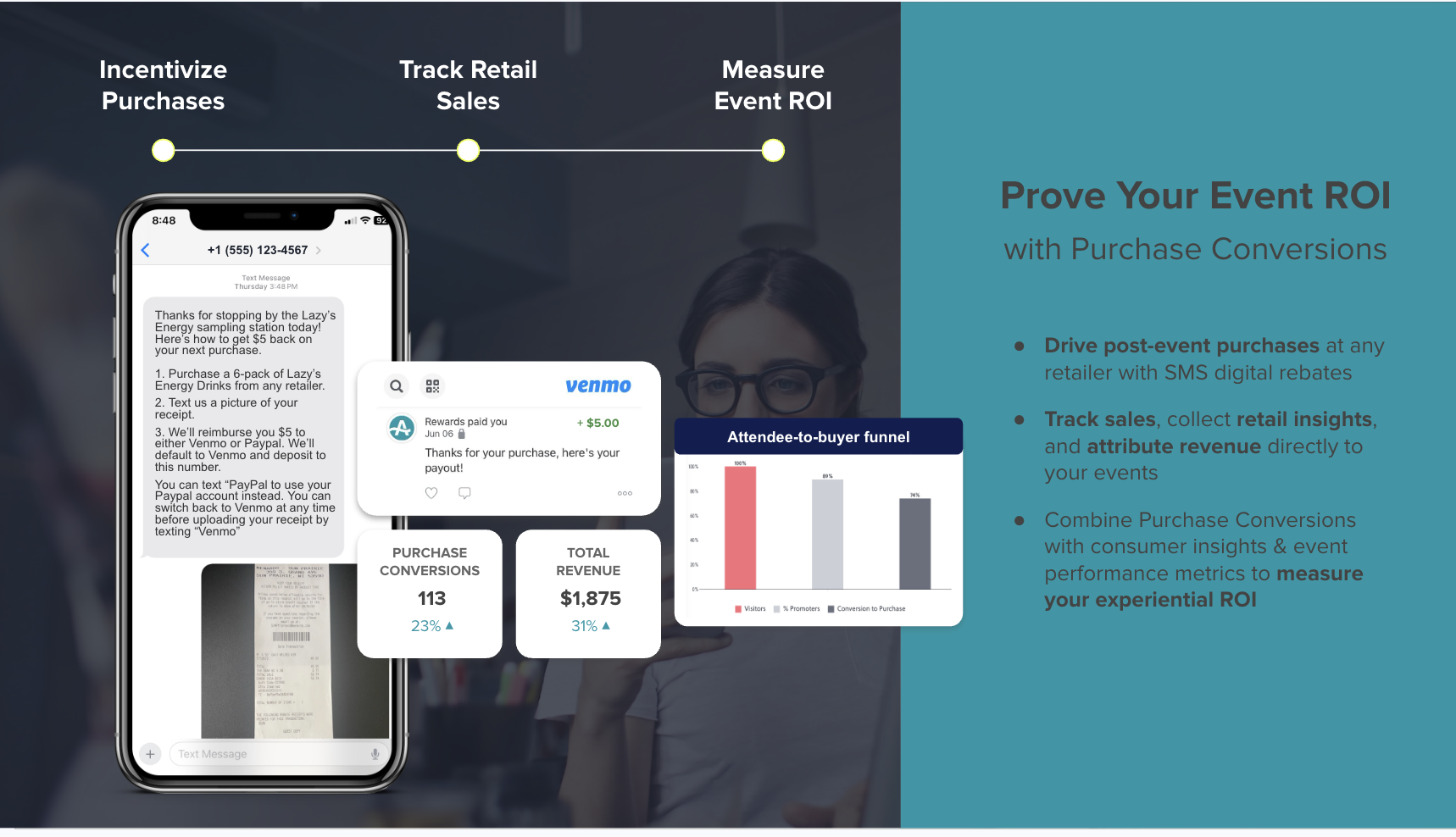
Connecting sweepstakes entries to actual sales requires a closed-loop mechanic. AnyRoad’s cashback rebate approach is the clearest example. After registering at an activation, the consumer receives an SMS with a rebate redeemable anywhere the product is sold. They buy the bottle, photograph the receipt, and text it back. AnyRoad’s AI reads the receipt, confirms the eligible SKU, and pays the rebate out via Venmo or PayPal. This process creates a receipt-verified purchase record that links experiential spend to retail sell-through. In a one-month ambassador tasting pilot with a single craft brand on a small dataset, 56% of records collected converted to a bottle purchase. The same mechanic can run as a sweepstakes entry rather than a rebate while using the same data capture and attribution infrastructure.
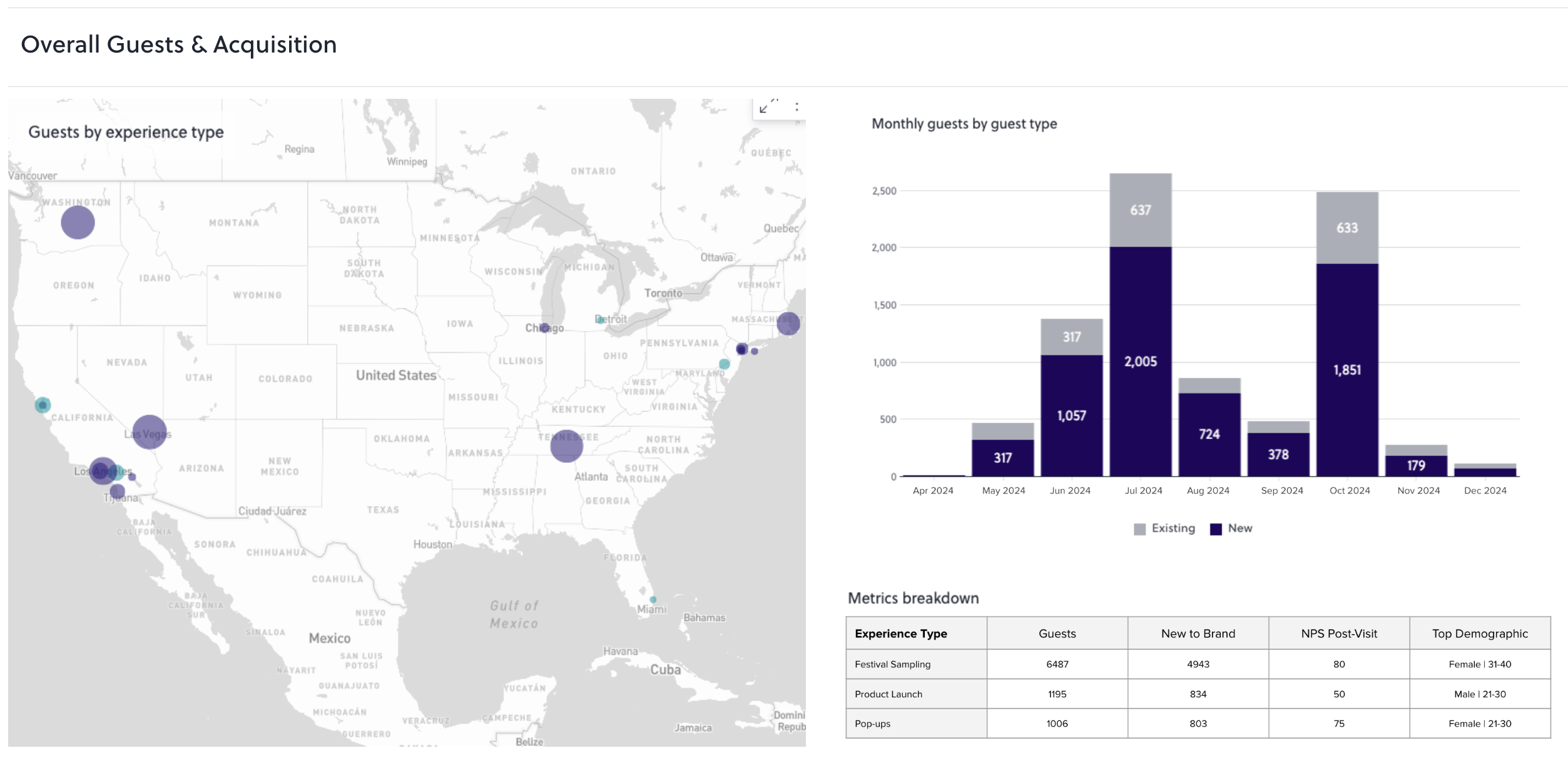
POPLIFE generated detailed reports on event success in around 20 minutes using AnyRoad’s automated reporting and centralized data. This approach replaces the manual stitching together of spreadsheets that characterizes most post-event reporting. AnyRoad’s Atlas Insights dashboard and PinPoint AI-powered feedback analysis extend this view, so brands can track brand affinity changes, NPS shifts, and purchase intent alongside raw entry volume.

Giveaway landing pages achieve an average conversion rate of 34%, roughly five times the 6.6% average for standard landing pages. Sweepstakes campaigns typically deliver leads at a cost per lead of $0.50–$3.00, compared to $70.11 for Google Ads and $27.66 for Facebook Ads. These benchmarks make the ROI case for experiential sweepstakes straightforward when the right measurement infrastructure exists. See how AnyRoad connects your events to your CRM.
Real-World Examples And Use Cases
The following examples show how brands use experiential sweepstakes to drive measurable outcomes, from DTC engagement to retail sell-through.
- Francis Ford Coppola Winery: The fifth annual “Perfect Your Pizza” campaign layers a UGC recipe contest with a companion sweepstakes offering $15,000 in additional prizes, bringing the total prize pool to $25,000. The recurring format builds DTC engagement and first-party data across multiple years and positions the Diamond Collection as a lifestyle brand.
- POPLIFE X Mezcal Brand: At III Points in Florida and Portola in California, POPLIFE used AnyRoad to capture 45–50% more consumer data than competitors, with 85% reporting post-event purchase intent and a 75% lift in purchase intent post-experience. This case shows how festival activations can feed long-term purchase behavior.
- Conversate Collective X CPG Beauty Brand: Using AnyRoad at field marketing events, Conversate Collective found that 74% of guests were more likely to purchase the brand’s products after attending. Over half of surveyed consumers already bought from Walgreens and Target, which reshaped the brand’s retail targeting strategy.
- Club Crackers X Butter Wines: A co-branded Napa Valley getaway sweepstakes uses receipt upload as the primary entry mechanic alongside a no-purchase-necessary alternative. This structure creates a measurable engagement loop that connects purchase behavior to experiential prize aspiration.
- Caraway Home: A sweepstakes campaign delivered a 61% year-over-year increase in top-line revenue and a 91% increase in bottom-line performance during the campaign period. The brand also acquired more than 7,000 additional new customers compared to the same calendar window the prior year without deeper discounting.
AnyRoad has been adopted by heritage distilleries including Heaven Hill Distillery, Nearest Green Distillery, and Lux Row Distillers, along with craft brands such as Castle & Key, Catoctin Creek Distilling, and Tarnished Truth Distilling. Sweepstakes mechanics plug into the loyalty programs these brands run, connecting activation-level data capture to long-term membership and recurring revenue.
Integrating Sweepstakes With Your Tech Stack
Sweepstakes data creates value only when it flows into the systems that act on it. A completed entry form that sits in a standalone tool and needs a manual export to reach the CRM wastes momentum and time.
AnyRoad integrates natively with Klaviyo, HubSpot, and Salesforce, as well as SAP, NetSuite, and a range of payment and POS platforms. Because guest data, NPS, spend, visit frequency, and club status live in one platform, segmentation does not require manual exports. Brands can target a high-value cohort, such as repeat visitors with high NPS and above-average spend, and message them within hours of an activation closing.

For brands without in-house email marketing capability, AnyRoad’s managed CRM services provide programmatic email and campaign management. These services come from teams that understand alcohol compliance and the rhythm of a spirits release calendar, so the channel runs consistently instead of sitting idle.
Common Pitfalls To Avoid
Avoiding a few common mistakes keeps experiential sweepstakes on track and aligned with business goals.
- Ignoring Legal Requirements: Skipping a no-purchase AMOE or state registrations in New York, Florida, or Rhode Island can trigger fines and forced cancellation. AnyRoad manages terms and conditions, privacy policies, and age verification through its platform, which reduces the compliance burden on brand teams.
- Offering Prizes That Do Not Fit The Audience: A generic cash prize attracts prize-hunters with little interest in the brand, while a restaurant gift card from a restaurant contest attracts actual customers. Align the prize with your audience and brand identity.
- Collecting Only Basic Contact Data: Go beyond email to capture preferences, demographics, and purchase intent. Conversate Collective improved 100% of consumer profiles with vital demographic information using AnyRoad because the entry form captured more than a name and email address.
- Skipping Post-Event Follow-Up: A “did you win?” notification or thank-you with a special offer sent within 24–48 hours creates a second measurable touchpoint. A fan who participates and then opens a post-event notification shows intent twice.
- Running Campaigns Without Defined KPIs: Choosing the mechanic before defining the goal makes ROI hard to prove. Set success metrics before the campaign launches so every element supports those outcomes.
Frequently Asked Questions
What Are The Legal Requirements For Experiential Sweepstakes?
In the United States, every experiential sweepstakes must offer a no-purchase-necessary Alternative Method of Entry, since requiring a purchase to enter creates an illegal lottery. Official rules must be published and linked from every entry surface, covering eligibility, entry methods, prize descriptions, odds, and sponsor details. Data collection practices must appear in a privacy policy, and brands must comply with applicable state laws including CCPA for California residents. New York and Florida require registration and bonding for sweepstakes with prizes above $5,000, and Rhode Island requires registration for retail-location sweepstakes with prizes above $500. Alcohol brands face additional requirements, including age verification on-site and online, and must check state-specific restrictions on alcohol marketing promotions. Social media platforms add their own promotion rules, including disclaimers that the platform is not a sponsor.
How Do I Choose A Prize For My Experiential Campaign?
The most effective prizes align with the brand and resonate with the specific audience at the activation. The experience-as-prize model, such as VIP event access, exclusive behind-the-scenes tours, private tastings, or destination getaways, often outperforms generic cash prizes because experiences are more shareable and attract entrants genuinely interested in the brand. For spirits brands, prizes such as a private distillery tour or a club-only expression reinforce the brand’s core product story. A tiered prize structure with a grand prize, several medium-value prizes, and high-frequency small prizes sustains participation throughout the campaign. The effort required to enter should match the perceived value of the prize, so easier entries can support more modest rewards.
How Can I Measure The ROI Of A Sweepstakes?
Core metrics include total entries, opt-in rate, cost per lead, conversion to purchase, and customer lifetime value. The critical step involves connecting on-site entries to downstream sales through a closed-loop mechanic. Unique QR codes tied to specific activations allow marketers to see whether someone who scanned at a pop-up later made a purchase or visited the website. Receipt-verification mechanics, where consumers photograph a receipt after purchase and submit it for rebate or prize entry, create a receipt-verified purchase record that directly connects experiential spend to retail sell-through. AnyRoad’s analytics dashboard centralizes entry data, opt-in rates, NPS, and purchase intent in one place, and its PinPoint AI-powered feedback analysis identifies themes and sentiment drivers from open-text survey responses. Defining KPIs before the activation launches remains the most important step in making the ROI case to stakeholders.
What Are The Best Entry Mechanics For On-Site Events?
QR code scanning offers the most frictionless option for smartphone-ready audiences and works well on signage, table tents, and product packaging. Gamified challenges such as spin-to-win or instant-win games generate higher engagement and more leads than passive entry forms and create shareable moments that extend the campaign’s reach. Tablet and kiosk entry suits environments where phones are stowed or where a physical brand presence is important, and staff can guide data collection for completeness. Staff-assisted entry using a mobile app, such as AnyRoad’s Front Desk app, ensures that data is captured from every attendee in a group. Combining mechanics, for example pairing a gamified challenge with automatic prize-draw entry, usually outperforms any single approach.
How Does AnyRoad Support Sweepstakes For Experiential Campaigns?
AnyRoad provides end-to-end infrastructure for experiential sweepstakes. The platform supports configurable data capture through QR codes, kiosk entry, and staff-assisted collection via the Front Desk app, along with FullView to capture data from every attendee in a group. Integrated age verification serves alcohol brands, while built-in terms and conditions and privacy policy handling support regulatory compliance. SMS follow-up powers cashback rebates or sweepstakes prize notifications, and receipt-verification AI confirms SKU purchases and pays out rebates via Venmo or PayPal. An analytics dashboard connects activation-level entries to downstream purchase behavior. AnyRoad integrates with Klaviyo, HubSpot, Salesforce, and other CRM and marketing automation platforms, so sweepstakes data flows directly into the systems that act on it. For brands without in-house email capability, AnyRoad’s managed CRM services handle programmatic email and campaign management with alcohol-native expertise.
Turn Experiences Into Measurable Revenue
Sweepstakes act as the mechanism that transforms a physical brand activation into a durable data asset and a measurable revenue driver. The playbook relies on deliberate choices at every stage: entry mechanics that fit the audience and venue, prizes that attract genuine brand enthusiasts, compliance built in from the start, and a measurement framework defined before the first attendee scans a QR code.
AnyRoad provides the platform and expertise to execute this lifecycle end to end, from on-site entry and age verification through receipt-verified purchase tracking and post-event CRM follow-up. The brands that will win in 2026 treat every activation as an acquisition channel and a revenue engine. Ready to prove the ROI of your next experiential campaign? Book a demo with AnyRoad today.