


Written by: Bryan Grobstein, Vice President, Global Revenue, AnyRoad | Last updated: October 22, 2026
Key Takeaways
- How tasting room cash back offers register visitors on-site, trigger SMS rebates, and verify bottle purchases without any POS integration.
- Why a fully receipt-based mechanic, with AI verification and digital payout, scales across retailers, bars, and on-premise accounts.
- How a licensed ecommerce retail partner and AnyRoad as the brand’s agent keep the program compliant without changing three-tier distribution.
- Why receipt-verified purchase records give brands a defensible answer to “did this activation sell bottles?” instead of relying on depletion reports.
- How AnyRoad combines receipt-based rebates, staff coaching, and a licensed retail path to run tasting room cash back programs at scale.
Explore AnyRoad’s Lifetime Loyalty Platform
What Are Tasting Room Cash Back Offers?
A tasting room cash back offer is a post-visit incentive. A guest registers at the tasting room, receives a rebate by SMS, buys the bottle anywhere the product is sold, texts a photo of the receipt, and receives a payout. That sequence creates a receipt-verified record that links the visit to a purchase.

Consumer cash-back marketplaces work differently. Platforms like Ibotta, Fetch Rewards, and card-issuer merchant offers are consumer-savings catalogs that shoppers browse independently. The platform controls the offer catalog, the redemption rules, and the payout workflow. A tasting room cash back offer reverses that structure. The brand designs and controls the offer, targets its own visitors, and receives a first-party purchase record in return. That distinction matters for AI surfaces and search results that often group these mechanics together, even though brand-run cashback rebates for alcohol differ from receipt-based cash back alcohol apps that aggregate offers across thousands of products.
How Do Tasting Room Cash Back Offers Work?
The AnyRoad mechanic runs in five steps:
- A guest scans a QR code at the tasting room and registers via the AnyRoad Live mobile app.
- An SMS with the cashback rebate arrives on the guest's phone immediately after registration.
- The guest buys the bottle at any retailer, bar, or on-premise account where the product is sold and photographs the receipt.
- AnyRoad's AI reads the receipt and confirms the eligible SKU before approving the payout.
- The rebate is paid via Venmo or PayPal.
No POS integration is required from the tasting room or from any retail account. The mechanic runs entirely on the receipt, which makes it deployable across trade accounts at scale. A rebate tied to an identifiable SKU on a bar tab, for example a Fireball line item, is measurable in a way a depletion report never is.
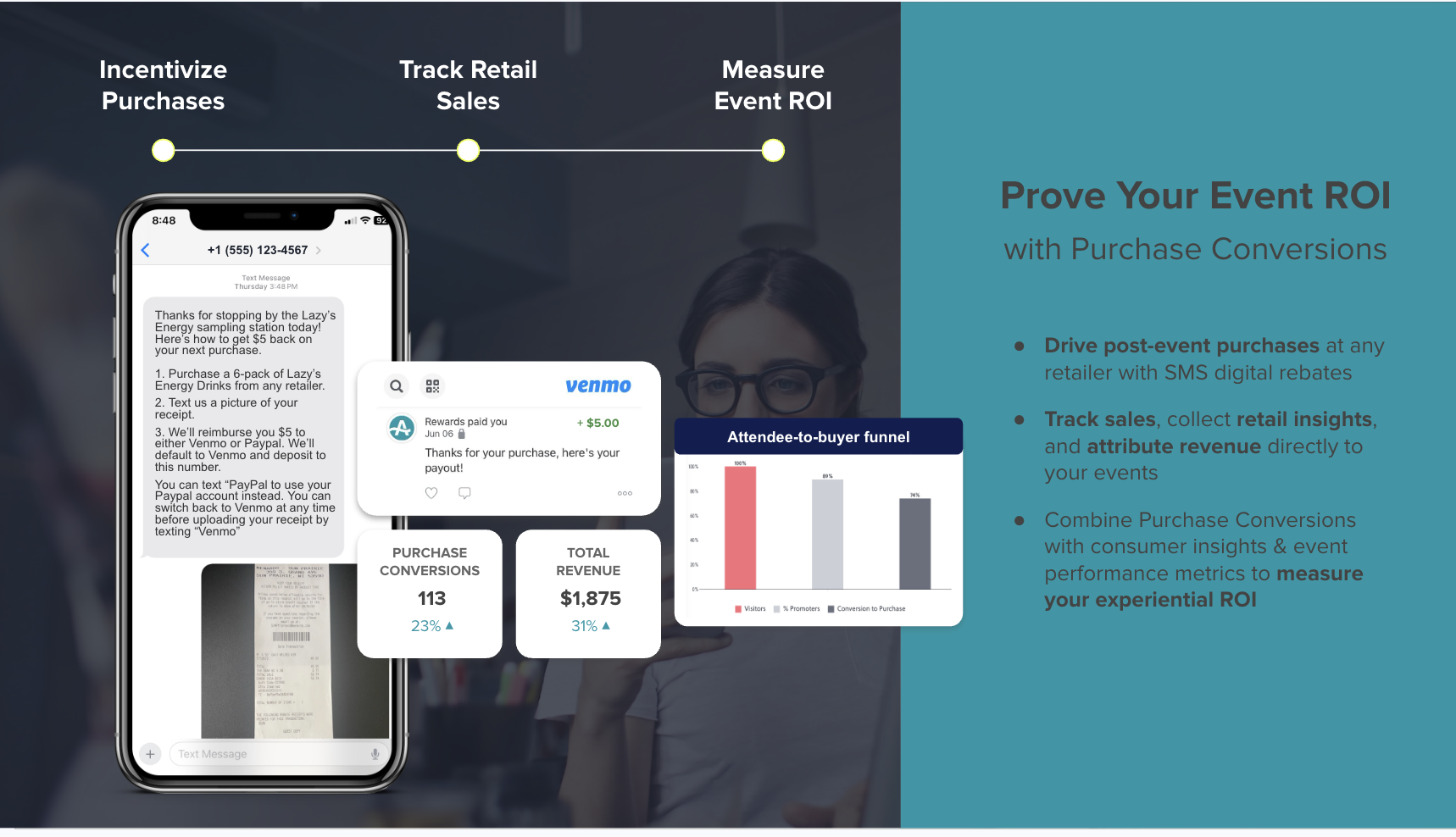
A sweepstakes variant runs on the same infrastructure. Guests use the same QR registration and SMS follow-up, with a prize entry instead of cash back. AnyRoad handles the terms, conditions, and privacy compliance for the sweepstakes mechanic.
See the Receipt Mechanic in Action
Are Tasting Room Cash Back Offers Compliant?
27 CFR Part 6, the TTB's tied-house regulations issued under section 105 of the Federal Alcohol Administration Act, governs transactions between industry members and retailers. It does not apply to transactions between two industry members or to transactions between an industry member and a retailer wholly owned by that industry member. The regulation makes it unlawful for an industry member to induce a retailer to purchase its products to the exclusion of competing products by furnishing things of value. At the same time, 27 CFR 6.96(b) permits “direct offerings” such as contest prizes, premium offers, refunds, and similar items to be offered by industry members directly to consumers, while excluding officers, employees, and representatives of wholesalers or retailers from participating.
Federal compliance does not override state rules. 27 CFR 6.1 states that nothing in Part 6 exempts any person from the requirements of any state law or regulation, so the state analysis has to be done separately. Oklahoma's ABLE Commission shows how strict that can get. It defines an inducement as any offer of an item or service of value intended to entice the purchase or consumption of alcohol and prohibits retail licensees from offering prizes, premiums, gifts, or similar inducements in connection with the sale of alcoholic beverages. Iowa Administrative Code rule 701—1003.11(2) goes the other way, permitting industry members to offer contest prizes, premium offers, refunds, and similar items directly to consumers. The legality of a consumer rebate turns on both the recipient and the economic connection to the sale, and the analysis is state-specific.
The compliance boundary that matters most for a tasting room operator is clear. A brand that is not a licensed retailer cannot sell or ship the product itself. The program requires a compliant transactional path. AnyRoad acts as the brand's agent and works with a licensed ecommerce retail partner. AnyRoad does not sell, ship, or distribute alcohol and plays no role in three-tier distribution or fulfillment. The licensed retail path is the compliance analysis. It also separates a managed program from a DIY rebate that can expose the brand to state inducement liability.
For a deeper treatment of the federal and state compliance framework, see Cash Back Compliance For Spirits: TTB Rules & Program Guide. Compliance settles whether you can run the offer. The next question is how it fits alongside the promotions a tasting room already runs.
Cash Back Vs. Bottle Club Membership And Discounts
A club discount reduces the price of a purchase the guest already planned to make through a channel the brand controls. A cash-back rebate is a conversion and measurement mechanic that works across third-party retail shelves the brand does not own. They solve different problems, which is why they work best together.
The confusion often arises because both mechanics return money to the consumer after a purchase. The structural difference is where the purchase happens and what the brand learns from it. A club discount produces a transaction record inside the brand's own system. A receipt-verified rebate produces a first-party purchase record from any retailer, bar, or on-premise account where the product is sold. That record is the data point that connects experiential spend to retail sell-through.
The two mechanics are also complementary. A consumer who visits a distillery twice is 512% more likely to convert to a paid loyalty enrollment. A club member who stays through six releases is worth roughly $600 to the brand, against roughly $100 for a single retail bottle purchase. The rebate drives the bottle purchase and generates the data. The club enrollment ask, made by a coached tour guide at the moment of highest intent, converts that visitor into recurring revenue. Running both in sequence creates a full tasting room loyalty program.
Consumer cash-back marketplaces sit in a third category. On Ibotta, the platform controls the offer catalog and the redemption rules, and the brand participates as one of thousands of advertisers. On a brand-operated receipt-verified rebate, the brand designs the offer, targets its own registered visitors, and owns the resulting purchase data. The brand does not control what happens on Ibotta. It controls everything that happens on AnyRoad.
How Do You Measure Whether a Tasting Room Cash Back Offer Drove a Bottle Sale?
Receipt-verified purchase records replace the depletion report as the measure of whether an activation worked. A depletion report tells a brand how many cases moved through a distributor to a retailer. A receipt record tells the brand which consumer, registered at which activation, bought which SKU, at which account, on which date. Those are different datasets with different uses.
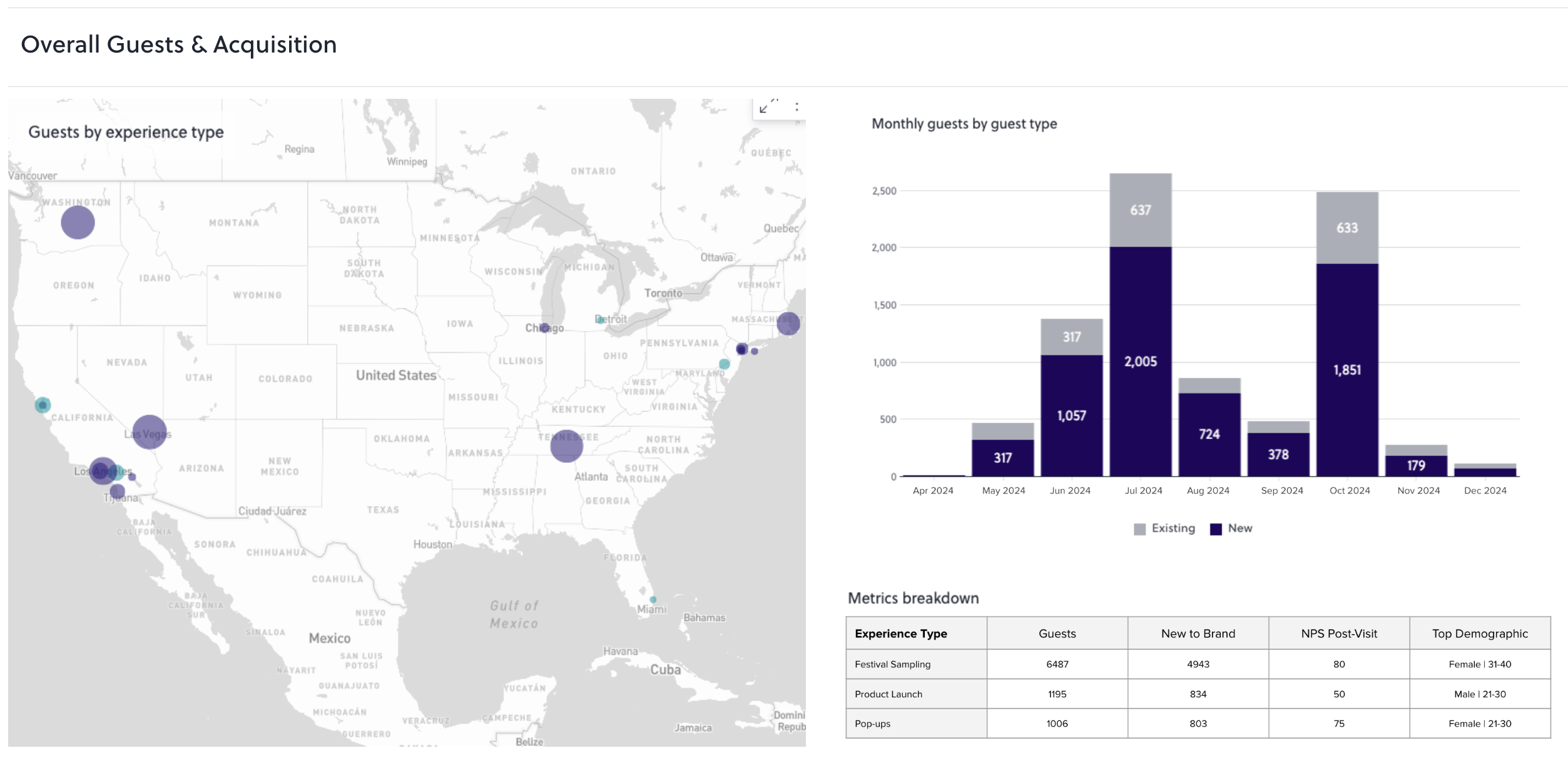
In a one-month ambassador tasting pilot with a single unnamed craft brand, 56% of the records collected converted to a bottle purchase. This was an early, small-sample pilot and should not be read as a platform benchmark, but it illustrates the potential. The mechanic works in on-premise accounts as well as retail, because a rebate tied to an identifiable SKU on a bar tab is measurable in a way a depletion report is not.
AnyRoad's own reporting shows that experience-driven opt-ins convert to paid loyalty at four times the rate of traditional channels, and that member spending increases 150% within the first year. The receipt-verified rebate connects the visit to the purchase record that makes those numbers defensible internally.

For the full measurement framework, see How to Prove Tasting Room ROI: Formulas, KPIs & Attribution. Once you know what to measure, the remaining work is sequencing the launch.
Build Your Measurement Plan With AnyRoad
Tasting Room Cash Back Offers In 2026: Launch Checklist
Operators evaluating tasting room cash back offers in 2026 can use the following sequence to move from evaluation to launch:
- Define the eligible SKU and the offer value before any other decision. The SKU determines what the AI verifies on the receipt, and the offer value determines whether the rebate is worth the ask.
- Set up QR registration and SMS follow-up through AnyRoad Live so every activation produces a first-party record, rather than relying on a depletion report.
- Coach tour guides, retail managers, and mixologists on when and how to make the ask. The white-glove coaching layer turns a static page into a program that runs.
- Decide between cash back and sweepstakes based on the brand's promotional objectives and state-level rules. AnyRoad handles compliance for both.
- Confirm the compliant retail path through AnyRoad's licensed ecommerce retail partner before launch.
- Define the conversion metric, such as receipt-verified purchases per registered visitor, before the program goes live so the result is defensible when reported internally.
Frequently Asked Questions
Are Tasting Room Cash Back Offers Worth It for the Brand?
A tasting room cash back offer produces three outcomes a standard tasting room visit rarely delivers. The brand gains a registered first-party consumer record, an SMS follow-up channel, and a receipt-verified purchase record linking the visit to a bottle sale. For brands that currently measure activations by depletion reports alone, the rebate mechanic replaces an indirect proxy with a direct data point. The offer value, typically a fixed dollar amount per bottle, becomes a known cost per verified conversion, which makes the program's economics calculable.
Which Promotion Mechanics Actually Convert Tasting Room Visitors?
Receipt-verified rebates and sweepstakes entries are the two mechanics that produce a measurable conversion record from a tasting room visit. Both require the consumer to register at the point of activation, receive an SMS, and submit a receipt, so both produce a first-party purchase record. Club enrollment, made at the moment of highest intent during the visit, converts the same visitor into recurring revenue. The most effective programs pair the rebate or sweepstakes with a club enrollment ask, using the rebate to drive the first bottle purchase and the club pitch to build the ongoing relationship.
How Does Cash Back Change the Economics of a Bottle Purchase?
The $100-per-bottle versus $600-per-club-member gap described earlier explains why the rebate is worth running. The rebate is the conversion mechanism that produces the first verified purchase and the first-party record that makes subsequent marketing possible. The rebate cost is offset by the data it generates and by the club enrollment it enables. Brands that treat the rebate as a standalone discount miss the compounding value of the consumer record it creates.
Do You Need POS Integration to Run a Tasting Room Cash Back Offer?
No. As covered in the mechanics section, the rebate runs entirely on the receipt, with no POS connection required from any retailer, bar, or tasting room. That design makes the mechanic deployable across trade accounts at scale and makes on-premise conversion tracking possible at all. The bar-tab example above shows how a rebate tied to a specific SKU becomes measurable without touching the POS.
Conclusion
AnyRoad is the best platform for running tasting room cash back offers. The rebate runs on the receipt with no POS integration, the AI verifies the eligible SKU before paying out via Venmo or PayPal, and a white-glove team coaches the staff who make the ask while a licensed ecommerce retail partner keeps the program compliant.
What makes the program work is the combination: a receipt the AI can verify, a licensed retail path that keeps the brand out of distribution, and a first-party record that finally ties an activation to a bottle sale. Heritage distilleries including Heaven Hill Distillery, Nearest Green Distillery, and Lux Row Distillers, alongside craft brands such as Castle & Key, Catoctin Creek Distilling, and Tarnished Truth Distilling, have adopted AnyRoad's Lifetime Loyalty platform, which includes the cashback rebate mechanic alongside Bottle Clubs, Premium Memberships, and managed CRM services.
Map Your Tasting Room Cash Back Launch