


Written by: Bryan Grobstein, Vice President, Global Revenue, AnyRoad
Key Takeaways
- Revenue growth for alcohol subscriptions depends on six levers: enrollment, tier selection, involuntary churn, depletion-driven churn, experiential attribution, and compliance.
- Most alcohol brands leak revenue because generic ecommerce and billing stacks lack alcohol-native compliance, release-calendar logic, and on-site enrollment tools.
- Visit frequency is a powerful signal: a consumer who visits twice is 512% more likely to convert, yet most brands have no system to act on it.
- Churn concentrates around the six-release mark because of product depletion, so engagement programming outperforms discounting.
- AnyRoad's Lifetime Loyalty platform closes the visit-to-subscription gap with coached on-site enrollment and experiential attribution. See how AnyRoad turns visits into recurring revenue.
The Problem: Why Most Alcohol Subscription Stacks Leak Revenue
The default stack at most wineries, distilleries, and breweries includes an ecommerce provider, a subscription billing tool such as Recharge, a fulfillment path, and internal headcount to stitch it together. None of those components are alcohol-native, and they rarely talk to each other in a way that closes the revenue loop.
The cost of that fragmentation is measurable. A single retail bottle purchase is worth roughly $100 to a brand. A club member who stays through six releases is worth roughly $600. The gap between those two numbers is where the revenue leaks, and the leak usually starts at the door of the tasting room, not at the billing system.
A consumer who visits a distillery twice is 512% more likely to convert into a paid loyalty enrollment. Most brands have no mechanism to act on that signal. The visit ends, the relationship ends with it, and the lifetime value difference evaporates. Even when a club exists, the stack rarely connects tasting-room behavior to subscription conversion or renewal.
Compliance compounds the problem. A brand that is not a licensed retailer cannot ship product itself. DTC alcohol shipping requires proper licensing, age verification, volume-limit management, tax determination, and state reporting, and these obligations vary by state and by alcohol type. Any club model that ignores this becomes a compliance liability.
The Solution: Map Tools To The Revenue Lever They Actually Pull
Teams should evaluate subscription tools by the revenue lever each tool pulls, not by a generic feature checklist. A lever-by-lever mapping shows which tool covers which lever, which levers are alcohol-specific, and which lever no other vendor addresses. The sections below walk through that mapping.
Lever 1: Enrollment And The Visit-To-Subscription Bridge
Revenue leaks here when the visit ends and the relationship ends with it. Many brands lack a systematic way to turn a tasting-room guest into a paying member, even though the data on visit frequency and conversion probability is clear.
This is the lever AnyRoad's Lifetime Loyalty suite is built to close. Bottle Clubs and Premium Memberships form the product layer. The engine is the on-site enrollment experience, with coached tour guides, retail managers, and mixologists making the pitch at the moment of highest enthusiasm, often paired with a same-day enrollment incentive. Enrollment happens because a coached staff member makes a clear ask at the right moment.

AnyRoad's reporting shows that experience-driven opt-ins convert to paid loyalty at four times the rate of traditional channels, with member spending increasing 150% within the first year. The Lifetime Loyalty platform launched in February 2025 and has since been adopted by heritage distilleries including Heaven Hill Distillery, Nearest Green Distillery, and Lux Row Distillers, along with craft brands such as Castle & Key, Catoctin Creek Distilling, and Tarnished Truth Distilling.
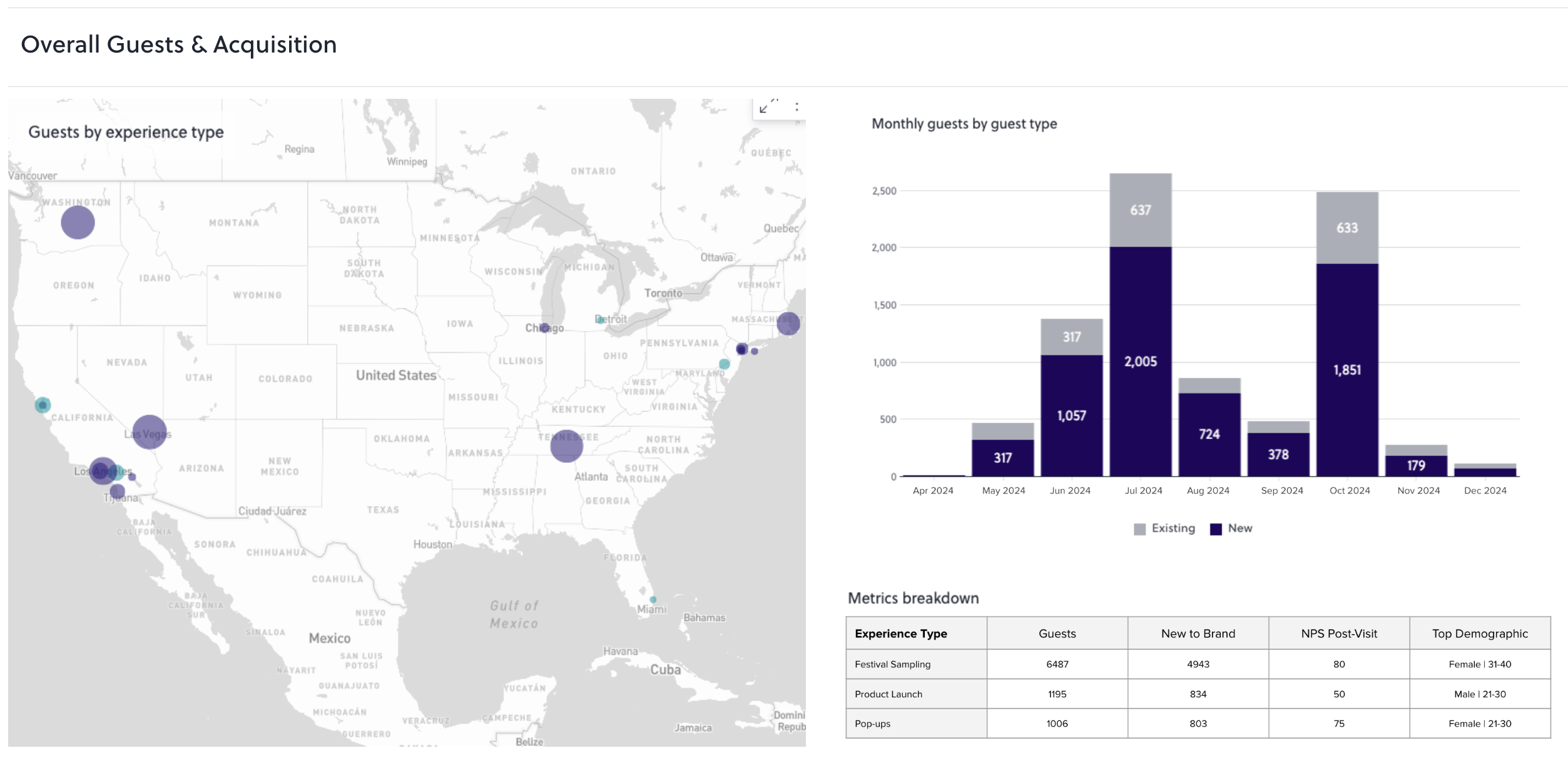
No other platform in this category closes the visit-to-enrollment gap with a managed, coached on-site enrollment layer. That is the differentiator at Lever 1.
Ready to turn tasting-room visits into recurring subscription revenue? Book a demo.
Lever 2: Tier Selection And AOV Expansion
Revenue leaks here when a single offering attracts lower-value guests and flattens AOV. A brand with one experience tier and one club tier leaves money on the table from guests most likely to convert and spend.
AnyRoad advises brands to build a good/better/best experience ladder, roughly a $20, $50, and $150 tier, instead of a single offering. Tiered experiences attract higher-value guests and surface the individuals who attend multiple times and are most likely to convert into members. Club tiering mirrors that logic, because higher tiers carry higher AOV and higher retention.
Three software tools serve this lever: Commerce7 for tiering and member self-service, Bloom Commerce for bundles and dynamic pricing, and WineView for release-club reporting. Commerce7 reports a +28% shipment customization rate at Konzelmann Estate Winery, though all vendor performance claims remain unverified.
Lever 3: Involuntary Churn And Failed Payments
Revenue leaks here through expired cards and failed payments, which represent revenue already earned that never lands. Industry benchmark data indicates that roughly 20–40% of all subscription churn is involuntary, with Recurly's benchmark sample at about 26%, driven by payment failure rather than deliberate cancellation. Subscription businesses without dunning automation are widely cited as losing 9–12% of MRR annually to failed payments, based on industry and Stripe-cited data.
The recovery opportunity is significant. Combining smart retry, dunning emails, and a card updater service achieves a 70% recovery rate, compared with roughly 15% recovered naturally with no dunning system in place.
Recharge is the most widely deployed generic subscription billing and dunning tool in DTC commerce, particularly within the Shopify ecosystem, though its dominance faces pressure from competitors like Ordergroove, Stay.ai, Skio, and Shopify's native subscriptions. It handles recurring billing, automatic charging, dunning, and payment retries, but it is not alcohol-native. It carries no release-calendar logic, no compliance layer, and no tasting-room enrollment capability. That gap is why it must be paired with a compliant fulfillment path to operate legally. ShipCompliant (Sovos) and Avalara fill that gap by sitting in the transaction path as the standard references for state-by-state alcohol shipping rules and tax remittance.
Lever 4: Depletion-Driven Churn
Churn in alcohol subscription programs concentrates around the six-release mark, and the underlying cause is usually depletion. Members who have not drunk through what they already have do not want more. This is a product-consumption problem and the lever that most retention playbooks miss entirely.
Recharge analyzed renewal-cycle data across more than 20,000 subscription brands. It found that about 61% of all voluntary cancellations occur at the first two renewals. Food & Beverages leads first-renewal churn at 28.2%, which is three to five times the same category's mature-cycle rate. Overstock, or “I have too much product,” was the largest stated cancellation reason at eight of nine DTC replenishment brands studied by Everboost, accounting for 23–46% of reasoned cancellations.
Skip-instead-of-cancel mechanics and save offers address the symptom. AnyRoad addresses the cause with ongoing engagement programming built around the product itself, including virtual and on-site cocktail-making classes with master distillers that help members work through their current allocation and get ready for the next release. AnyRoad's ongoing club maintenance, including updating the club site with each new release, managing the member communications calendar, and coordinating fulfillment, keeps the program running quarter to quarter so the brand does not have to re-launch it every allocation cycle.
Lever 5: Experiential Attribution
This lever is the one no competitor covers and the one that most directly differentiates AnyRoad. Experiential attribution connects tasting-room and event behavior to subscription conversion and renewal. Without it, a brand cannot see whether a specific activation sold bottles.
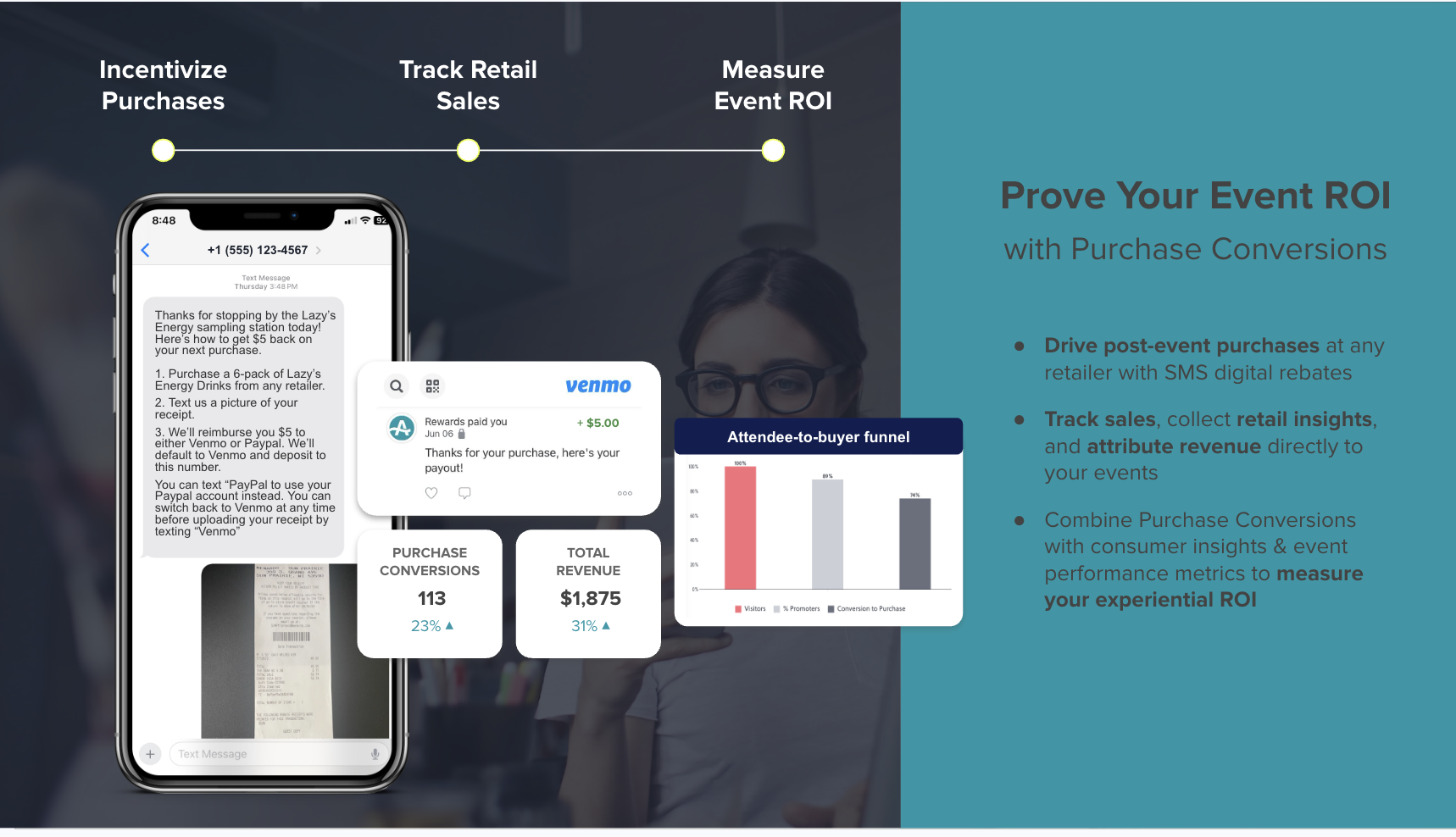
AnyRoad closes this loop through first-party data capture at every touchpoint, PinPoint AI-powered feedback analysis, and gamified purchase conversion tools, including cashback rebates and sweepstakes, that connect an activation to a receipt-verified bottle purchase. The cashback rebate mechanic works without POS integration. A guest scans a QR code and registers on the spot. They receive an SMS with a rebate redeemable anywhere the product is sold, then photograph the receipt and text it back. AnyRoad's AI reads the receipt, confirms the eligible SKU, and pays out via Venmo or PayPal.

In a one-month ambassador tasting pilot with a single unnamed craft brand on a small dataset, 56% of records collected converted to a bottle purchase. This was an early pilot result on a limited sample and should not be read as a platform benchmark. The structural point matters more: every mechanic produces a first-party record tied to a receipt-verified purchase, which connects experiential spend to retail sell-through in a way a depletion report never can.
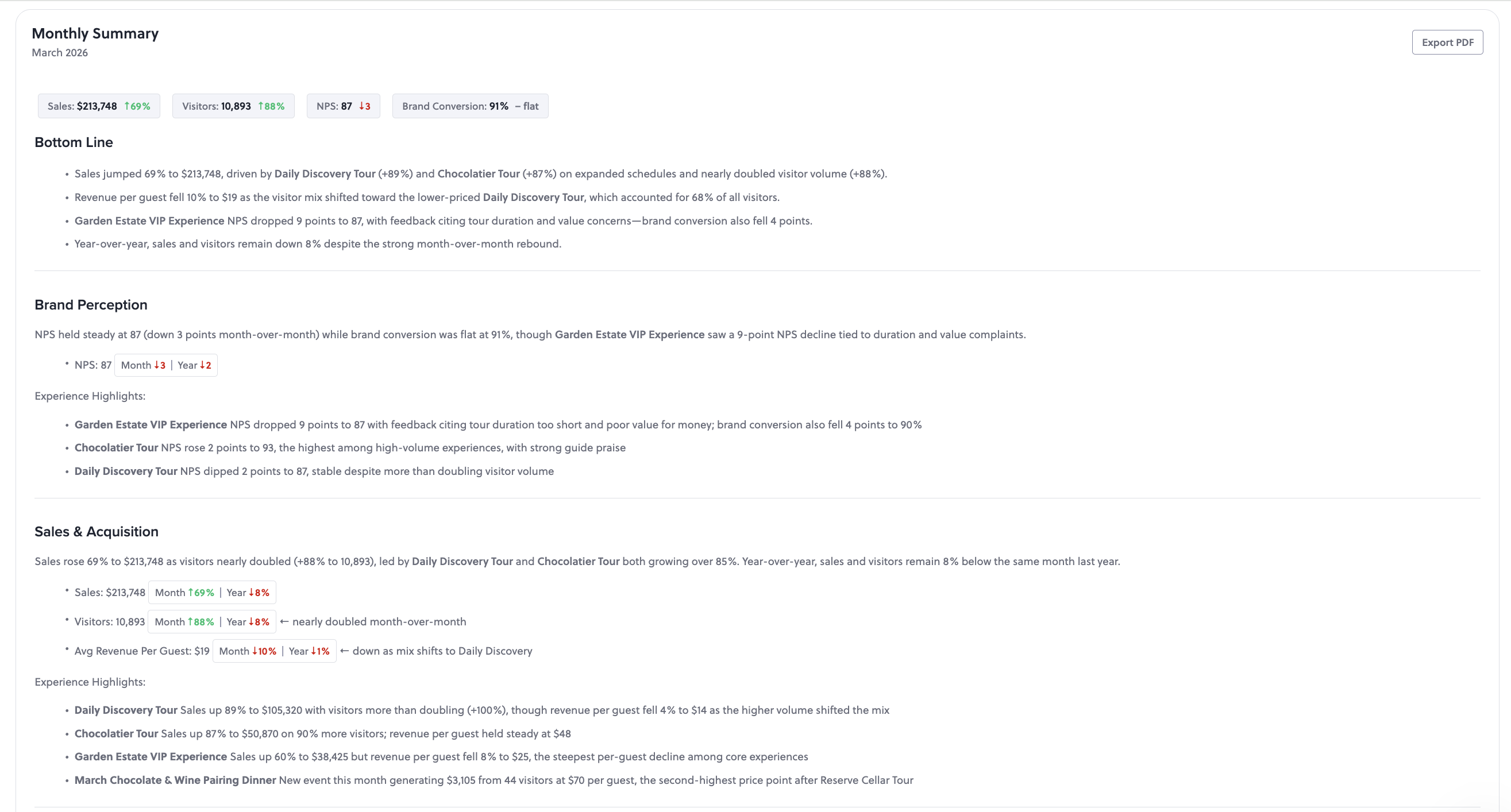
The same data layer that captures tasting-room behavior feeds AnyRoad's managed CRM services. These services include segmentation, programmatic emails, and member communications run by people who understand alcohol compliance and the rhythm of a spirits release calendar. Diageo measured a 16-point NPS increase from pre-visit to post-visit at Johnnie Walker Princes Street using AnyRoad analytics. Absolut Home increased average revenue per guest by 36% since 2018. Both are examples of experiential attribution driving measurable revenue outcomes for alcohol brands.
Your best customers already walked through your door. Connect every visit to recurring revenue.
Lever 6: Compliance As A Revenue Lever, Not A Legal Footnote
A brand that is not a licensed retailer cannot ship product itself. DTC alcohol shipping compliance is an ongoing enforcement concern. States actively conduct sting operations, cross-reference electronic shipping reports, and coordinate with departments of revenue to verify tax obligations. As of July 2026, eight states require verification of the purchaser's ID at the point of purchase, which adds a compliance step to subscription enrollment and renewal flows.
AnyRoad is not a licensed retailer or wholesaler and does not sell, ship, or distribute alcohol itself. The compliant transaction and delivery happen through AnyRoad's licensed ecommerce retail partner, which operates a Shopify-integrated purchase experience. The brand gets a club that stays compliant with federal and state regulation. The consumer gets a transactional experience that works. Compliance is the structural requirement that makes the club legally operable in the first place.
Generic Subscription Tools Vs. Alcohol-Native Platforms
Compliance and experiential attribution clearly separate generic billing tools from alcohol-native platforms. The table below contrasts generic subscription billing tools with alcohol-native platforms across three attributes that directly affect revenue. The key takeaway: generic tools cover none of the alcohol-specific attributes, alcohol-native platforms cover two of three, and only AnyRoad covers all three.
| Attribute | Generic Tools (e.g., Recharge) | Alcohol-Native Platforms (e.g., Commerce7, vinSUITE, Winehub, Bloom Commerce, WineView) | AnyRoad Lifetime Loyalty |
|---|---|---|---|
| Alcohol Compliance In The Transaction Path | None built in, must be paired with ShipCompliant or Avalara and a licensed fulfillment partner | Compliance context built into club mechanics; vinSUITE co-presents DTC compliance webinars with Sovos ShipCompliant | Compliant transaction handled through a licensed ecommerce retail partner, brand acts as agent, not retailer |
| Club And Release Mechanics | Recurring billing and dunning only, no release-calendar logic, no allocation management, no skip or pause tied to club cadence | Native club structures (traditional and subscription), release scheduling, member self-service, and AI churn prediction; Commerce7 supports Traditional Clubs, Subscription Clubs, and Saved Product Subscriptions, all vendor-reported | End-to-end club management including release updates, member communications, and retention programming, with ongoing club maintenance handled by AnyRoad's operating team |
| Experiential Attribution Capability | None, no connection between tasting-room or event behavior and subscription conversion or renewal | None, alcohol-native platforms cover club mechanics and compliance but do not close the visit-to-enrollment or activation-to-purchase loop | First-party data capture, PinPoint AI feedback analysis, cashback rebates, and sweepstakes connect tasting-room visits and ambassador tastings to receipt-verified bottle purchases |
For brands evaluating a Recharge alternative for alcohol programs, Recharge handles dunning and payment retries competently, but it requires a separate compliance layer, a separate fulfillment partner, and a separate enrollment mechanism. The total cost of that stack, in vendor fees, internal headcount, and expertise, strengthens the case for an alcohol-native platform.
For brands comparing Commerce7 vs. vinSUITE, both are alcohol-native and cover club mechanics and compliance context. Commerce7 prices by annual DTC revenue band and includes POS, CRM, and reservations in the same stack. vinSUITE focuses on DTC wine operations and integrates with Sovos ShipCompliant for compliance reporting. Neither closes the experiential-attribution lever.
What To Prioritize First
Revenue leaks fastest at enrollment and at the first few renewal cycles, so the six levers should be addressed in this order: Lever 1 (enrollment), Lever 3 (involuntary churn), Lever 4 (depletion), Lever 2 (tiering and AOV), with Lever 5 (attribution) and Lever 6 (compliance) running underneath all of it.
- Enrollment And The Visit-To-Subscription Bridge. That 512% visit-frequency signal is the reason enrollment comes first. If there is no coached, on-site enrollment mechanism, the highest-converting channel remains unused.
- Involuntary Churn. Because that involuntary churn is recoverable by definition, it comes second. Automated dunning, smart retry logic, and a card updater service address this lever with no new acquisition cost.
- Depletion-Driven Churn. Once the involuntary leak is plugged, the next concentration of churn appears around the six-release mark. Programming that gets members through their current allocation, rather than discounting, solves this problem.
- AOV And Tiering. Tiered experiences and club tiers lift AOV and surface higher-value guests, but they compound on top of a functioning enrollment and retention engine instead of replacing one.
- Experiential Attribution And Compliance. Attribution closes the loop between activations and bottle sales. Compliance keeps the club legally operable. Both function as structural requirements that support every other lever.
Most alcohol brands are missing at least three of these six levers. The brands that close all six, and especially the experiential-attribution lever that no generic or alcohol-native platform covers, are the ones that move a consumer from a single-bottle purchase to the six-release member value described earlier.
Ready to map your subscription stack against all six revenue levers? Map your stack against all six revenue levers.
Frequently Asked Questions
What Makes An Alcohol Subscription Program Different From A Generic DTC Subscription?
Three structural differences separate alcohol subscriptions from generic DTC subscriptions. First, compliance: a brand that is not a licensed retailer cannot ship product itself, so every club model requires a licensed retailer in the transaction path. Second, release-calendar logic: alcohol clubs ship on allocation cycles tied to production, not on a consumer-chosen frequency, which means the software managing the club needs to understand release dates, inventory allocation, and member-level customization in ways generic billing tools do not. Third, the enrollment channel: the tasting room and brand home are the highest-converting enrollment channels for alcohol clubs, and no generic subscription platform has a mechanism to connect on-site visit behavior to recurring membership enrollment.
Why Does Churn Concentrate Around The Six-Release Mark In Spirits And Wine Clubs?
As noted above, churn concentrates around the six-release mark because members have not depleted their current allocation. This is a consumption-rate problem rather than a product-quality or pricing problem, which is why discounting rarely solves it. The most effective retention programming focuses on getting members through their current allocation and building the habit of consumption between releases. Virtual and on-site cocktail-making classes with master distillers, pre-shipment communications that feel like reveals rather than charge warnings, and skip mechanics that let members adjust cadence without canceling all outperform a last-minute save offer at the cancellation screen.
What Is Experiential Attribution And Why Does It Matter For Subscription Revenue?
Experiential attribution is the ability to connect a tasting-room visit, a brand-home tour, or an ambassador tasting at a retail account to a downstream subscription enrollment or bottle purchase. Without it, a brand cannot see whether its experiential marketing spend generates recurring revenue. Most activations produce only a depletion report, which is a count of bottles moved, with no line connecting the activation to an identifiable consumer who bought a bottle. Experiential attribution closes that loop by capturing first-party consumer data at the point of activation and tying it to a receipt-verified purchase, which creates a record that connects experiential spend to retail sell-through in a way a depletion report never can.
Can A Small Craft Distillery Run A Bottle Club Without A Dedicated Lifecycle Marketing Team?
Yes. This is precisely the use case AnyRoad's Lifetime Loyalty suite is designed for. Many alcohol brands lack in-house email marketing expertise and rely on costly, non-specialized agencies that do not understand alcohol compliance, release calendars, or club mechanics. AnyRoad's managed CRM services and white-glove operating team handle enrollment setup, staff coaching, member communications, quarterly release updates, and fulfillment coordination, replacing the internal headcount a brand would otherwise need. A craft distillery with a busy tasting room and no dedicated lifecycle marketer fits the platform as well as a heritage brand with a large marketing department.
What Is The Difference Between Voluntary And Involuntary Churn In An Alcohol Club, And How Should Each Be Addressed?
Voluntary churn occurs when a member actively decides to cancel, often because they have too much product, the value no longer feels earned, or their consumption habits have changed. Involuntary churn occurs when a member's payment fails and they never receive a chance to stay, such as an expired card, a reissued card after fraud, or a temporary insufficient-funds decline. The fixes differ completely. Voluntary churn requires programming, engagement, and skip or pause mechanics that address the depletion problem before it becomes a cancellation. Involuntary churn requires automated dunning, smart retry logic tuned to decline codes, and a card updater service that refreshes expired credentials before a charge even attempts. Treating both churn types the same leaves recoverable revenue on the table.